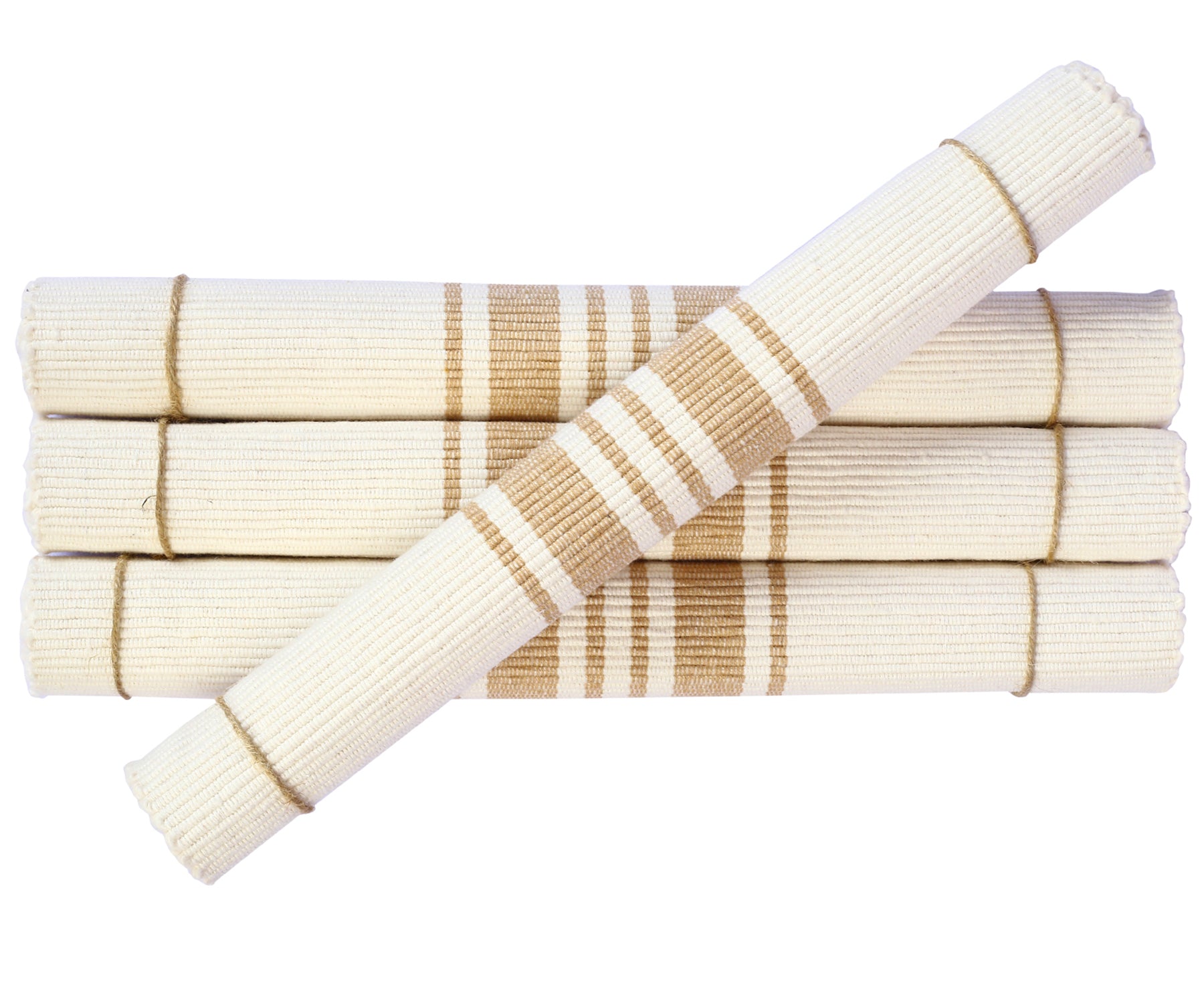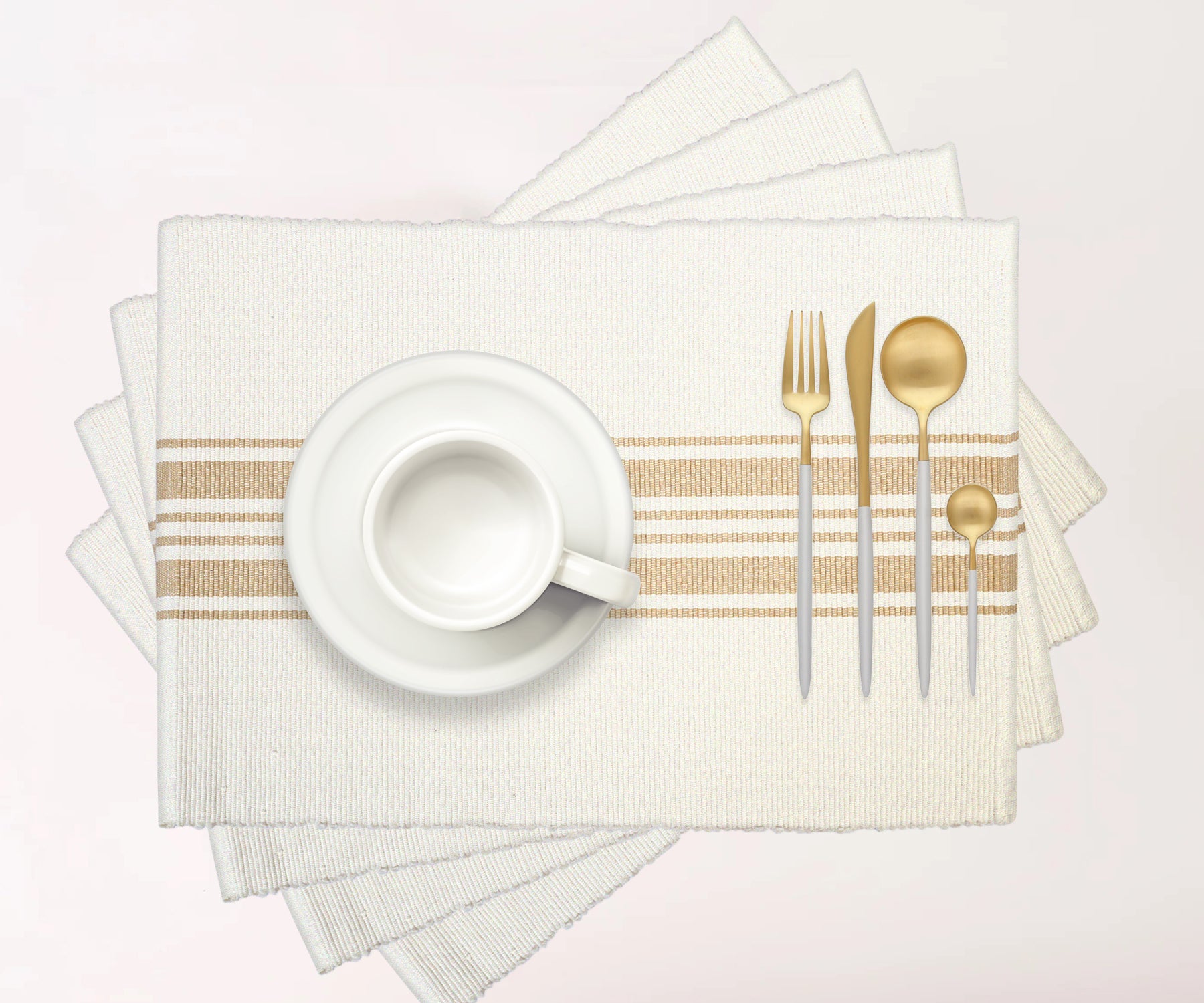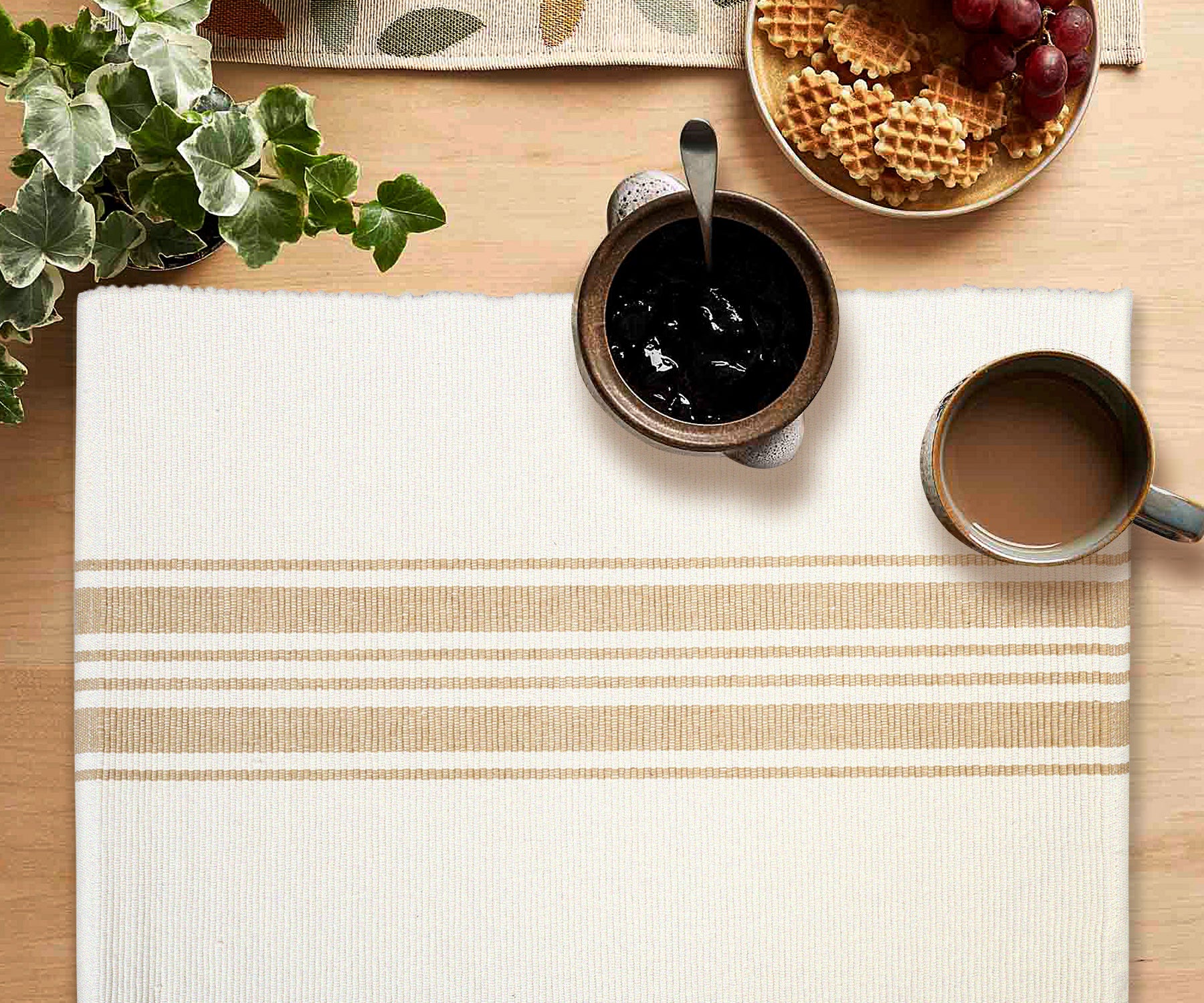



The best storage method depends on the material, shape, how often you use the placemats, and how much space you have. Cotton and linen placemats, for example, can be folded or rolled, while thicker or rigid styles may be better stored flat.
Here are simple ways to store placemats so they stay clean, organized, and ready for your next table setting.
What Is the Best Way to Store Placemats?
For most fabric placemats, the best storage method is one that keeps them clean, dry, protected, and easy to access. If you use your placemats every day, a shallow drawer or shelf works well. For occasional or seasonal sets, a covered basket, storage box, or separate shelf can keep them protected until you need them.
Before storing them, always make sure the placemats are clean and completely dry. Food crumbs, moisture, or stains left on fabric can become harder to deal with after sitting in storage.
How to Store Placemats Without Wrinkles
If you are storing cotton or linen placemats, avoid creating sharp folds that will sit in the fabric for months.
Roll Fabric Placemats
Rolling is a good option when you want to minimize strong fold lines and save drawer space. Lay the placemat flat, smooth out any wrinkles, and roll it loosely from one end to the other. Do not make the roll too tight. You can place several rolled placemats together in a basket or arrange them upright inside a drawer divider.
This method works particularly well for linen placemats because it avoids creating a permanent-looking center crease.

Fold Them Gently
If rolling is not practical, fold your placemats loosely rather than pressing down on each fold. For rectangular fabric placemats, fold them in half and then make another gentle fold if needed to fit your storage space. Keep the folds consistent so your stack stays neat.
If you use the placemats regularly, occasional fold lines are usually not a major concern. They will have less time to set deeply into the fabric.
Store Them Flat
Flat storage is a good choice when you have enough shelf or drawer space.
Place the placemats in a single stack and avoid putting heavy objects on top. A wide, shallow drawer is particularly useful because you can see the entire stack without digging through it.
How to Store Linen Placemats
Linen has a naturally textured appearance, so a few wrinkles are not unusual. Still, proper storage can prevent unnecessary creasing.
Before storing linen placemats:
- Wash them according to the care instructions.
- Make sure they are completely dry.
- Smooth them gently with your hands.
- Roll them loosely or fold them without creating sharp creases.
- Keep them in a dry storage area away from direct sunlight.
For long-term storage, breathable fabric storage is preferable to trapping natural-fiber textiles in a damp environment.
How to Store Cotton Placemats
Cotton placemats are generally straightforward to store. After washing and drying, fold them into a uniform stack or roll them if you want to reduce fold lines. If you have multiple patterns or colors, separate them by type. For example, keep everyday cotton placemats together and reserve holiday or special-occasion designs for another section.
This simple system saves time when you are setting the table.
Also Read: How to Clean Fabric Placemats?

Store Placemats by How Often You Use Them
One of the easiest ways to improve placemat storage is to stop treating every set the same.
Everyday Placemats
Keep the placemats you use most often somewhere within easy reach.
A kitchen drawer, dining room cabinet, or open shelf near the table can work well.
Special Occasion Placemats
Placemats used for dinner parties, birthdays, or formal meals can be stored separately.
Keep them on a higher shelf or in a labeled storage container if you do not use them frequently.
Seasonal Placemats
Holiday and seasonal designs only need to be accessible during certain times of the year.
Store your Thanksgiving, Christmas, spring, or summer placemats together and label the container or shelf. When the season arrives, you can pull out the entire set instead of searching through everyday linens.
You May Also Like: Different Types of Placemats with a Tablecloth
Store Placemats on a Shelf
A shelf works well if you do not have enough drawer space. Create separate stacks rather than one tall pile. For example, you could keep neutral everyday placemats in one stack, patterned styles in another, and seasonal designs in a third.
Avoid making the stacks too high. A shorter stack is easier to remove without disturbing everything underneath.
Try a basket for rolled placemats.
A basket can be both practical and easy to access. Roll your fabric placemats loosely and place them vertically inside the basket. This works particularly well when you have limited cabinet or drawer space. Choose a basket that is tall enough to support the rolls without squeezing them together.
You can also separate different sets using small fabric dividers or place the most frequently used designs toward the front.
Use a Cabinet for Multiple Placemat Sets
If you have a larger collection, a cabinet can give each set its own place.
Use separate shelves or sections for different categories. Keep the placemats you use most often at eye level and place occasional or seasonal sets higher up. If your cabinet has deep shelves, avoid pushing placemats to the back where they are easy to forget. A simple label can make a big difference.
How to Store Round and Oval Placemats
Round and oval placemats can be slightly trickier to organize because they do not always stack as neatly as rectangular styles. For soft fabric versions, rolling is often an easy option.f you prefer to fold them, use one or two gentle folds rather than repeatedly folding the same area into a small shape.
For structured placemats that need to retain their shape, flat storage is usually more practical. Place them horizontally and avoid heavy items pressing down on them.

Keep Placemats Away From Moisture
Where you store your placemats matters just as much as how you arrange them.
Choose a clean, dry area away from:
- Sink splashes
- Damp cabinets
- Direct sunlight
- Excessive heat
- Strong cleaning chemicals
- Areas where food particles can collect
Natural-fiber textiles should be completely dry before they go into storage. Moisture trapped in folded fabric can lead to unpleasant odors and other problems.
Should You Store Placemats in Plastic?
For everyday storage, breathable fabric storage or an open shelf is often a better choice for cotton and linen placemats than sealing them tightly in plastic.
If you need to protect seasonal placemats from dust, choose a clean storage container that keeps them protected while avoiding unnecessary moisture buildup.
The most important thing is to store only clean, completely dry placemats.
Common Placemat Storage Mistakes
A few simple mistakes can make your placemats harder to maintain.
Folding Them Into Tiny Squares
Repeatedly folding fabric into very small sections can create more noticeable fold lines.
Storing Them Before They Are Dry
This can leave your linens smelling musty and may damage the fabric over time.
Making One Huge Stack
A tall pile becomes difficult to manage. Every time you pull something from the bottom, the whole stack gets disturbed.
Mixing Every Occasion Together
Putting everyday, holiday, and formal placemats into one pile makes it harder to find what you need.
Storing Them Near Moisture
A damp kitchen cabinet or area near the sink is not an ideal place for long-term textile storage.
Overview
You do not need a large linen closet or complicated storage system to keep your placemats organized.
The simple formula is clean, dry, sort, and store. Roll fabric placemats when you want to reduce strong fold lines. Fold and stack them when drawer or shelf storage makes more sense. Keep everyday sets within easy reach and move seasonal designs to a separate space.
Once every set has a designated place, setting the table becomes easier, and you spend less time searching through drawers for the right placemat.