
Quick Facts
| Category | Highlights |
|---|---|
| Best fabrics | Cotton (soft, easy care) and linen (textured, absorbent, softens with washing) |
| Common dinner sizes | 18", 20" and 22" square |
| Monogram placement | Usually one corner, about 2" in from the point, so it shows when folded |
| Washing | Cold or cool water, gentle cycle, mild detergent, no chlorine bleach |
| Drying | Air-dry or low heat |
| Ironing | Iron from the back, while slightly damp, with the embroidery face-down on a towel |
| Best uses | Dinner parties, holidays, weddings, gifts and personalized everyday sets |
What Makes Embroidered Napkins Different?
Embroidery is decoration stitched with thread into the fabric itself, which gives it texture and depth that printing can't match. It can be a small corner motif, a border along the edges, a seasonal sentiment, or a monogram with initials or a family name.
Because the design is part of the napkin, embroidered napkins usually feel more substantial and more personal than plain ones. They are also reusable cloth napkins first, so they can replace paper at everyday meals too, not just at special events.

Choosing the Right Fabric: Cotton or Linen?
| Category | Cotton | Linen |
|---|---|---|
| Feel | Soft from the first use | Crisp with natural texture; softens with every wash |
| Look | Smooth, even surface; colors look bright | Relaxed, slightly rumpled elegance |
| Wrinkles | Moderate | More noticeable unless pressed |
| Care | Very easy | Easy, but benefits from pressing for formal events |
| Best for | Families, everyday use, bold colors, crisp folds | Formal dinners, weddings, garden parties, natural looks |
If you want napkins you'll actually use every week, start with cotton. Our beige embroidery napkins, for example, are 100% cotton in 18-, 20- and 22-inch sizes. If you want a softer, more textured look for entertaining, linen is hard to beat.

How to Spot Quality Embroidery
Before you buy, look at these details:
Stitch density: Stitches should cover the design evenly, without gaps showing the fabric underneath.
Clean back: The reverse side should be tidy, with no long loose threads that can snag in the wash.
Flat finish: The fabric around the design shouldn't pucker or pull.
Proportion: A dinner napkin can carry a corner motif or border; a very large design may be uncomfortable on your lap and harder to fold.
Thread and fabric match: Strong cotton or polyester embroidery thread on a medium-weight base fabric holds up better to repeated washing than delicate threads on a thin fabric.
Hand vs. machine embroidery: Hand embroidery has small, charming irregularities and tends to cost more. Machine embroidery is more uniform and consistent across a set of 8 or 24, which matters for matching wedding or holiday tables. Both can last for years with the right care.
Also Read: Sustainable Style: 5 Ways Embroidered Napkins Elevate Your Eco-Friendly Table
Monogrammed Napkins: Placement and Letter Styles
A monogram turns napkins into a keepsake, a wedding detail or a meaningful gift. A few traditional guidelines help them look intentional:
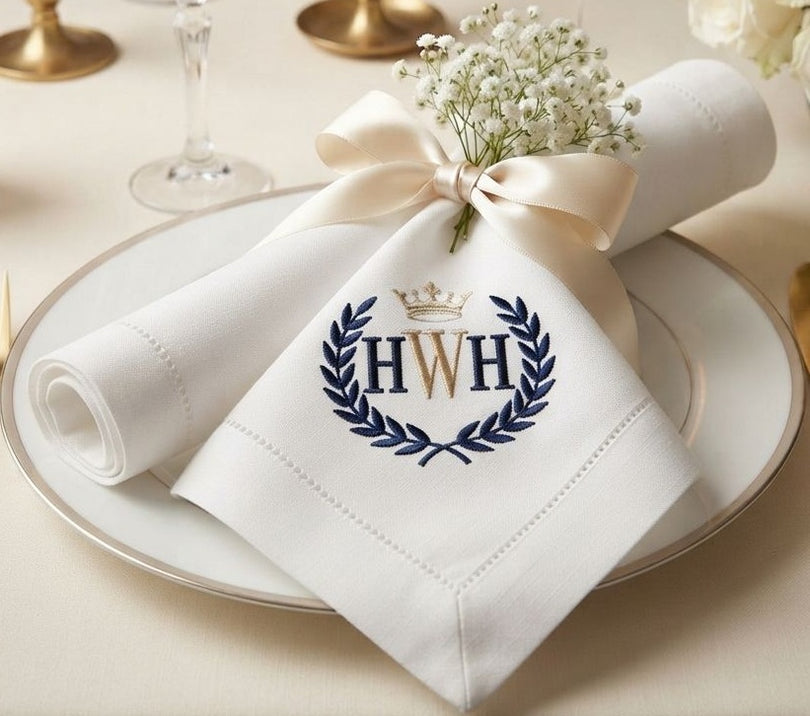
Placement: The most common spot is one corner, roughly 2 inches in from the corner point, so the monogram shows when the napkin is folded into a rectangle or triangle. A centered monogram works for napkins that are folded to display the middle, such as on a formal plate setting.
Orientation: Corner monograms are usually stitched on a diagonal so they read correctly when the corner faces the guest, or straight if you fold the napkin into a simple rectangle.
Letter styles:
Single initial: Clean and modern; often the family last name.
Three-letter individual monogram: Traditionally first, last and middle initials, with the larger last-name initial in the center.
Couple's monogram: Often the shared last-name initial in the center, flanked by each partner's first initial.
Before ordering, fold a plain napkin the way you plan to set your table and mark where the monogram should appear. Browse monogram styles and thread colors, or read our full monogram guide. Our custom napkins can be personalized for events and gifts.

How to Style Embroidered Napkins for Any Occasion
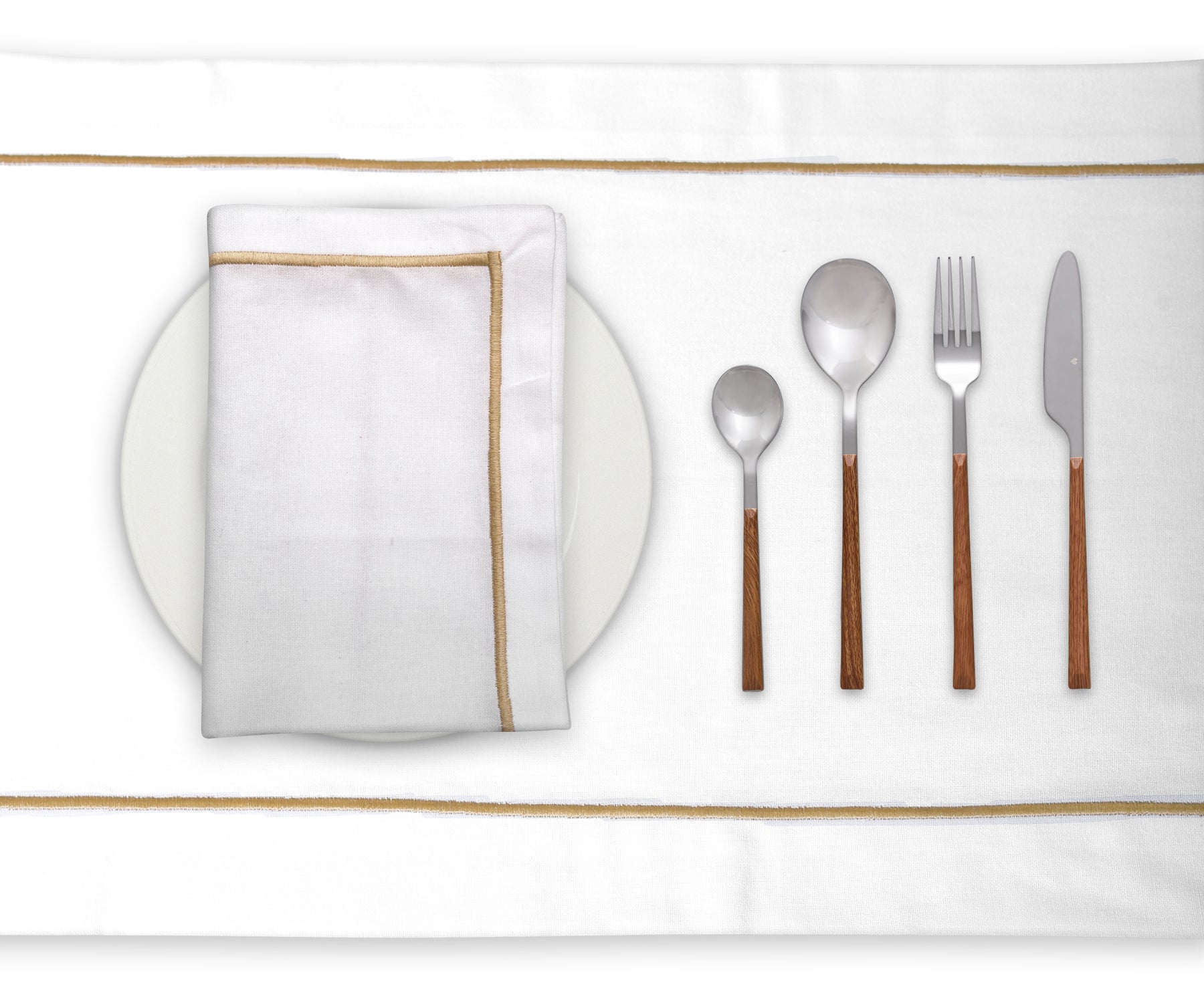
Formal dinner parties: Choose fine, tone-on-tone or deep-colored embroidery (navy, black, gold) and pair it with white or cream plates. Place the napkin on the plate with the design facing the guest.
Brunches and garden parties: Pastel embroidery in blush, sage or sky blue looks fresh with neutral plates and fresh flowers. A napkin ring or a loose roll keeps things relaxed.
Weddings and anniversaries: Monograms with the couple's initials or wedding date double as keepsakes. For larger guest counts, see our wedding napkins and embroidered wedding napkins.
Holidays: Seasonal motifs and phrases set the mood quickly. Our sentiment napkins are made for holiday tables.
Themed events: Coastal motifs suit beach gatherings, while earthy threads on natural fabric fit rustic dinners.
You May Also Like: Linen Cocktail Napkins: Elegant, Sustainable & Stylish for Every Occasion
Simple Folds That Show Off Embroidery
Corner drape: Fold into a square, then let the embroidered corner hang over the plate edge.
Pocket fold: Fold in thirds and tuck flatware into the top pocket. Place the monogram on the front panel.
Fan in a glass: Accordion-fold and set it in a wine glass, with the embroidered edge at the top.

Pairing With the Rest of Your Table
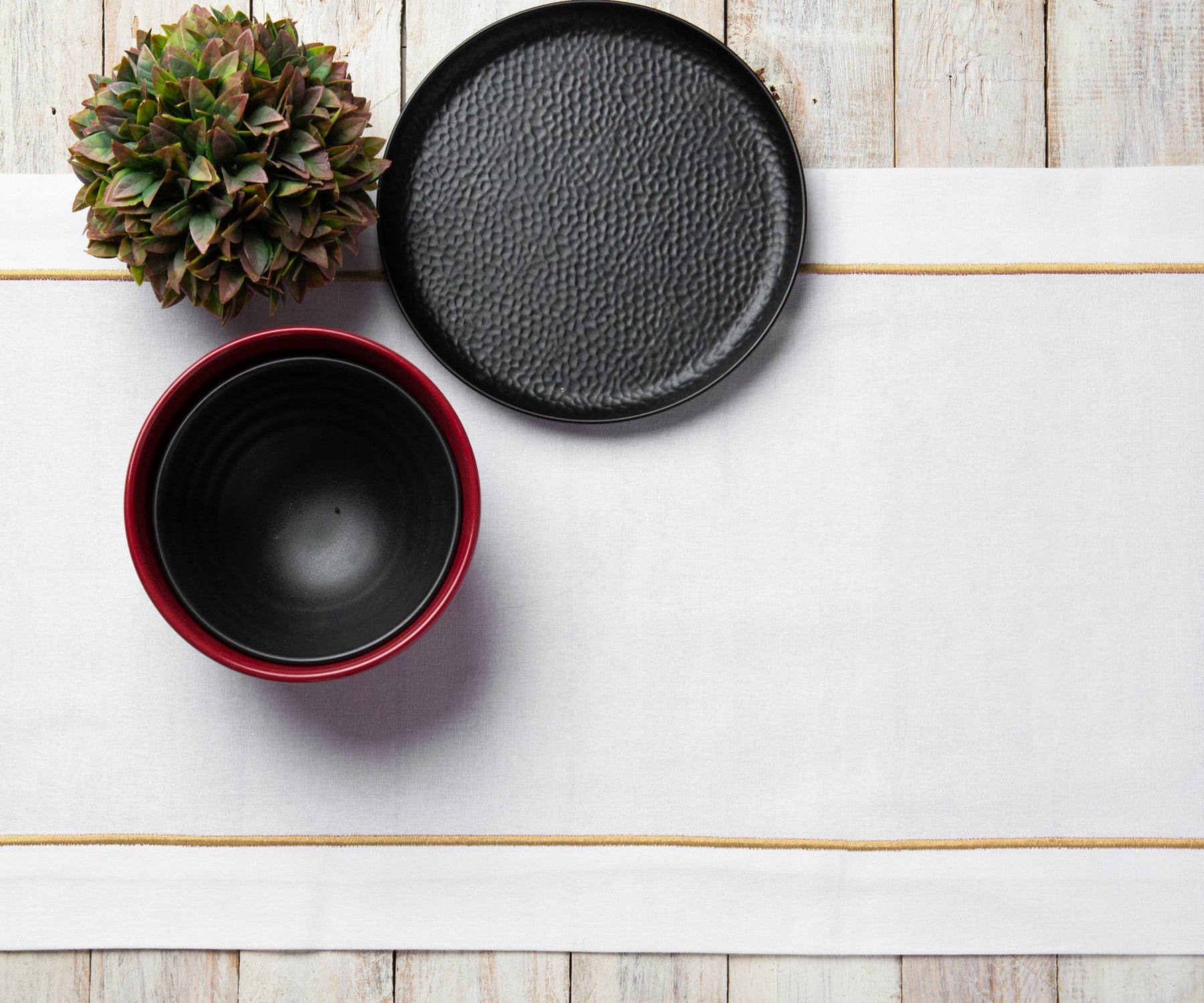
Balance is everything. If the napkins are richly embroidered, keep the tablecloth and plates simple. If the napkins are subtle, you have room for a patterned runner or colorful dishes. Embroidered napkins on textured linen placemats create a layered, high-end look without much effort.
A practical tip from experienced hosts: For saucy dishes, keep a set of plain, washable napkins on hand as a backup. Your embroidered napkins stay beautiful, and guests don't feel nervous about using them.
How to Wash and Care for Embroidered Napkins
Treat stains right away. Blot (don't rub), then rinse from the back with cool water. Fresh stains are much easier to remove than set ones.
Wash cool and gentle. Use cold or cool water, a gentle cycle and a mild detergent. Hand washing is the gentlest option for delicate or hand-stitched designs. Always follow the care label.
Skip chlorine bleach. It can weaken fibers and fade colored thread. On embroidered napkins, be extra careful with any whitening product.
Use a mesh laundry bag to reduce snagging on other items.
Air-dry or tumble on low. High heat can shrink fabric around the stitching and cause puckering.
Iron from the back. Lay the napkin embroidery-side down on a folded towel and press while slightly damp. The towel cushions the stitches so they stay raised instead of flattened. A pressing cloth adds protection.
Store flat or loosely rolled in a dry place, rather than tightly creased through the design.

Embroidered Napkins vs Paper Napkins
Paper napkins are used once and thrown away; embroidered cloth napkins are washed and reused for years. They also change the feel of a meal: guests notice the detail, and a monogrammed set can become part of family traditions. If sustainability matters to you, read our comparison of cloth napkins vs paper napkins.
The Bottom Line
Embroidered napkins bring warmth and personality to the table when you choose the right fabric, check the embroidery quality and care for them gently. Cotton is the easy everyday option; linen gives a relaxed, elevated texture; and a corner monogram turns either into something worth keeping.
Explore our embroidered napkin collection or start a personalized set with our custom napkins.
Shop Embroidered Napkins at All Cotton and Linen
www.allcottonandlinen.com