

What Is a Fitted Sheet?
A fitted sheet is the base layer of your bed. It has elasticated corners, and in better-quality versions, an elasticated band running all the way around that grips the mattress and holds the sheet firmly in place throughout the night. It sits directly over the mattress or mattress protector and is the first fabric layer you build your bed on.
Fitted sheets come in standard sizes, single, double, queen, king, and super king, and in varying pocket depths to accommodate different mattress thicknesses. If you have a deep-pocket mattress (12 inches or more), always check the pocket depth before buying. A fitted sheet that's too shallow will pop off the corners during the night, which is one of the most frustrating bedding problems to deal with.

What to look for in a fitted sheet:
-
Deep pocket depth (15 inches or more for thicker mattresses)
-
All-around elastic for a secure fit
-
Pre-washed fabric to prevent shrinkage after the first wash
-
Breathable natural fiber linen or cotton for temperature regulation
What Is a Flat Sheet?
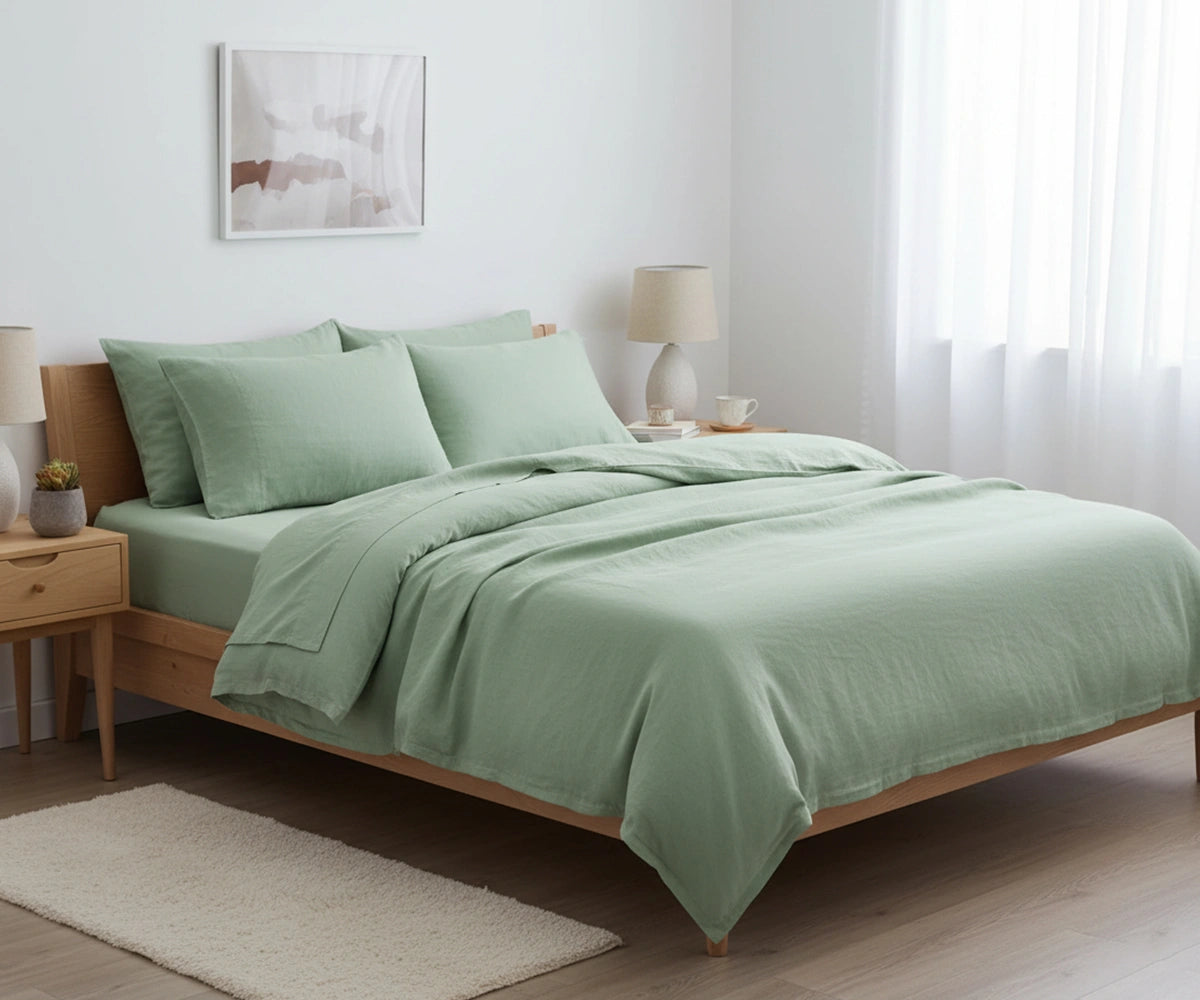
A flat sheet, also called a top sheet, is a large rectangular piece of fabric placed on top of the fitted sheet and beneath your duvet or blanket. It creates a clean, breathable barrier between your body and the duvet cover, which means your duvet stays fresher for longer and needs washing less frequently.
Flat sheets are more popular in North American and European bedding traditions. In some households, particularly in the UK and Australia, many people skip the flat sheet entirely and sleep directly under a duvet cover. There is no right or wrong answer — it comes down entirely to what feels comfortable for you.

Benefits of using a flat sheet:
-
Adds a soft, smooth layer next to your skin
-
Reduces how often you need to wash the duvet cover
-
Provides an extra layer of warmth in cooler months
-
Easy to fold back for a hotel-style bed presentation
Read On: A Creative Fitted Sheet Folding: 5 Hacks to Try
Flat vs Fitted Sheets: Key Differences at a Glance
|
Feature |
Fitted Sheet |
Flat Sheet |
|
Position on the bed |
Over the mattress |
Over the fitted sheet |
|
Has elastic |
Yes — corners or all-around |
No |
|
Purpose |
Protects the mattress, stays in place |
Barrier between body and duvet |
|
Washing frequency |
Weekly |
Weekly |
|
Used in hotel beds |
Always |
Almost always |
|
Optional or essential |
Essential |
Personal preference |
|
Best material |
Linen or cotton percale |
Linen or cotton sateen |

Do You Really Need Both?
This is the most-asked bedding question, and the honest answer is that a fitted sheet is non-negotiable, but a flat sheet is optional.
A fitted sheet is always necessary. Without it, your duvet or blanket sits directly on the mattress, which is both uncomfortable and unhygienic. It needs washing far more frequently than most people want to deal with.
A flat sheet, on the other hand, is a genuine personal choice. Here is how to decide:
Use a flat sheet if you:
-
Prefer a smooth, cool layer directly against your skin
-
Want to reduce how often you wash your duvet cover
-
Like the clean, layered look of a hotel-style bed
-
Sleep in a warm climate where a duvet feels too heavy
-
Enjoy the extra styling detail a folded-back flat sheet creates
Skip the flat sheet if you:
-
Find it bunches up or comes untucked during the night
-
Prefer the simplicity of fewer layers
-
Sleep cold and want maximum duvet contact
-
Live in a cooler climate where extra warmth matters more
The Best Materials for Fitted and Flat Sheets
The material you choose for your sheets affects how they feel, how long they last, and how well they regulate your temperature at night. Here are the top options:

|
Material |
Feel |
Best For |
Care |
|
European Flax Linen |
Textured, softens with washing |
Hot sleepers, all climates |
Machine wash cold, air dry |
|
Cotton Percale |
Crisp, cool, matte |
Warm sleepers, everyday use |
Easy machine wash |
|
Cotton Sateen |
Silky, smooth, slight sheen |
Softness seekers, cooler months |
Gentle machine wash |
|
Organic Cotton |
Soft, breathable, chemical-free |
Sensitive skin, eco-conscious |
Machine wash cold |
|
Cotton-Linen Blend |
Balanced texture and softness |
Versatile year-round use |
Machine wash gentle |
For hot sleepers or warm climates, linen and percale cotton are the clear top choices. Both allow airflow that keeps you cool through the night. For those who prioritize immediate softness over breathability, sateen cotton delivers a luxurious feel from the very first use.
Related Articles: Will Full Sheets Fit a Queen Bed?
How to Choose the Right Sheet Size
Getting the size right is just as important as getting the material right. A flat sheet that's too small won't tuck properly. A fitted sheet that's too shallow will pop off the mattress corners during the night.
Standard sheet sizes guide:
|
Bed Size |
Fitted Sheet |
Flat Sheet |
|
Twin / Single |
39 x 75 inches |
66 x 96 inches |
|
Full / Double |
54 x 75 inches |
81 x 96 inches |
|
Queen |
60 x 80 inches |
90 x 102 inches |
|
King |
76 x 80 inches |
108 x 102 inches |
|
California King |
72 x 84 inches |
108 x 102 inches |
Always check your mattress depth before ordering a fitted sheet. Standard depth is 8–12 inches. Deep-pocket mattresses run 12–16 inches. Extra-deep mattresses go 16–22 inches. All Cotton and Linen's fitted sheets are designed with generous pocket depth to accommodate most mattress types.
How Thread Count Affects Your Sheets
Thread count is one of the most misunderstood terms in bedding. Higher does not automatically mean better; in fact, thread counts above 800 often use multi-ply threads to inflate the number, resulting in denser, less breathable fabric that feels heavy rather than luxurious.
The real thread count guide:
|
Thread Count |
Quality Level |
Feel |
|
Under 200 |
Basic |
Rough, less durable |
|
200–300 |
Good everyday |
Comfortable, breathable |
|
300–500 |
Premium |
Soft, durable, well-balanced |
|
500–600 |
Luxury |
Exceptionally soft and smooth |
|
Above 800 |
Often misleading |
Can feel dense and less breathable |
For linen sheets, thread count is not a relevant measure at all. Look for GSM weight instead. 120–175 GSM is ideal for year-round use in most climates.
Caring for Your Flat and Fitted Sheets
Proper care makes a significant difference in how long your sheets last and how good they continue to feel.
Washing:
-
Machine wash in cold or warm water (max 40°C) on a gentle cycle
-
Use a mild, pH-neutral detergent — avoid bleach and fabric softener
-
Wash sheets separately from heavy items like towels or denim
Drying:
-
Tumble dry on low heat — remove slightly damp to reduce wrinkles
-
Line drying is ideal, especially for linen — sunlight naturally freshens the fabric
-
Never over-dry, particularly linen, which becomes brittle under high heat
Storing:
-
Store folded flat or rolled in a breathable cotton bag
-
Avoid plastic storage, which traps moisture and can cause mildew
-
Keep in a cool, dry place away from direct sunlight for long-term storage
How often to wash:
-
Fitted sheets and flat sheets: every 1–2 weeks
-
Pillowcases: every week, more frequently for allergy sufferers
Flat Sheet vs Fitted Sheet: Which Should You Buy First?
If you are building a new bed from scratch, always start with the fitted sheet. It is the non-negotiable foundation of every well-made bed. From there, add a flat sheet if you prefer layers and a clean barrier between your body and the duvet. Complete the set with pillowcases in a matching material and colour.
All Cotton and Linen sells fitted sheets, flat sheets, and pillowcases individually or as complete linen bedding sets, so you can build exactly the combination that suits your sleep style and bedroom aesthetic.
Overview
Whether you use a flat sheet, a fitted sheet, or both, what matters most is the quality of the fabric you choose. Natural fibers breathe better, last longer, and feel better against your skin night after night. All Cotton and Linen's bedding collection brings you premium cotton and linen sheets in every size, style, and color, built for real comfort and real longevity. → Shop Fitted Sheets, Flat Sheets & Complete Bedding Sets at All Cotton and Linen