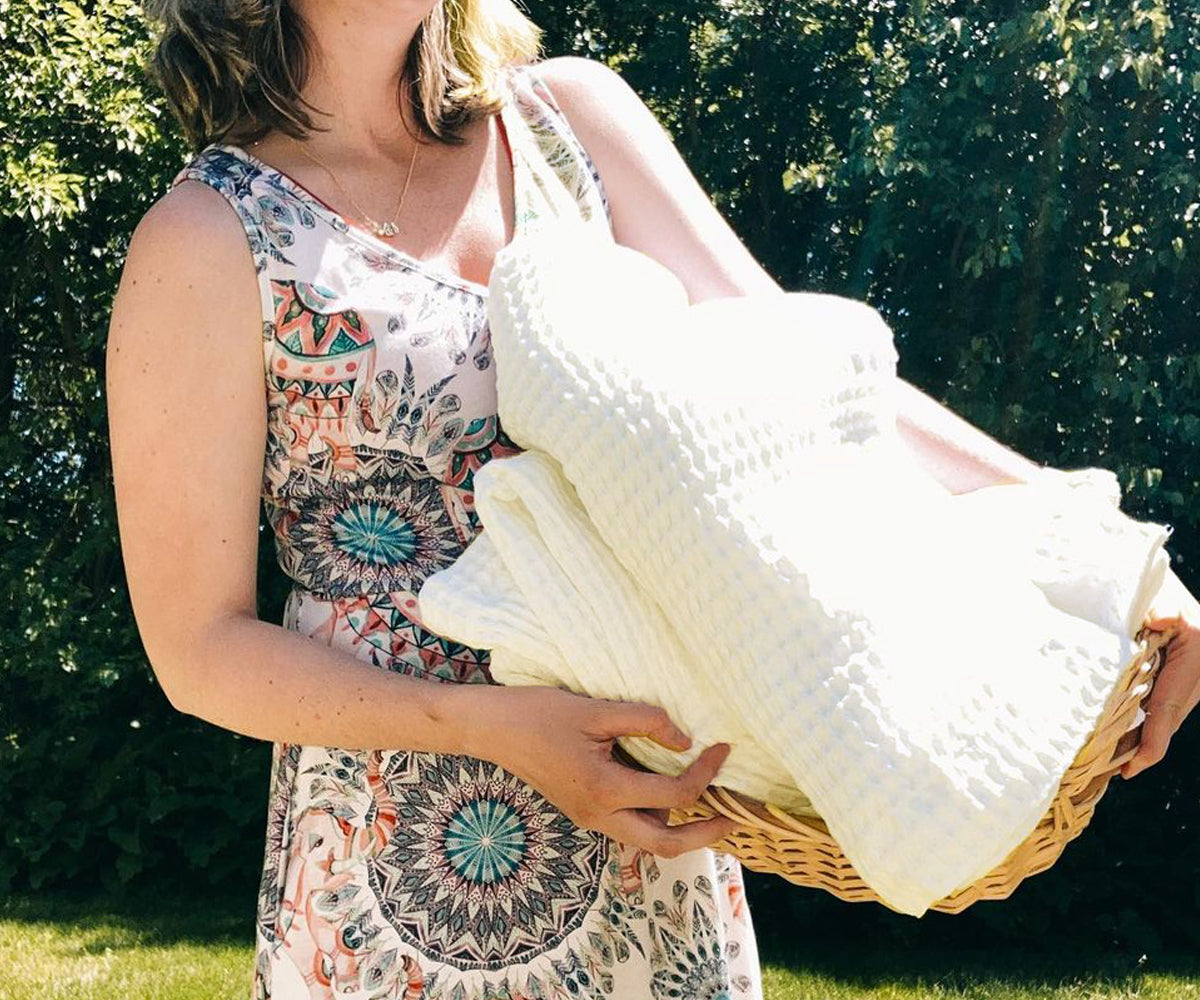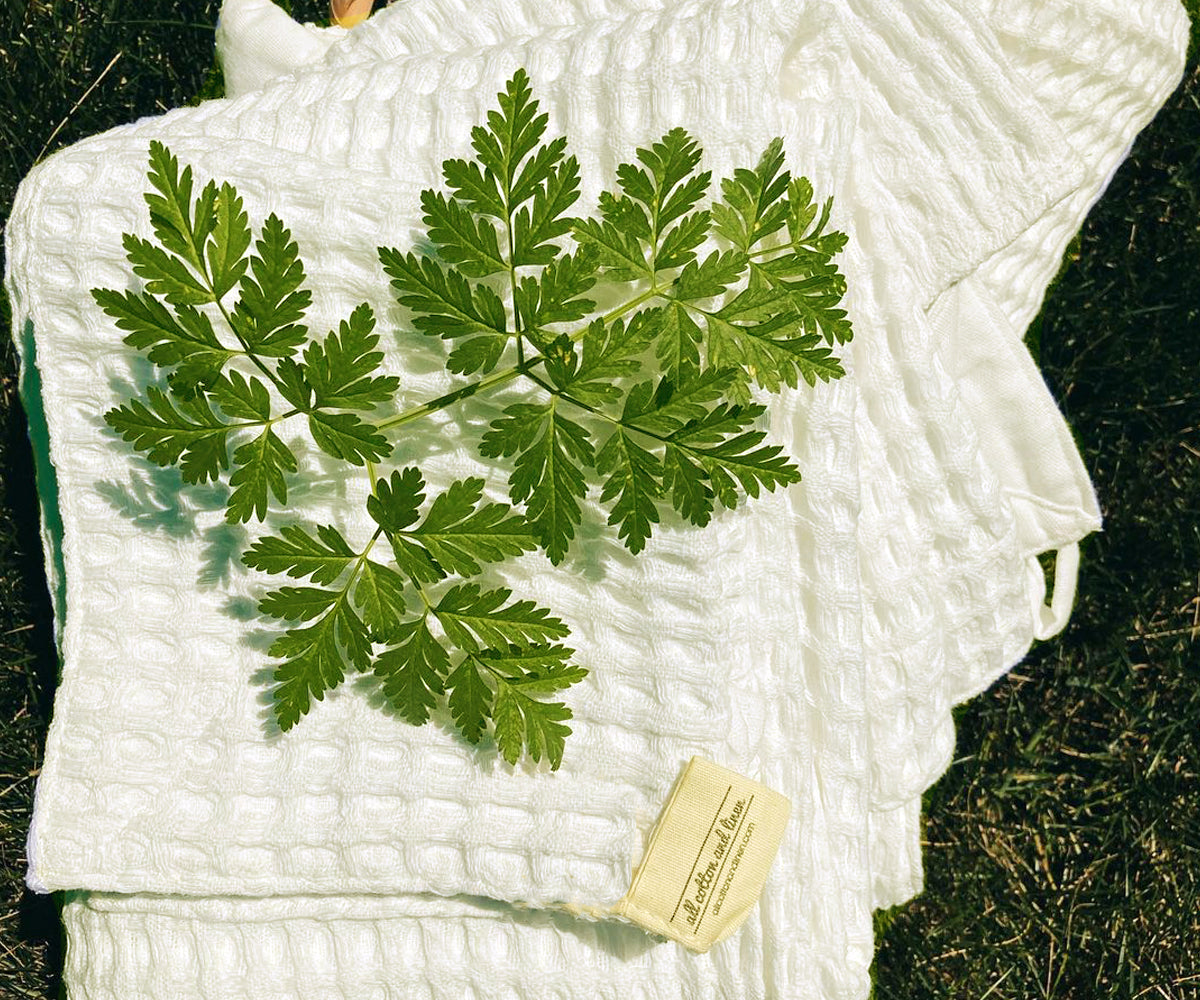


A well-folded towel does more than look neat. It protects the pile of the fabric by preventing compression creases that develop from tight folding. It makes the most of the available shelf and closet space. It keeps the bathroom looking considered rather than chaotic. And for households where guests see the towels on display, it communicates the same standard of care that five-star hotels and spas communicate with the same simple technique.
The good news is that towel folding is not complicated. Every method in this guide takes under two minutes per towel once learned, works with any cotton bath towel regardless of size, and produces a result that is meaningfully better than the improvised fold that most households default to.
This guide covers six folding methods in full step-by-step detail, a complete storage guide for different bathroom layouts, a display guide for open shelving and towel bars, and the care tips that keep cotton towels looking their best through years of regular washing.
Why the fold matters for cotton towels
Before the techniques, it is worth understanding why folding correctly matters beyond aesthetics.
Cotton towels are made from looped terry pile, thousands of individual cotton loops that create the absorbent, soft surface of the towel. When towels are folded too tightly or compressed on overfull shelves, these loops are flattened, and the pile gradually loses the loft and softness that makes a quality cotton towel feel genuinely luxurious.
Folding with consistent, even folds without twisting or forcing the towel into a compressed space preserves the pile between washes. Combined with proper washing and drying technique, correct folding is one of the simplest ways to extend the life and maintain the quality of a cotton towel collection.
Method one: The classic tri-fold
Best for: Linen closets, bathroom cupboards, stacking on shelves, and everyday storage.
This is the most widely used bath towel fold in home settings. It produces a neat, consistently sized rectangle that stacks easily and makes the best use of shelf depth.

Step 1: Lay the towel flat on a clean surface with the longer edge running left to right.
Step 2: Fold the right third of the towel inward toward the centre, so the right edge meets approximately the centre line.
Step 3: Fold the left third over the top of the right fold, so the left edge aligns with the right edge. The towel is now folded in thirds lengthwise into a long rectangle.
Step 4: Fold the towel in half widthwise, bringing the short top edge down to meet the short bottom edge.
Step 5: Fold in half widthwise once more to create a compact, thick rectangle.
Step 6: Place on the shelf with the folded edge facing outward. The folded edge is the cleanest-looking side and should always face the front.
Result: A compact, stackable rectangle that takes up minimal shelf depth and maintains its shape in storage.
Read More: How to Make an Easter Basket: Simple & Fun DIY Ideas
Method two: The deep fold
Best for: Wide shelves, displaying folded towels in a bathroom, creating a layered effect on open shelving.
The deep fold produces a wider, slightly flatter rectangle than the tri-fold — it takes more shelf width but creates a generous, spa-like appearance that works particularly well for open shelving displays.

Step 1: Lay the towel flat with the longer edge running left to right.
Step 2: Fold the towel in half lengthwise, bringing the top long edge down to meet the bottom long edge.
Step 3: Fold in half lengthwise again, bringing the top folded edge down to meet the bottom edge.
Step 4: Fold the towel in thirds widthwise: bring the right third inward, then fold the left third over the top.
Step 5: Place on the shelf with the folded edge facing outward.
Result: A wider, flatter rectangle that sits beautifully on open shelves and bathroom ledges. The three-layer construction gives it a full, generous appearance.
Method three: The narrow fold
Best for: Small linen cupboards, bathroom vanity drawers, spaces where shelf width is limited.
The narrow fold is the most space-efficient fold available. It produces a slim, tall rectangle that takes minimal horizontal space, ideal for tightly organised storage or for vertical stacking in deep, narrow shelving.

Step 1: Lay the towel flat with the longer edge running left to right.
Step 2: Fold the towel in half lengthwise.
Step 3: Fold in half lengthwise again to create a long, narrow strip.
Step 4: Fold the top edge down to the two-thirds point of the strip.
Step 5: Fold the bottom edge up over the top fold, so the bottom edge aligns with the top.
Step 6: Stand the folded towel vertically or lay it flat on a narrow shelf with the folded edge facing outward.
Result: The most compact fold of the six methods. Takes up minimal horizontal space and works well for deep, narrow storage.
Method four: The spa roll
Best for: Display baskets, countertop bowls, open wicker baskets, guest bathroom display, and decorative bathroom styling.
The spa roll is the signature of hotel and spa aesthetics, and it is genuinely the most space-efficient display fold available for rolled storage. Rolled towels in a basket or on a counter communicate quality and care immediately.

Step 1: Lay the towel flat with the longer edge running left to right.
Step 2: Fold one long edge up toward the centre by approximately four inches, creating a narrow cuff along the bottom of the towel.
Step 3: Fold the towel in half lengthwise, with the cuff on the outside.
Step 4: Starting from one short end, roll the towel tightly and evenly toward the opposite short end. Keep consistent tension throughout; too loose, and the roll loses its shape; too tight, and it compresses the pile.
Step 5: When you reach the end, tuck the final edge into the cuff fold to secure the roll without elastic or fastening.
Step 6: Place in a basket, on a counter, or on an open shelf with the spiral end of the roll facing outward.
Result: A firm, neat cylinder that stacks beautifully in baskets and on countertops and holds its shape without any fastening.
Method five: The hotel fold
Best for: Towel bars, towel rails, hanging display in bathrooms.
The hotel fold is specifically designed for hanging. It creates a single clean folded edge at the front when the towel is draped over a bar, and hides all raw edges and the manufacturer's tag from view.

Step 1: Lay the towel flat with the longer edge running left to right.
Step 2: Fold the towel in thirds lengthwise: right third inward, left third over the top, as in the tri-fold method.
Step 3: Hold the folded towel horizontally and fold in half widthwise, bringing the two short ends together.
Step 4: Drape the folded towel over the towel bar with the folded edge facing toward you and the open edges at the back.
Result: A clean, symmetrical hang with no raw edges visible from the front. The fold creates a uniform, polished appearance on any towel bar or rail.
A note on displaying hand towels alongside bath towels on a towel bar: the most considered display layers a folded bath towel first on the bar, then a hand towel draped across the lower third of the bath towel, with a washcloth folded and placed across the centre of the hand towel. This creates a cascading, layered effect that is the standard in high-end hospitality settings.
Method six: The fan fold
Best for: Decorative display in guest bathrooms, open shelving as a styling accent, special occasion presentation.
The fan fold is the most visually dramatic of the six methods and takes slightly more time than the others, but the result is genuinely impressive, a standing fan shape that sits beautifully on a shelf edge or bathroom surface.
Step 1: Lay the towel flat with the longer edge running left to right.
Step 2: Starting at one short edge, fold the towel in accordion pleats of approximately two inches each, alternating the fold direction at each pleat.
Step 3: Once the full towel is pleated, fold the entire fan in half across the centre, bringing both pleated ends upward.
Step 4: Wrap a small length of ribbon, twine, or a napkin ring around the folded base to hold the shape.
Step 5: Stand the fan upright on a shelf or bathroom surface and allow the pleated top to open and fan outward.
Result: A dramatic, decorative fan shape that works as both a display piece and a functional folded towel. Best reserved for guest bathrooms and occasions rather than everyday storage.
Find Out: How to Dye Easter Eggs: A Fun and Easy Guide
Storage guide by bathroom type
|
Storage type |
Best fold |
Why |
|
Deep linen closet |
Classic tri-fold |
Stacks compactly, makes best use of depth |
|
Open bathroom shelving |
Deep fold or spa roll |
Generous appearance, works on display |
|
Small bathroom vanity |
Narrow fold |
Space-efficient, fits narrow shelves |
|
Wicker basket or bowl |
Spa roll |
Cylindrical shape fits the basket contours naturally |
|
Towel bar or rail |
Hotel fold |
Creates a clean front edge for hanging |
|
Guest bathroom display |
Fan fold or spa roll |
Decorative and welcoming |
How many towels should be kept in the bathroom
A practical household guide to towel quantities:
For one person: two bath towels, one in use, one fresh. Add a third if laundry is not done weekly.
For two people: four bath towels, minimum two in use, two clean and stored. Six allows for a more comfortable rotation.
For a family of four: eight to twelve bath towels. Enough for two sets per person with rotation between washes.
For guest bathrooms: two freshly laundered, neatly folded bath towels per expected guest, plus two hand towels per guest.
Rotating the stock means the same towels do not sit folded on a shelf for weeks at a time, a useful habit for maintaining the freshness and condition of the pile.
Care tips that make every fold look better
Towels that are properly cared for fold more neatly and hold their shape better than towels that have been over-dried, over-detergented, or stored while still slightly damp.
Shake each towel vigorously before placing it in the dryer. This re-lofts the pile after washing and prevents the matted, flat surface that produces a messy-looking fold, regardless of the technique used.
Dry on medium heat and remove from the dryer while still slightly warm. Over-drying compresses the pile and makes the towel stiff. Folding while slightly warm allows the fabric to settle into its shape rather than being forced.
Avoid fabric softener. Fabric softener coats the cotton loop fibres with a chemical layer that reduces absorbency over time. For both performance and fold quality, a half cup of white vinegar in the rinse cycle is a better alternative, as it softens naturally without reducing absorbency or leaving residue.
Store completely dry. A towel folded and stored while even slightly damp will develop mildew. If in any doubt about dryness after removing from the dryer, air the towel over a door or rack for thirty minutes before folding and storing.
Folding a bath towel correctly takes under two minutes and makes a visible difference to the organisation, appearance, and longevity of a towel collection. The method that works best depends on where the towel is going: the tri-fold for the closet, the hotel fold for the bar, the spa roll for the basket, the fan fold for a guest bathroom that deserves a moment of theatre.
Overview
What makes the difference across methods is the quality of the fabric being folded. A well-made cotton towel with a generous, lofted pile and a weight that holds shape folds cleanly and looks considered regardless of the method used. A thin, low-quality towel looks underwhelming in any fold.
At All Cotton and Linen, our cotton towel collection is made from quality natural cotton that is absorbent, durable, and with a pile that holds its loft through years of regular washing. The kind of towel that looks as good folded on a shelf as it feels in use.