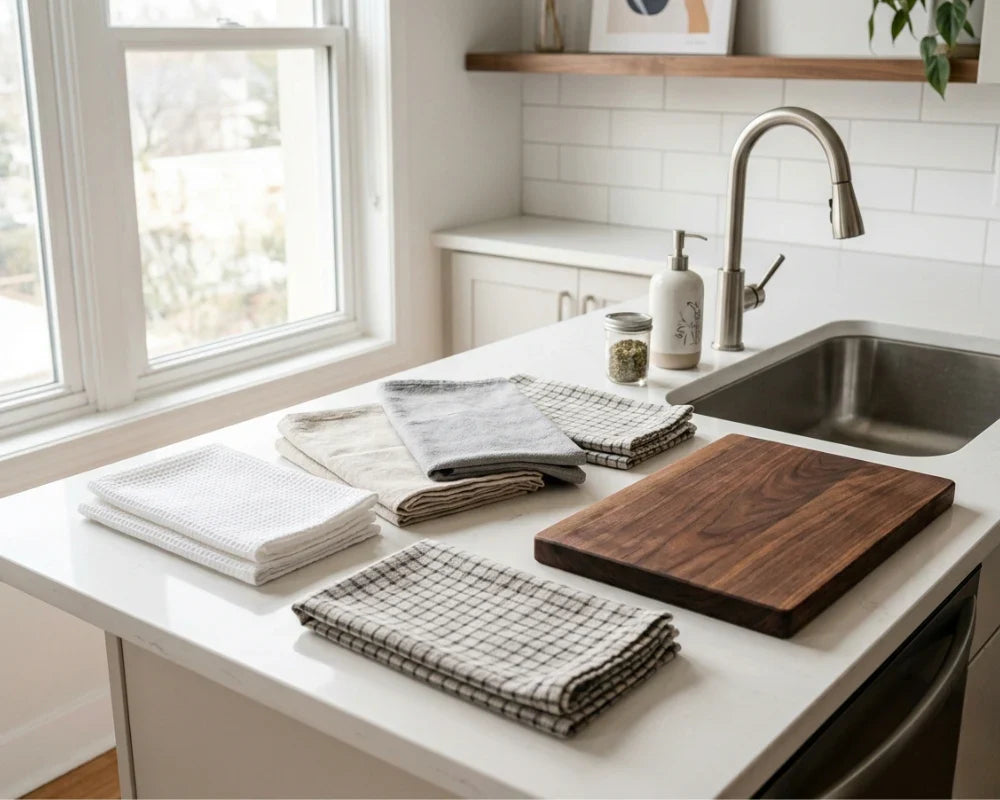


This guide covers everything you need to know about choosing and styling dining table placemats. From selecting the right placemat size and pattern to finding the best colors for dark wood tables, matching shapes to oval tables, and creating a well-balanced table setting, you will learn how to make placemats work beautifully in your space.
Why Placemats Are Still a Popular Choice for Home Dining
Yes, placemats remain a popular and practical choice in 2026. As more people focus on comfortable, everyday dining and casual entertaining at home, placemats continue to play an important role in table décor.
While traditional tablecloths are used less often for daily meals, placemats have become the go-to option for adding color, texture, and structure to a dining table. They help define each place setting while protecting the table from spills, heat, and scratches.
The trend today is less about perfectly matched formal sets and more about personal style. Natural cotton and linen placemats, textured weaves, subtle embroidery, scalloped edges, and mix-and-match designs are all popular choices. Seasonal colors and layered table settings also allow homeowners to refresh their dining space throughout the year.
A set of thoughtfully chosen placemats can instantly make a dining table feel more polished and inviting. Whether placed on a rustic farmhouse table or a modern wood dining surface, placemats add character and create a finished look that feels current rather than outdated.

Standard Placemat Dimensions: What Size Do You Need?
Getting the size right is the most practical decision in placemat shopping. A placemat that is too small makes the place setting look unsupported, and the table feels underdressed. One that is too large overlaps with neighbouring settings and crowds the table visually.
What are the dimensions of a placemat?
The most common standard placemat size is 12 x 18 inches for rectangular mats and 14 x 17 inches for oval mats. These dimensions accommodate a standard dinner plate (10 to 11 inches in diameter) with a visible placemat border on all sides, plus space for cutlery and a glass.
What is the standard size of a placemat?
12 x 18 inches is the widely accepted standard for rectangular placemats. Round placemats are typically 15 inches in diameter. Oval placemats measure approximately 14 x 17 inches. These proportions work for most standard dinnerware and table configurations.
|
Placemat Shape |
Standard Dimensions |
Best Table Type |
Seats Per Table |
|
Rectangular |
12 x 18 inches |
Rectangular, square |
4 to 8 |
|
Oval |
14 x 17 inches |
Round, oval |
4 to 6 |
|
Round |
15-inch diameter |
Round, square |
2 to 6 |
|
Square |
14 x 14 inches |
Square, modern tables |
2 to 4 |
|
Large rectangular |
14 x 20 inches |
Large formal tables |
6 to 10 |
Leave at least one inch of visible table between placemats when setting multiple seats. If settings overlap, go one size smaller.
How to Make Table Placemats: DIY Fabric Guide
Making your own fabric placemats is one of the most accessible sewing projects for the home. You need basic materials, a straight stitch, and about 30 minutes per mat. Here is a straightforward method that produces clean, washable results.
What you need: Cotton or cotton-linen fabric (half a yard covers two standard mats), coordinating thread, scissors or a rotary cutter, a ruler, pins, and a sewing machine.
Step 1: Cut your fabric.
Cut two pieces of fabric per placemat, each measuring 13 x 19 inches. This provides a half-inch seam allowance on all sides, resulting in a finished mat measuring 12 x 18 inches.
Step 2: Place right sides together.
Lay both fabric pieces face to face and pin around the edges. Leave a 3-inch gap on one of the shorter sides. This is where you will turn the mat right side out.
Step 3: Sew around the perimeter.
Stitch along all four edges at a half-inch seam allowance. Clip the corners at a 45-degree angle to reduce bulk, taking care not to cut through the stitching.
Step 4: Turn right-side-out and press.
Push the mat through the gap and use a blunt tool to push out the corners fully. Press flat with an iron.
Step 5: Close the gap and topstitch.
Fold the raw edges of the gap inward and press. Topstitch around the entire perimeter at 1/8 inch for a clean, finished edge.
For a more decorative result, use contrasting thread for the topstitch, add a scalloped edge cut before sewing, or use two different patterned fabrics for the front and reverse side. The guide on DIY fabric placemats has additional techniques and pattern ideas for anyone looking to take the project further.
Also Read: What Are Some Easy and Cheap DIY Decor Ideas That Only Require Items Around Your House?
Choosing Placemat Patterns: What Works and Why

Placemat patterns do most of the decorative work on a bare table. The pattern draws the eye, sets the mood of the meal, and signals the season or occasion. Choosing the right one depends on the base tone of your table and what else is on it.
Solid colours:
The most versatile option. A solid cotton placemat in a neutral tone, beige, sage, navy, or white, works with any dinnerware and any season. Solid placemats benefit from a textured weave or a scalloped edge to avoid looking flat.
Stripe patterns:
Classic and practical. Horizontal or vertical stripes read as relaxed and approachable, which suits everyday family dining well. Stripes in two tones work easily with coloured napkins and plain dinnerware.
Plaid and check:
Strong seasonal associations, particularly for autumn and Christmas. A buffalo check placemat in black and white or red and black adds visual weight and works well at informal gatherings and holiday tables.
Floral and botanical prints:
Work best in spring and summer, or for celebratory meals where a more decorative look is intended. Pair with plain white napkins and simple dinnerware to let the pattern read clearly.
Geometric and modern:
Clean lines, graphic shapes, and high-contrast colour combinations suit contemporary dining rooms and minimalist table settings. These patterns pair well with solid-colour tablecloths where the placemat becomes the primary decorative element.
Embroidered and scalloped:
Add detail through texture rather than print. An embroidered cotton placemat with a scalloped edge looks considered in formal and semi-formal settings without requiring any other decorative addition to the table.
What Colour Placemats Work for a Dark Wood Table?
Dark wood dining tables are one of the most common surfaces on which placemats are used, and they are also one of the most rewarding to style because the contrast between the placemat and table creates a strong visual frame.
Light neutrals work best as a base.
White, ivory, cream, and natural linen all stand out clearly against dark wood and make the individual settings visible and distinct. A white or cream cotton placemat on a walnut or mahogany table creates a clean, high-contrast setting that reads well with almost any dinnerware.
Warm tones build on the wood's natural hues.
Terracotta, rust, mustard, and warm amber pick up the red and orange tones in most dark wood grains. This approach creates a warm, cohesive table without the starkness of a pure white contrast.
Sage and olive green complement dark wood naturally.
Green tones echo the natural, organic character of wood and work particularly well in dining rooms with warm lighting and natural furniture.
Deep jewel tones create a rich, layered look.
Navy, forest green, burgundy, and deep teal all read well against dark wood without disappearing into it. These work best at evening meals and holiday tables where a richer atmosphere is the goal.
Avoid mid-tone browns.
A brown or tan placemat on a dark wood table disappears rather than stands out, producing a flat, underwhelming effect where the setting looks incomplete.
|
Table Tone |
Best Placemat Colours |
Avoid |
|
Dark walnut |
White, cream, ivory, terracotta, sage |
Mid-brown, tan |
|
Dark mahogany |
Ivory, gold, forest green, deep red |
Beige, grey-brown |
|
Black table |
White, cream, bright colours, natural linen |
Very dark tones |
|
Espresso brown |
White, mustard, sage, rust, navy |
Brown, olive-grey |
What Shape Placemats Work for an Oval Table?

Oval tables have a distinctive curved silhouette, and the placemat shapes that complement that curve most naturally are oval and round placemats. Rectangular placemats work on oval tables when the table is large enough to accommodate them without corners hanging over the edge, but they require more careful positioning.
Oval placemats:
The most natural fit for an oval table. The curved shape echoes the table's own lines, creating a cohesive setting where each place looks intentional. Standard oval placemat dimensions of 14 x 17 inches leave visible table surface between settings and suit tables seating 4 to 6 guests.
Round placemats:
Works well on oval tables, particularly for 4-seat configurations where the table's width allows each round mat to sit comfortably without crowding the settings beside it.
Rectangular placemats:
Practical on larger oval tables seating 6 or more. Position them straight on each side of the table's length and at each curved end, angled very slightly to follow the curve.
For a full comparison of shapes and sizing for oval table setups, the guide on DIY fabric placemats includes shaping and sizing notes for non-rectangular tables.
How to Set a Table Setting with Placemats
The table setting placemat arrangement is straightforward when you follow a consistent method. These steps apply to any meal, any table shape, and any number of guests.
Step 1: Lay placemats approximately one inch from the edge of the table at each seat position.
Step 2: Space placemats evenly around the table. For rectangular tables, position one mat per seat along each long side and one at each end. For round tables, space mats at equal intervals around the perimeter.
Step 3: Place the dinner plate at the centre of the placemat, with at least half an inch of visible placemat border around the plate's edge.
Step 4: Arrange cutlery on the placemat beside the plate. Forks go to the left, knives and spoons to the right.
Step 5: Place the folded napkin on the plate or to the left of the fork. Cotton napkins paired with solid or patterned placemats are the quickest way to bring the setting together visually.
Step 6: Position glassware above the knife at the upper right of the place setting.
Step 7: Add a centrepiece along the middle of the table at a height that does not interrupt sight lines across the table.
For guidance on napkin folding styles that work with different placemat arrangements, the guide on how to fold napkins for a birthday party covers a range of practical folds for both casual and formal tables.
How to Choose the Best Placemats for Everyday Dining

The placemats that get used most often are the ones that are easy to clean, durable enough to survive regular laundering, and neutral enough to work with everything in the kitchen and dining room.
Cotton placemats cover all three requirements. They are machine washable, become softer and more absorbent with each wash, and are available in solid colours and patterns that suit everyday use. A set of six in a neutral solid colour or simple stripe lasts for years of daily use without losing its shape or colour.
For care guidance, including machine washing temperatures, removing stains, and how to keep fabric placemats looking fresh through regular use, the guide on how to clean fabric placemats covers every material type and cleaning scenario.
For a deeper look at the practical and decorative benefits of placemats in everyday life, the best placemats for everyday dining guide covers material selection, sizing, and setting styles for daily household use.
To Know: How to Choose the Best Striped Napkins for Your Table (2026)
Seasonal Placemat Guide: Rotating Through the Year
One of the most practical advantages of fabric placemats over other table covering options is how easily they rotate with the seasons. A set of six cotton placemats costs less than most table decorations and transforms the feel of the dining space completely.
|
Season and Occasion |
Recommended Placemat Colours |
Best Patterns |
Pair With |
|
Spring and Easter |
Blush, sage, pale yellow, mint |
Floral, solid pastel |
White tablecloth, neutral napkins |
|
Summer |
Aqua, coral, white, bright solid |
Stripe, geometric |
No tablecloth, outdoor setting |
|
Autumn and Thanksgiving |
Rust, amber, terracotta, deep orange |
Plaid, solid, earthy tones |
Warm-toned runner, cloth napkins |
|
Christmas |
Deep red, forest green, gold, ivory |
Plaid, solid, embroidered |
White tablecloth or no cloth |
|
Everyday neutral |
Beige, natural linen, navy, sage |
Solid, simple stripe |
Napkins in complementary colour |
|
Formal and wedding |
White, ivory, natural linen |
Hemstitched, embroidered, scalloped |
Full tablecloth, folded linen napkins |
A base set of six neutral everyday placemats plus one seasonal set for each major holiday (Thanksgiving, Christmas, spring) covers every occasion in a typical household with three sets of six, a practical investment that keeps the table looking current year-round.
Placemats are one of the lowest-effort, highest-impact changes a dining table can receive. The right size, shape, colour, and pattern at each setting pulls a table together in a way that takes three minutes to achieve and is noticed immediately by anyone who sits down. Start with a set of six in a cotton solid or simple stripe, match them to your table's base tone, and rotate with a seasonal set at the occasions that matter most. The result is a table that always looks ready for a meal.
Browse the full range of cotton placemats at All Cotton and Linen, including round placemats, oval placemats, embroidered styles, and seasonal collections in sets of 4 and 6.