

The switch from single-use plastic bags to reusable grocery bags is one of the most straightforward sustainable habits available. It requires no significant lifestyle adjustment, costs very little, and, when the right bag is chosen and actually used regularly, removes hundreds of disposable plastic bags from the waste stream every year.
The challenge is that not all reusable bags are created equal. A non-woven polypropylene bag from a supermarket checkout is technically reusable but does not biodegrade and breaks down into microplastics. A cotton tote that is produced using large amounts of water but has been used for years has a different environmental profile than one used a handful of times before being discarded. The material, the durability, the frequency of use, and the care taken with the bag all shape how sustainable it actually is.
This guide cuts through the complexity. It covers every major reusable bag material: cotton, organic cotton, canvas, jute, mesh, and recycled materials with an honest comparison of their environmental credentials, practical performance, and ideal use cases. By the end, you will know exactly which bag type suits your shopping habits, your sustainability priorities, and your lifestyle.
The reusable bag market in 2026: Why this matters now
The global reusable grocery tote bag market is projected to grow at a 4.5% compound annual growth rate from 2025 to 2035, driven by rising environmental awareness, increasing restrictions on single-use plastic, and growing consumer preference for sustainable shopping solutions. In practice, this growth means more options and more marketing claims that require scrutiny.

Plastic bag restrictions and bans across the UK, EU, Australia, and many US states have accelerated the shift to reusable alternatives. But consumer confusion about which alternative is genuinely better for the environment has grown alongside the market. The honest answer is that any reusable bag is better than a single-use plastic bag as long as it is actually reused.
You May Also Like To Know About Wedding Accessories to Complete Your Look
The sustainability rule that applies to every bag type
Before comparing materials, one principle applies universally: a bag only becomes sustainable through use.
A cotton tote bag requires more energy, water, and resources to produce than a single-use plastic bag. The environmental break-even point, the number of uses at which the cotton bag has a lower environmental impact per use than the plastic bag it replaces, is approximately 131 uses for a conventional cotton bag. For an organic cotton bag, which uses more water in production, the break-even point is higher.

Used once a week for a weekly shop, a cotton tote reaches its break-even point in approximately two and a half years. Used twice a week, it gets there faster. Used occasionally and then discarded, it may never offset the environmental cost of its production.
The practical implication: the best reusable grocery bag is the one you will actually use regularly. A beautifully made organic cotton bag that sits in a cupboard is less sustainable than a simple polyester tote used at every shop.
The best reusable grocery bag materials: a complete comparison
Cotton tote bags
Cotton is the most widely used material for reusable grocery bags, and for most households, it is the most practical natural fibre choice for daily grocery shopping.
Cotton tote bags are:
-
Machine washable essential for bags that carry food, particularly fresh produce, and leaking packaging
-
Strong enough for a full weekly shop, a quality cotton tote handles 15 to 20kg of groceries comfortably
-
Available in sizes suited to every shopping occasion, from small top-up bags to large weekly shop totes
-
Natural and biodegradable cotton breaks down in soil without producing microplastics
-
Soft enough to fold compactly into a pocket or handbag for unplanned shopping
The environmental qualification: conventional cotton is one of the most water-intensive crops in the world, approximately 10,000 litres of water per kilogram of fibre. For households where environmental credentials matter, organic cotton is a meaningfully better choice.
Organic cotton tote bags
Organic cotton is grown without synthetic pesticides, herbicides, or genetically modified seeds. It uses significantly less water than conventional cotton through rain-fed rather than irrigated cultivation, and is processed without the harsh chemical finishes that conventional cotton sometimes involves.

For a reusable grocery bag, the difference between conventional and organic cotton is primarily in the production footprint. The bag itself performs identically; both are machine washable, both are strong, and both are biodegradable. Organic cotton simply arrives at your hands having had a smaller environmental cost in its production.
All Cotton and Linen's organic cotton tote bags are made from 100% organic cotton, machine washable, and designed for the load requirements of everyday grocery shopping generous in size, strong in handle construction, and available in natural undyed tones that do not require chemical dyeing processes.
Canvas tote bags
Canvas is a tightly woven, heavier-weight cotton fabric. It is stiffer and more structured than standard cotton tote fabric, which gives canvas bags more load-bearing capacity and better shape retention under heavy loads.

For heavy shopping, bottles, cans, root vegetables, and bulk items, a canvas bag carries comfortably what a lighter cotton tote can only manage awkwardly. Canvas is also more abrasion-resistant, which matters for bags that are set down repeatedly on rough surfaces.
The trade-off: Canvas is less foldable than lightweight cotton. A canvas grocery bag does not compress into a coat pocket the way a cotton tote does. It is best carried in a car boot or kept as a primary bag rather than a backup.
Read On: Floral Home Decor – Beautiful Spring Flower Ideas
Jute bags
Jute is a fast-growing plant fibre that requires no pesticides and uses minimal water compared to cotton. On raw material credentials alone, jute is the most eco-friendly mainstream bag material available. It is also fully biodegradable, breaking down within two years in soil conditions.
Practical limitations: Jute bags cannot be machine-washed; immersion in water causes the fibres to swell and the bag to lose its shape. They require spot cleaning only. Jute is also less flexible than cotton and canvas, which limits its capacity for heavy or irregular loads.
Best use case for jute: farmers' markets, indoor markets, light shopping, and any occasion where the bag will be used relatively gently and can be spot cleaned rather than fully laundered.
Mesh cotton and organic cotton produce bags
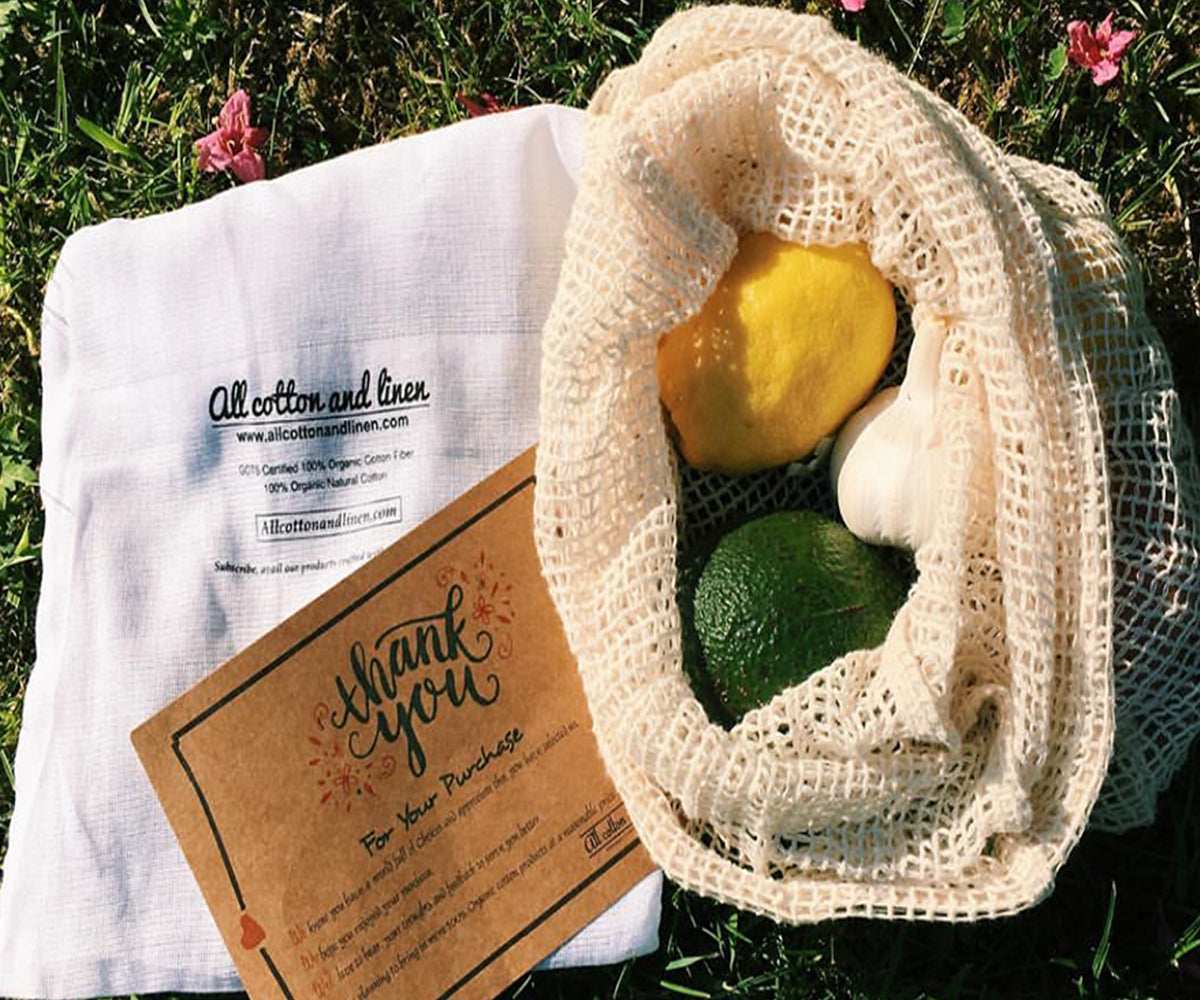
Mesh produce bags are a specific and essential category, not general shopping bags, but dedicated bags for loose fruit, vegetables, and herbs. They replace the small plastic produce bags that accumulate at checkouts and cannot be recycled through standard household collection.

The key properties of mesh produce bags for grocery shopping:
-
Breathable mesh construction keeps produce fresh longer than sealed plastic
-
Lightweight enough that supermarket scales can tare them accurately
-
Machine washable in a mesh laundry bag
-
Drawstring closure keeps loose items contained without sealed packaging
-
Reused a set of four to six mesh produce bags indefinitely covers most regular shopping
Organic cotton mesh is the most sustainable mesh produce bag material, fully natural, biodegradable, and free from synthetic fibres that could be mistaken for microplastics during washing.
Recycled Material Bags
Recycled material bags offer a practical way to reduce waste by giving existing materials a second life. Instead of relying on new raw resources, these bags are made from materials such as recycled plastic bottles (rPET) and recycled cotton.
rPET bags are created by processing used plastic bottles into durable fibres. They are lightweight, strong, and water-resistant, making them a good option for grocery shopping, travel, and outdoor use. While they are not biodegradable, they help keep plastic waste out of landfills and reduce the demand for new plastic production.

Recycled cotton bags provide many of the same benefits as standard cotton bags while requiring fewer new resources. By reusing existing cotton fibres, manufacturers can reduce waste and lower the environmental impact associated with producing new cotton. These bags remain reusable, durable, and suitable for everyday shopping and storage needs.
For consumers looking to make more sustainable choices, recycled material bags offer a balance between practicality, durability, and waste reduction.
Bag types compared at a glance
|
Material |
Washability |
Load capacity |
Foldability |
Biodegradable |
Best for |
|
Organic cotton |
Machine washable |
Very good |
Excellent |
Yes |
Everyday shopping — the most versatile choice |
|
Cotton canvas |
Machine washable |
Excellent |
Moderate |
Yes |
Heavy loads, weekly shop |
|
Jute |
Spot clean only |
Good |
Moderate |
Yes |
Farmers market, light shopping |
|
Mesh (organic cotton) |
Machine washable |
Good (loose items) |
Excellent |
Yes |
Produce, loose items |
|
rPET (recycled plastic) |
Machine washable |
Very good |
Good |
No |
Wet conditions, outdoor, durable use |
|
Standard cotton |
Machine washable |
Very good |
Excellent |
Yes |
Everyday shopping |
|
Non-woven polypropylene |
Hand wash |
Good |
Moderate |
No |
Not recommended — microplastic risk |
Building the right set of reusable bags for your lifestyle
No single bag type covers every shopping occasion. The most effective reusable bag collection for a sustainable lifestyle combines two or three types that complement each other across different shopping needs.
The core everyday set for most households:
Two to three large organic cotton tote bags (for a full weekly shop or large top-up trips), four to six mesh produce bags (for all loose fruit, vegetables, and herbs), and one or two compact cotton fold-up bags (stored permanently in a coat pocket or handbag for unplanned stops).
For households that do a large weekly shop: add one or two canvas bags for the heaviest items, bulk grains, bottles, canned goods, where the extra structure of canvas makes carrying significantly more comfortable.
For households that shop at farmers' markets or local markets: a jute bag or two provides the right aesthetic and practical performance for the type of shopping, lighter loads, carried carefully, and cleaned between uses.
The single most important rule: keep at least one bag with you at all times. A bag that is at home when you need it is not useful. A compact cotton fold-up in the pocket of every coat you wear means you are always equipped, regardless of whether the shopping trip was planned.

How to care for reusable grocery bags
The lifespan of a reusable bag depends almost entirely on how it is cared for. A well-maintained cotton tote used and washed correctly lasts for years. A bag left damp in a boot or stored with food residue inside degrades rapidly and develops mildew.
Cotton and canvas bags: machine wash in cold or warm water on a normal or gentle cycle. Use a mild detergent. Air dry or tumble dry on low. Wash after every three to five uses, or immediately after carrying raw meat, fish, or produce that has leaked.
Jute bags:
Spot clean with a damp cloth and mild detergent. Do not machine wash. Allow to air dry completely before storing.
Mesh produce bags:
Place in a mesh laundry bag and machine wash on a gentle cycle in cool water. Air dry.
All bags: store clean and completely dry. A damp bag stored in a cupboard or boot develops mildew rapidly. If a bag is damp after shopping from wet produce or rain, hang it to air dry before storing.
The best reusable grocery bag for a sustainable lifestyle is the one that fits your shopping habits well enough that you actually use it consistently. A perfect organic cotton bag used occasionally is less sustainable than a simple cotton tote used at every shop.
Start with two or three organic cotton tote bags for everyday shopping, add a set of mesh produce bags to replace plastic produce packaging, and keep a compact fold-up in your coat or bag for unplanned stops. Care for them properly, wash regularly, store dry, return to storage after every use, and they will serve you through years of shopping without producing the waste that their single-use alternatives generate with every trip.
At All Cotton and Linen, our organic cotton grocery bags and mesh produce bags are made from natural, biodegradable fibres designed for daily use, sized for a real weekly shop, and built to last through the regular washing that a food-carrying bag needs.