

Why Are Cotton and Linen the Best Materials for Home Accessories?
Cotton and linen are the two most enduring natural textile materials in home design, and for good reason. They breathe, soften with use, improve with washing, and have a natural warmth that no synthetic material replicates convincingly at close range.
Cotton is soft from the first use, available in every color and pattern, machine washable, and durable through years of daily use. It's the most versatile natural home textile.
Linen is stronger than cotton, naturally lint-free, and develops a relaxed, lived-in elegance over time. It suits formal and casual settings equally and has become the defining fabric of contemporary natural interior design.
Both materials are biodegradable, support sustainable farming when organically certified, and outlast synthetic alternatives by years, making them the most cost-effective home textile investment available.
What Are the Best Cotton and Linen Home Accessories for the Dining Table?
The dining table is where cotton and linen home accessories have the greatest immediate impact. A bare table set with natural linens looks deliberately styled; the same table with synthetic alternatives looks functional at best.
1. Linen tablecloth
A natural linen tablecloth in white, ivory, or cream is the single most transformative dining table accessory. It drapes with fluid elegance, photographs beautifully, and improves with every wash. Use it for everyday dining and formal occasions equally, linen suits both without requiring a change.

2. Cotton checkered tablecloth
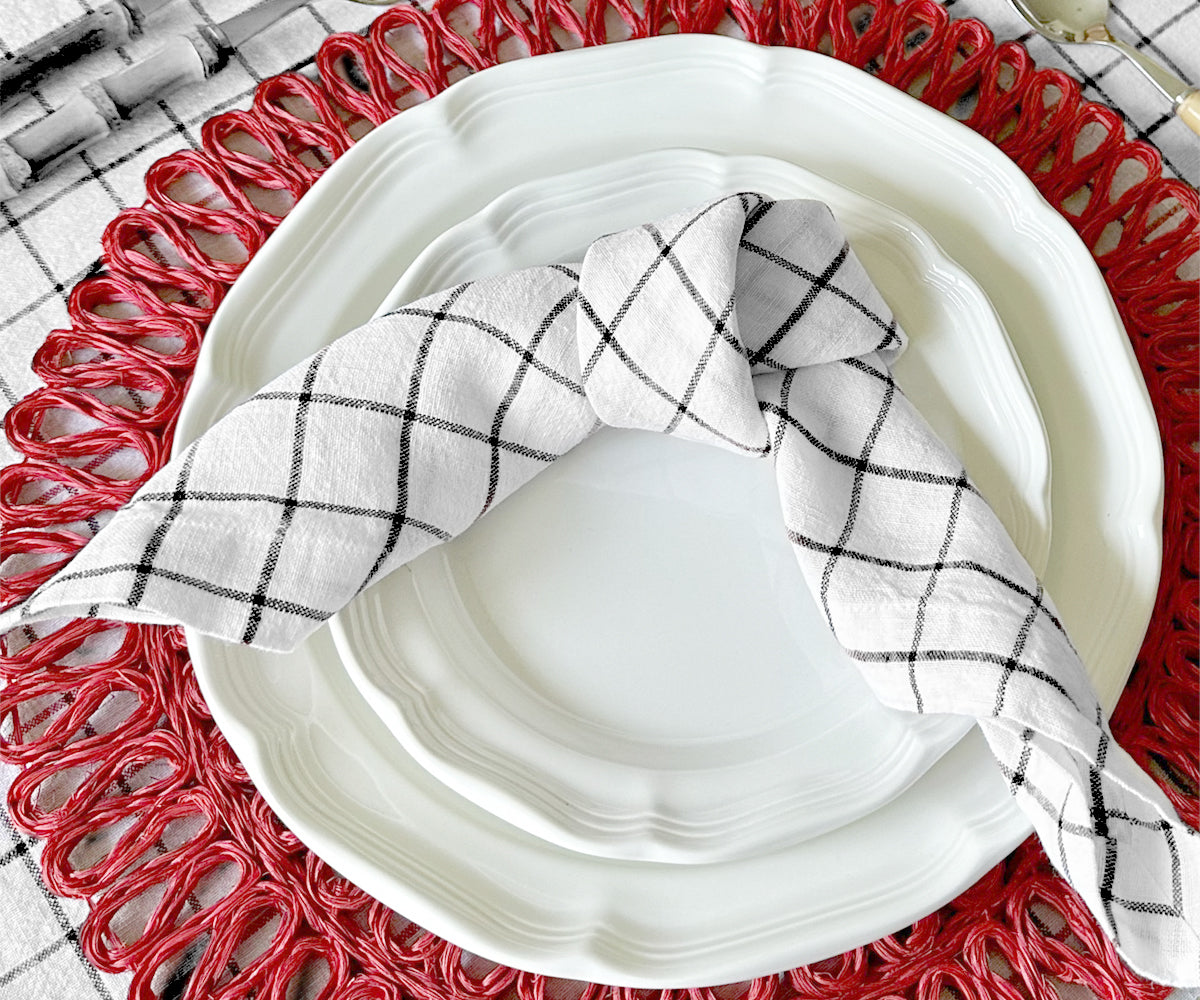
A buffalo check cotton tablecloth in navy and white, red and white, or black and cream brings immediate warmth and character to a kitchen or dining table. Machine washable, durable, and visually strong, the checkered pattern defines the farmhouse and coastal table aesthetics that dominate current dining room styling.
3. Linen table runner
A natural linen table runner placed along the center of a dining table creates a defined visual axis, frames the centerpiece, and shows the table surface on either side a contemporary layered look that a full tablecloth doesn't achieve. Use with or without a tablecloth underneath.
Find About: How to Store Tablecloths: Clever Kitchen Organization Ideas

4. Cotton striped table runner
A French-stripe cotton table runner in beige and cream, navy and white, or sage and natural linen brings pattern and horizontal rhythm to the table. More casual than a plain linen runner, ideal for everyday dining and outdoor entertaining.
5. Hemstitched cotton placemats.
A set of hemstitched cotton placemats at each seat adds a refined hand-finished detail to the table without the commitment of a full tablecloth. Available in white, ivory, cream, and soft neutrals, hemstitched placemats suit everyday and formal use equally.

6. Linen napkins
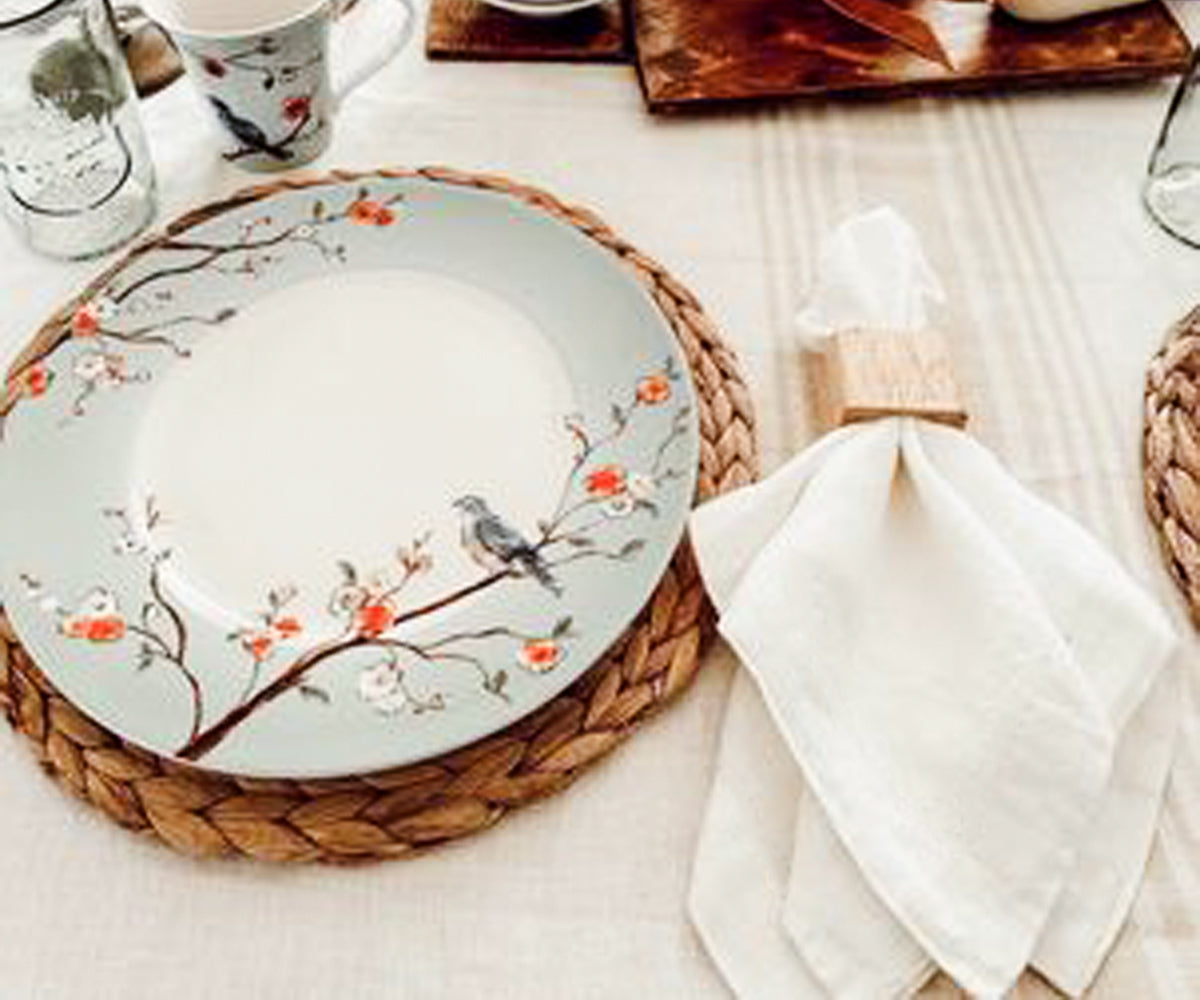
Switching from paper napkins to linen napkins is one of the most immediately felt upgrades at any dining table. They feel better in the hand, look significantly more considered on the table, and eliminate ongoing paper waste. A set of six hemstitched or plain linen napkins in white or a coordinating tone handles everyday and dinner party use.
7. Cotton cloth napkins
Cotton napkins in stripe, check, embroidered, or plain are the more affordable and pattern-versatile everyday alternative to linen. A set of navy and white striped cotton napkins on a natural linen tablecloth creates a coordinated, collected table look.

8. Embroidered napkins
Embroidered cotton or linen napkins carry stitched motifs, florals, monograms, and seasonal designs that make each napkin a decorative object as well as a functional one. Particularly effective for special occasions, holiday tables, and as personalized gifts.
9. Cocktail napkins
Smaller than dinner napkins, cotton cocktail napkins, plain, embroidered, or printed, replace paper cocktail napkins for casual entertaining. A set of cocktail napkins on a bar cart or drinks tray is one of the most underutilized home accessory ideas for hosting.
What Are the Best Cotton and Linen Accessories for the Kitchen?
The kitchen generates more visible textile use than any other room. Towels, bags, aprons, and storage items are constantly in use and constantly visible. Natural cotton and linen outperform synthetic alternatives in every functional measure.
10. Striped cotton kitchen towels
A set of four to six striped cotton kitchen towels in a coordinating colorway is the fastest, most affordable kitchen upgrade available. Hung on the oven handle, folded on the counter edge, or draped over a rack, a well-chosen stripe adds color, pattern, and visual intention to the kitchen's most visible textile positions.

11. Linen kitchen towels
Linen kitchen towels are lint-free, the professional choice for drying glassware, polishing chrome surfaces, and any task where lint on a surface is unacceptable. Keep one or two alongside cotton kitchen towels specifically for glassware.
12. Buffalo check kitchen towels
Buffalo check cotton kitchen towels in navy, and white, red and white, or black and cream are the defining farmhouse and country kitchen textiles. Bold, durable, and machine washable, the pattern is woven in, not printed on, so it maintains its color and definition through repeated washing.

13. Waffle weave kitchen towels
Waffle weave cotton kitchen towels have a textured honeycomb surface that provides more absorbency per unit weight than flat weave, dries faster, and is lint-free. A contemporary choice for modern and minimalist kitchens.
Also Read: Difference between table cover and tablecloth
14. Cotton apron
A cotton or linen apron is one of the most functional and visually pleasing kitchen accessories available. It coordinates naturally with the kitchen's textile palette. A navy apron with navy and white striped kitchen towels creates a complete, intentional kitchen look.

15. Mesh produce bags
A set of organic cotton mesh produce bags replaces single-use plastic at every grocery trip. Kept folded inside the shopping tote, they're always ready, and in the refrigerator crisper drawer, they extend produce freshness by allowing breathable storage instead of sealed plastic.

How Do You Choose the Right Cotton or Linen Home Accessories?
What Should You Prioritize When Buying Home Accessories?
Material quality over quantity. Four excellent cotton kitchen towels outperform twelve cheap ones in every measure: absorbency, durability, appearance, and how the kitchen looks. Apply this logic to every category: fewer, better pieces make more impact than many mediocre ones.
Coordination over matching. The most visually successful natural home textile setups coordinate without being identical. A natural linen tablecloth, hemstitched cotton placemats, and striped cotton napkins in a coordinating tone look more considered than a perfectly matched set of one.
Function first, then appearance.
Every piece on this list is functional before it is decorative. A kitchen towel that looks good but doesn't absorb is a failure. Choose natural fibers because they perform the aesthetic benefit is a consequence of the material quality, not a substitute for it.
Wash before first use.
New cotton and linen accessories benefit from one or two washes before use, which removes manufacturing finishes that reduce initial absorbency in kitchen towels, and softens linen napkins and bedding before their first contact with skin.
How Do You Care for Cotton and Linen Home Accessories?
Cotton accessories (kitchen towels, napkins, tablecloths, placemats, throw blankets): Machine wash at 40–60°C on a normal or gentle cycle. Tumble dry low or air dry. Iron on medium while slightly damp. Avoid bleach on colored or embroidered items. No fabric softener reduces absorbency in towels and napkins over time.
Linen accessories (tablecloths, napkins, curtains, kitchen towels, bedding): Machine wash cold on a gentle cycle with mild liquid detergent. Air dry flat or tumble dry low. Iron on medium-high with steam, while slightly damp linen wrinkles release easily. No bleach, no fabric softener. Add white vinegar to the rinse cycle for natural softening.
Organic cotton bedding: Machine wash cold or warm on a gentle cycle. Tumble dry low. Avoid high heat and bleach. Store folded in a breathable cotton bag, never sealed in plastic.
Overview
The 15 home accessories ideas in this guide cover every room, dining table, kitchen, bedroom, living room, and bathroom using natural cotton and linen to upgrade appearance, comfort, and daily function simultaneously. No renovation required; no designer budget needed. The impact comes from the quality of the material and the consistency of the coordination.
Start with the room where you spend the most time. Add one or two pieces of a linen table runner, a set of cotton kitchen towels, and a cotton throw for the sofa. See how natural fiber changes the feel of the space. Then work through the rest of the list at whatever pace suits your home and your timeline.
Cotton and linen don't date. They improve. That's what makes them the most reliable home accessory investment available.