

This isn't a complicated science topic. Think of color noise the way you think about light. White light contains every color of the spectrum at once. Colored light is just white light filtered some frequencies amplified, others pulled back. Sound works the same way. Color noises are all variations on the full spectrum of sound, each shaped to emphasize different frequencies. And those differences, subtle as they seem, have a real effect on how your nervous system responds at night.
Why Sound Helps You Sleep in the First Place
Before getting into the colors, it helps to understand why any background noise works at all.
Your brain doesn't fully switch off at night. It keeps monitoring your environment for anything that might need your attention a voice, a door, a sudden change in the soundscape. When things are completely silent, small sounds stand out sharply. A creak, a car passing, your partner rolling over these become obvious against total quiet, and they pull you out of lighter sleep stages.
Background noise works by raising your baseline sound level. When everything is at the same steady volume, individual sounds don't stand out as much. Your brain stops flagging them as worth waking up for, and sleep gets deeper and more consistent.
That's the core mechanism. The color of the noise then shapes the quality and feel of that background whether it feels sharp, soft, deep, or natural.
What Is Color Noise for Sleep?
Color noise is a type of continuous background sound used to support relaxation and improve sleep. Different “colors” of noise are created by changing how sound frequencies are balanced, which gives each one a different tone and effect on the brain.
The most common sleep sounds are white noise, pink noise, brown noise, and green noise. Some sounds are sharper and better at blocking outside noise, while others are deeper, softer, or more natural-sounding for relaxation.
These background sounds help mask sudden noises like traffic, snoring, voices, or doors closing, which can interrupt sleep during the night. Studies suggest that steady sound may help people fall asleep faster and reduce sleep disruptions, especially in noisy environments.
White noise is the most widely used option for general sleep support. Pink noise is often linked to deeper sleep quality. Brown noise is calming for stress and anxiety, while green noise creates a softer nature-like atmosphere.
The science around sleep noise continues to grow, but many people already use color noise as part of a consistent bedtime routine to create a quieter and more restful sleep environment.
White Noise for Sleep
White noise contains all audible frequencies played at equal intensity. The result is a steady, static-like sound that most people compare to a fan, an air conditioner, or an untuned radio. It is consistent, predictable, and effective at masking a wide range of sudden noises.

White noise works by raising the ambient sound floor in your room. When a car horn goes off outside, the contrast between the sudden loud noise and the quiet room normally wakes you up. White noise reduces that contrast, so your brain registers the disturbance as less jarring.
Best for: Light sleepers, people who live in apartments, urban environments, anyone who shares a wall with noisy neighbors, and parents helping babies or toddlers fall asleep.
Studies suggest white noise can also improve concentration, reduce symptoms of ADHD, and support people dealing with tinnitus by masking the internal ringing.
One thing to keep in mind: some people find white noise slightly too intense because of the equal presence of high-frequency sounds. If that is you, pink or brown noise may feel more comfortable.
Pink Noise for Sleep
Pink noise uses the same full range of frequencies as white noise, but the lower frequencies are louder. The result is a warmer, softer sound that many people describe as steady rainfall, ocean waves, or a gentle wind through trees.

Dr. Meeta Singh, a board-certified sleep physician, has noted that "pink noise can be beneficial for people who find white noise too harsh or artificial" and that it "may improve sleep quality and support a deeper, more restorative sleep."
What makes pink noise particularly interesting is its connection to deep sleep and memory. A study conducted at Northwestern University found that participants exposed to pink noise during sleep showed improved memory recall the next morning and spent more time in deep, slow-wave sleep. The rhythmic, lower-frequency sound appears to synchronize naturally with the brain waves that occur during deep sleep.
Best for: People who want deeper sleep, older adults, those whose sleep quality has declined, anyone dealing with nighttime stress, and people who find white noise too sharp.
For anyone asking what color noise is best for sleep and anxiety, pink noise is one of the strongest candidates. Its softer tone is less likely to cause agitation and more likely to help a worried mind settle.
To Know: What Mattress Types Are Best Suited for a Storage Bed for 2026
Brown Noise for Sleep
Brown noise, sometimes called red noise or Brownian noise, emphasizes the lowest frequencies even more strongly than pink noise. The sound is deep, rumbling, and bass-heavy. People commonly describe it as a strong waterfall, heavy rainfall, or distant rolling thunder.

Brown noise has gained significant attention in recent years, particularly through communities focused on ADHD, focus, and anxiety management. Many users report that brown noise shuts off the kind of mental chatter that keeps them awake. The low-frequency dominance seems to act almost like a blanket over the auditory system, making it easier to settle into sleep.
A study on brown noise and cognitive performance found that it enhanced executive functioning and improved working memory. The participants who listened to brown noise outperformed those in silence or those using other noise types.
Best for: People with anxiety, ADHD, or a racing mind at bedtime. Also recommended for anyone who finds white or pink noise too bright, and for those who prefer the sound of heavy weather or a strong river.
If your question is specifically about what color noise is best for sleep and anxiety, brown noise sits alongside pink noise as one of the top two recommendations from both sleep researchers and users.
Read Now: Best Luxury Bed Linens for 2026
Green Noise for Sleep
Green noise sits in the middle of the frequency spectrum and has a balanced, natural quality. It is often described as sounding like a gently flowing stream, moderate rainfall, or the ambient sound of a forest. Unlike white noise, it does not include the full range of frequencies at equal intensity. It focuses on mid-range frequencies, which most people find less fatiguing to listen to over extended periods.

Green noise has gained popularity on social media and streaming platforms, particularly among people who find white noise too clinical and brown noise too heavy. It is not as extensively researched as white or pink noise, but anecdotal reports and early observations suggest it reduces anxiety and supports relaxation effectively.
Best for: People who sleep well to nature sounds, those who find white noise too abrasive, and anyone who wants a calm, balanced background without the intensity of white noise or the heaviness of brown noise.
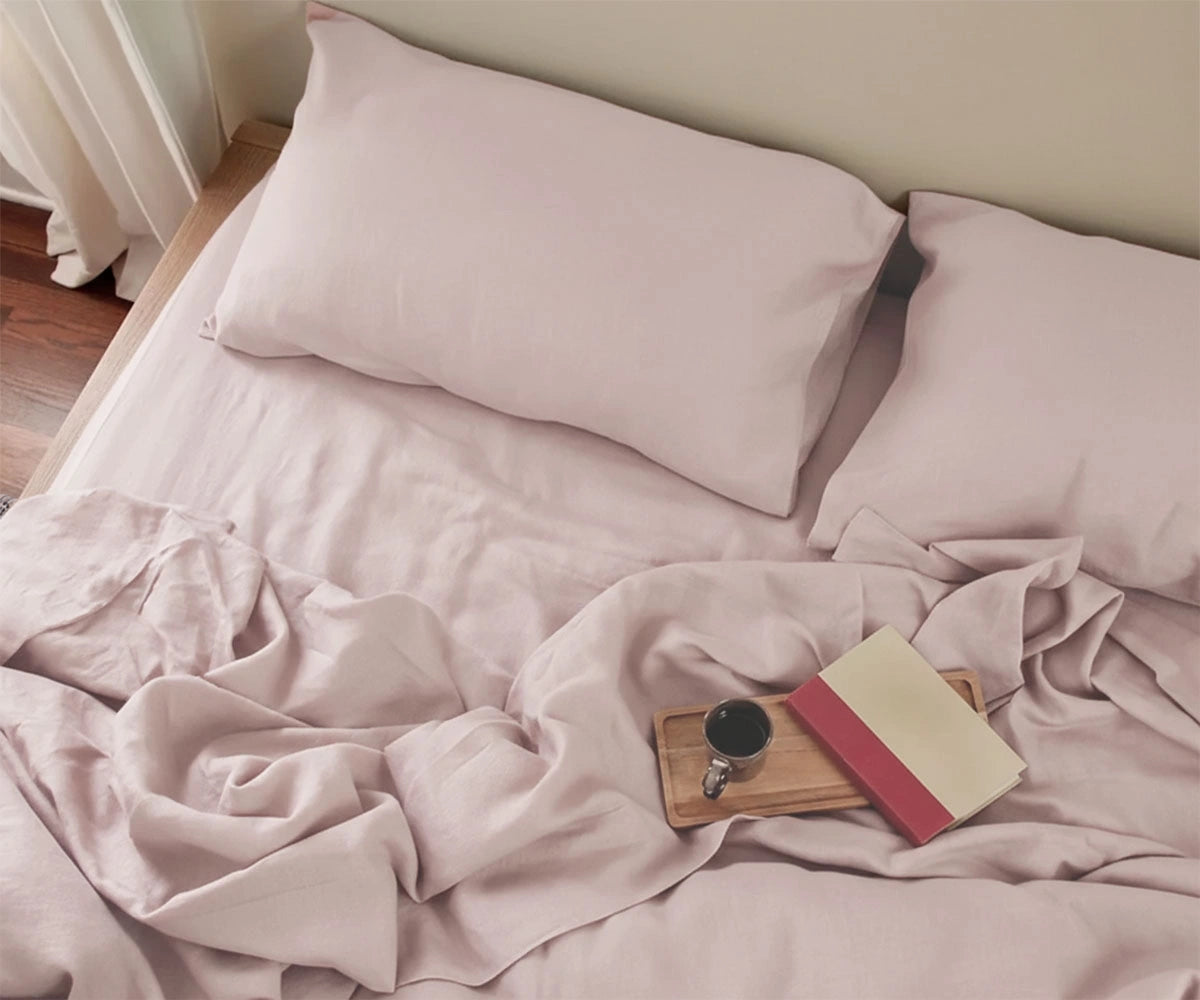
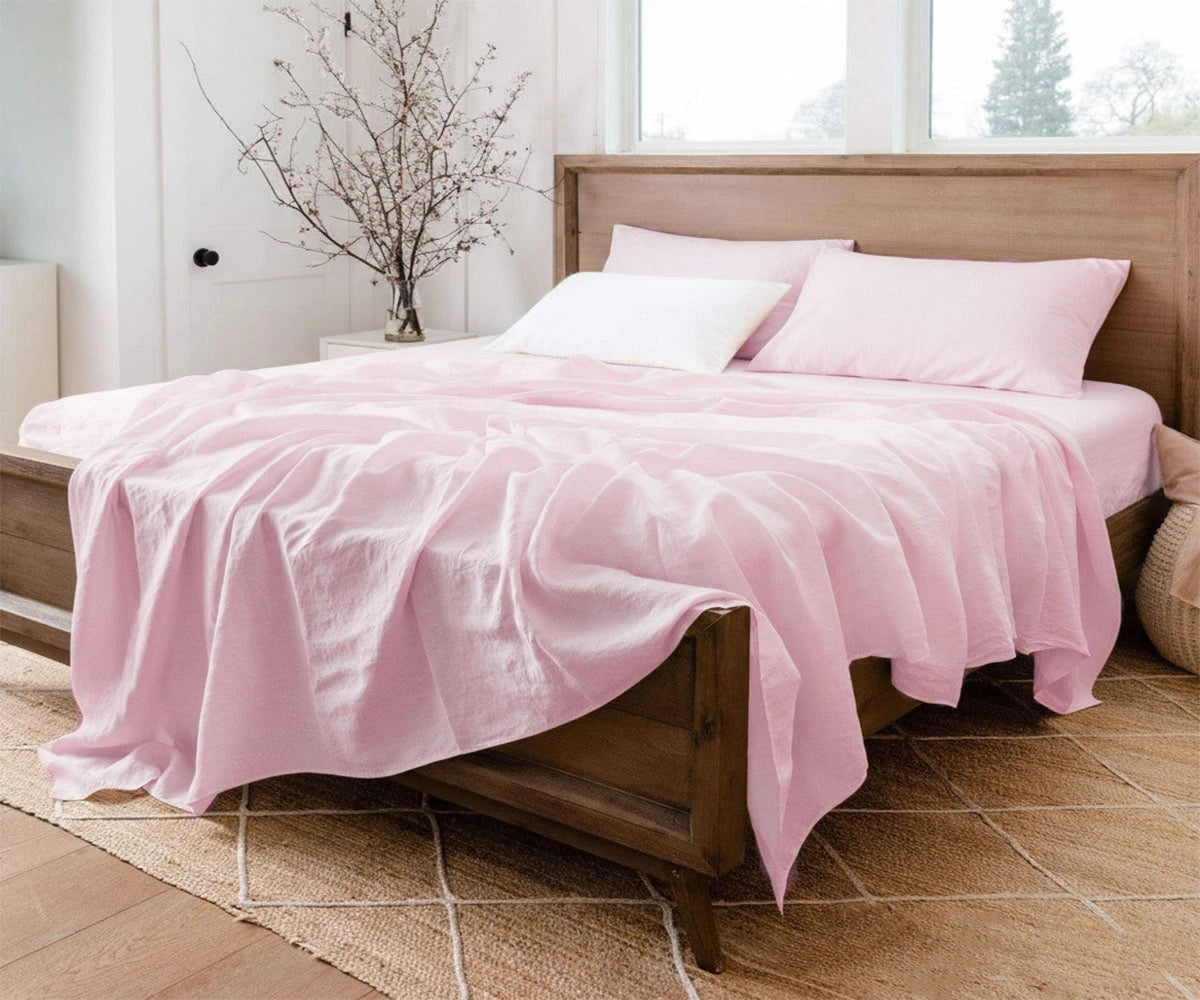
Pair green noise with white scalloped bedding and soft, breathable linen pillowcases from All Cotton and Linen, and you have a bedroom setup designed around rest.
Color Noise Comparison Table
|
Color |
Sound Character |
Best For |
Feels Like |
|
White |
Sharp, full-spectrum static |
Light sleepers, noisy urban environments |
Fan, AC unit, static |
|
Pink |
Soft, warm, natural |
Deep sleep, general relaxation |
Steady rainfall, light wind |
|
Brown |
Deep, rumbling, immersive |
Racing thoughts, ADHD, low-frequency disruptions |
Heavy rain, waterfall |
|
Green |
Middle-range, natural |
Nature lovers, anxiety, and all-around sleep |
Stream, ocean surf, forest |
|
Blue |
Higher-pitched, crisp |
Focus (not generally used for sleep) |
Water spray, high hiss |
|
Violet |
Highest pitch |
Tinnitus treatment only |
Sharp hiss |
Blue and Violet Noise: When They Are Used
Blue noise and violet noise sit at the opposite end of the spectrum from brown noise. Both emphasize higher frequencies, which gives them a bright, sharp quality. Blue noise sounds like steam escaping a pipe or a high-pitched hiss. Violet noise is even more extreme.
These are not commonly recommended for sleep in healthy adults. However, audiologists and hearing specialists sometimes use violet noise for tinnitus masking because its high-frequency energy can counteract the internal ringing many people experience.
Unless you have a specific medical reason, blue and violet noise are best avoided for general sleep use.
You May Also Like: Pros and Cons of Cotton and Linen Sheets: How to Choose Between Cotton and Linen Sheets?
Which Color Noise Is Best for Sleep?
There isn't one universal answer, which is honest and worth saying plainly. The best color noise for sleep is the one you can stay asleep beside.
That said, there are some useful patterns:
If you sleep in a noisy environment and the issue is unpredictable external sounds — white noise gives you the most thorough masking across all frequencies.
If you sleep in a reasonably quiet environment but want something to soften the silence and deepen your sleep pink noise is where most sleep researchers would point you.
If your mind is your biggest obstacle at night the kind of thinking that doesn't stop when your head hits the pillow brown noise is worth serious consideration. Many people who've tried other colors without much success find brown noise is the one that finally works.
If you don't sleep near a lot of noise but want something calming, natural, and easy to be beside all night green noise is the most comfortable choice for a lot of people.
Start with whatever sounds most appealing and give it a few nights. Your preferences will tell you more than any chart.
How to Choose the Right Color Noise for Your Sleep
Getting the right noise color is less complicated than most guides make it sound. There are four things worth considering before you start.
-
Consider your noise environment. If you live near traffic, a loud household, or a building with thin walls, you need a noise that masks a wide range of sounds. White noise does this most effectively because it covers all frequencies. Pink noise is nearly as effective and less harsh.
-
Identify your main sleep problem. If you take a long time to fall asleep because of anxiety or a busy mind, brown noise is worth trying first. If you wake up frequently during the night, pink noise may help you stay in deeper sleep stages longer. If nearby sounds jolt you awake, white noise gives the most consistent masking.
-
Start at a low volume. Sleep researchers, including Roneil Malkani, MD at Northwestern Medicine, recommend keeping sleep sounds just low enough to be audible but not loud enough to cause arousal. The goal is a background presence, not a replacement for silence.
-
Give each noise three to five nights. One night is not enough to judge. Your brain adapts to new sounds, and what feels unfamiliar on night one often becomes comforting by night three.
Color Noise and Bedding by Sleep Type
|
Sleep Type |
Best Color Noise |
Best Fabric |
|
Hot sleeper |
Pink or green (calming, not stimulating) |
Linen — maximum airflow |
|
Light sleeper |
White noise |
Cotton percale — cool and smooth |
|
Anxious mind |
Brown noise |
Organic cotton — soft, grounding feel |
|
Heavy sleeper who still wakes tired |
Pink noise |
Linen or cotton sateen |
|
City dweller / noisy environment |
White noise |
Any breathable natural fabric |
|
Babies and children |
White or pink noise |
Organic cotton — gentle and hypoallergenic |
How Color Noise Pairs With Your Sleep Environment
Sound is one piece of a complete sleep environment. The other pieces are temperature, light, and the feel of your bedding against your skin. Color noise works best when the rest of your sleep setup is not working against it.
People who use breathable bedding report that the combination of a cool, comfortable surface and consistent background sound helps them reach and stay in deep sleep more reliably. All Cotton and Linen's stonewashed linen sheets are made from European flax linen specifically designed for temperature regulation, keeping you cool in warm months and comfortable year-round.
A room that is too warm or bedding that traps heat can interrupt sleep just as effectively as external noise. Pairing a brown or pink noise track with linen pillowcases that do not trap heat creates a sleep environment where your auditory system and your thermal comfort system are both settled at the same time.
To explore options, check out the linen bedding collection at All Cotton and Linen for breathable sheets, pillowcases, and duvet covers designed for better rest.
Sound Is One Part. Your Bedding Is the Other.
Sleep quality comes from your whole environment not just what you hear, but what you feel. And what you feel most directly is your bedding.
The reason this matters alongside color noise is simple: you can create the perfect sound environment and still sleep badly if you're too hot, too itchy, or too uncomfortable. The two work together.
Natural fabrics cotton and linen specifically do something that synthetic bedding can't: they breathe with you. When your body temperature rises slightly during deeper sleep stages, breathable fabric lets that heat escape rather than trapping it under the covers. The result is a more stable sleep temperature through the night, which means fewer unconscious adjustments, less tossing, and deeper uninterrupted rest.
Linen is especially effective for temperature regulation. Its loose, open weave allows genuine airflow, and it pulls moisture away from the skin quickly. Over time, linen also softens rather than pills or thins, so it actually becomes more comfortable with use.
Organic cotton offers a softer feel for people who prefer something smoother, while still being breathable and free of the synthetic finishes that can cause skin irritation in lighter sleepers.
The combination a sound environment shaped by the right color noise, a sleeping surface made from natural breathable fabric removes the two most common reasons people sleep badly: a mind that won't settle and a body that can't regulate.
Overview
A good sleep environment goes beyond sound. Breathing freely through the night, staying at a comfortable temperature, and resting against bedding that does not trap heat all contribute to how well color noise actually works. If you want bedding that supports your sleep routine, explore All Cotton and Linen's linen sheets, stonewashed duvet covers, and linen pillowcases. Each piece is made for breathability and long-term comfort, the kind that makes a real difference by morning.