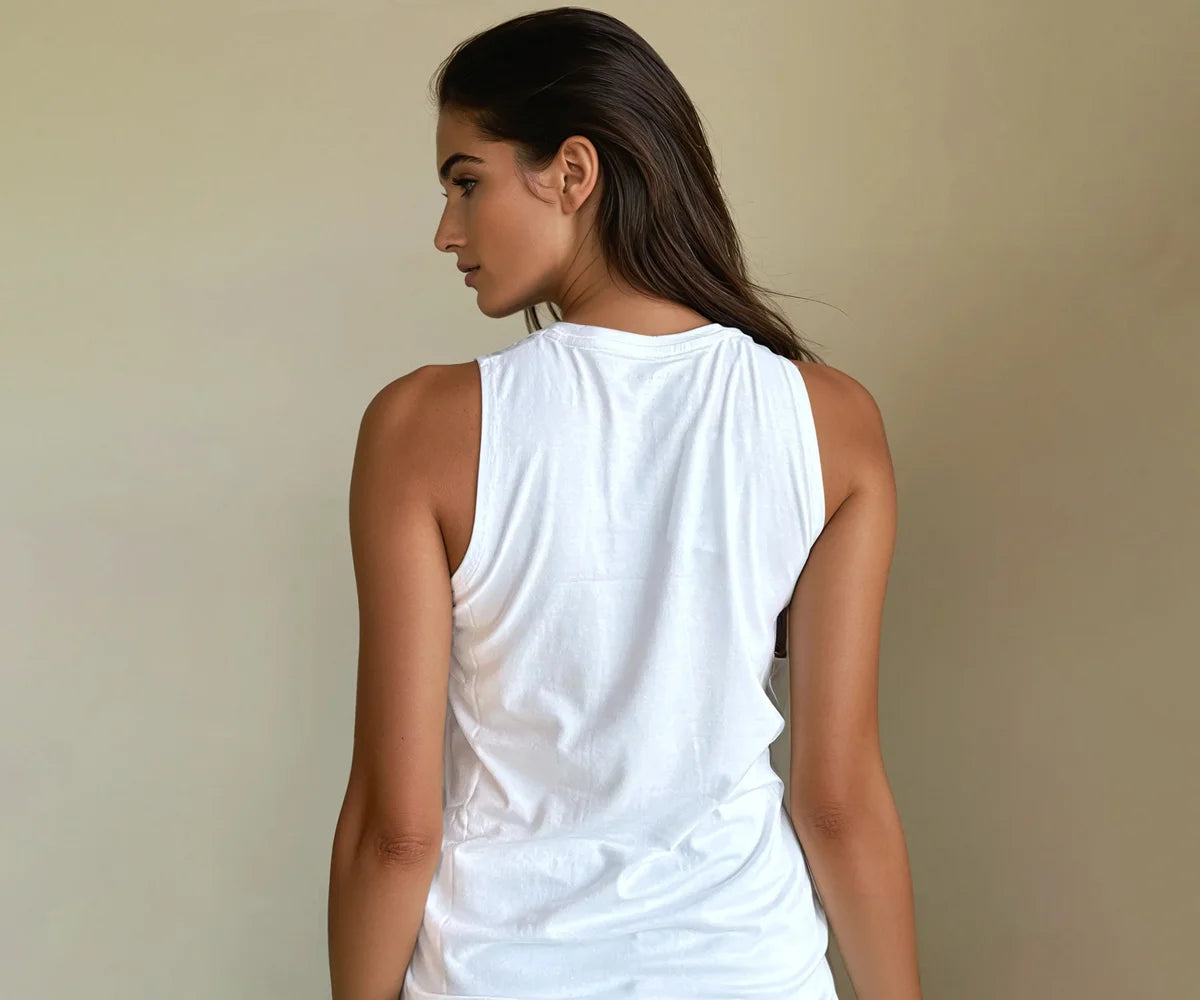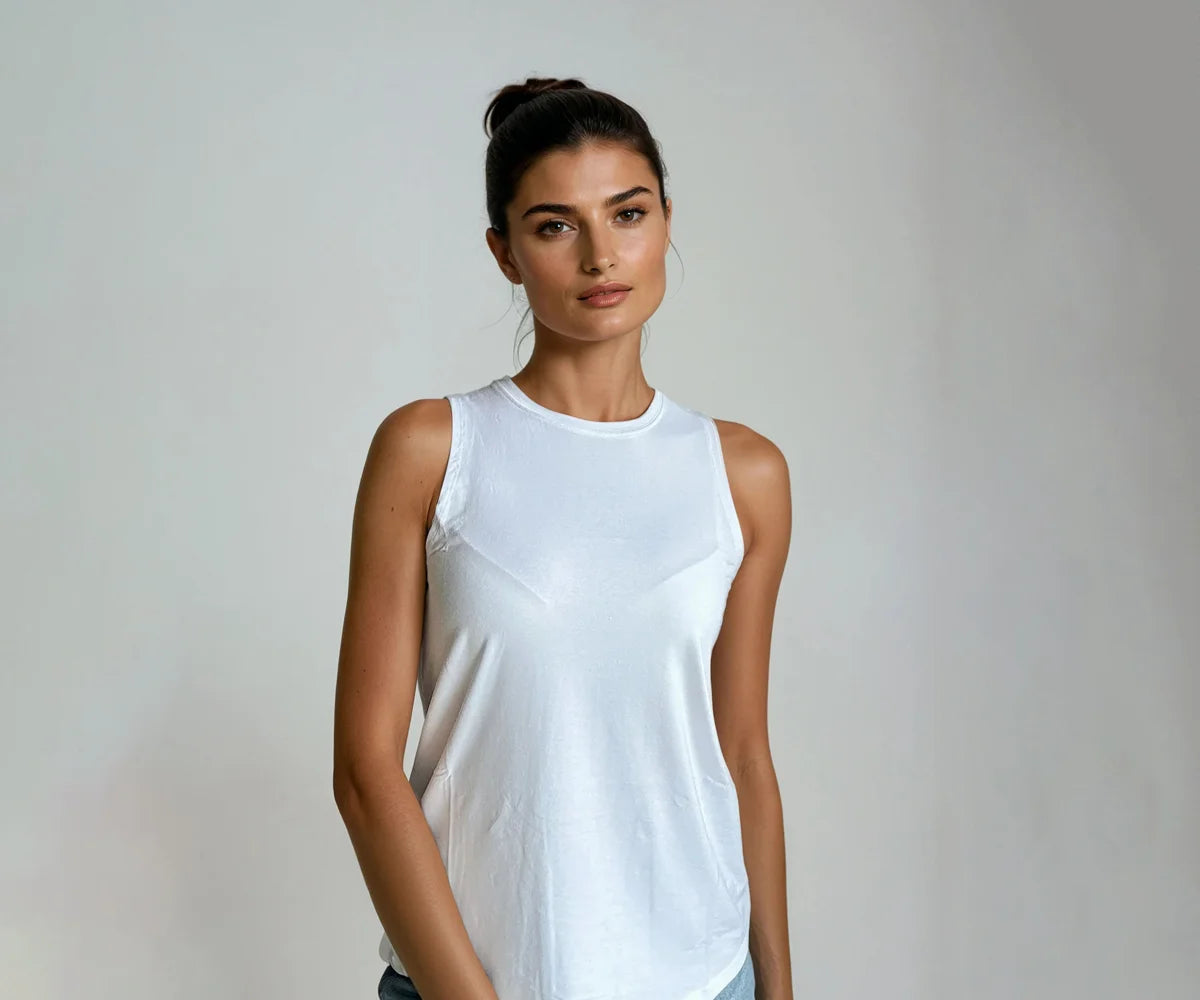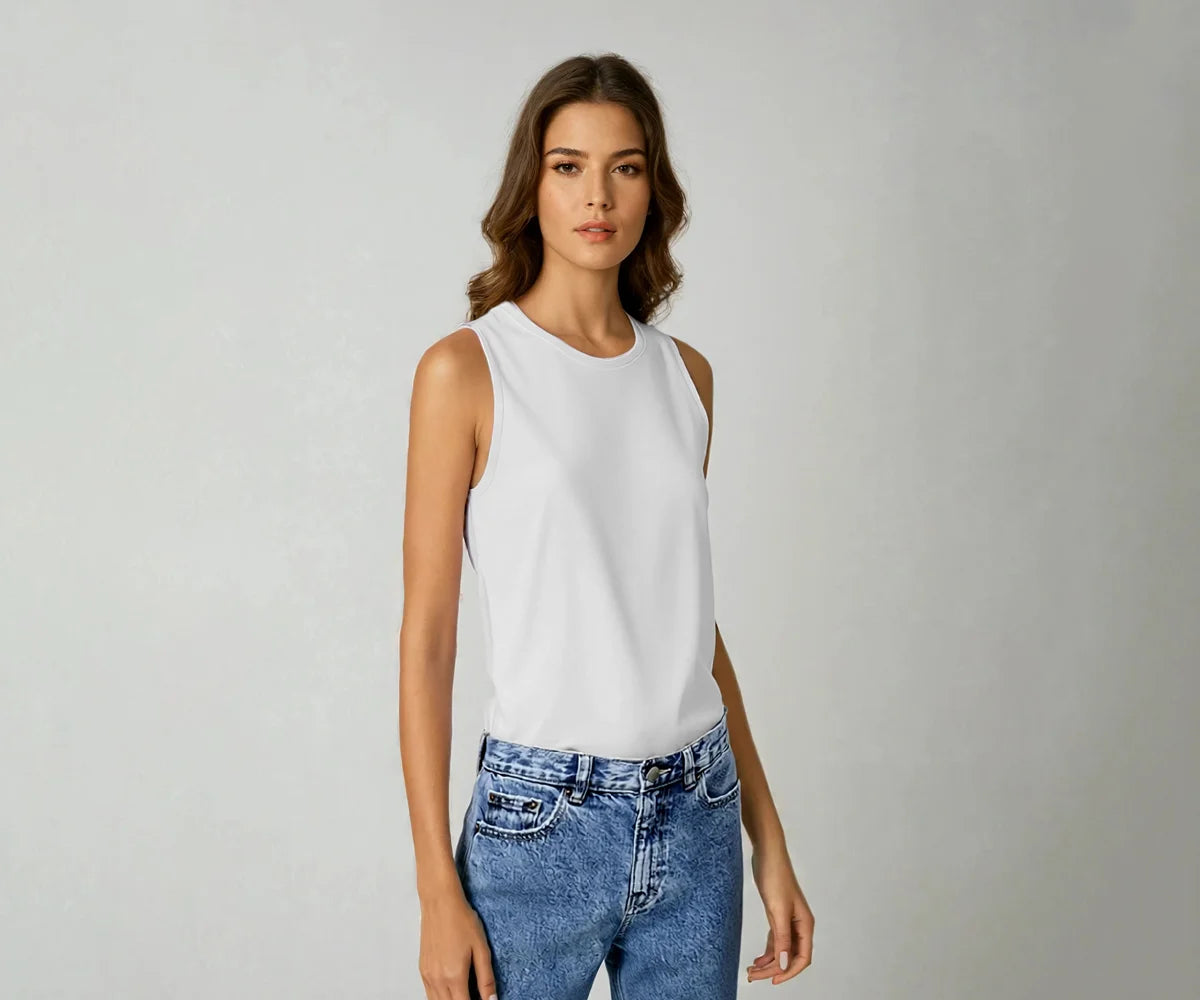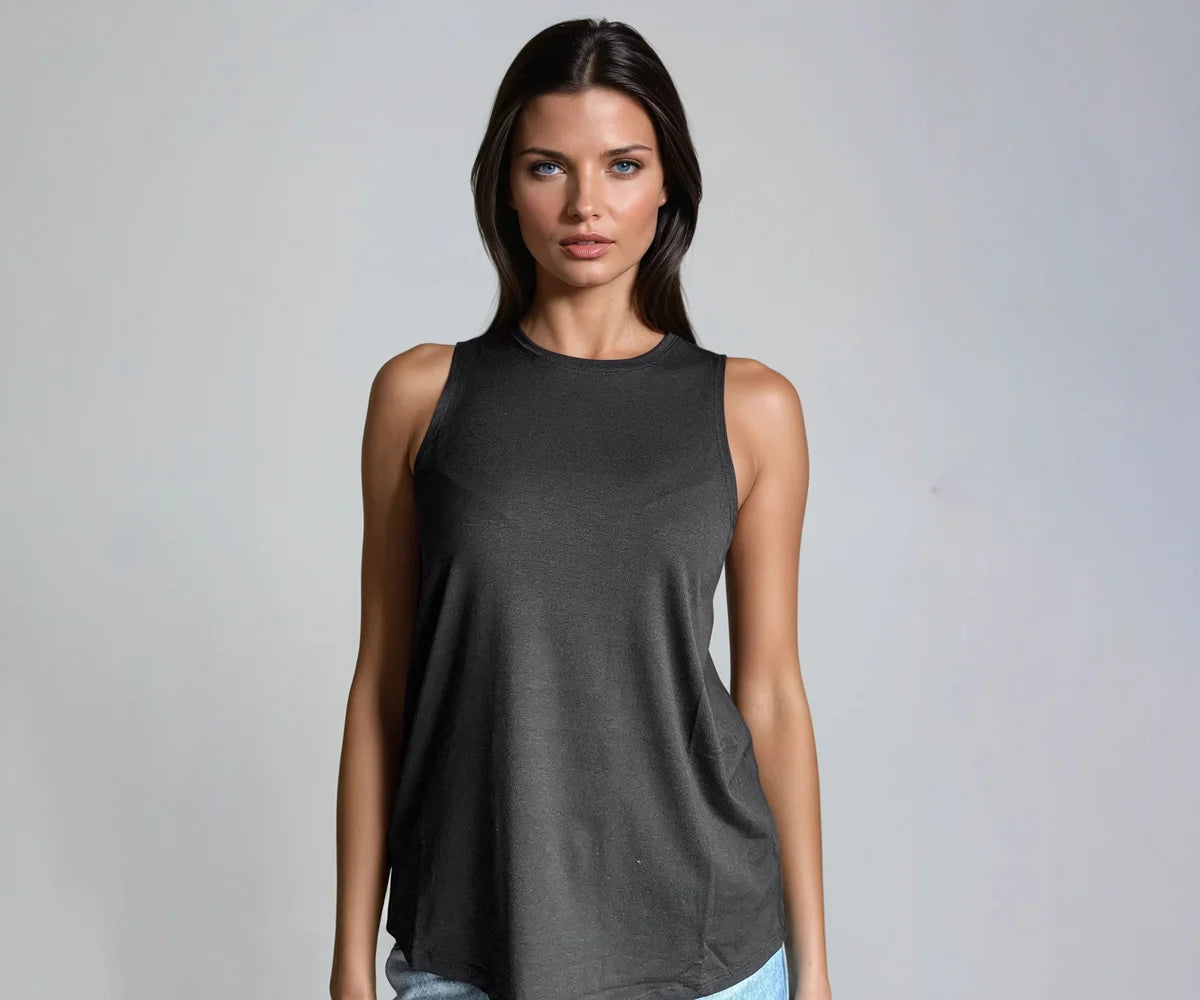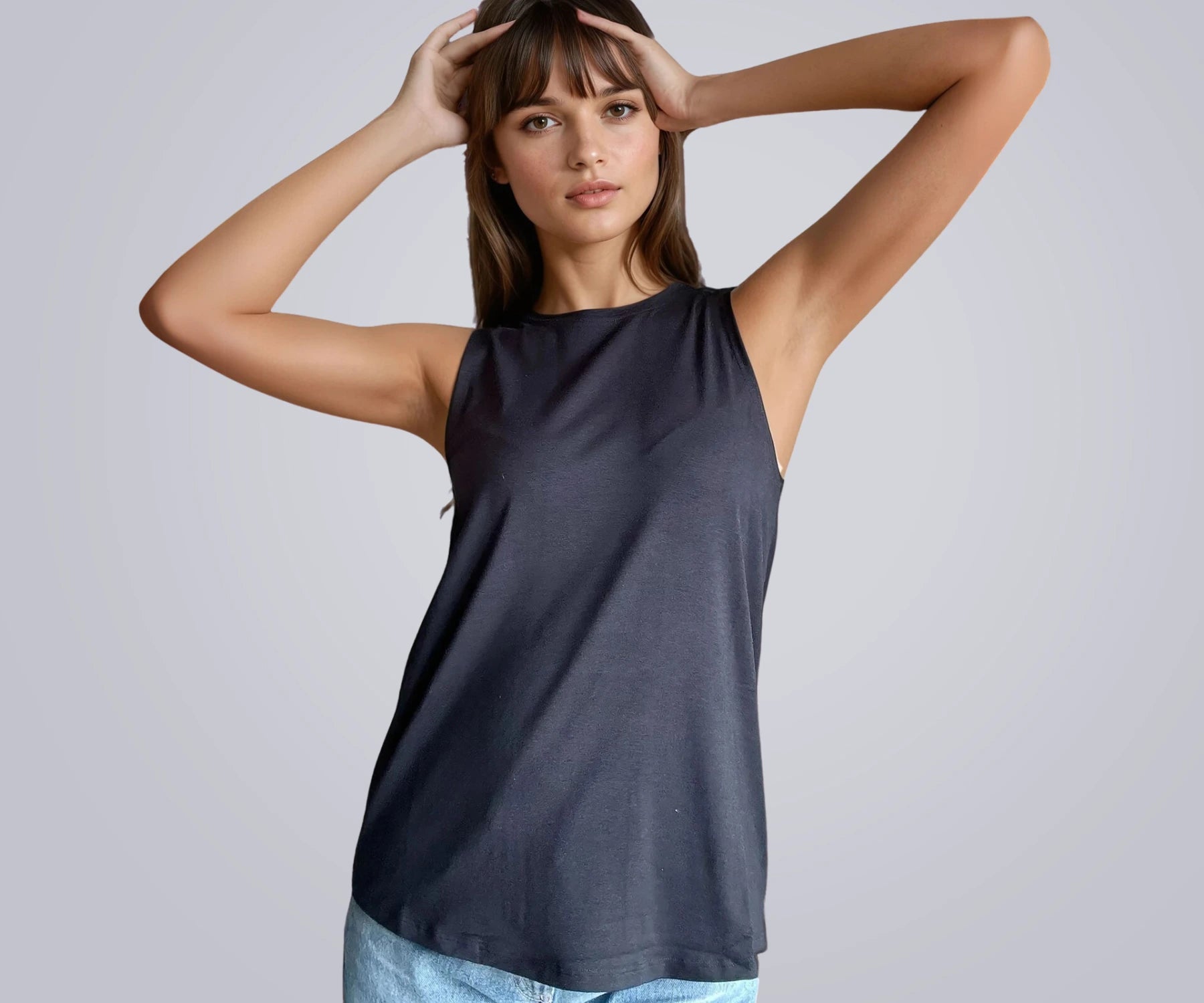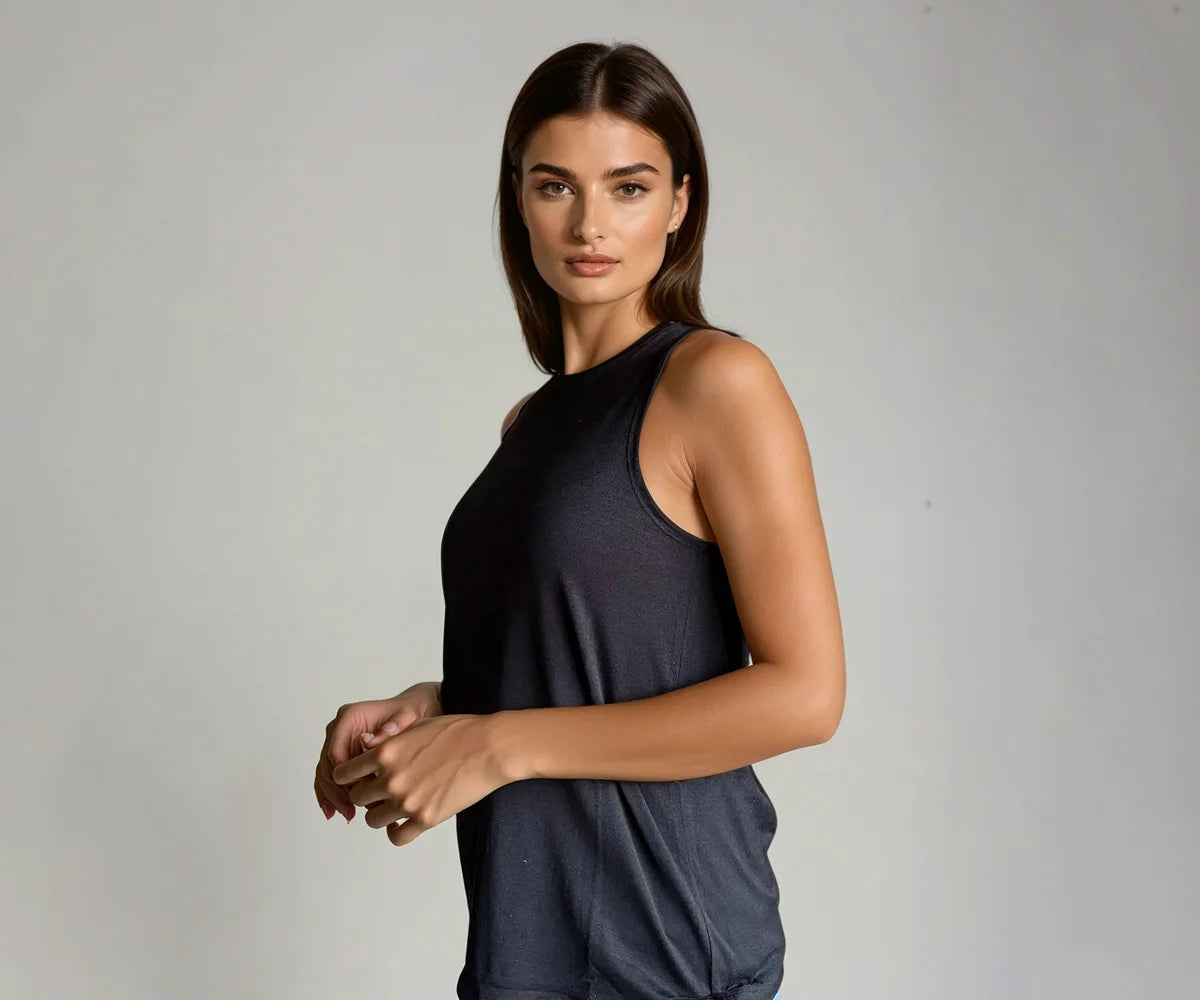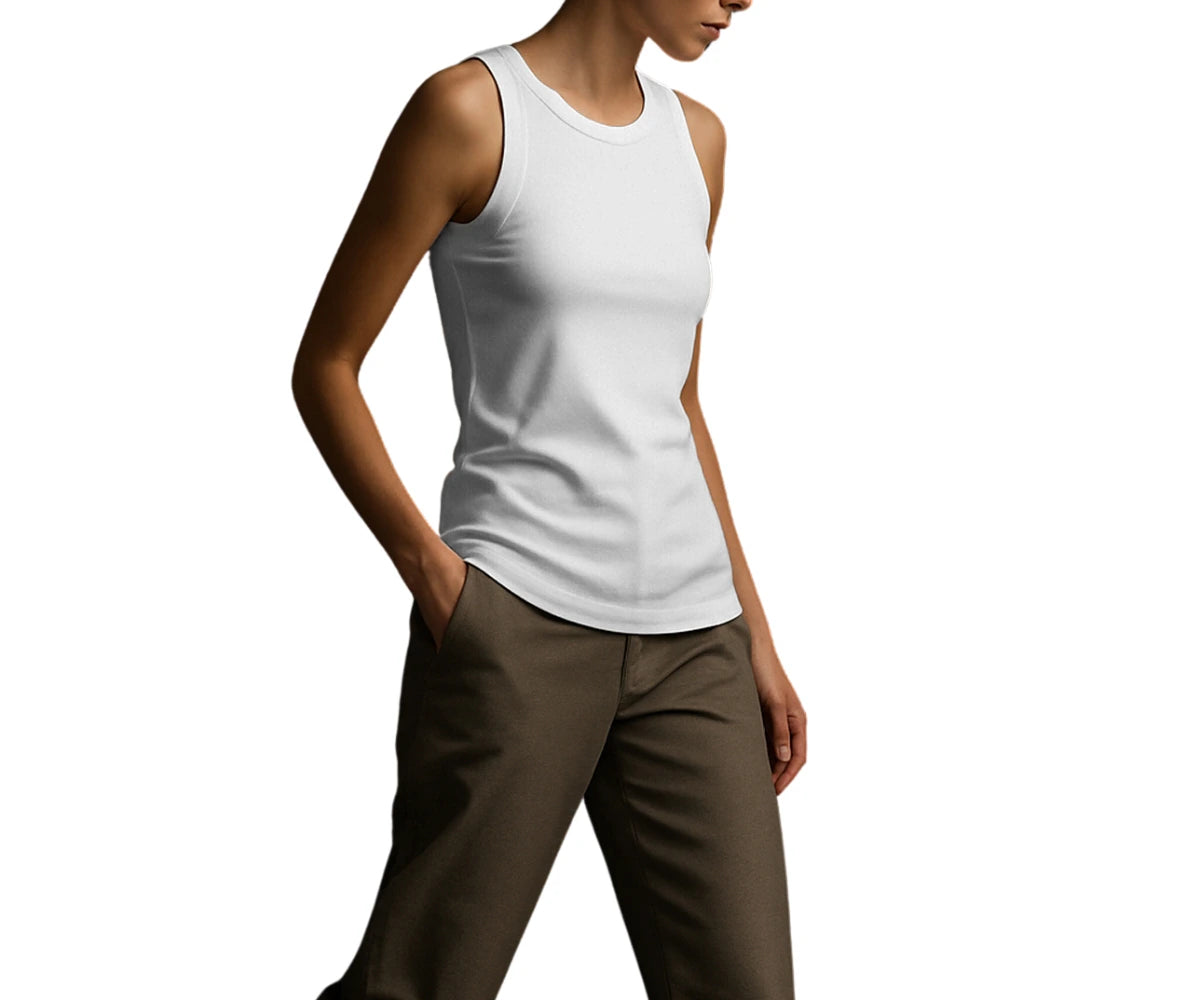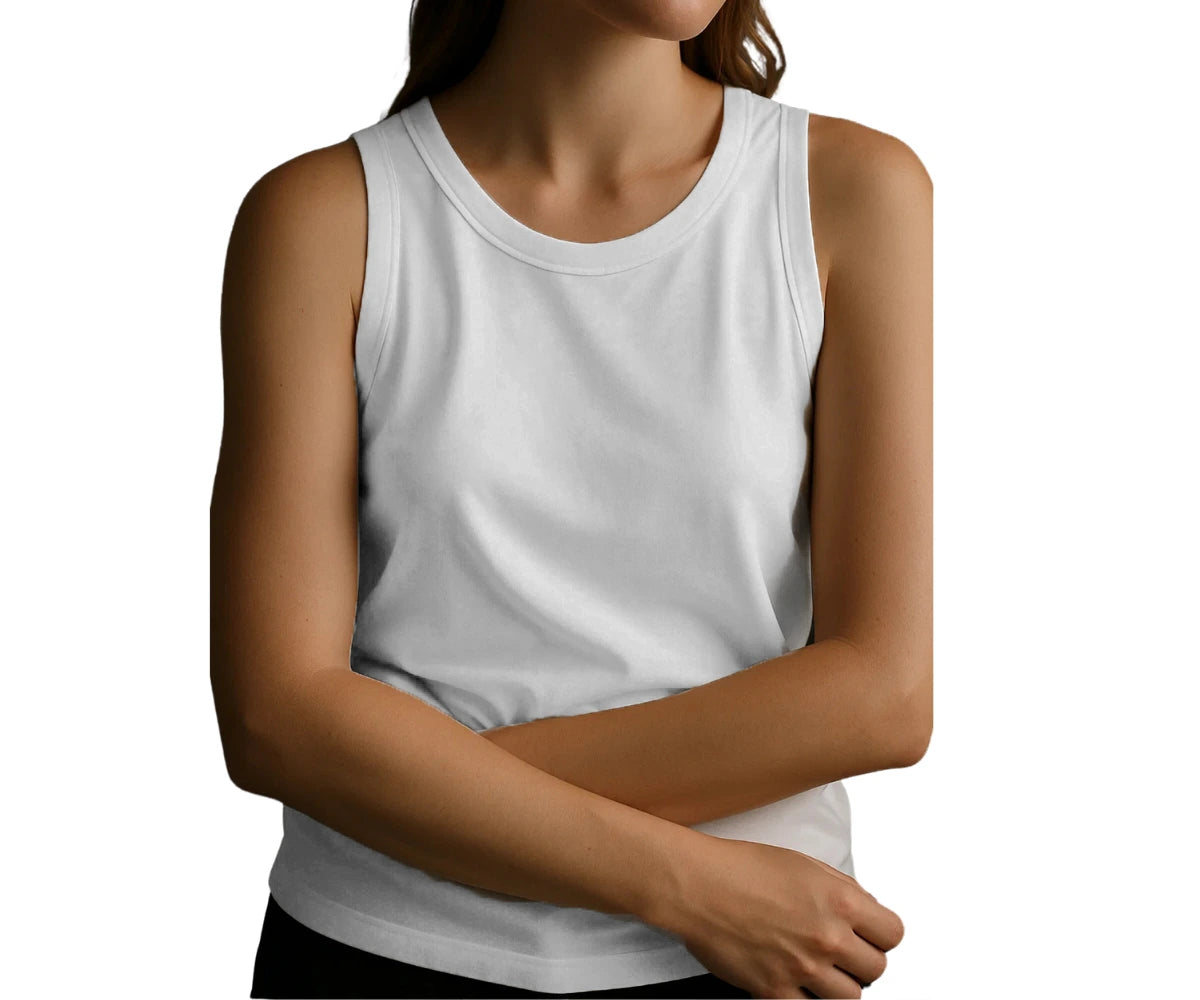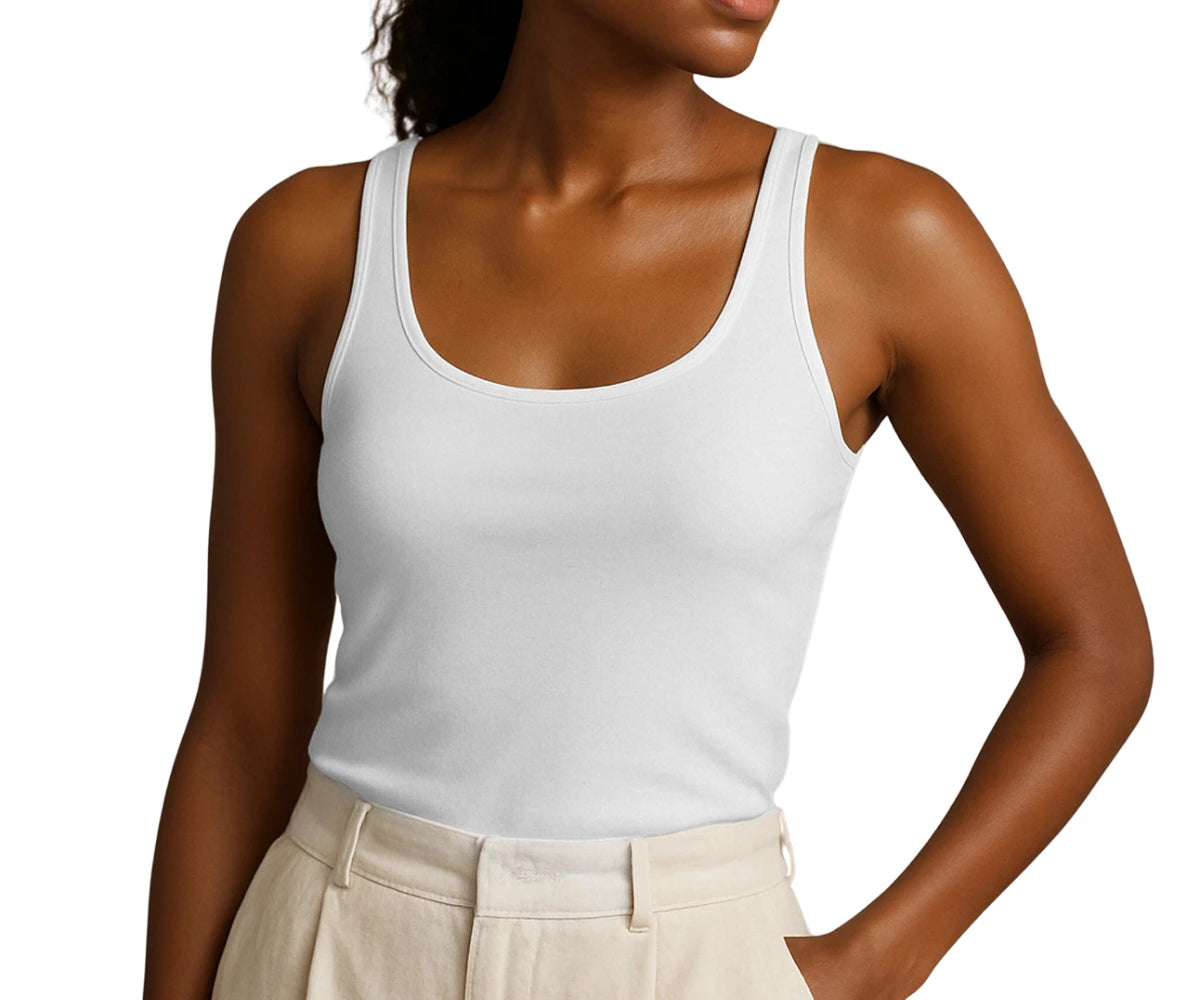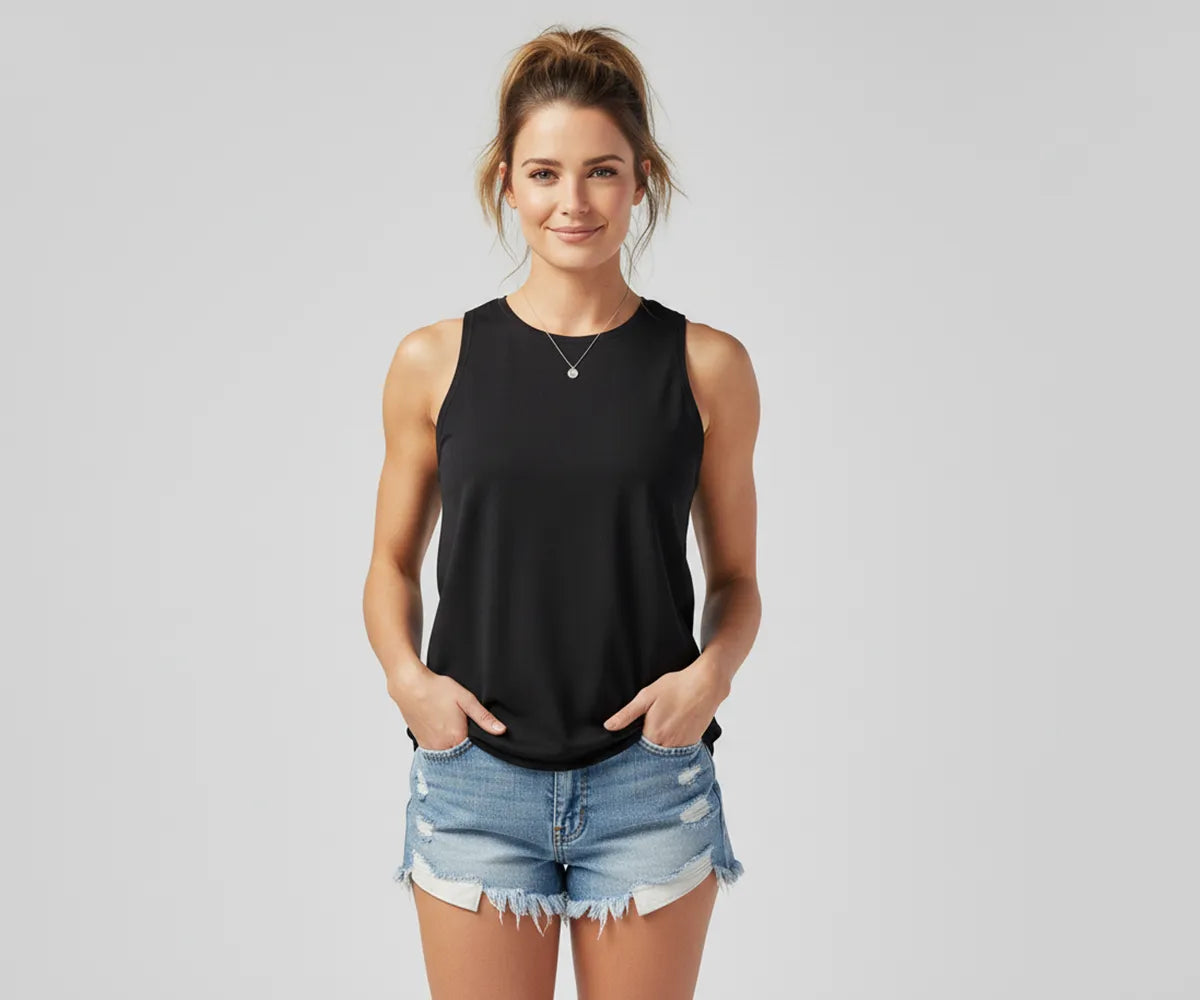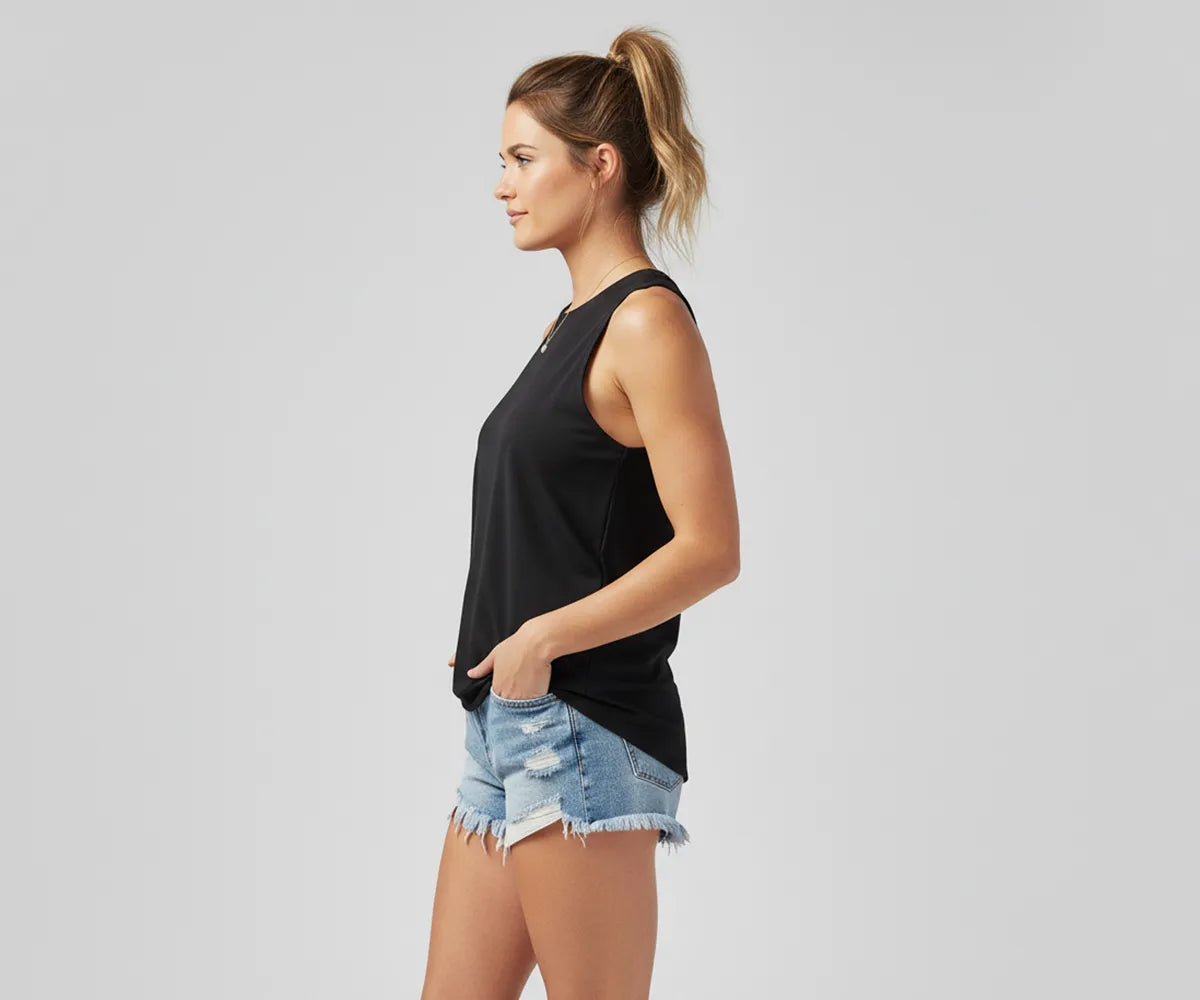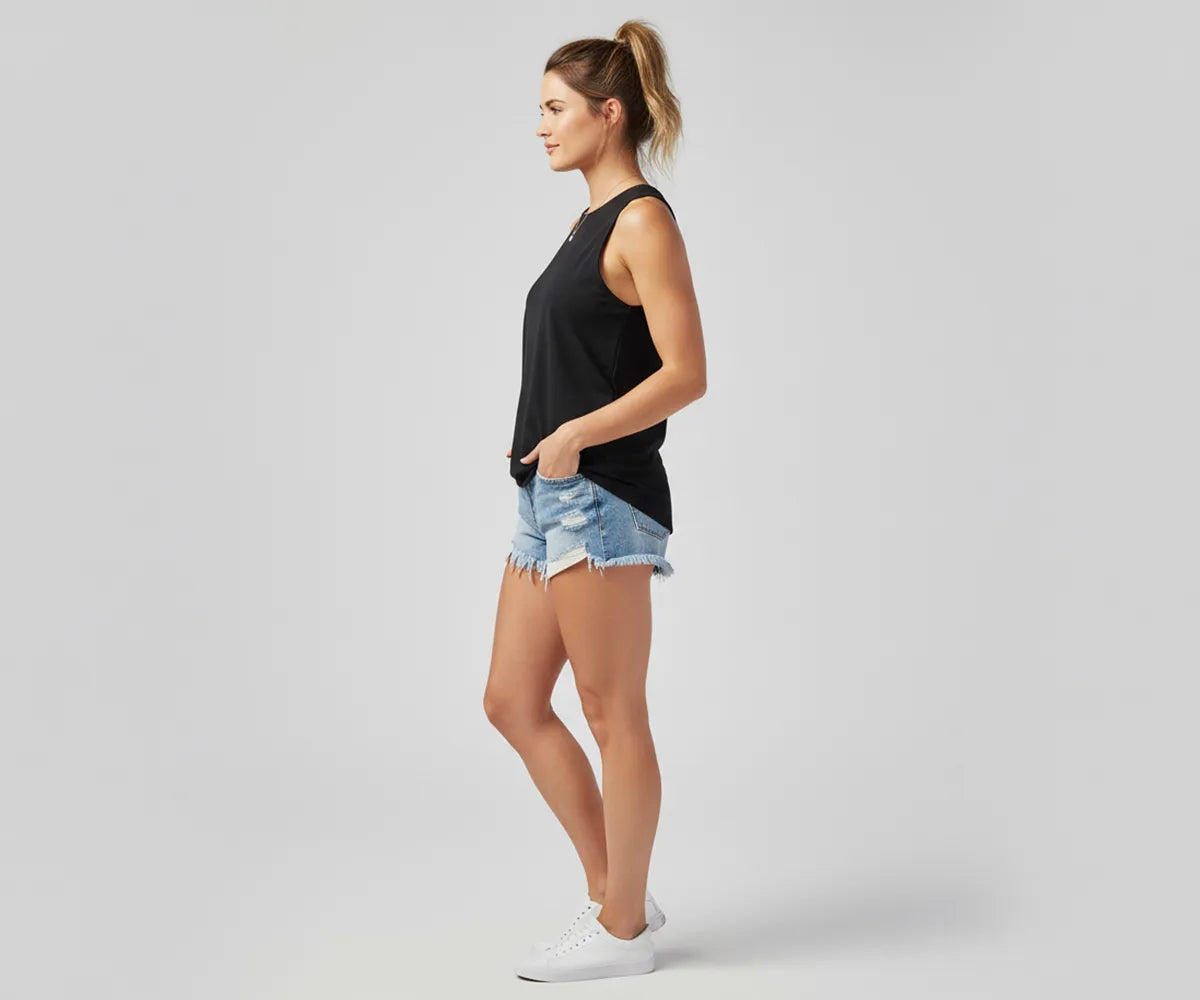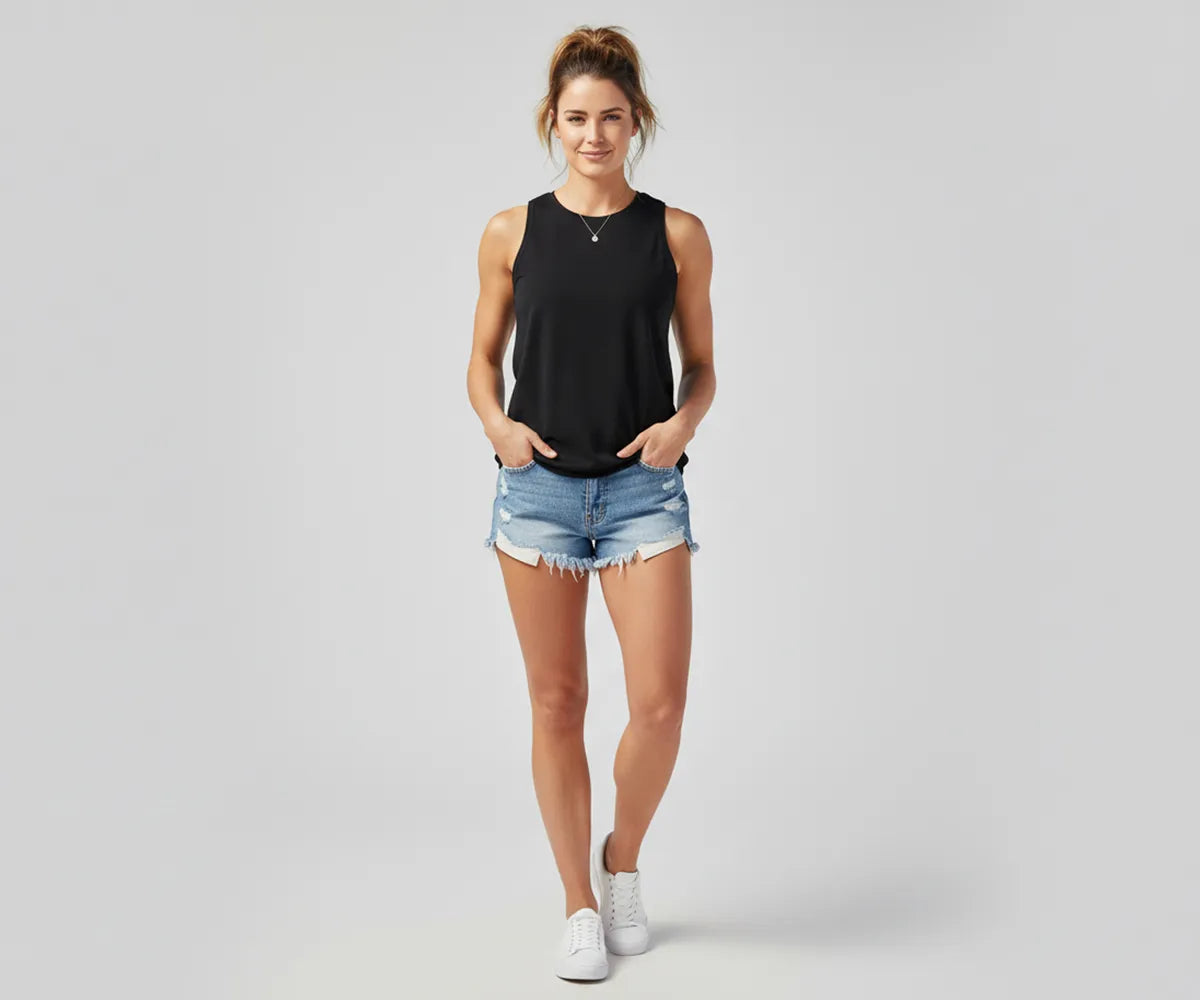

The association between wife beater tank tops and violence started in the mid-1900s and became widely used in the 1990s.
However, in recent years, people have questioned the use of this problematic term, opting for simply calling them tank tops for men or tank tops for women instead.
The Origin of the Term "Wife Beater"
If you’re wondering where the term 'wife beater" comes from, it traces back to a 1940s crime case and was later reinforced by media portrayals that linked white tank tops with violent stereotypes.
Over time, pop culture helped spread the phrase, even as its origins remained troubling.
The connection between tank tops and domestic violence first appeared in the 1940s. In 1947, a crime story gained national attention when a man named James Hartford Jr. was arrested for beating his wife to death. Newspapers published his mugshot, showing him wearing a dirty white wife-beater tank top, and labeled him a “wife-beater.” Over time, the phrase stuck, linking the white tank top to abusive men.

But the association didn’t stop there. Around the same time, Hollywood reinforced the stereotype. In the 1951 movie A Streetcar Named Desire, the character Stanley Kowalski, played by Marlon Brando, wore a white wife-beater while aggressively confronting his wife and her sister. This visual cemented the idea of the wife-beater tank top being linked to violent, working-class men.
The Rise of the Wife Beater in Pop Culture
By the late 20th century, tank tops became more mainstream, but the controversial name stuck. The 1980s and 1990s saw a rise in black wife beaters and white tank tops in fashion, thanks to pop culture and hip-hop influences. Designers like Dolce & Gabbana even put the wife-beater tank top on the runway in 1992.

At the same time, the term "wife beater" became ironic slang among young people. The shirt was associated with rebellion, grunge, and alternative culture. By 1997, the Oxford English Dictionary officially recognized "wife beater" as slang for a white tank top, proving how widespread the term had become.
Know About: Is No Buy 2026 the Ultimate Money-Saving Challenge?
What Is a “Wife Beater” Shirt?
“Wife beater” is a slang term historically used for a close-fitting, sleeveless undershirt, usually made from white ribbed cotton. The garment is also commonly called a tank top, a shirt, a ribbed tank, or a sleeveless undershirt. The clothing itself has a much longer history than the slang name attached to it.
Today, the term is often avoided because of its association with domestic violence. “Tank top” or "a shirt" is a more neutral way to describe the same style.
When Were Tank Tops Invented?
Tank tops were invented in the early 20th century and gained popularity in the late 1970s and early 1980s as a key part of casual summer fashion. Originally inspired by sleeveless sweaters, they became widely worn for their comfort and versatility. In the UK, they are also called sleeveless jumpers or slipovers.
While their popularity faded for a time, tank tops for men and tank tops for women have made a strong comeback in the 21st century, especially in 2021, as stylish and breathable wardrobe staples.
Are tank tops supposed to be loose or tight? The answer depends on personal style and purpose. Fitted tank tops create a sharp, layered look, while looser styles offer breathability and everyday comfort.

Why Are Tank Tops Still Called Wife Beaters?
Despite its troubling history, the term is still sometimes used to describe white or Black tank tops, often without awareness of its violent origins. Over time, the phrase has become more commonly associated with a basic tank top style rather than its original meaning.
However, as conversations about gender and domestic violence awareness have grown, people are beginning to reconsider the use of the term. Many clothing brands now label them simply as tank tops or A-shirts (athletic shirts), moving away from the outdated and offensive name.
Should We Stop Using the Term "Wife Beater"?
While wife-beater tank tops are still widely recognized by that name, many believe it’s time to retire the term. The link between clothing and domestic violence is not something to take lightly. With over 600 women experiencing domestic abuse daily in the U.S., using "wife beater" to describe a piece of clothing can feel insensitive.

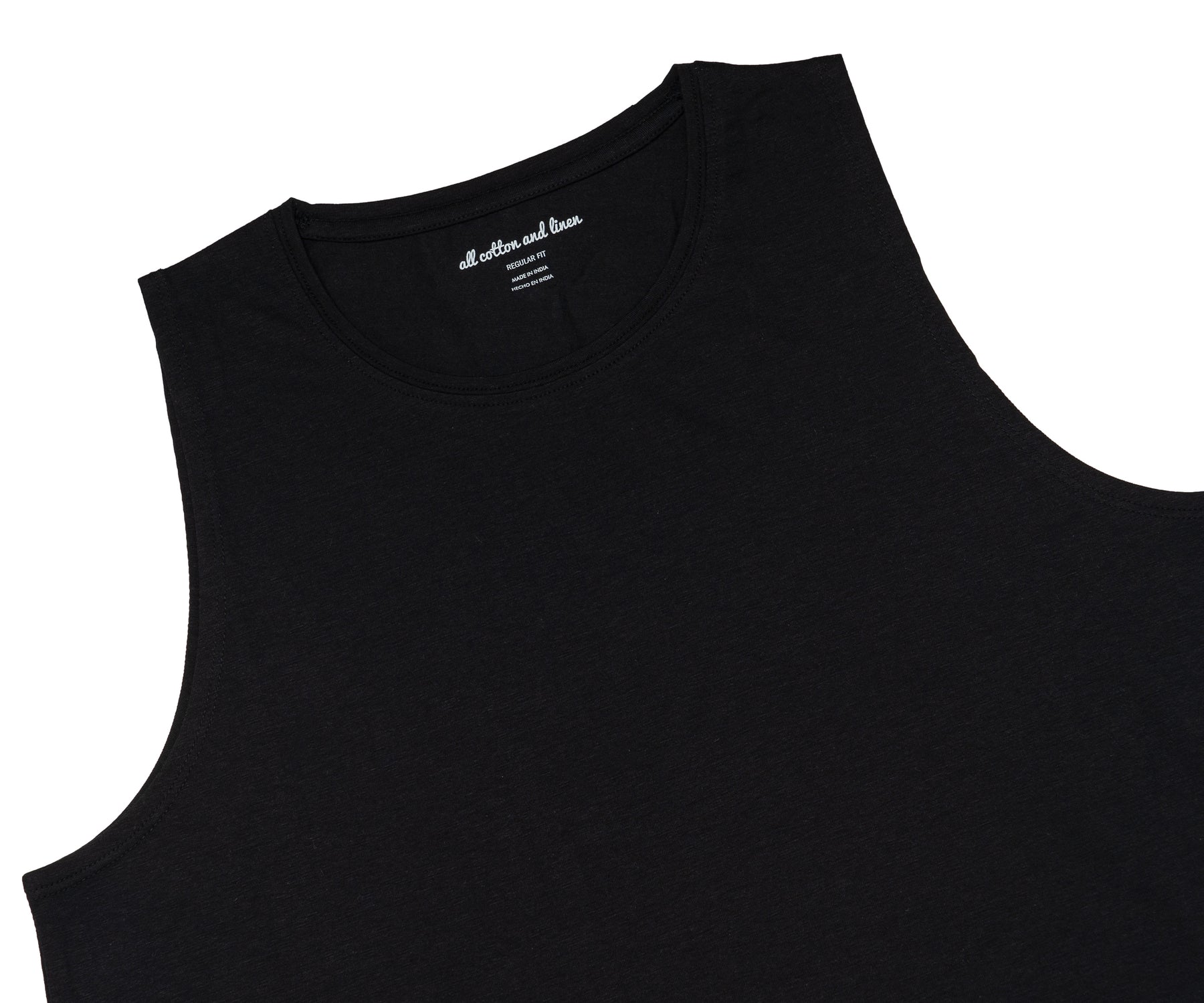
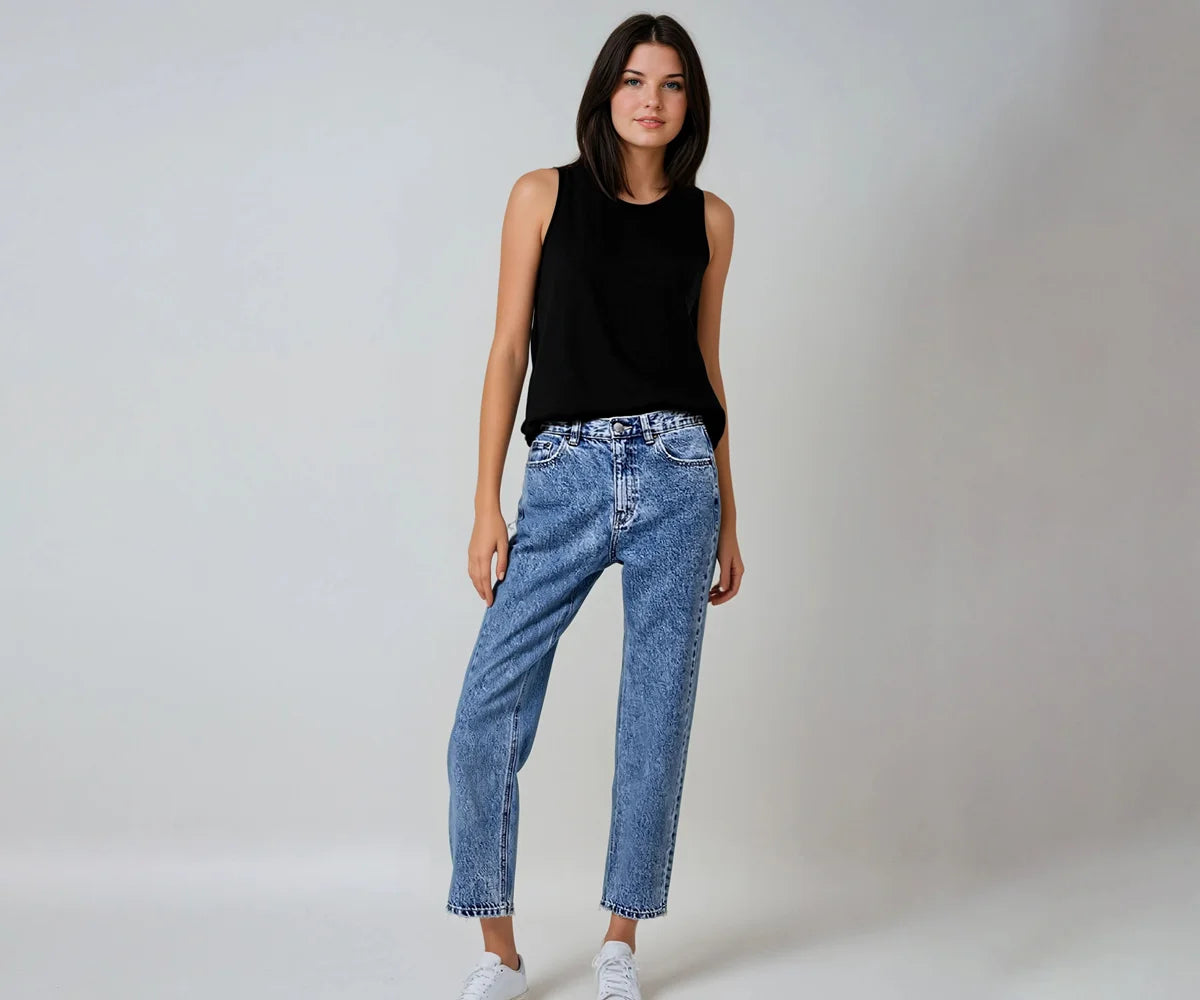
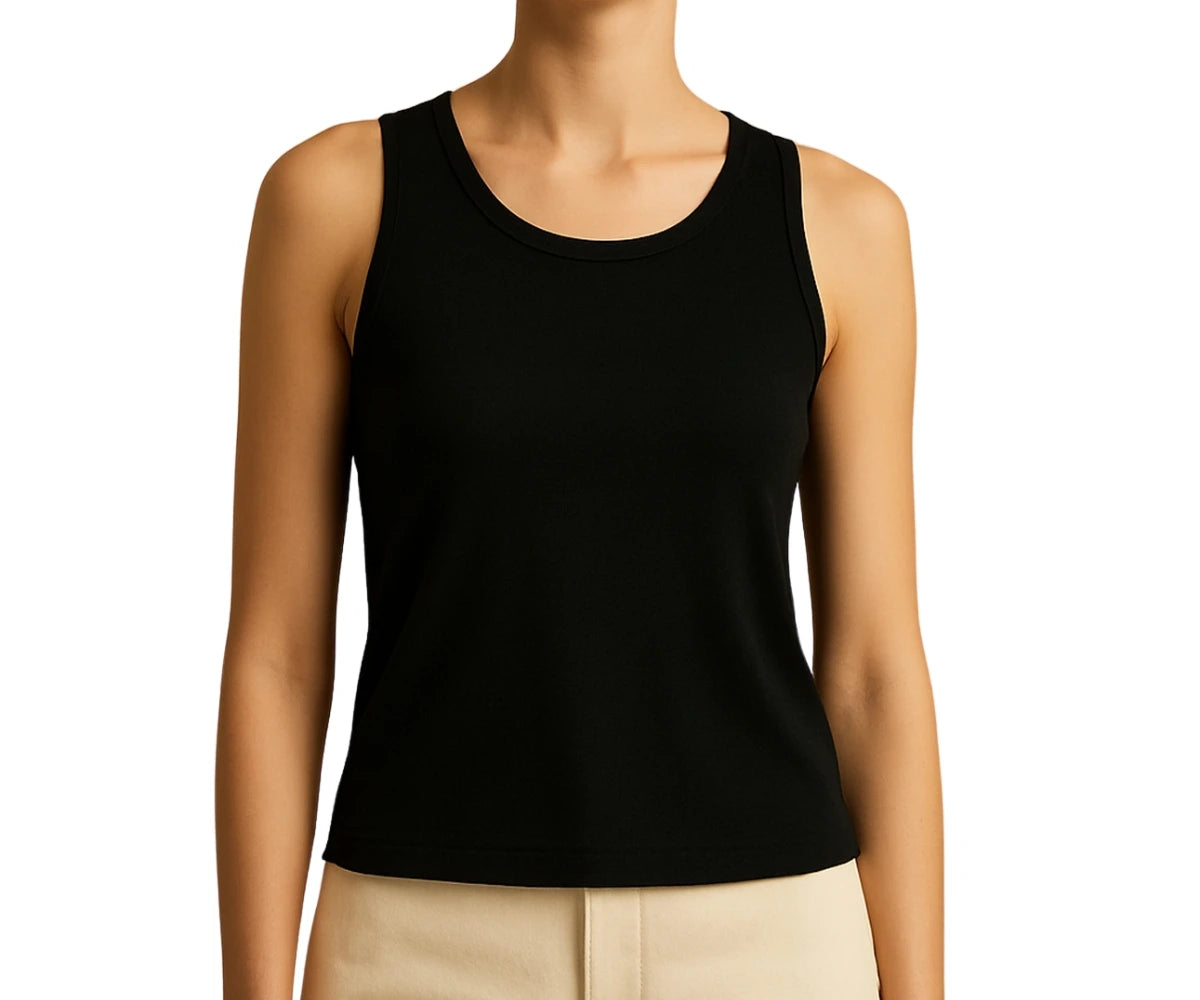
Today, stylish tank tops for men and cute tank tops for women come in various styles, including black tank tops and cotton tank tops, without needing a name tied to violence. As society becomes more aware of harmful language, it's a good time to simply call them what they are: tank tops.
Learn About: Women’s Pants: A Complete Guide to Styles, Fit, and Sizing
Why Is a White Tank Top Called a “Wife Beater”?
The nickname developed from a cultural stereotype that connected white ribbed undershirts with aggressive or abusive men. The association was reinforced through crime reporting and, more significantly, through movies and television that repeatedly used the shirt as part of this character type.
There is no strong evidence that the tank top itself was created because of domestic violence. The garment existed independently of the slang term. The nickname came later as a cultural association between the clothing style and a particular stereotype of masculinity.
What Should You Call a “Wife Beater" Instead?
The term “wife beater” is now widely considered outdated and offensive due to its connection to domestic violence. Today, more appropriate and widely accepted terms are used in fashion and retail.
|
Term to Use |
Why It’s Better |
|
Tank top |
Neutral and commonly used in everyday language |
|
A-shirt |
Official retail and fashion industry term |
|
Sleeveless shirt |
Descriptive and non-controversial |
|
Athletic shirt |
Highlights function without negative meaning. |
The history of the wife-beater tank top is rooted in crime, pop culture, and outdated stereotypes. While many people still use the term without knowing its origins, awareness is growing about why the name is problematic.
Whether you prefer white tank tops or black tank tops, calling them "tank tops" instead of “wife beaters” is a small but meaningful step toward using language more thoughtfully.