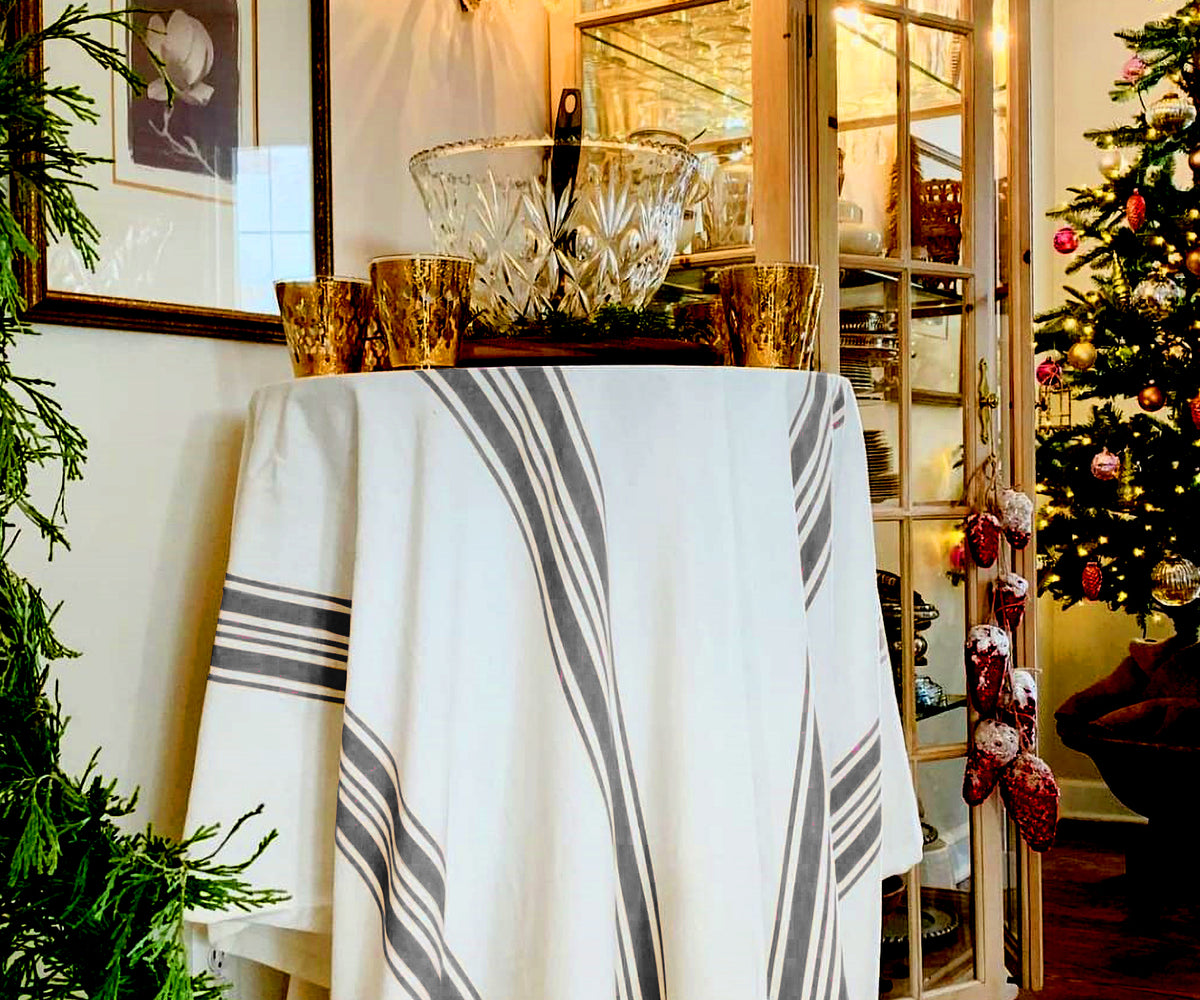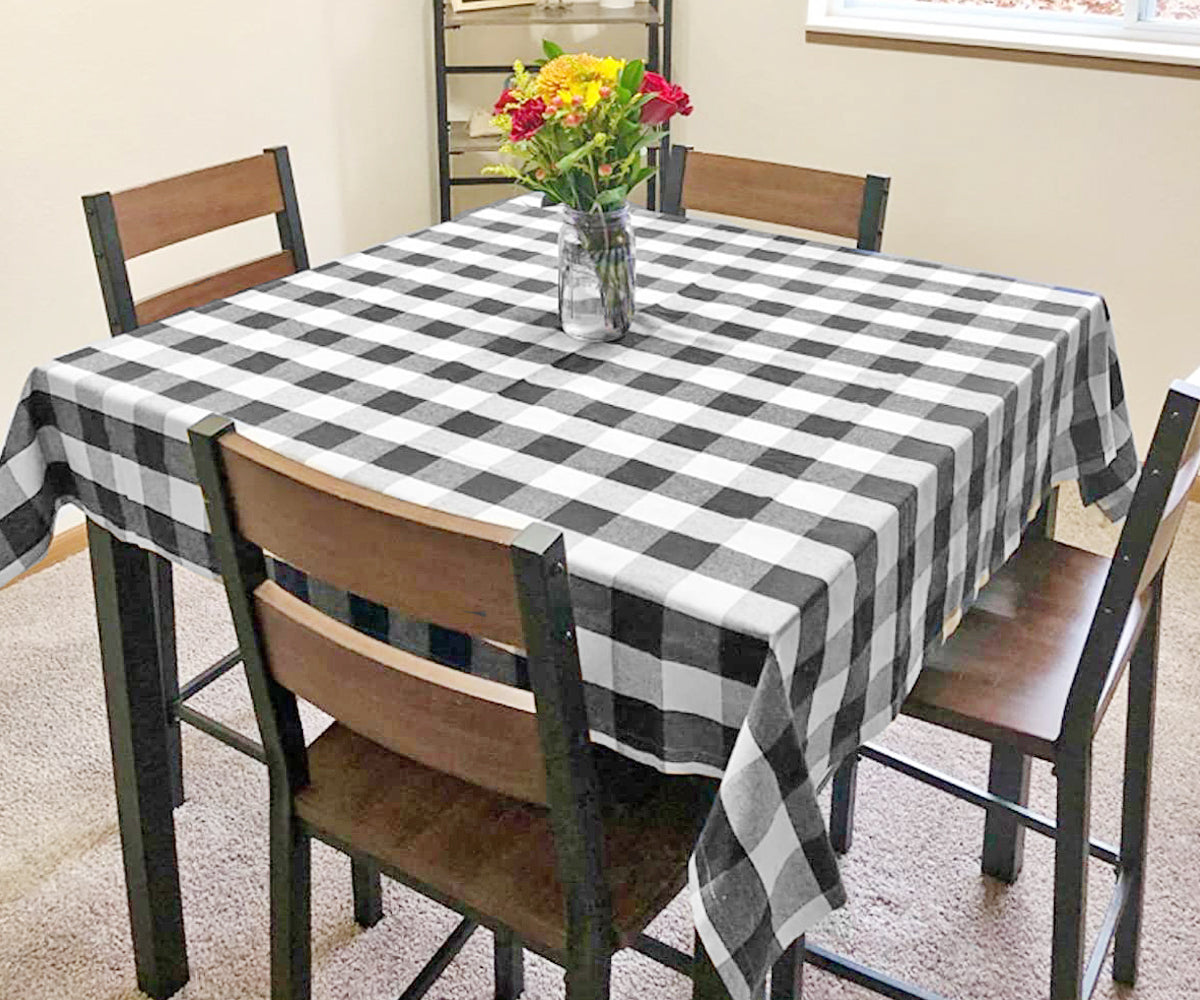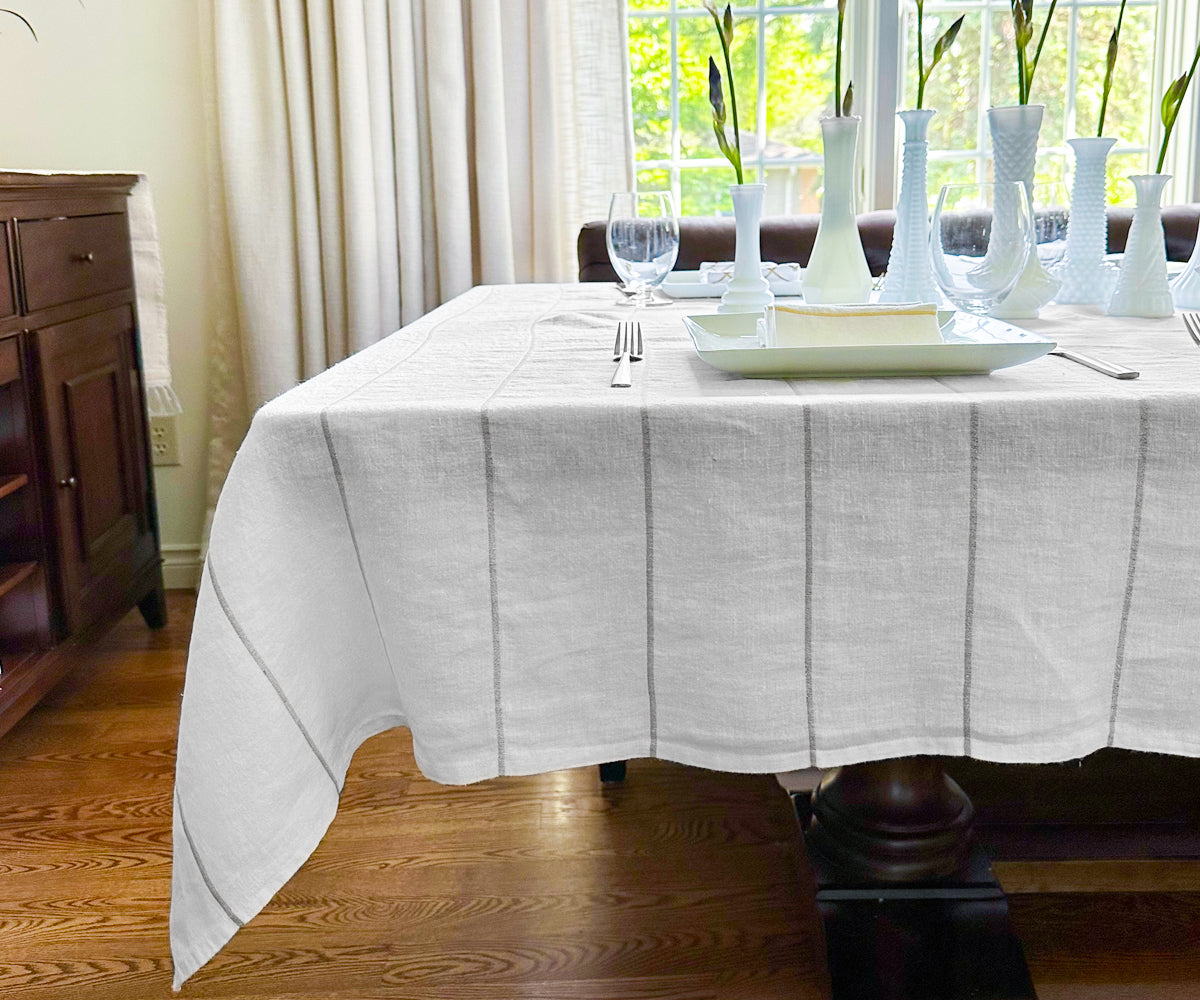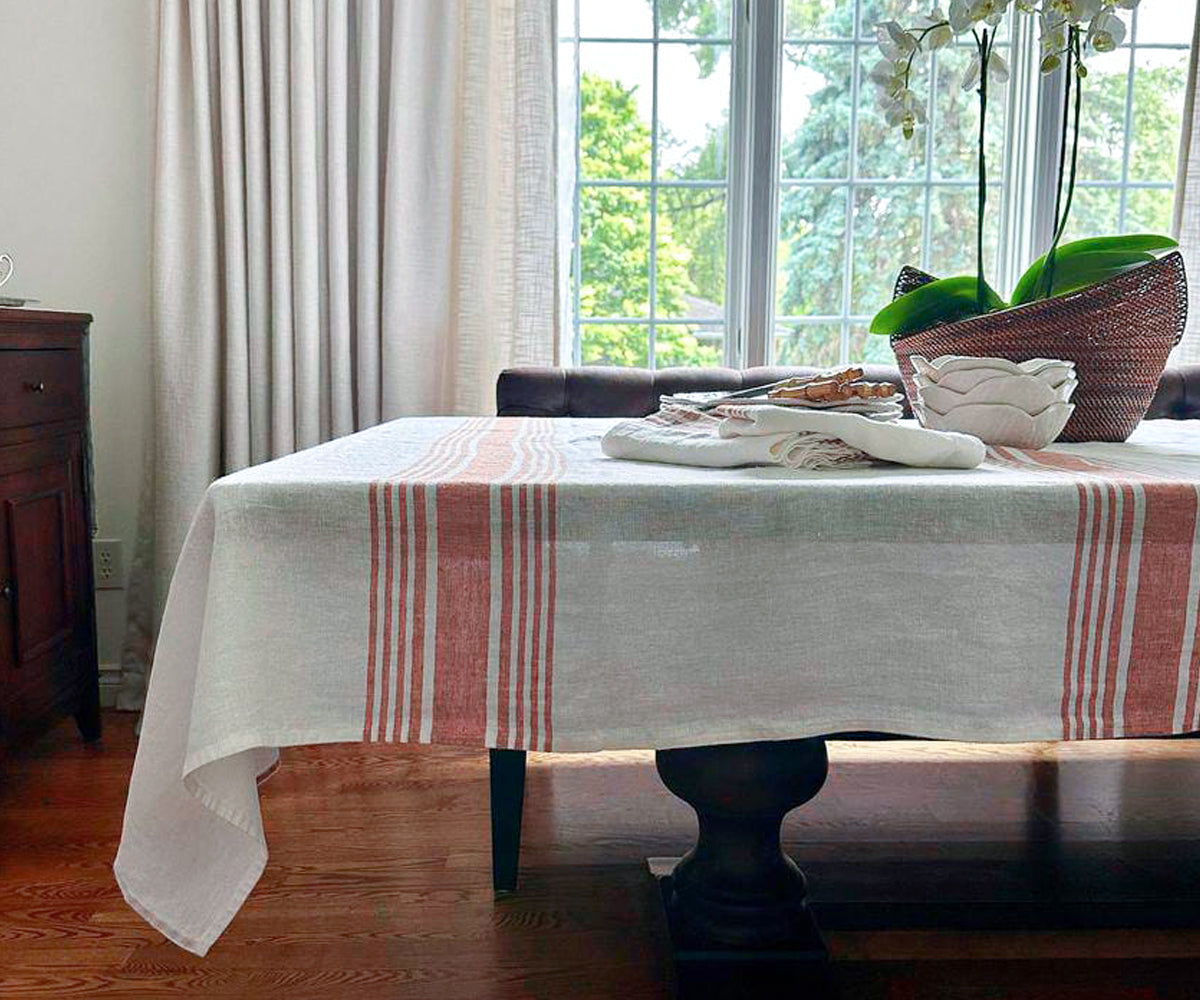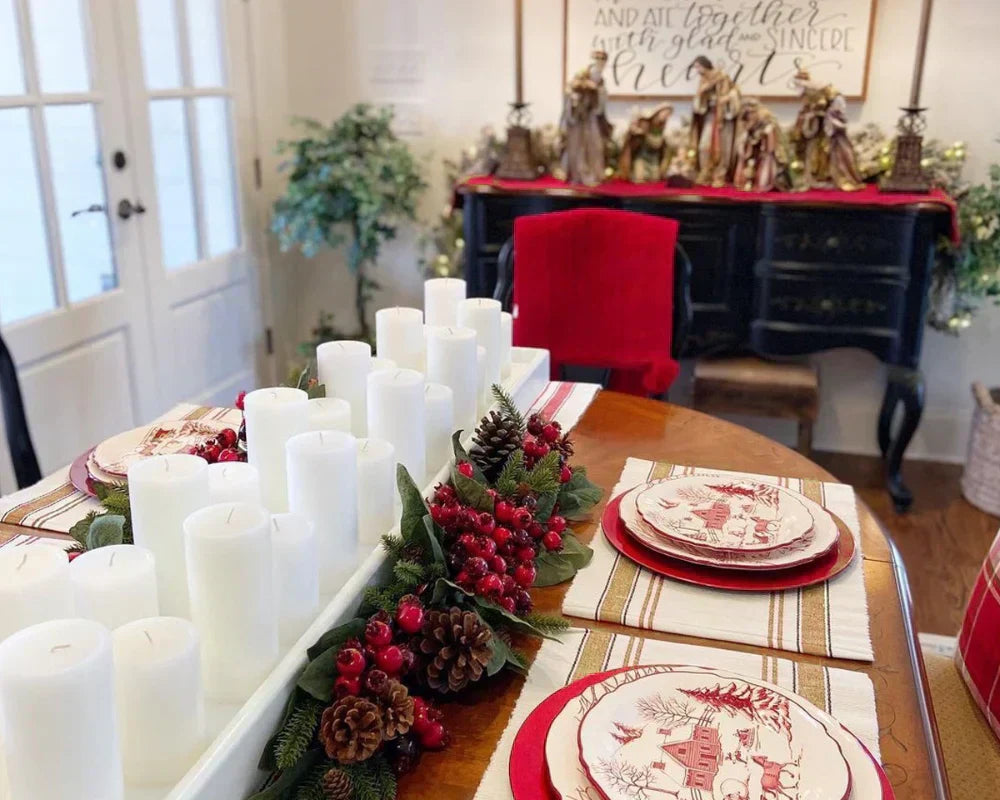



Walk into a restaurant where every table has a clean, pressed tablecloth. Now walk into one where the tables are bare. The food might be identical in both. The service might be identical. But the experience feels different before anyone sits down.
This is the significance of the tablecloth, not the fabric itself, but what it signals. The table was prepared so that the meal could be considered, as the people sitting down to eat were worth the effort of presentation.
This guide explores that significance fully from the historical origins of tablecloths to the practical reasons we continue to use them, the cultural meaning they carry across different societies, the role they play in presentation psychology, and the specific way that material choice shapes the message a table sends.
The history of tablecloths, where the significance began
Understanding why tablecloths matter today requires a brief look at how they became significant in the first place.
The oldest known written reference to a tablecloth dates to approximately 100 AD in the work of the Roman poet Martial. But the practice of covering tables with fabric almost certainly predates ancient Rome and Greece, both of which used fine fabrics on dining surfaces as signals of wealth and refinement. Roman banquets were theatrical events in which the table covering was as much a part of the spectacle as the food served on it.
In medieval Europe, the tablecloth became one of the clearest visible indicators of social standing in domestic life. The whiter the cloth and the longer its drop, ideally touching the floor, the higher the status of the household. Elaborately embroidered tablecloths were brought out only for feasts attended by significant guests, functioning as an early form of conspicuous hospitality.

The finest table linen in the 18th and 19th centuries was woven in Ireland, renowned for its craftsmanship, whiteness, and strength. Irish damask tablecloths became the height of elegance across Europe, and the association between fine linen and the quality of a household's dining culture was firmly established.
By the 20th century, tablecloths had become accessible to most households across the social spectrum. White linen or cotton remained the formal standard, but colour, pattern, and a much wider range of materials became common. In modern dining culture, the tablecloth is no longer exclusively a marker of status; it is a marker of care.
Read On: Best Organic Bedding Sets for Healthy Sleep
The five reasons tablecloths are significant today
The significance of tablecloths in contemporary dining culture operates across five distinct dimensions. Each one is worth understanding separately because together they explain why a piece of fabric has remained one of the most consistently used objects in domestic and commercial dining for over two thousand years.
Protection of the table surface
The most immediate and practical significance of a tablecloth is physical protection. A dining table, particularly one made from wood, marble, or glass, is vulnerable to a long list of everyday hazards:

-
Heat from serving dishes and hot plates
-
Condensation rings from glasses and cold bottles
-
Spills from food and drink that can stain or warp the surface
-
Scratches from cutlery, serving utensils, and moving plates
-
Accumulated oils from hands and food contact over the years of use
A tablecloth placed between the table surface and the meal absorbs and intercepts these hazards at every sitting. For a quality dining table, this protection represents a real financial and aesthetic benefit. A well-maintained tablecloth can absorb the damage that would otherwise accumulate on an irreplaceable surface.
You May Also Like: Why Making Your Bed Every Day Is Important? 8 Simple Tips
Presentation and atmosphere
The second and arguably most visible significance of a tablecloth is what it does to the atmosphere of a room before anyone sits down.
A bare table is a functional surface. A covered table is a destination. This distinction, which happens at the moment a tablecloth is placed, is one of the most reliable and least expensive ways to change how a dining space feels.
Research in environmental psychology consistently finds that the visual environment of a dining space affects not only the perceived quality of the meal but also how long people stay at the table, how much they enjoy the food, and how positively they rate the experience overall. A tablecloth contributes to the visual environment of the dining space by:
-
Adding texture that the bare table surface does not provide
-
Introducing colour that coordinates or contrasts with the room's palette
-
Creating a clear, defined boundary that frames the dining space
-
Providing a visual base on which every other table element, dinnerware, glassware, and centrepiece can stand out
|
Without a tablecloth |
With a tablecloth |
|
Bare, functional surface |
Defined, welcoming dining space |
|
All visual interest from objects on the table |
A foundation that supports and enhances every object |
|
Table surface wear is visible |
Table surface protected and concealed |
|
No textural contribution |
Natural fabric texture adds warmth and depth |
|
Neutral atmosphere |
Atmosphere set before anyone sits down |
Communication of care and intention
The third significance of a tablecloth is what it communicates to the people who see it.
A tablecloth on a dining table sends a message that requires no words: someone prepared for this meal. Someone considered the occasion worth the effort of setting up properly. The people gathering here were worth that effort.
This communicative function is why tablecloths remain standard in professional dining environments, restaurants, hotels, and event venues, where the quality of the experience is explicitly what is being sold. A white tablecloth in a restaurant is not decoration. It is a promise of standard, made visible before the menu arrives.
In the home, the same principle applies at a less formal level. A household that sets the table with a tablecloth for a regular weeknight dinner is communicating something to every person sitting down at it that this meal, and the people sharing it, are worth a moment of care. This is the quiet social significance of the tablecloth in everyday domestic life.
Cultural and ceremonial significance
In many cultures, tablecloths carry specific and significant ceremonial meaning that goes well beyond aesthetics.
In Jewish tradition, the Shabbat table is covered with a white tablecloth, often an heirloom piece passed down through generations as part of the weekly observance of the Sabbath. The tablecloth is an explicit part of the ritual, not merely a decorative choice.

In many West African cultures, tablecloths are more than simple table coverings. They often feature colours and patterns that reflect the occasion, such as special fabrics for weddings, specific colours for mourning ceremonies, and unique designs for harvest celebrations. In this way, a tablecloth serves as both a practical dining accessory and a meaningful expression of cultural identity and tradition.
In formal European dining tradition, the colour and condition of a tablecloth have carried social information for centuries. A white tablecloth in pristine condition signalled a household of means. A stained or carelessly arranged cloth signalled the opposite. These associations, formed over hundreds of years of cultural practice, remain embedded in how most people respond to tablecloth conditions in formal dining environments today.
Know About: Laundry Habits for a Better Environment: Small Changes, Big Impact
Sustainability and conscious living
The fifth dimension of tablecloth significance in 2026 is sustainability. The tablecloth is one of the most powerful symbols of the shift from disposable to durable in domestic life.
A household that replaces paper placemats and paper napkins with a cotton or linen tablecloth makes a material reduction in single-use paper waste. A quality cotton tablecloth used daily for five years replaces thousands of disposable alternatives. A linen tablecloth, made from natural flax fibres that typically require minimal water and fewer chemical inputs than many other crops, is widely considered one of the more sustainable choices for home textiles. It offers durability, reusability, and a lower environmental impact compared to many synthetic alternatives.

As environmental consciousness becomes a more significant driver of consumer choices in domestic goods, the tablecloth acquires an additional layer of significance not just as a marker of care for the people at the table, but as a marker of care for the world beyond it.
Why material choice amplifies significance
The significance of a tablecloth is shaped not only by its presence but by the material it is made from. Different fabrics communicate different things, and understanding these distinctions allows the tablecloth to do more of the communicative work it is capable of.
|
Material |
What it communicates |
Best occasion |
|
White linen |
Refinement, formality, craftsmanship |
Formal dining, weddings, fine dining |
|
Natural cotton |
Warmth, accessibility, and everyday care |
Everyday home dining, casual entertaining |
|
Cotton-linen blend |
Elegance without ostentation |
Year-round, everyday, and semi-formal |
|
Printed cotton |
Personality, seasonality, informal warmth |
Casual, outdoor, seasonal dining |
|
Polyester |
Practicality, efficiency |
Events, high-volume catering |
The choice of linen, specifically a fabric that has carried associations of quality, hospitality, and care across cultures for millennia, amplifies every dimension of tablecloth significance. A linen tablecloth is not simply a functional covering. It is a material choice with two thousand years of cultural weight behind it.
The tablecloth in modern life: what has changed and what has not
Several things have changed about the role of tablecloths in the past century.
The formality requirement has relaxed significantly. The white damask tablecloth that was the universal standard for formal dining in the early 20th century is now one option among many. Natural linen in earthy tones, coloured cotton, printed seasonal fabrics, the range of materials and styles available has expanded to serve every dining context, from a formal dinner to an outdoor lunch.
The occasions for use have expanded. Tablecloths are no longer reserved for formal meals or special occasions. Every day, home dining with a quality cotton or linen tablecloth has become increasingly common as households recognise the practical and atmospheric value of a covered table.

The sustainability dimension is genuinely new. Previous generations did not choose tablecloths with environmental impact as a consideration. In 2026, the eco-credentials of linen and organic cotton are explicitly part of why households invest in quality tablecloths rather than defaulting to disposable alternatives.
What has not changed is the fundamental significance: that a tablecloth communicates care. It transforms a surface into a space. That it signals, before a single dish arrives, that the meal and the people sharing it were worth preparing for.
This is what a tablecloth has always meant. And it is what it continues to mean.
The significance of a tablecloth is not in the fabric itself. It is in what the fabric does to the surface beneath it, to the atmosphere around it, and to the experience of every person who sits down at the table it covers.
Protection. Presentation. Communication. Cultural meaning. Sustainability. These five dimensions together explain why a piece of woven fabric has remained one of the most consistently used and consistently meaningful objects in domestic life for over two thousand years.
A tablecloth placed on a dining table before a meal is an act of care made visible. And that across every culture, every era, and every dining occasion, is its deepest significance.
At All Cotton and Linen, our cotton and linen tablecloths are made from quality natural fibres that protect, present, and communicate for every occasion, from a quiet weeknight dinner to a celebration that the table will remember.
Shop our cotton and linen tablecloth collection, quality natural fibre tablecloths for every table, every occasion, and every season.