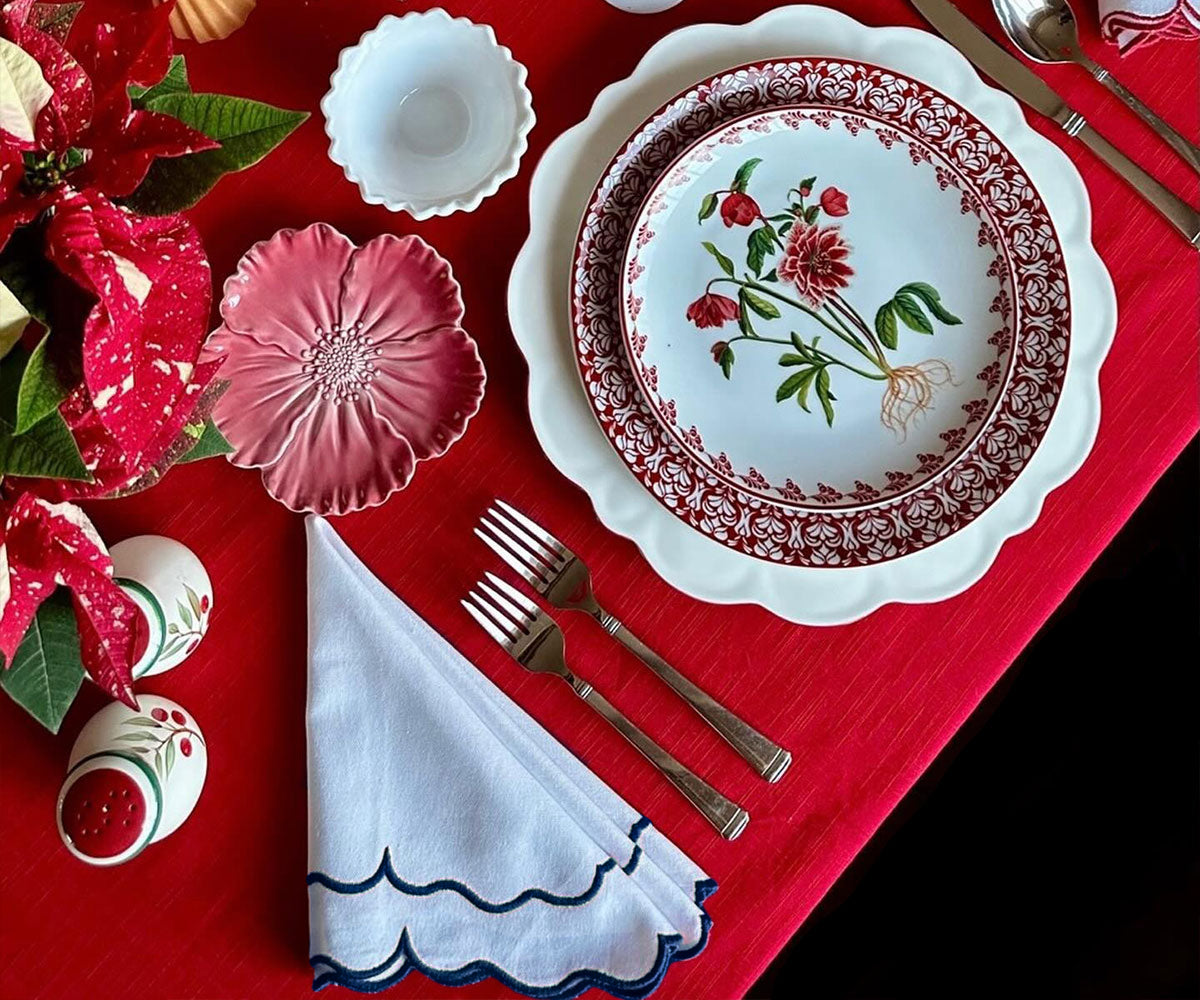



This guide covers nine specific farmhouse kitchen ideas, from the structural choices like worktops and sinks to the smaller details like kitchen towels, napkins, and table linens that together create the rustic, cozy aesthetic that defines this style.
What Makes a Farmhouse Kitchen Different?
Farmhouse kitchens are defined by their use of natural, imperfect materials and a palette drawn from the countryside: weathered wood, aged metal, stone, linen, and cotton. Unlike modern minimalist kitchens, where everything is smooth, uniform, and hidden, a farmhouse kitchen puts its character on display. Open shelving shows off everyday objects. Worn wood shows its age. Fabric adds texture and warmth where hard surfaces would feel cold.
The style works across a range of budgets and existing kitchen layouts. Some elements a farmhouse sink and reclaimed wood cabinetry, require investment. Others a striped linen kitchen towel, a cotton tablecloth on the dining table, a woven placemat are simple swaps that cost very little and have an immediate visual impact.
1. What Natural Materials Work Best in a Farmhouse Kitchen?
The single most effective way to get farmhouse kitchen decor right is to bring in raw, natural materials. Weathered wood, stone, aged metal, and natural fiber textiles all signal the same thing: this kitchen has been here a while, and it is comfortable because of that.
Start with surfaces. A reclaimed oak countertop or a chunky butcher block island immediately changes the feel of the room. Stone backsplash tiles or exposed brick on one wall add texture without overwhelming the space. For smaller budgets, a wooden cutting board, a ceramic crock for utensils, or a cast-iron skillet hanging from a pot rack achieves the same material story at a fraction of the cost.
Do not forget textiles when you are sourcing materials. A pair of softly worn linen kitchen towels draped over the oven handle or stacked near the sink brings warmth and practicality together. Linen is naturally absorbent, dries fast, and only gets softer after washing, which makes it a dependable choice for daily kitchen use.
|
Material |
Best Use For |
Budget Option |
|
Reclaimed wood |
Countertops, shelving, tables |
Wooden cutting board or tray |
|
Stone or brick |
Backsplash, accent wall |
Peel-and-stick stone tile |
|
Aged metal |
Hardware, light fixtures, faucets |
Spray-painted cabinet pulls |
|
Linen or cotton |
Dish towels, curtains, napkins |
Linen kitchen towels set |
|
Ceramic or clay |
Storage crocks, serving bowls |
Thrift store finds |

2. How Does a Rustic Dining Table Transform a Farmhouse Kitchen?
The dining table is the centerpiece of a farmhouse kitchen design. It is where people gather, and the right table signals exactly what kind of space this is.
A long rectangular table in solid pine or reclaimed oak is the classic starting point. Look for visible grain, knots, and a finish that shows some history. If the table is too perfect, it will look out of place with the rest of the rustic kitchen decor. Pair it with mismatched wooden chairs, a bench on one side, or antique stools for an approachable, collected look.
Table runners in striped or checked cotton add pattern without covering the wood entirely. Cotton kitchen towels in a coordinating color can double as casual placemats or a table runner for everyday meals, which keeps the look relaxed and functional.
For small farmhouse kitchen ideas, a round table takes up less visual space and still seats four comfortably. A pedestal base keeps the floor area open, making the room feel larger.
3. What Vintage Pieces Add Authentic Farmhouse Charm?
Vintage decor is what separates a farmhouse kitchen that looks designed from one that feels genuinely personal. The key is to mix old and new pieces so the vintage elements stand out rather than making the kitchen feel like a museum.
Flea markets, estate sales, and online vintage marketplaces are the best places to find one-of-a-kind items. Look for antique clocks, hand-painted ceramic canisters, old wooden spice racks, woven baskets, and enamel colanders. These pieces add personality at a low cost.
A vintage chandelier over the dining table has a significant impact on the overall mood of the room. Copper or wrought iron fixtures work particularly well in a rustic kitchen.
For walls, consider framed seed catalog prints, hand-lettered signs, or a chalkboard panel near the refrigerator. These small additions reference the working farm tradition that farmhouse style is rooted in.
Find Out: Why Do Restaurants Use White Tablecloths?
4. What Are the Best Cotton Napkins for Farmhouse Kitchen Decor?
Soft, durable, and naturally textured, cotton napkins are one of the fastest ways to reinforce a farmhouse look at the table. They pair well with wooden tables, neutral ceramic plates, and simple glassware.
The best cotton napkins for farmhouse kitchen decor are made in earthy neutrals or classic patterns: natural undyed cotton, checks, stripes, or simple hemstitch borders. These options stay versatile across casual weekday meals and more intentional weekend gatherings.
Because they are reusable and easy to wash, cotton napkins also reduce waste compared to paper alternatives, which fits naturally with the sustainability values that many farmhouse kitchen fans already hold.
|
Napkin Style |
Best Paired With |
Farmhouse Feel |
|
Natural undyed cotton |
Raw wood, linen tablecloths, ceramics |
Very Strong |
|
Blue or black check |
White plates, enamelware, wooden boards |
Strong |
|
Striped cotton |
Simple plates, mason jar glasses |
Strong |
|
Hemstitch cotton |
Casual gatherings, everyday table sets |
Moderate |
|
Embroidered cotton |
Holiday tables, more formal settings |
Moderate |
Know More: How to transport tablecloths without wrinkles?
5. What Color Palette Creates a Calm Farmhouse Kitchen Atmosphere?
Farmhouse kitchen color ideas almost always start with neutrals. Soft white walls, warm cream cabinets, and greige countertops form the base layer that lets natural textures and materials carry the room.
Warm gray is a practical choice for lower cabinets because it grounds the space without competing with the wood tones. Sage green has become a popular accent color for farmhouse kitchens, especially on an island or a feature wall, because it feels natural and restful. Muted clay or terracotta works well in kitchens that lean toward a warmer, sun-baked look.
The goal is to keep the palette small: two to three colors plus wood tones. Adding too many shades breaks the cohesion that makes farmhouse style feel settled and calm. For soft furnishings like curtains and dish towels, staying within the same muted tonal range lets the pieces read as part of the room rather than accessories placed on top of it.
Choose the Right Color Palette
Farmhouse kitchens work within a restrained, nature-inspired color palette. The colors reference the landscape, and the style comes from earthy neutrals, soft whites, warm creams, and muted greens and blues.
Farmhouse kitchen color palette guide:
|
Color |
Where to Use |
Effect |
|
Warm white or cream |
Walls, cabinetry, tablecloths |
Clean base that shows off natural textures |
|
Natural linen |
Kitchen textiles, curtains |
Warm, organic, relaxed |
|
Warm grey |
Walls, stone surfaces |
Grounding works with wood tones |
|
Sage green |
Accent cabinetry, ceramics, and napkins |
Quietly natural, botanical |
|
Terracotta |
Ceramics, cushions, small accents |
Warm and earthy without being bold |
|
Navy or deep blue |
Striped textiles, a single cabinet color |
Strong contrast against neutrals |
|
Weathered wood tones |
Furniture, shelving, flooring |
Anchors the natural palette |
Avoid sharp, saturated colors. Farmhouse kitchens work because their palette is calm — every element sits within the same tonal range without competing for attention.
6. Why Is a Farmhouse Sink One of the Most Impactful Kitchen Updates?
A farmhouse sink, also called an apron front sink, is one of the few individual fixtures that can shift the entire personality of a kitchen. The exposed front panel gives it a presence that standard undermount sinks do not have.
White porcelain is the traditional material and still the most versatile. It suits both modern farmhouse kitchens and more traditional rustic kitchen decor. Fireclay is a more durable porcelain alternative that resists chips and staining well. Stainless steel apron sinks work in modern farmhouse spaces where the aesthetic leans cleaner.
Pair the sink with a bridge faucet in matte black or unlacquered brass. Both finishes complement natural wood tones and feel more authentic in a farmhouse setting than polished chrome.
If a full sink replacement is not in the budget, updating the faucet alone has a noticeable impact. A bridge faucet in brass over a standard sink still reads as farmhouse-influenced.
7. How Do Textured Fabrics Make a Farmhouse Kitchen Feel More Inviting?
Textiles do more visible work in a kitchen than most people expect. A woven cotton rug under the dining table softens hard floors and adds color. Linen curtains at a window let light filter through while keeping the space feeling open. A knit throw on a bench seat makes that corner look intentional and comfortable.
For cotton kitchen towels and dish cloths, texture matters as much as color. Waffle weave, ribbed cotton, and plain woven linen all have surface interest that solid, smooth fabrics lack. Layering two or three different textile textures in the same color family adds depth without introducing visual complexity.
Natural fiber materials like cotton, linen, and wool are the right choices for farmhouse kitchens. They breathe well, hold up to washing, and soften naturally over time, which only improves the lived-in quality of the space.
Related More: How to Make Your Kitchen More Stylish with Stripe Kitchen Towels
Choose the Right Kitchen Textiles
Textiles are where a farmhouse kitchen gets most of its warmth and softness. Hard surfaces, such as stone, wood, and metal, do most of the structural work, but fabric does the work of making the space feel comfortable and human.
Essential farmhouse kitchen textiles:
-
Kitchen towels — striped or checkered cotton or linen kitchen towels hung from a tap, oven handle, or towel rail are one of the most visible farmhouse kitchen details; a set of coordinating striped towels in navy and white, red and white, or natural and cream are the most classic options
-
Dish towels — flour sack cotton towels are the most practical farmhouse option, large, absorbent, machine washable, and naturally soft after washing
-
Apron — a simple cotton or linen apron in a natural or striped fabric belongs in a farmhouse kitchen; it is both functional and part of the aesthetic
-
Table linens — a cotton or linen tablecloth on the dining table, cotton placemats at each seat, and cloth napkins for everyday use rather than paper
-
Window curtains — lightweight linen curtains in natural, white, or a simple stripe filter light softly without blocking it entirely; avoid heavy lined curtains that darken the space
Best fabric choices for a farmhouse kitchen:
|
Textile |
Best Fabric |
Style Note |
|
Kitchen towels |
Cotton or linen |
Striped or checkered patterns in classic color combinations |
|
Dish cloths |
Flour sack cotton |
Plain white or natural; softens with every wash |
|
Tablecloth |
Cotton or linen |
Plain, natural, checkered, or simple stripe |
|
Napkins |
Cotton |
Matching the tablecloth or a complementary neutral |
|
Curtains |
Linen |
Natural, white, or light stripe; unlined for soft light |
|
Apron |
Cotton or cotton-linen blend |
Plain or striped; practical weight |
8. How Can a Breakfast Nook Complete a Farmhouse Kitchen Design?
A breakfast nook is one of the most searched for small farmhouse kitchen ideas because it solves a practical problem while adding a lot of character. Even a tight corner can become a seating area with a simple bench, a cushion, and a small table.
For farmhouse kitchens, the nook works best when the bench is built from the same wood as the dining table or painted in the same color as the cabinets. A ticking stripe cushion, a small stack of linen napkins, and a vase of dried flowers on the table surface complete the picture.
Woven rattan chairs at the table work well if the bench is fixed to one or two walls. The contrast between the rigid wood structure of the bench and the softer rattan weave of movable chairs adds the kind of collected over time quality that farmhouse spaces are known for.
Adding a floating shelf above the nook for cookbooks, candles, and small ceramic pieces makes the area feel like its own zone within the kitchen rather than just an extra seat
9. What Farmhouse Kitchen Backsplash Ideas Add the Most Visual Interest?
The backsplash is one of the most cost-effective places to make a farmhouse kitchen decor statement. It covers a contained area, so even materials that might feel expensive across a whole kitchen are manageable on a backsplash.
Subway tile in a white or off-white glaze with wide, dark grout is the most recognizable farmhouse kitchen choice. The dark grout lines echo the look of original farmhouse tiling and add a graphic quality that keeps the backsplash from looking too clean.
Shiplap panels behind the range area are a popular alternative that brings a warmer, more wooden texture to the focal point of the kitchen. Brick, either real or manufactured, works the same way and tends to suit kitchens that lean more rustic than modern.
For a modern farmhouse kitchen, mixing subway tile on the main wall with a single row of handmade ceramic tiles as a border creates a custom look that still reads clearly as farmhouse.
|
Backsplash Option |
Style |
Approx.Cost |
|
White subway tile |
Classic farmhouse |
$3 to $8 per sq ft |
|
Brick or faux brick panel |
Rustic farmhouse |
$5 to $12 per sq ft |
|
Shiplap wood panel |
Modern farmhouse |
$4 to $10 per sq ft |
|
Handmade ceramic tile |
Artisan farmhouse |
$12 to $25 per sq ft |
|
Peel-and-stick stone tile |
Budget farmhouse |
$2 to $6 per sq ft |
How to Bring the Whole Farmhouse Kitchen Together
The details that connect all nine ideas are simple: consistency in material (wood, stone, linen), restraint in color (two to three neutrals plus one natural tone), and a mix of old and new that makes the space feel collected rather than decorated.
Start with the biggest impact changes first. The dining table, the sink fixture, and the textiles around the space that same mix of texture can also come from materials such as reclaimed wood, limestone, brick, and stone veneer, depending on how rustic or refined you want the kitchen to feel. For feature walls or areas around a range, I-XL’s durable stone veneer is one option for adding a natural stone look, while brands such as Eldorado Stone, Cultured Stone, and MSI also offer finishes that can work alongside timber cabinetry, butcher block, and aged metal details. Choosing materials with slightly varied tones and textures helps the space feel collected over time rather than overly coordinated. will do the most work quickly. Then layer in vintage finds, backsplash updates, and nook improvements as time and budget allow.
A well-organized farmhouse kitchen does not need to look perfect. Visible grain on the wood, a slightly worn dish towel on the oven rail, a stack of cotton napkins on the counter, these small imperfections signal that the kitchen is actually used, which is exactly the feeling farmhouse kitchen decor is built around.