
This guide compares cotton and linen tablecloths side by side on every factor that matters: feel, durability, care, appearance, price, and best use cases, so that you can choose the right one for your dining table.
What Is a Cotton Tablecloth?
A cotton tablecloth is made from natural cotton fiber, one of the most widely grown and used textiles in the world. Cotton tablecloths are woven from spun cotton yarn into a range of fabric structures: plain weave (flat and smooth), twill weave (diagonal texture), jacquard (woven patterns), and waffle weave (textured honeycomb surface).

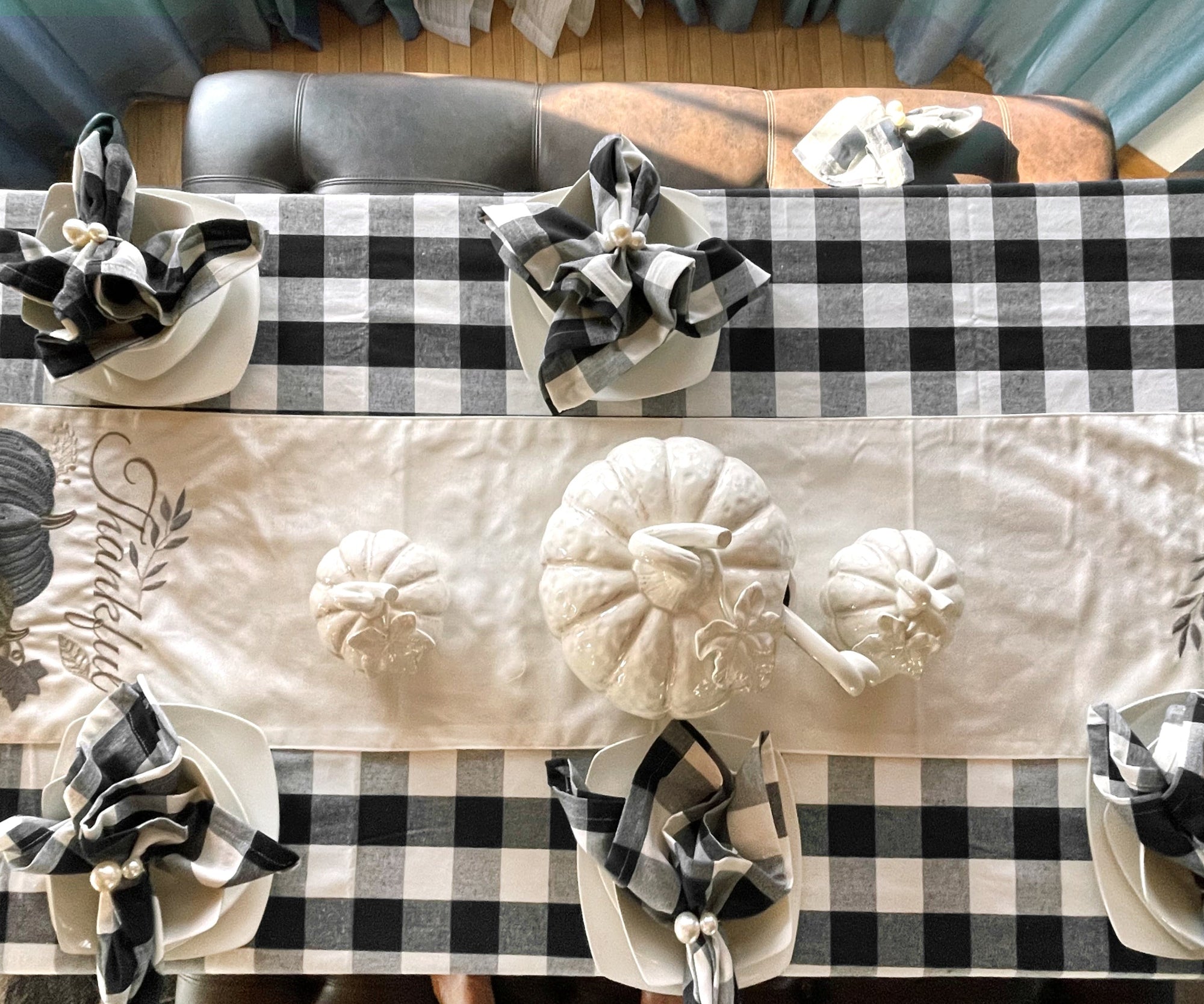
Cotton is the most common tablecloth material for everyday home dining. It's soft, breathable, machine washable, and available in every color, pattern, and size imaginable, from plain white rectangle tablecloths for formal settings to buffalo check and gingham tablecloths for casual farmhouse dining.
Cotton tablecloth types:
-
Plain cotton tablecloths (white, ivory, solid colors)
-
Gingham and checkered tablecloths (cotton woven in two-color check patterns)
-
Buffalo check tablecloths (larger-scale cotton plaid in bold two-color contrasts)
-
Striped cotton tablecloths
-
Hemstitched cotton tablecloths (cotton with drawn-thread decorative borders)
-
Embroidered cotton tablecloths
-
Printed cotton tablecloths
-
Jacquard cotton tablecloths (woven-in patterns)
What Is a Linen Tablecloth?
A linen tablecloth is made from flax fiber, one of the oldest cultivated plants in the world. Linen fabric has a distinctive texture: slightly rough when new, becoming progressively softer and more refined with every wash. It has a natural, organic appearance that reads as effortlessly elegant without being formal or fussy.

Linen is stronger than cotton at the fiber level, making linen tablecloths more durable over time. It's also naturally moisture-wicking and dries faster than cotton, which matters for tablecloths exposed to spills and condensation from glasses.
Linen tablecloth types:
-
Plain natural linen tablecloths (in undyed natural tones: cream, oatmeal, warm white)
-
Hemstitched linen tablecloths (with hand-finished drawn-thread borders)
-
Embroidered linen tablecloths
-
Striped linen tablecloths
-
Cotton-linen blend tablecloths
Cotton vs Linen Tablecloth: Head-to-Head Comparison
Feel and Texture
Cotton: Soft from the first use. A cotton tablecloth feels smooth and warm against the hands, with no break-in period required. High-quality cotton (long-staple or extra-long-staple) is noticeably softer than standard cotton. Cotton softens further with repeated washing.
Linen: Slightly textured and stiff when new. Linen has a natural roughness that smooths and softens significantly over the first five to ten washes. Once broken in, linen has a relaxed, organic softness that many people prefer to cotton, but it requires patience in the early uses.

How Do Appearance and Drape Differ Between Cotton and Linen?
Cotton:
Available in more colors, patterns, and styles than linen. Gingham, checkered, buffalo check, striped, printed, jacquard, and embroidered designs are all widely available in cotton. Cotton drapes smoothly and holds pattern and color well.
Linen:
Has a distinctive natural texture that reads as inherently elegant. The relaxed, slightly rumpled quality of linen is a design statement in itself. Linen drapes more fluidly and naturally than cotton, particularly in a tablecloth context where the weight of the fabric creates beautiful folds at the drop.
Linen tablecloths are available in fewer patterns than cotton but are widely available in a range of natural tones and hemstitched or embroidered finishes that suit formal and casual use equally.
Which Fabric Lasts Longer: Cotton or Linen?
Cotton:
Durable for everyday use. A quality cotton tablecloth lasts four to six years of regular use with proper care. Cotton fibers eventually thin and weaken at fold lines and edges with frequent washing. High-quality long-staple cotton (Pima, Egyptian) lasts significantly longer than standard cotton.
Linen:
More durable than cotton at the fiber level. Flax fiber is one of the strongest natural textiles; it actually gets stronger when wet, which means washing improves rather than degrades linen over time. A quality linen tablecloth, properly cared for, can last ten to twenty years or more. This extraordinary longevity makes linen the clear long-term value winner despite its higher upfront cost.
Which Fabric Requires Less Ironing?
Cotton:
Wrinkles moderately. Plain cotton tablecloths wrinkle after washing and benefit from ironing while damp for a crisp finish. Cotton-blend tablecloths wrinkle less than 100% cotton but sacrifice the natural feel.
Linen:
Wrinkles more than cotton; this is linen's most discussed characteristic. Fresh from the wash, a linen tablecloth will have visible wrinkles. This can be resolved by ironing while damp (linen responds very well to steam and heat) or embraced as part of linen's relaxed, natural aesthetic.
Many people who use linen tablecloths regularly come to appreciate the relaxed appearance of lightly wrinkled linen as part of the fabric's character. It looks lived-in and authentic rather than stiff.
Cotton vs. Linen Tablecloth Care: Which Is Easier to Maintain?
Caring for Cotton Tablecloths
Cotton tablecloths are simple to clean and fit easily into most household laundry routines.
-
Machine wash at 40–60°C on a normal or gentle cycle
-
Tumble dry on low heat or air dry
-
Iron on a medium setting while slightly damp for best results
-
Avoid chlorine bleach on colored or embroidered designs; use oxygen whitener for white cotton
-
Treat stains quickly with cold water and a stain remover before washing

Caring for Linen Tablecloths
Linen requires a bit more attention but remains easy to maintain with the right care routine.
-
Machine wash in cold water on a gentle cycle using mild detergent
-
Air dry flat or tumble dry on low heat to minimize shrinkage
-
Iron on a medium-high setting while the fabric is still slightly damp
-
Avoid bleach and fabric softeners, which can weaken flax fibers over time
-
Pre-treat stains with mild detergent before washing; linen's breathable weave helps release many stains effectively
Which Fabric Is Easier to Care For?
Cotton is generally easier to maintain because it can handle a wider range of washing and drying conditions. Linen needs a little more care when it comes to heat and pressing, but once you establish a routine, it remains a practical and long-lasting option.
Find Out: Can You Wash Pillows? A Complete Cleaning Guide
Cotton vs. Linen Tablecloth Cost: Which Offers Better Value?
Cotton Tablecloths: Budget-Friendly Choice
Cotton tablecloths are generally more affordable than linen. A quality 100% cotton tablecloth in a standard 60 × 84-inch size typically costs between $20 and $60, depending on the weave, design, and finish. Organic cotton, embroidered styles, and decorative details such as hemstitching usually fall at the higher end of the price range.
Linen Tablecloths: Higher Initial Investment
Linen tablecloths come with a higher upfront cost. A similar-sized linen tablecloth typically ranges from $40 to $120, depending on fabric quality, construction, and size. The higher price reflects the cost of growing flax, processing linen fibers, and the longer production process compared to cotton.
Long-Term Value and Cost Per Year
While cotton costs less initially, linen often provides better value over time. For example, a $60 cotton tablecloth that lasts five years costs about $12 per year of use. In comparison, an $80 linen tablecloth lasting fifteen years costs approximately $5 per year. Thanks to its durability, linen can be a more cost-effective option in the long run.
Which Fabric Wins on Price?
-
Best for upfront affordability: Cotton
-
Best for long-term value: Linen
Best Use Cases
Choose a cotton tablecloth when:
-
You want a tablecloth for everyday daily use
-
You have young children or a high-spill household
-
You want a gingham, checkered, buffalo check, or striped pattern
-
You want to rotate seasonal or holiday tablecloths without high investment
-
You prefer a machine-wash-and-go care routine
-
Budget is the primary constraint
Choose a linen tablecloth when:
-
You want a tablecloth that improves over the years of use
-
You're setting a formal or semi-formal table (dinner parties, holiday meals)
-
You want a natural, elegant aesthetic that works for both casual and formal occasions
-
You're willing to iron or appreciate the relaxed, wrinkled look
-
You want a long-term investment rather than a replaceable item
-
You prioritize sustainability (linen requires minimal pesticide treatment to grow)
What About Gingham and Checkered Tablecloths? Cotton or Linen?
Gingham tablecloths, the classic two-color check pattern in varying scales from small gingham to large buffalo check, are almost exclusively made in cotton. The structured, woven check pattern is achieved most cleanly in cotton, which holds the crisp color contrast of a two-color weave better than linen.
A gingham cotton tablecloth is one of the most versatile everyday tablecloth options available:
-
Red and white gingham: Picnics, Italian-inspired dining, outdoor summer meals
-
Blue and white gingham: Coastal, farmhouse, and Scandinavian kitchen tables
-
Black and white gingham: Modern, graphic, contemporary dining spaces
-
Green and white gingham: Garden dining, spring and summer tables
-
Yellow and white gingham: Bright, cheerful kitchen and breakfast tables
Gingham tablecloths in cotton machine wash easily, hold their color and pattern through repeated washing, and suit casual to semi-formal settings. For anyone drawn to the gingham pattern, cotton is the clear and appropriate fabric choice.
Learn About: What Is Percale? A Complete Guide to Crisp, Cool, and Winter-Ready Bedding
Cotton-Linen Blend Tablecloths: The Middle Ground
A cotton-linen blend tablecloth combines the best qualities of both fibers: the softness and ease of cotton with the texture, drape, and durability of linen. It wrinkles less than pure linen, feels softer than pure linen from the first use, and is typically more affordable than pure linen while offering a more refined aesthetic than plain cotton.

For households that want the linen look without the full linen care commitment, a cotton-linen blend is the most practical everyday choice in the "elevated" tablecloth category.
Side-by-Side Summary Table
|
Factor |
Cotton Tablecloth |
Linen Tablecloth |
|
Initial softness |
Excellent |
Moderate (improves over time) |
|
Long-term feel |
Very good |
Excellent |
|
Durability |
4–6 years |
10–20+ years |
|
Drape |
Good |
Excellent |
|
Wrinkle resistance |
Moderate |
Low (wrinkles easily) |
|
Pattern variety |
Extensive |
Limited |
|
Care ease |
Easy |
Moderate |
|
Upfront cost |
Lower |
Higher |
|
Long-term value |
Moderate |
Excellent |
|
Sustainability |
Moderate |
High |
|
Best for |
Every day, casual, patterned |
Formal, long-term, natural aesthetic |