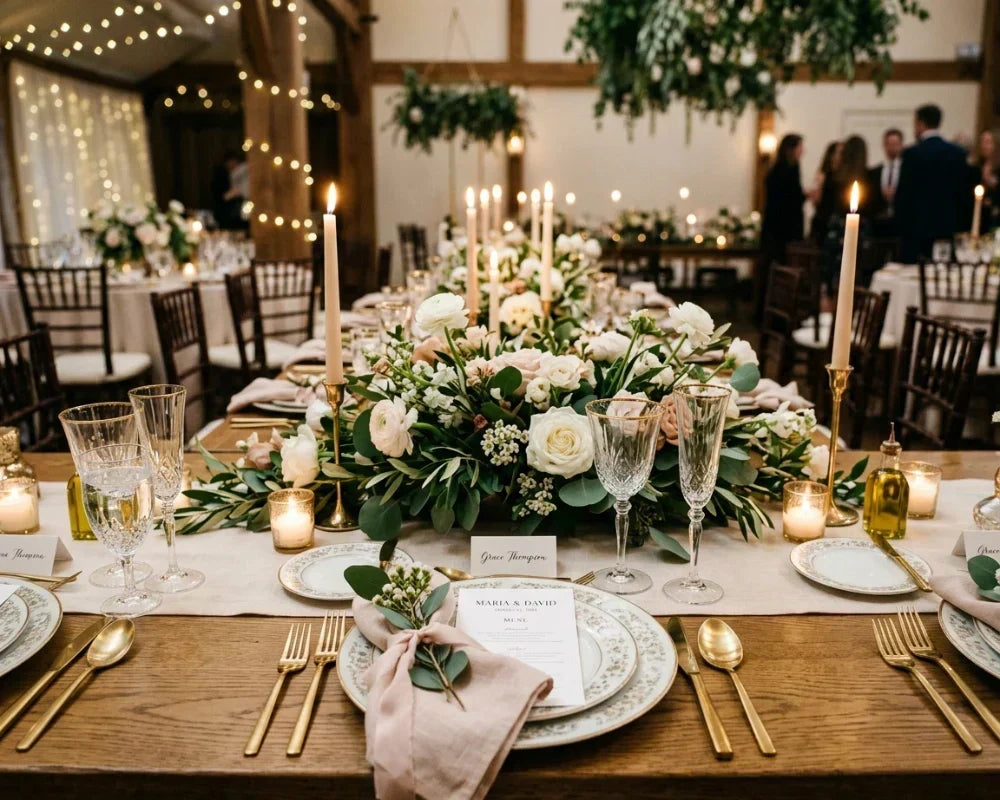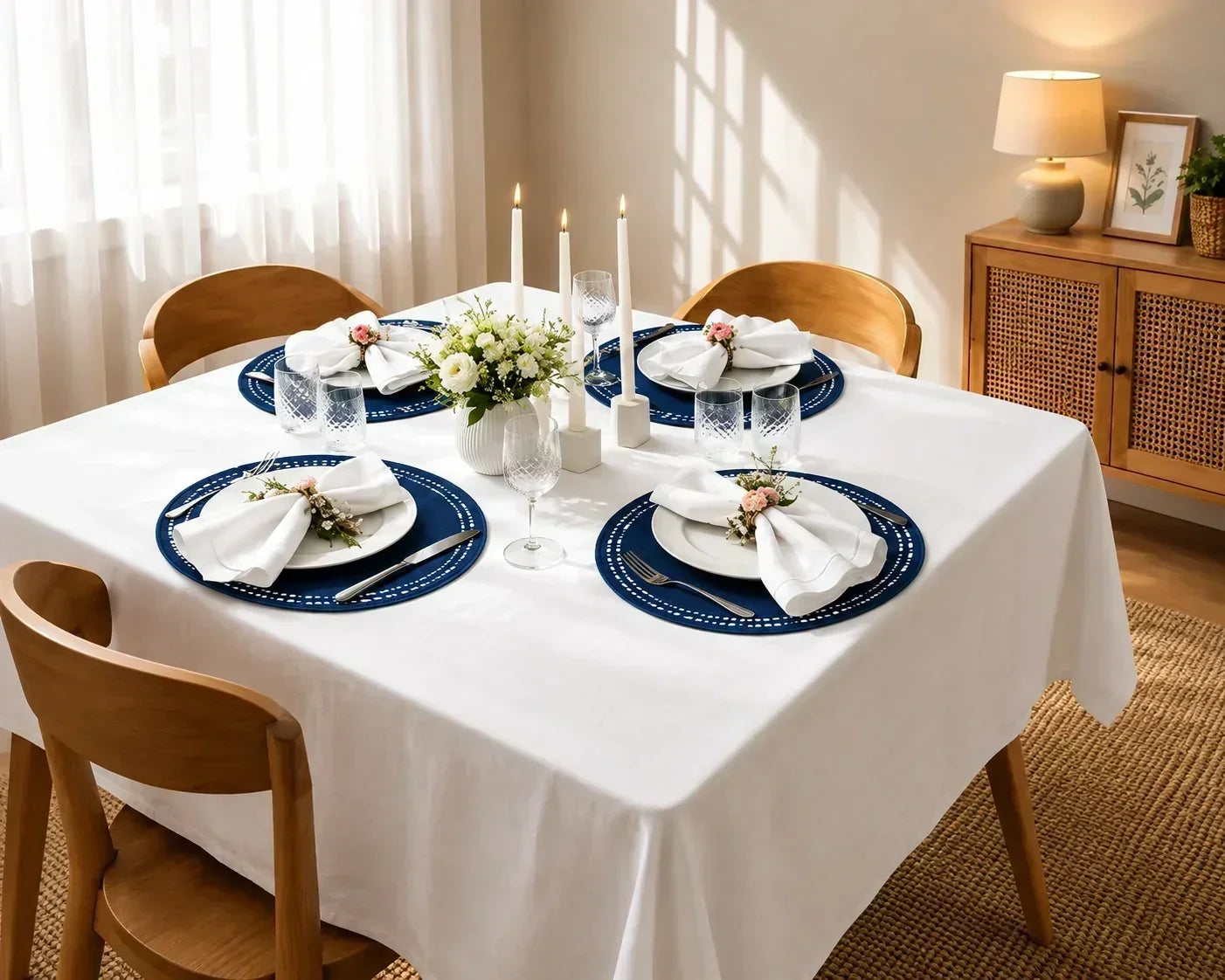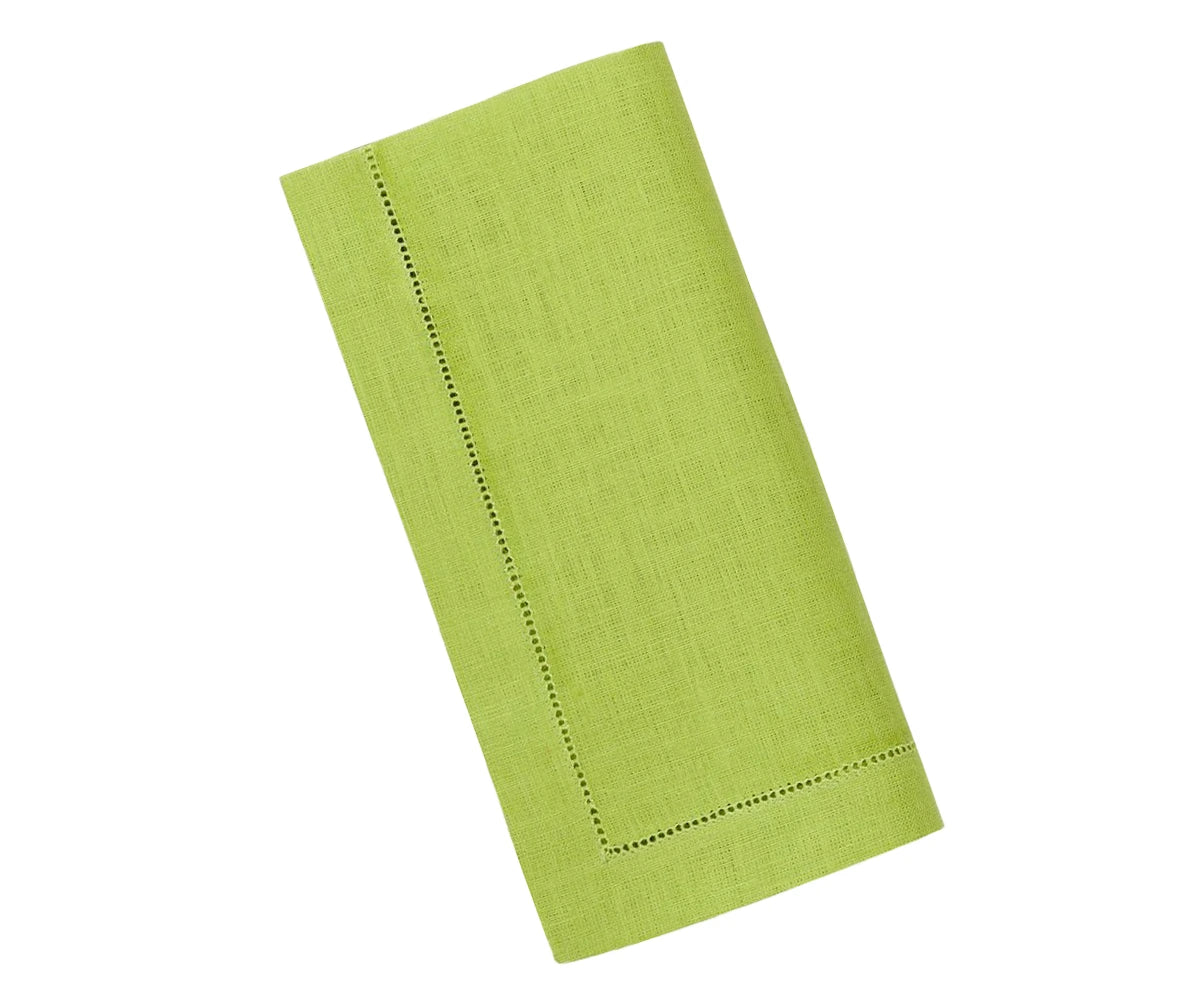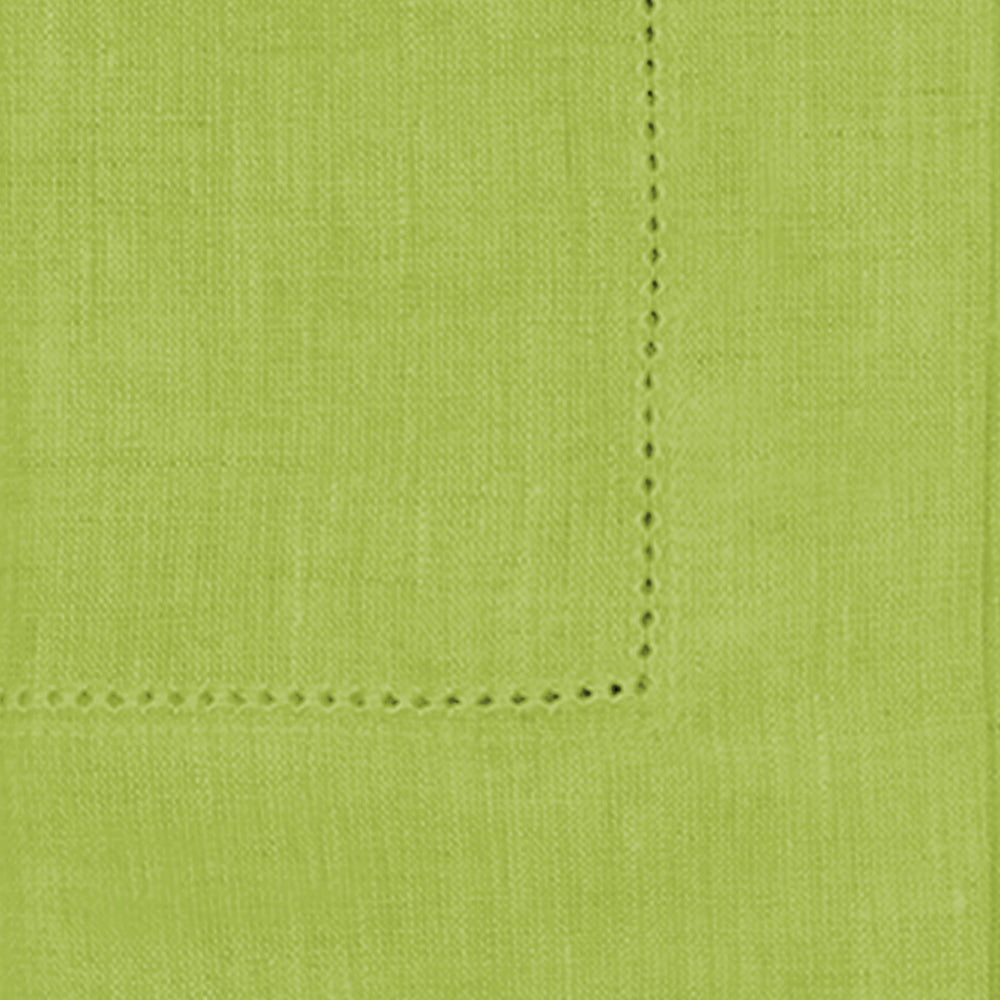

The truth is, choosing the right napkin for your occasion is not complicated, but it does require knowing a few key things: what fabric works best, which size is appropriate, which style suits the occasion, and how color choice shapes the entire table's mood.
This guide answers all of it. Whether you're setting a table for a casual family dinner, a holiday feast, a corporate event, or a wedding reception, you'll find exactly what you need here with comparison tables, size charts, color guides, and occasion-by-occasion recommendations.
Why Napkin Choice Matters More Than You Think
Napkins serve two purposes simultaneously: functional and aesthetic. Functionally, they protect clothing and allow guests to clean their hands and mouths during a meal. Aesthetically, they are one of the most powerful tools in table design.
Here's why getting this right matters:
-
Napkins are the item guests physically pick up and hold, making texture and fabric quality immediately noticeable
-
They cover a significant portion of the plate or table surface, contributing directly to the color palette of your setting
-
A well-chosen napkin communicates effort, hospitality, and attention to detail
-
The wrong napkin, too small, wrong fabric, or clashing color undermines even a beautifully set table
The good news: once you understand a few key principles about fabric, size, style, and color, choosing the right napkin for any occasion becomes quick and intuitive.
Types of Napkin Fabrics: Which Is Best?
The fabric of your napkin determines how it feels, how well it absorbs, how it drapes, how long it lasts, and what occasions it suits. There are three main categories: natural fibers (cotton, linen), synthetic fibers (polyester, microfiber), and blends.

Cotton Napkins
Cotton is the most popular napkin fabric in the world and for very good reason. It's soft from the first use, highly absorbent, available in an enormous range of colors and patterns, and easy to wash and maintain.
Key strengths of cotton napkins:
-
Soft and smooth against the face, important for something that touches your mouth
-
Excellent absorbency cotton draws moisture in immediately, ideal for messy meals
-
Holds a crisp crease beautifully, perfect for elaborate napkin folds
-
Machine washable and tumble-dryer safe
-
Wide range of styles, colors, and patterns available
-
Gets softer with every wash
Best for: Everyday dining, family meals, holiday tables, birthdays, casual entertaining, and children's tables.
Read More: Cloth Napkins for Wedding
Linen Napkins
Linen is derived from flax plant fibers and has been the fabric of choice for formal and luxury dining for centuries. It feels slightly textured at first but softens noticeably with each wash, developing a beautiful, draping quality that cotton cannot replicate.
Key strengths of linen napkins:
-
Naturally antimicrobial flax fibers resist bacteria and fungi, making linen especially hygienic for napkins
-
Highly absorbent despite its fine texture
-
Develops a beautiful, relaxed drape over time
-
Extremely durable linen napkins last for years, even decades, with proper care
-
Eco-friendly: flax requires minimal water and no pesticides to grow
-
Naturally hypoallergenic
Best for: Formal dinners, wedding receptions, upscale entertaining, garden parties, any setting where visual elegance is a priority.
Cotton-Linen Blend Napkins
Blended napkins combine the softness of cotton with the structure and lustre of linen, creating a versatile, balanced option that works across a wide range of occasions.
Key strengths of cotton-linen blends:
-
Softer than pure linen from first use
-
More structured and durable than pure cotton
-
Wrinkles less than pure linen
-
Easier to maintain than either fabric alone
-
Beautiful light-reflecting quality from the linen content
Best for: Everyday use, casual-to-semi-formal occasions, anyone who wants a versatile napkin that works across multiple settings.
Polyester Napkins
Polyester napkins are the most affordable option and are widely used in commercial settings (restaurants, hotels, event catering). They are durable, wrinkle-resistant, and hold color well, but they lack the absorbency and premium feel of natural fibers.
Best for: High-volume event catering, budget settings, and venues prioritizing ease of care over premium aesthetics.
Verdict: For most home hosts, cotton or a cotton-linen blend is the everyday best choice. For formal dinners, weddings, and upscale entertaining, pure linen is the premium option. Polyester serves high-volume commercial use where cost and durability are the priority.
You May Also Like: Easiest Way to Decorate a Napkin with Napkin Rings: A Complete Guide
Napkin Size Guide: Which Size for Which Occasion?
Napkin size is one of the most commonly overlooked decisions, yet it signals the formality level of the occasion instantly. A napkin that is too small at a formal dinner feels inadequate; one that is too large at a casual brunch feels over-the-top.
Standard Napkin Sizes by Occasion
|
Napkin Type |
Size (inches) |
Size (cm) |
Best Occasion |
|
Cocktail Napkin |
6 × 6 – 9 × 9 |
15 × 15 – 23 × 23 |
Cocktail parties, drinks service, appetizers |
|
Tea / Luncheon Napkin |
12 × 12 – 14 × 14 |
30 × 30 – 36 × 36 |
Tea parties, casual brunches, light lunches |
|
Informal Dinner Napkin |
16 × 16 – 18 × 18 |
40 × 40 – 46 × 46 |
Everyday family dinners, casual entertaining |
|
Formal Dinner Napkin |
20 × 20 – 22 × 22 |
51 × 51 – 56 × 56 |
Formal dinners, wedding receptions, banquets |
|
Extra-Large Formal Napkin |
24 × 24 – 26 × 26 |
61 × 61 – 66 × 66 |
Black-tie events, elaborate napkin folding |
Key Size Rules to Remember
-
For everyday family meals, 16–18 inch napkins are the practical sweet spot
-
For formal dinners and weddings, 20–22 inch napkins are standard; they drape over the lap elegantly and allow for detailed folds
-
For cocktail hours: 6–9 inch cocktail napkins are essential — small enough to hold in one hand while holding a drink
-
For elaborate napkin folds (roses, birds, fans): choose 22 × 22 inch or larger; smaller napkins become too thick and bulky to hold shape
-
For children's tables: 12–14-inch napkins are easier to manage for young guests
-
Round vs rectangular tables: large 22-inch napkins can crowd small round tables; stick to 18–20 inch on bistro or round tables
Napkin Styles & Designs
Beyond fabric and size, the style and design of your napkin adds personality and polish to your table setting.
Plain / Solid Color Napkins
The most versatile option. A plain napkin in a carefully chosen color allows the rest of your table decor, centerpieces, tableware, and candles to stand out.

Best for: Any occasion. Particularly effective for formal tables where clean simplicity reads as elegant.
Hemstitched Napkins
Hemstitching is a classic finishing technique that creates a delicate openwork border around the edge of the napkin. It adds subtle sophistication without competing with other table elements.
Best for: Formal dinners, weddings, holiday tables, any occasion where you want refined detail without pattern.
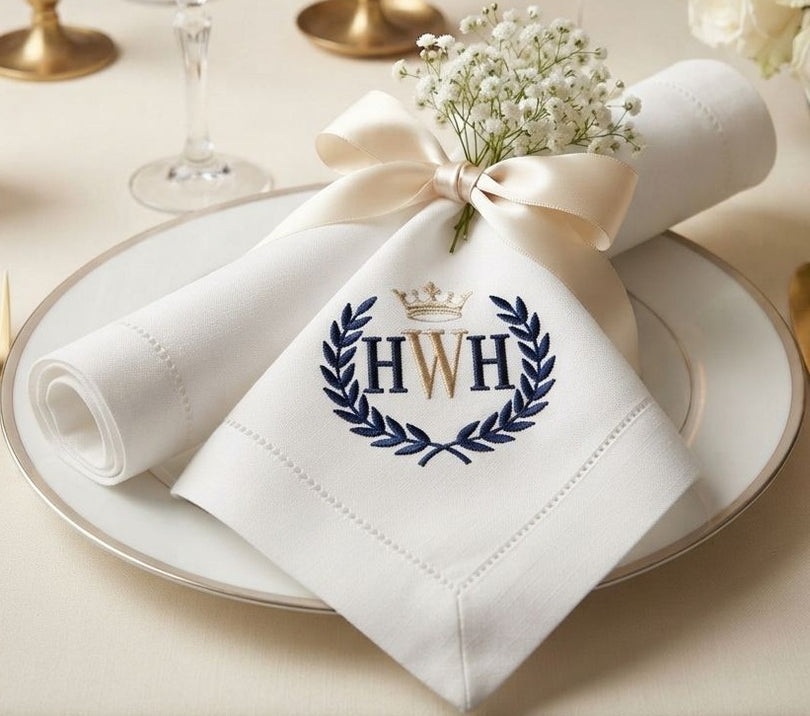
Embroidered Napkins
Embroidered napkins feature decorative stitching, florals, monograms, geometric patterns, or custom designs worked directly into the fabric.

Best for: Special occasions, personalized wedding napkins, holiday tables (Christmas, Easter), heirloom gifting.
Scalloped Edge Napkins
Napkins with a scalloped (curved wave) edge rather than a straight hemmed border. The scallop adds a gentle, romantic quality.
Best for: Garden parties, spring and summer entertaining, bridal showers, feminine table settings.
Printed Napkins
Printed napkins feature patterns applied to the surface of the fabric, such as florals, geometric prints, seasonal motifs, abstract patterns, or custom graphics.
Best for: Casual entertaining, themed parties, holiday tables (Thanksgiving, Christmas, Easter), brunches, and children's tables.
Lace Napkins
Lace napkins or napkins with lace trim bring a delicate, vintage quality to the table.

Best for: Weddings, bridal showers, afternoon teas, vintage-themed events, and romantic dinners.
Fringe and Tassel Napkins
Napkins with fringe or tassel edges add texture and bohemian character.
Best for: Boho weddings, outdoor entertaining, rustic or farmhouse-style table settings, casual summer events.
Napkin Styles at a Glance
|
Style |
Key Feature |
Best Occasion |
|
Plain / Solid |
Clean, versatile |
All occasions |
|
Hemstitched |
Elegant border detail |
Formal, wedding, holiday |
|
Embroidered |
Decorative / custom stitching |
Wedding, holiday, gifting |
|
Scalloped Edge |
Curved romantic border |
Garden party, bridal shower |
|
Printed |
Surface pattern or motif |
Casual, themed, holiday |
|
Lace |
Delicate lace trim or overlay |
Wedding, vintage, tea party |
|
Fringe / Tassel |
Textured edge trim |
Boho, rustic, casual outdoor |
|
Striped |
Classic stripe pattern |
Farmhouse, everyday, coastal |
|
Checkered / Plaid |
Grid pattern |
Casual, picnic, country |
|
Metallic |
Gold/silver shimmer fabric |
New Year, gala, black-tie |
How to Choose Napkin Color for Every Occasion
Color is the fastest way to set the mood of your table, and your napkin is often the most prominent splash of color on it.
The Psychology of Napkin Color
|
Color |
Mood It Creates |
Best Occasion |
|
White |
Purity, simplicity, timeless elegance |
Weddings, formal dinners, banquets |
|
Ivory / Cream |
Warmth, softness, relaxed luxury |
Weddings, garden parties, every day |
|
Sage Green |
Freshness, nature, calm |
Spring, garden parties, boho weddings |
|
Blush Pink |
Romance, femininity, softness |
Weddings, bridal showers, Valentine's Day |
|
Deep Burgundy |
Richness, drama, warmth |
Fall weddings, formal dinners, Christmas |
|
Navy Blue |
Authority, depth, sophistication |
Formal events, winter weddings, corporate |
|
Terracotta / Rust |
Warmth, earthiness, coziness |
Fall entertaining, boho events, Thanksgiving |
|
Mustard Yellow |
Cheerfulness, warmth, energy |
Fall tables, casual entertaining |
|
Gold |
Luxury, celebration, festivity |
Christmas, New Year, galas, weddings |
|
Black |
Sophistication, drama, modernity |
Black-tie, New Year, corporate |
|
Aqua / Turquoise |
Freshness, tropical energy |
Summer, coastal, casual |
|
Lavender |
Whimsy, softness, romance |
Spring, Easter, bridal showers |
How to Coordinate Napkins With Your Table
Matching: Choose a napkin in the same color family as your tablecloth for a tonal, layered look. Example: cream tablecloth + ivory napkins.
Contrasting: Choose a napkin in a contrasting color to add visual depth. Example: white tablecloth + sage green napkins. This is often more visually interesting than a matching set.
Accent color: Use the napkin to introduce your accent color. Example: natural linen tablecloth + rust napkins + gold napkin rings.
Napkin Folding Ideas by Occasion
How you fold and present your napkins communicates as much as the napkin itself. A bishop's hat fold says formal; a simple rectangle on a plate says clean and modern; a fan in a glass says effort and artistry.

Napkin Folds by Occasion
|
Occasion |
Recommended Fold |
Placement |
|
Casual / Everyday |
Simple rectangle or square fold |
Left of the fork |
|
Informal Dinner Party |
Diagonal fold with napkin ring |
Across the plate |
|
Formal Dinner |
Bishop's hat or goblet fan fold |
In the wine glass or on a plate |
|
Wedding Reception |
Rose fold, lily fold, or pocket fold |
On the charger plate |
|
Cocktail Party |
Simple fold in a fan |
Stacked on a tray or in a glass |
|
Holiday Table |
Fan in glass or creative seasonal fold |
In the glass or on the plate |
|
Children's Table |
Simple square or fun pocket fold |
Left of the fork |
|
Buffet |
Rolled with cutlery inside |
In a basket or tray |
Best Napkin Folds for Elaborate Presentations
For complex folds (bird of paradise, rose, fleur-de-lis), you need a napkin that is at minimum 20 × 20 inches ideally 22 × 22 inches made from a fabric that holds a crisp crease. Cotton is the best fabric for elaborate folding because it has natural "memory" and holds its shape. Linen drapes beautifully but is less rigid for intricate structural folds.
Tip: Lightly starch your napkins before folding for crisper, more dramatic results.
Napkins by Occasion Complete Reference Guide
Everyday Family Dining
|
Element |
Recommendation |
|
Fabric |
Cotton or cotton-linen blend |
|
Size |
16 × 16 – 18 × 18 inches |
|
Style |
Plain, striped, or printed |
|
Color |
Any coordinate with your everyday tablecloth |
|
Fold |
Simple rectangle or square |
|
Placemet |
Left of the fork |
Priority: Absorbency, durability, easy care, and washability.
Casual Dinner Party
|
Element |
Recommendation |
|
Fabric |
Cotton or linen |
|
Size |
18 × 18 – 20 × 20 inches |
|
Style |
Plain, hemstitched, or softly printed |
|
Color |
Coordinate with your tablecloth — either matching or contrasting |
|
Fold |
Diagonal with napkin ring, or simple pocket fold |
|
Placemet |
On the plate or to the left of the fork |
Priority: Visual appeal plus functionality. This is your opportunity to introduce color to the table.
Formal Dinner / Fine Dining
|
Element |
Recommendation |
|
Fabric |
100% linen or high-quality cotton |
|
Size |
20 × 20 – 22 × 22 inches |
|
Style |
Plain, hemstitched, or monogrammed |
|
Color |
White, ivory, champagne, or deep jewel tones |
|
Fold |
Bishop's hat, fan in a goblet, or pyramid |
|
Placemet |
In the wine glass or centered on the charger plate |
Priority: Elegance, drape, and presentation. This is where linen truly excels.
Wedding Reception
|
Element |
Recommendation |
|
Fabric |
Linen or premium cotton |
|
Size |
20 × 20 – 22 × 22 inches |
|
Style |
Plain linen, hemstitched, embroidered, or custom monogrammed |
|
Color |
Match your wedding palette — white/ivory for classic, sage/blush/terracotta for seasonal |
|
Fold |
Rose fold, lily fold, or elegant pocket fold on a charger plate |
|
Placemt |
On the charger plate |
Priority: Visual impact, elegance, and alignment with the wedding color palette.
Pro tip: Order 10–15% more napkins than guest count to allow for replacements, spillage, and head table styling.
Holiday Table (Christmas, Thanksgiving, Easter)
|
Holiday |
Color |
Fabric |
Style |
|
Christmas |
Deep red, forest green, gold |
Cotton |
Printed, plaid, or embroidered |
|
Thanksgiving |
Rust, mustard, cream |
Cotton or linen |
Printed or plain in seasonal tones |
|
Easter |
Lavender, mint, soft yellow |
Cotton |
Printed florals or scalloped edge |
|
Hanukkah |
Navy blue, silver, white |
Cotton |
Plain or embroidered |
|
New Year |
Gold, black, silver |
Cotton or metallic blend |
Metallic or plain with a metallic ring |
|
Valentine's Day |
Blush, red, deep rose |
Cotton |
Plain or lace-trimmed |
Cocktail Party
|
Element |
Recommendation |
|
Fabric |
Cotton or linen |
|
Size |
6 × 6 – 9 × 9 inch cocktail napkins |
|
Style |
Plain, printed, or personalized |
|
Color |
Match your event theme |
|
Placemet |
Stacked on trays, in baskets, or beside drink stations |
Priority: Compact size, easy to hold in one hand, absorbs spills from glasses and small bites.
How Many Napkins Do You Need?
For Home Entertaining
The simple rule: one napkin per guest per meal. For multi-course dinners, some hosts provide two per guest (one for the meal, one for dessert).
For Weddings and Large Events
Order 10–15% more than your guest count to account for:
-
Spillage and replacements
-
Head table or sweetheart table styling extras
-
Unexpected additional guests
-
Vendor and staff use
For Restaurants and Commercial Settings
Industry standard is 2–3 napkins per cover per service. Higher-end restaurants often stock 3–4× their cover count to allow for full service rotation.
Also Read: What Is the Difference Between Napkin and Serviette?
Bulk Buying Guide
|
Event Size |
Guests |
Napkins Needed (with 15% buffer) |
|
Intimate dinner |
8 |
10 |
|
Dinner party |
20 |
24 |
|
Small wedding |
50 |
58 |
|
Medium wedding |
100 |
115 |
|
Large wedding |
200 |
230 |
|
Corporate banquet |
300 |
345 |
How to Care for Cloth Napkins
Proper care dramatically extends the life of your cloth napkins and keeps them looking their best.
|
Fabric |
Wash Temp |
Drying |
Ironing |
Special Tips |
|
Cotton |
40°C (warm) |
Tumble dry low or air dry |
Optional iron while slightly damp for the crispest result |
Wash darks separately the first time to prevent color bleed |
|
Linen |
30–40°C (cool to warm) |
Air dry preferred; low tumble |
Low-heat ironing while damp gives the best results |
Gets softer and more beautiful with every wash |
|
Cotton-Linen Blend |
30–40°C |
Tumble dry low or air dry |
Low heat if needed |
Less wrinkle-prone than pure linen |
|
Polyester |
40°C |
Tumble dry medium |
Not usually needed |
Avoid high heat — causes static and pilling |
Stain Removal Tips
-
Wine and food stains: Treat immediately. Blot (don't rub). Apply a small amount of mild dish soap or club soda, let sit for 5 minutes, then rinse.
-
Grease stains: Apply a small amount of dish soap directly to the stain before washing. Let it sit for 10–15 minutes before laundering.
-
Lipstick: Apply a small amount of rubbing alcohol on a cloth, dab the stain gently, then wash normally.
-
General rule: The faster you treat a stain, the easier it is to remove. Never put a stained napkin in the dryer before the stain is fully out; heat sets stains permanently.
-
Sustainable Napkins: Why Cloth Always Wins
One of the most significant and easy sustainable swaps any household or event host can make is replacing paper napkins with cloth napkins.
Cloth vs Paper Napkins: Environmental Impact
|
Factor |
Cloth Napkins |
Paper Napkins |
|
Uses |
200–500+ washes over its lifetime |
Single use |
|
Material |
Natural fibers (cotton, linen) |
Trees/wood pulp |
|
Waste per year (family of 4) |
Near zero |
Approximately 2,000+ napkins |
|
Feel against skin |
Soft, premium |
Rough, disposable |
|
Visual presentation |
Elegant |
Basic |
|
Long-term cost |
Lower (reusable) |
Higher (continuous purchase) |
|
Eco-friendly |
Yes, especially linen |
No |
Choosing cloth napkins is a small but meaningful commitment to reducing household waste. Linen is particularly sustainable: flax (the plant linen is derived from) requires very little water, grows without pesticides, and produces a fabric that is fully biodegradable at the end of its long life.
Shop the Perfect Napkins for Every Occasion at All Cotton and Linen
At All Cotton and Linen, every napkin in our collection is crafted from 100% natural cotton or linen, the fabrics that feel best, last longest, and look most beautiful on any table.
Whether you need everyday cotton napkins for family dinners, elegant linen napkins for a formal dinner party, personalized wedding napkins in bulk, or seasonal holiday sets, our collection has exactly what you're looking for.
Browse our full napkin collection at All Cotton and Linen and set a table worth remembering, every single time.