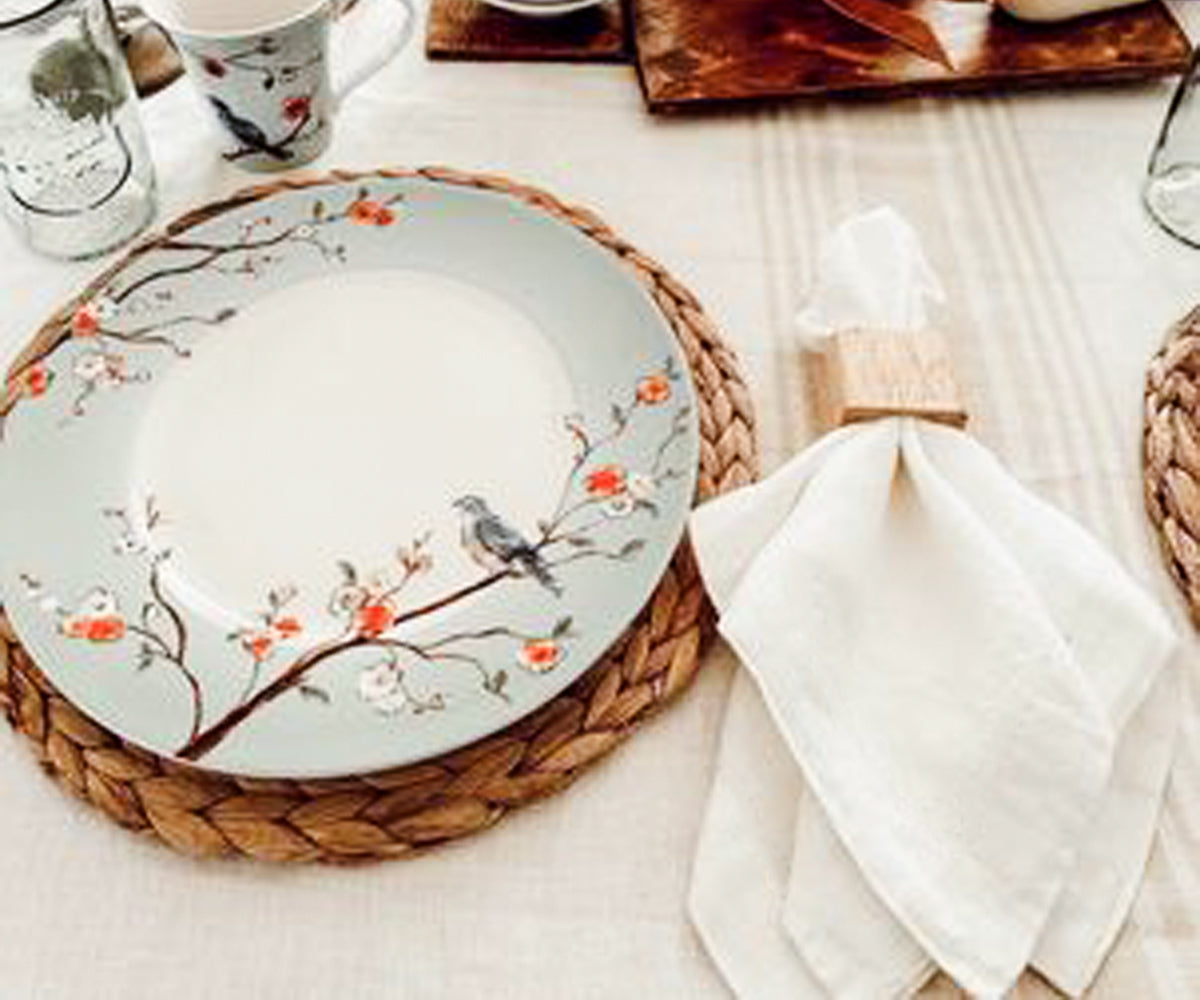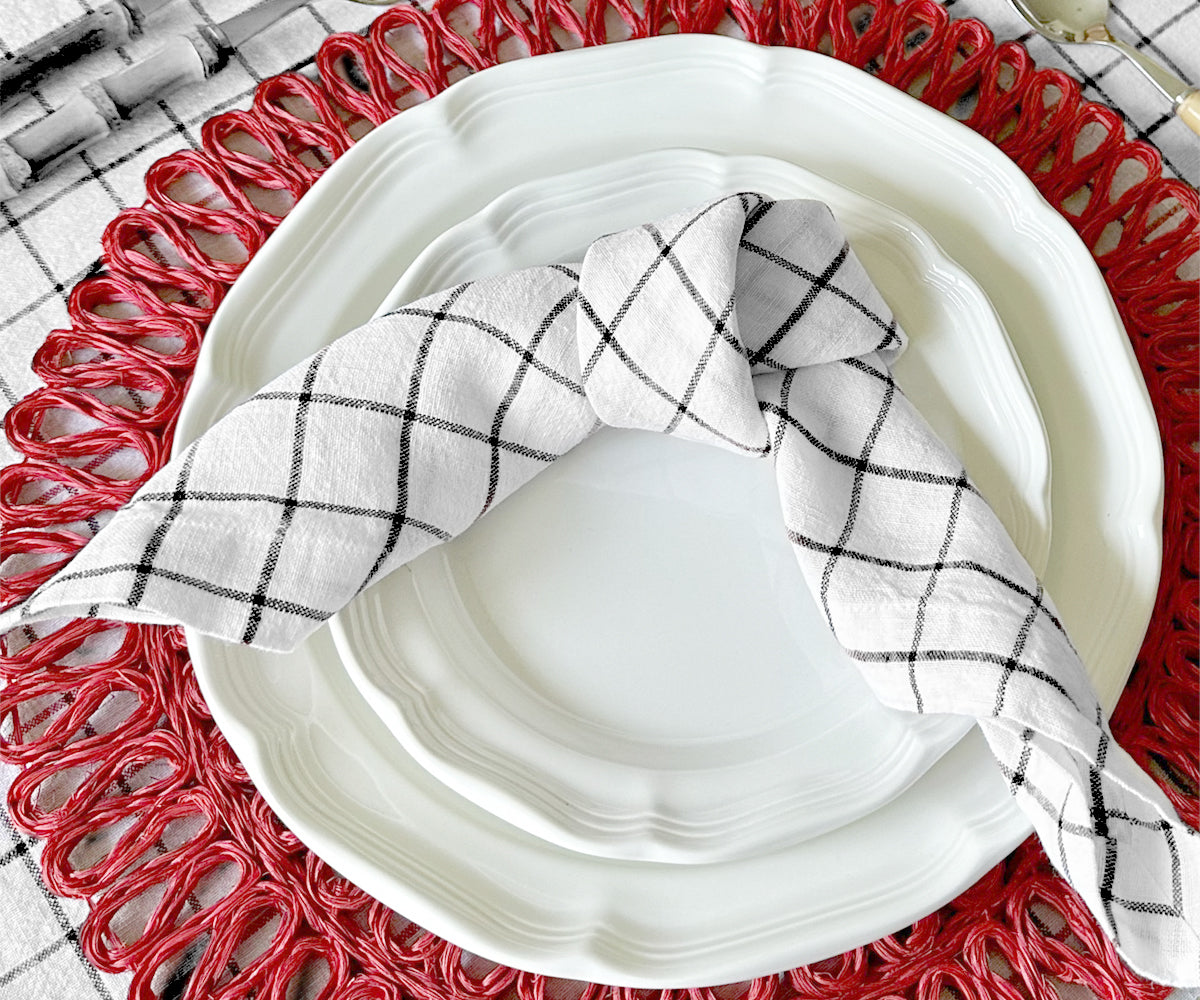


Cloth napkins in cotton or linen work far better than paper with napkin rings. The fabric holds its fold, drapes naturally, and photographs beautifully.
A napkin ring is one of the most quietly powerful table accessories available. Small, simple, and inexpensive, it transforms a cloth napkin from a flat square of fabric into a considered, styled element of the place setting. It adds vertical interest to the table surface, signals that the table was set with intention, and, when chosen to coordinate with the tablecloth or the centrepiece, ties the whole composition of the table together in a way that no other single accessory manages.
The most common question about napkin rings is also the most practical one: What is the easiest way to actually use them? The fold technique matters. The napkin material matters. The placement on the table matters. Get these details right, and the finished result looks as though the table was styled by someone who really knows what they are doing. Get them wrong, and even a beautiful napkin ring looks like an afterthought.
This guide covers everything from the simplest to the most impressive, a complete guide to napkin ring types, placement options for every setting style, seasonal decoration ideas, and the care and maintenance tips that keep both napkins and rings in perfect condition.
Why are cloth napkins essential for napkin rings?
Before the folding techniques, one point needs to be clear: napkin rings are designed for cloth napkins. Paper napkins can be slid through a napkin ring in a pinch, but the effect is underwhelming. Paper does not hold a fold, does not drape, and does not create the visual weight that makes a napkin ring look intentional rather than decorative for decoration's sake.

Cotton and linen napkins are the ideal choices. Cotton napkins are soft, smooth, and available in every colour. They hold folds cleanly and are forgiving enough for techniques that require a small amount of hand shaping. Linen napkins have a more natural body; the slight stiffness of the flax fibre means linen holds a fold particularly well, creating crisper, more defined shapes through a napkin ring than cotton does.
The ideal napkin size for use with a napkin ring is 18 by 18 inches or 20 by 20 inches. Smaller cocktail napkins can be used with narrow rings, but do not produce the generous, flowing effect that a full dinner napkin creates. Larger napkins, 22 inches or above, can become unwieldy inside a narrow ring.
|
Napkin type |
Best with napkin rings |
Why |
|
100% cotton dinner napkin |
Excellent |
Soft, smooth, holds fold cleanly |
|
100% linen dinner napkin |
Excellent |
Natural body holds a fold with crispness |
|
Cotton-linen blend |
Excellent |
Combines softness with structure |
|
Hemstitch cotton or linen |
Exceptional |
Border detail adds visual refinement |
|
Paper napkin |
Poor |
Does not hold fold, no drape |
Seven napkin fold techniques for napkin rings
Each of the following techniques works with a standard 18 to 20-inch cloth napkin and any style of napkin ring. They are listed from simplest to most elaborate.
The simple roll
This is the fastest and most foolproof technique. Fold the napkin in half to form a rectangle, then fold in half again to form a smaller rectangle. Starting from one short end, roll the folded napkin loosely toward the other end, not tightly, as a loose roll produces a more generous, organic finish. Slide the napkin ring over the centre of the roll. At each exposed end, gently fan or fluff the layers outward. The result is a symmetrical, full roll with two soft, fanned ends. This technique works for every ring style and every occasion, from casual to semi-formal.
The gather and pull
This is arguably the most universally used technique in home and restaurant settings. Hold the napkin flat at its centre with one hand. Gather it loosely from the centre downward so the four corners hang freely around your hand.

Slide the napkin ring upward over the gathered middle from the bottom until it sits approximately one-third of the way up from the centre point. Release the napkin and allow the four corners to fall naturally around the ring. Fan and adjust the upper half of the napkin so that it opens outward above the ring. The result is a full, relaxed fan above the ring with the lower half hanging below. This technique creates the most effortless, generous look of all seven methods.
The fan fold
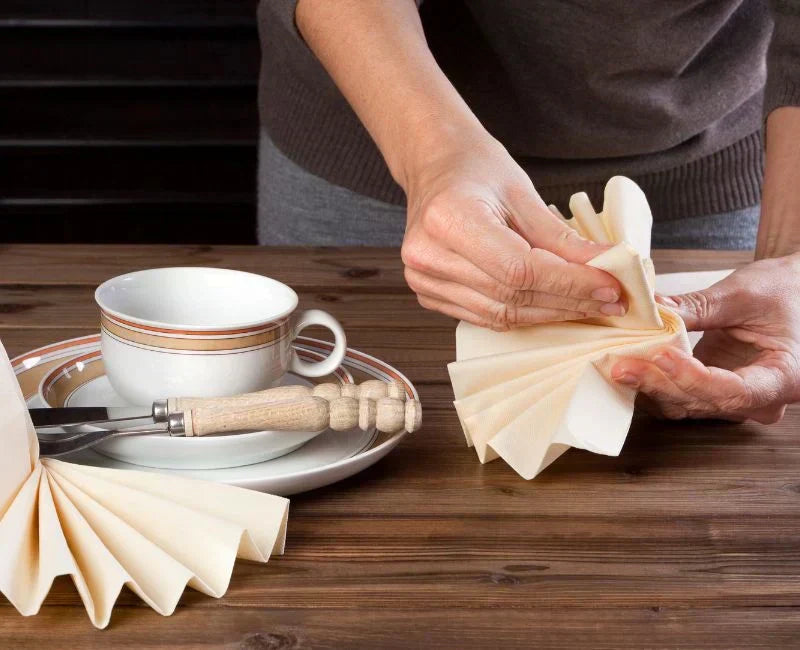
Lay the napkin flat on a clean surface. Beginning at one short edge, fold the napkin in accordion pleats of approximately one inch each, alternating the fold direction at each pleat so the napkin builds into a flat fan shape. Once the full napkin is pleated, fold the entire fan in half lengthwise so both pleated ends meet at the top.

Slide the folded end into the bottom of the napkin ring. Hold the bottom firmly and allow the top to open out into a full fan above the ring. Adjust the pleats so the fan is even on both sides. This technique requires slightly more care than the previous two but creates the most formal and impressive result. It is the standard for restaurant settings.
Also Read: Festive Table Decor for July 4th Party Ideas 2026
Step by step for the fan fold:
The rosebud fold
This technique creates a soft, flower-like shape that works particularly well for romantic occasions and spring or summer tables. Fold the napkin in half diagonally to form a triangle. With the long edge facing you, roll the two bottom corners upward toward the apex of the triangle until the napkin forms a loose cylinder. Bring the two rolled ends together to form a circular base and tuck one end inside the other to hold the shape. Place the ring around the base to secure. Gently peel back the loose upper layers from the inside of the ring to open the centre. This creates the rosebud or open flower effect above the ring.
The simple rectangle
This is the most formal and understated technique, the one used for fine dining and white tablecloth restaurant settings. Fold the napkin into a precise rectangle by folding in thirds lengthwise and then folding in half. The result is a neat, flat, precisely folded rectangle. Slide the ring over the rectangle from one short end until it sits at the centre.

Place the decorated napkin horizontally on the charger plate or vertically to the left of the cutlery. The clean, unadorned rectangle communicates precision and formality; the effect is elevated entirely by the quality of the napkin fabric and the ring itself.
The knot
Lay the napkin flat and roll it loosely from corner to corner to form a long, soft tube. Tie a single loose knot at the centre of the tube. Slide the napkin ring over one end of the tube until it rests behind the knot. The knot sits in front of the ring, and the remaining fabric trails on each side. This technique works best with lightweight cotton napkins that can be tied without becoming too stiff or bulky.
The bishop's hat pull-through
Fold the napkin diagonally to form a triangle with the point facing upward. Starting at the long flat edge, roll the napkin upward toward the point, stopping when only the last three to four inches of the point remain. Hold the rolled section and slide the napkin ring over both ends from the base.

Allow the unrolled pointed tip to stand upward above the ring. Gently separate the layers of the standing point to create a two-layer decorative tip above the ring. Place on the plate or to the left of the cutlery.
Napkin ring types and when to use each
The ring style affects the final visual result as much as the fold technique. Here is how the most common ring materials and styles perform across different occasions.
|
Ring type |
Material |
Best occasion |
Character |
|
Plain metal (silver or gold) |
Silver or gold-plated metal |
Formal, fine dining |
Classic, timeless, understated |
|
Wooden or turned wood |
Natural wood |
Rustic, casual, outdoor |
Warm, organic, handcrafted |
|
Rattan or woven natural |
Jute, rattan, seagrass |
Casual, bohemian, outdoor |
Earthy, textural, relaxed |
|
Ceramic or stoneware |
Glazed ceramic |
Every day, elegant, artisan |
Handmade quality, colour variety |
|
Acrylic or resin |
Clear or coloured resin |
Contemporary, casual |
Modern, versatile, budget-friendly |
|
Napkin ring with charm |
Metal or wood with an attached decorative element |
Holiday, seasonal, themed |
Festive, personalised, decorative |
|
Monogrammed or engraved |
Silver, gold, or pewter |
Wedding, gifting, heirloom |
Personalised, special occasion |
For formal dining, silver or gold-plated rings with a plain, polished finish are the most appropriate choice. They complement hemstitch linen napkins and the overall restrained quality of a formal table without introducing a decorative element that competes with the setting.
For everyday home dining, wooden and ceramic rings are the most characterful and versatile options. Both coordinate naturally with cotton and linen napkins and work across seasonal colour changes without requiring a matching ring set for each occasion.
Related Articles: Paper Napkins vs. Cloth Napkins: Which is More Sustainable?
Where to place the decorated napkin on the table
Placement is the final decision, and it affects both the visual balance of the setting and the practicality of the guest experience.
On the charger plate:
This is the most formal placement. The decorated napkin sits in the centre of the charger, slightly lower than the rim. In fine dining settings, the folded napkin with its ring is placed here as part of the initial cover before service begins.

The charger provides a clean, dark, or neutral background that makes the napkin and ring the visual focus of the setting.
To the left of the cutlery:
The most traditional and widely used everyday placement. The napkin ring sits alongside the forks with the napkin either standing vertically or lying horizontally at the left edge of the placemat. This placement is practical for informal and semi-formal settings where the charger plate is not used.
On the placemat:
For casual settings without a charger, the napkin can rest directly on the placemat, positioned either at the top of the setting or at the left. The ring holds the fold in place and prevents the napkin from sliding across the placemat during the pre-meal period.
Across the bread plate:
For settings that include a bread plate, a loosely rolled or gathered napkin with its ring can rest diagonally across the bread plate, with the ring at the centre of the plate and the napkin ends draped over the rim on each side. This creates a charming, relaxed presentation that works well for casual entertaining.

Seasonal napkin ring decoration ideas
Beyond the fold technique and the ring style, seasonal accents added to the ring or tucked into the fold add a layer of personalisation that transforms the table for each occasion.

Spring: slip a sprig of fresh rosemary, a small stem of lavender, or a few flowers from the garden under the napkin ring alongside the folded napkin. The natural accent coordinates with the season and adds a subtle fragrance to each place setting.
Summer: tuck a small slice of dried lemon or orange under the ring, or trail a few sprigs of fresh herbs, mint, thyme, or basil alongside the napkin. For outdoor summer dining, a small raffia bow tied around the ring alongside a simple ring adds an effortless coastal warmth.
Autumn: a cinnamon stick, a small dried seed head, or a pressed autumn leaf tucked into the ring alongside the napkin fold adds warmth and seasonal character at each place. Natural materials from the garden cost nothing and create a table that feels genuinely connected to the season.
Winter and holiday: a short sprig of eucalyptus, a small pinecone, or a length of metallic ribbon tied in a bow alongside the ring transforms a simple napkin into a festive table detail. For Christmas tables, a small sprig of holly or rosemary alongside a silver or gold ring creates a classic, considered effect without elaborate effort.
Diy napkin rings: simple options to make at home
For households that want a specific colour, material, or decorative style that is not available off the shelf, making napkin rings at home is straightforward and requires minimal materials.
The simplest DIY option: cut cardboard toilet paper tubes into rings of one to two inches in width. Cover with fabric, twine, ribbon, or paint. Hot glue a decorative accent — a button, a small dried flower, a piece of woven jute — to the front of the covered ring. The result is an inexpensive, personalised napkin ring that can be made in any colour or style in under an hour per ring.

Jute wrapped rings: take a standard metal binder ring, open it, and wrap with jute twine until the metal is completely covered. Hot glue the ends. The result is a natural, earthy napkin ring that coordinates beautifully with linen napkins and wooden or natural table surfaces.
Clay rings: roll air-dry clay into a flat sheet, cut into strips, and form into rings by joining the ends. Press a decorative texture into the surface before drying leaf imprints, geometric patterns, or simple lines. Paint with chalk paint or leave natural once dry. These rings are durable, beautiful, and entirely customisable to any colour scheme.
The napkin ring is one of the smallest table accessories and one of the most rewarding to use well. It takes a cloth napkin, already one of the most overlooked upgrades to any table, and transforms it into a styled, decorative element that guests notice and remember.
The fold does not need to be elaborate. The simple gathering and pulling takes under thirty seconds and looks genuinely beautiful with a quality cloth napkin. The ring does not need to be expensive. A plain wooden ring or a jute-wrapped DIY ring coordinates naturally with linen and cotton napkins and suits any style of table from casual to considered.
Overview
What matters is the napkin. A quality cotton or linen dinner napkin with any ring and any fold produces a result that paper napkins with the same ring cannot come close to replicating. The fabric is what makes the difference.
At All Cotton and Linen, our cotton and linen napkins are made from quality natural fibres in a wide range of colours and finishes, including hemstitch borders that add a refined decorative detail that works beautifully alongside any napkin ring style or fold technique.