

Two cultures separated by thousands of miles arrived, independently, at many of the same conclusions about how a home should feel. Japan and Scandinavia both developed design traditions built on restraint, natural materials, honest craftsmanship, and the belief that a well-designed space has a quiet but measurable effect on the quality of daily life.
Japandi is what happens when those two traditions meet, and the living room is where the philosophy becomes most visible.
A Japandi living room is not sparse. It is not cold. It is not a showroom exercise in minimal styling where nothing looks lived in, and nothing invites you to sit down. It is a room where every piece was chosen with intention, where natural textures do the work that pattern and colour would do in a more maximalist space, where the light is always soft, and the atmosphere is always calm.
It is, in the language of both cultures that created it, a room that breathes.
This guide covers everything you need to understand and create a Japandi living room: the philosophy behind the style, the color palette, the furniture principles, the materials, the lighting, the textiles, and the small details that separate a Japandi space from a merely minimal one.
The philosophy of wabi-sabi meets hygge
Every strong design style is built on something more than aesthetics. Japandi is built on two philosophical concepts, one Japanese, one Scandinavian, that complement each other so naturally that it is difficult to believe they developed independently.
Wabi-sabi is a Japanese concept rooted in Zen Buddhism that finds beauty in imperfection, impermanence, and the natural aging of things. A wooden beam with visible grain. A handcrafted ceramic bowl with slight irregularities in the glaze. A linen cushion that has softened with washing and shows the texture of its fibers. Wabi-sabi does not seek perfection; it finds meaning and beauty in the authentic, the worn, the genuinely made. In a living room, wabi-sabi means valuing materials for their natural character rather than their flawlessness, and finding comfort in a space that shows signs of use and love.
Hygge (pronounced approximately "hoo-guh") is a Danish and Norwegian concept that describes a quality of cosiness, warmth, and contented togetherness. It is the feeling of a soft blanket on a cold evening, of candles lit at dusk, of a room that wraps itself around the people in it. Hygge is not a design style in itself; it is an atmosphere, a feeling that good design can create and sustain. In a Japandi living room, hygge shows up in layered textiles, warm lighting, and low seating that invites you to settle in rather than sit up straight.
Together, wabi-sabi and hygge create something that neither achieves alone: a living room that values authentic materials and honest craftsmanship (wabi-sabi) while remaining genuinely warm, comfortable, and liveable (hygge). This is the heart of Japandi minimalism that never tips into austerity, warmth that never tips into clutter.
The Japandi color palette
Color in a Japandi living room is never loud. It is chosen to soothe the eye rather than stimulate it, to create a sense of continuity with the natural materials in the room, and to let texture do the work that saturated color would do in a more traditional decorating approach.
The Japandi palette operates in layers:
The base layer is built from light, warm neutrals, off-white, cream, stone, warm ivory, and soft greige. These tones reflect natural light, make the room feel spacious and open, and provide the clean, quiet foundation that Japandi's more textural elements need to stand out against.
The mid-layer introduces earthy, nature-referencing tones: warm taupe, dusty sage green, muted clay, soft terracotta, and cool grey. These are the colours that give a Japandi room its warmth and its connection to the natural world. They echo the palette of wood, stone, earth, and plant life, the materials and textures that appear throughout a true Japandi space.

The accent layer uses deeper, more grounded tones as punctuation: charcoal, deep forest green, warm walnut brown, soft black, and occasionally a muted navy or slate blue. These darker accents prevent the room from feeling washed out or too uniform. They appear in a low-profile chair, a ceramic vase, a linen cushion in a deeper tone than the sofa, or the visible grain of a darker wood piece amid lighter ones.
Bold, saturated colours have almost no place in a Japandi living room. If a vibrant accent colour appears, it should be organic and subtle mossy green, soft terracotta, or a muted blue-grey, never primary red or bright yellow. The overall effect should be a room where the eye moves calmly from element to element, never snagging on a jarring contrast.
Read More: Decorating with Gingham – Ways to use this Classic Print in your Home
Furniture low, functional, and made from natural materials
Japandi furniture is defined by three qualities: it sits close to the ground, it serves a clear function, and it is made from natural materials with honest, visible craftsmanship.
Low-profile seating is one of the most immediately recognisable characteristics of Japanese-influenced interiors. Low sofas, floor cushions, and seating arrangements that keep the eye level close to the floor create a sense of groundedness and intimacy that higher furniture cannot replicate. The room feels calmer, more spacious, and more contemplative when the furniture does not compete with eye level for attention.
In a Japandi living room, the sofa should be streamlined and structured, with no oversized arms, no plush, bulky silhouettes that overwhelm the space. Upholstery in neutral linen, cotton, or a cotton-linen blend in beige, warm grey, or taupe keeps the sofa anchored in the palette while adding the natural textile texture that is essential to the overall look.

Wood is the most essential furniture material in a Japandi living room. Japanese design traditions favour darker wood tones, deep walnut, rich oak, and ebony-stained pieces that carry weight and depth. Scandinavian design leans toward lighter, unfinished woods, such as pale ash, natural birch, and white oak. Japandi uses both, often in the same room, creating a wood dialogue that is one of the style's most distinctive qualities. A light ash coffee table beside a walnut side table. A white oak shelving unit alongside a darker wood media console.
Functional beauty governs every piece. Japandi is rooted in the belief that everything in a room should earn its place, that an object which serves no function or carries no meaning has no right to be there. This is not minimalism for its own sake; it is the recognition that a room edited to its most intentional elements feels better to live in than one filled with things that were never truly chosen.
Natural materials, the texture language of Japandi
If colour is the palette of a Japandi living room, natural materials are its vocabulary. Wood, linen, cotton, rattan, bamboo, stone, and ceramic are the materials that give a Japandi space its character, its warmth, and its connection to the natural world.
Linen
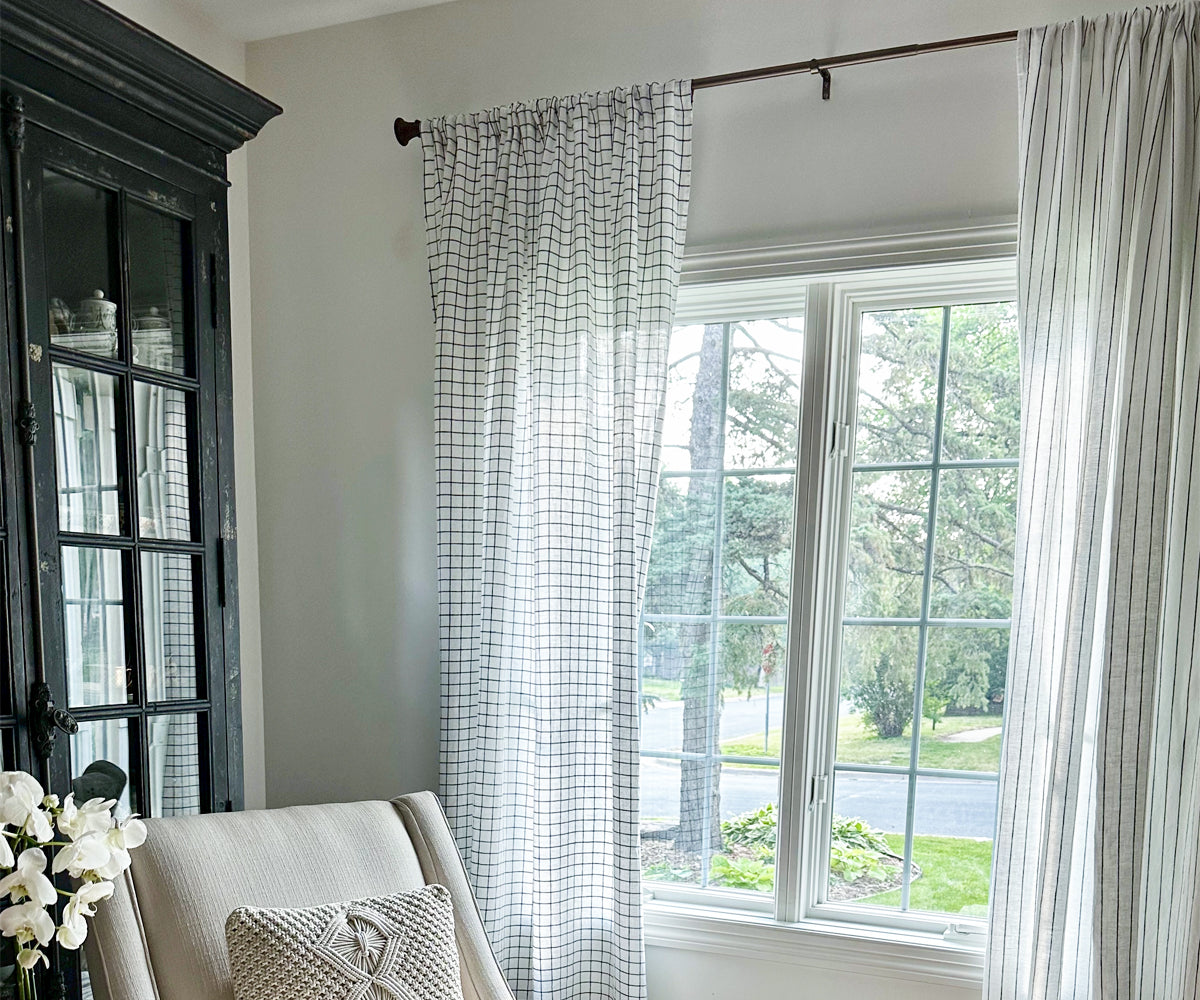
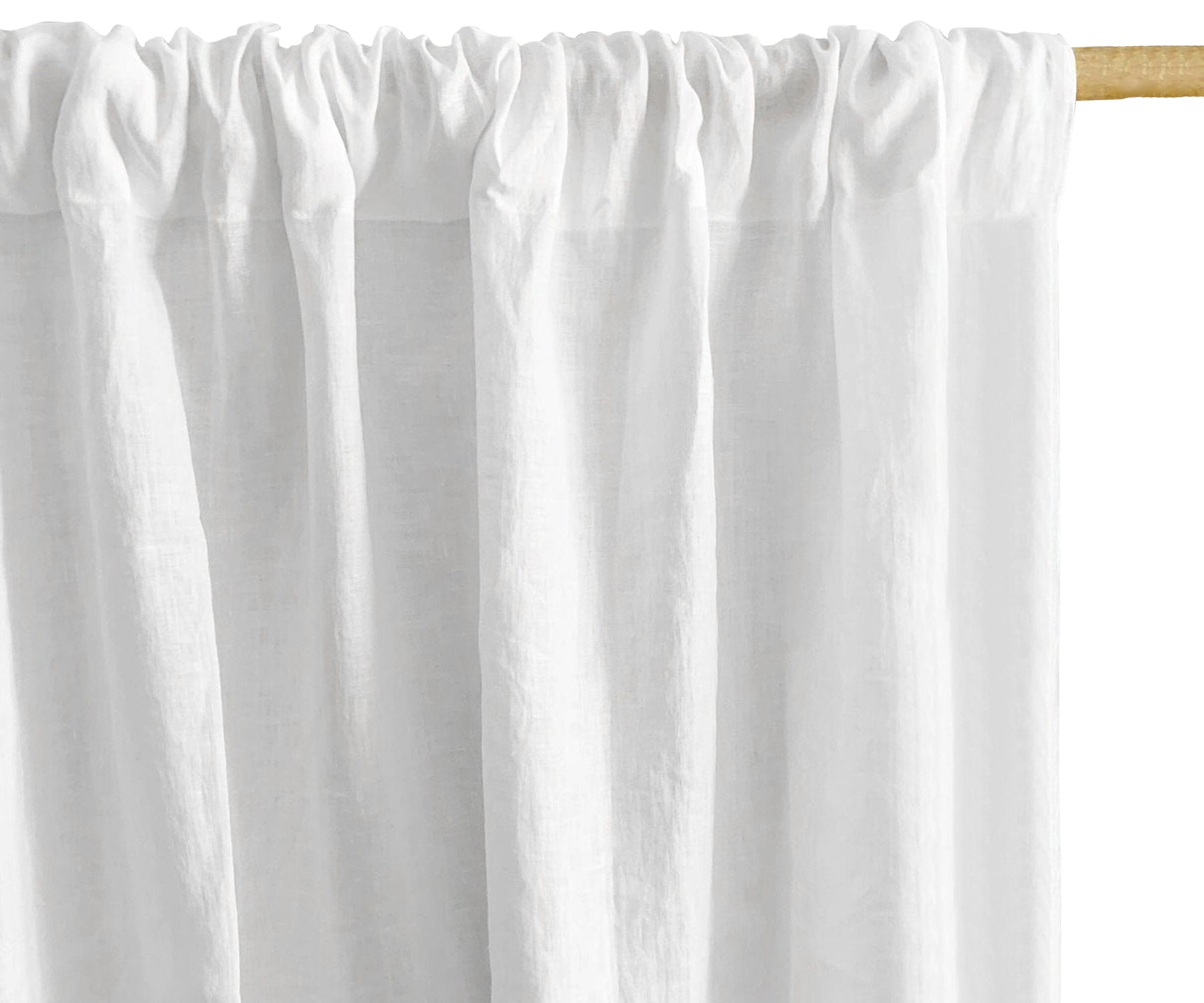
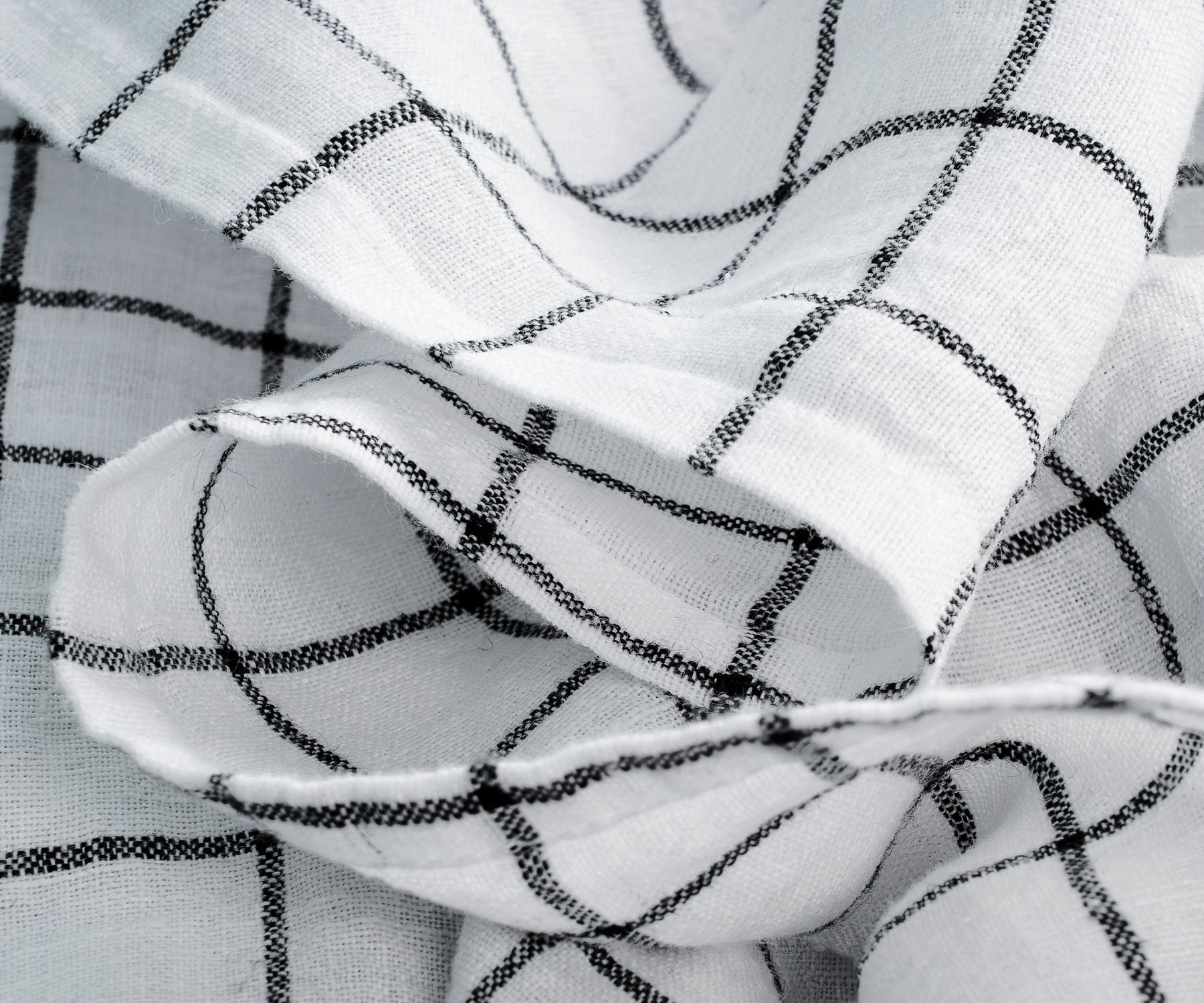
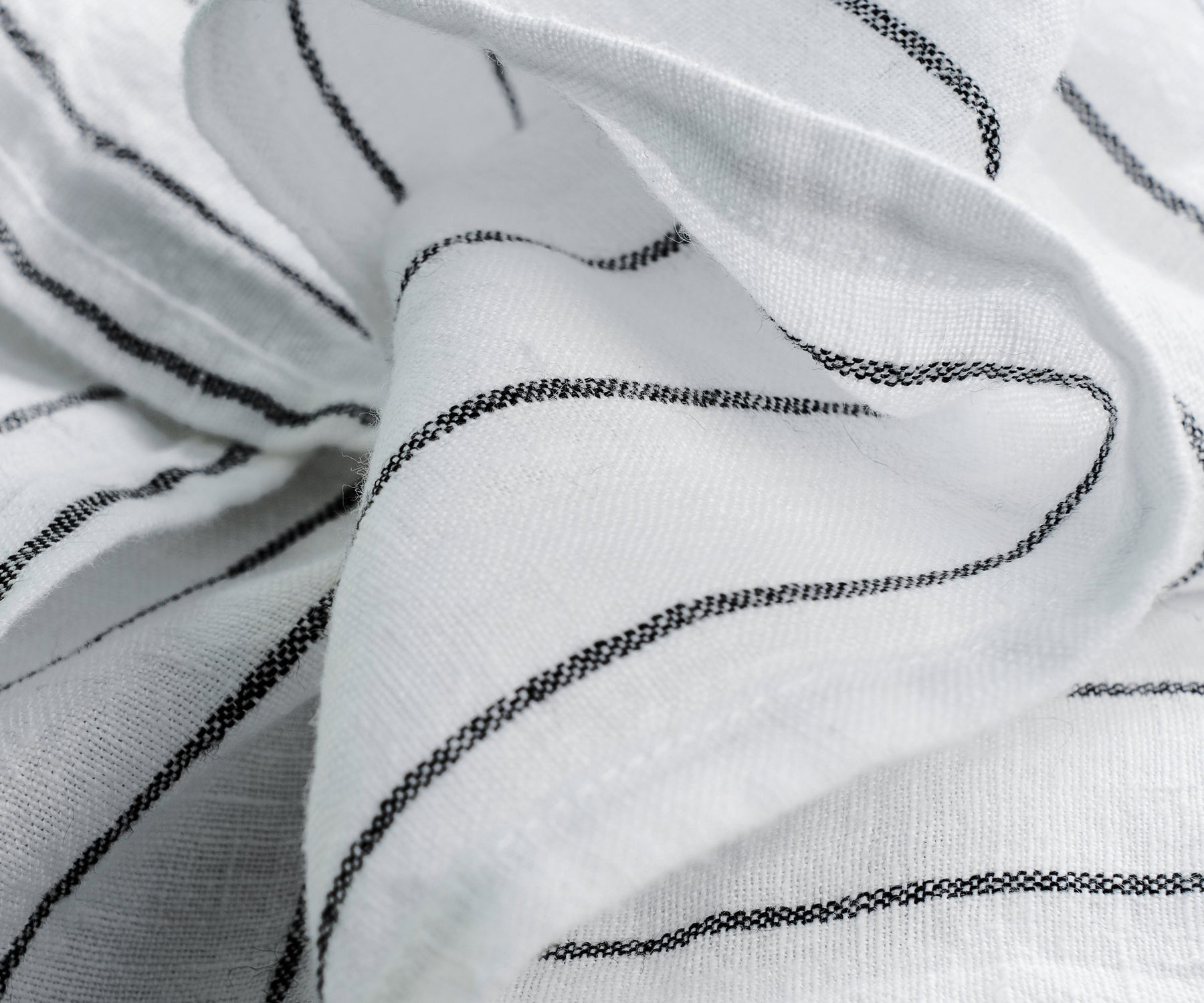
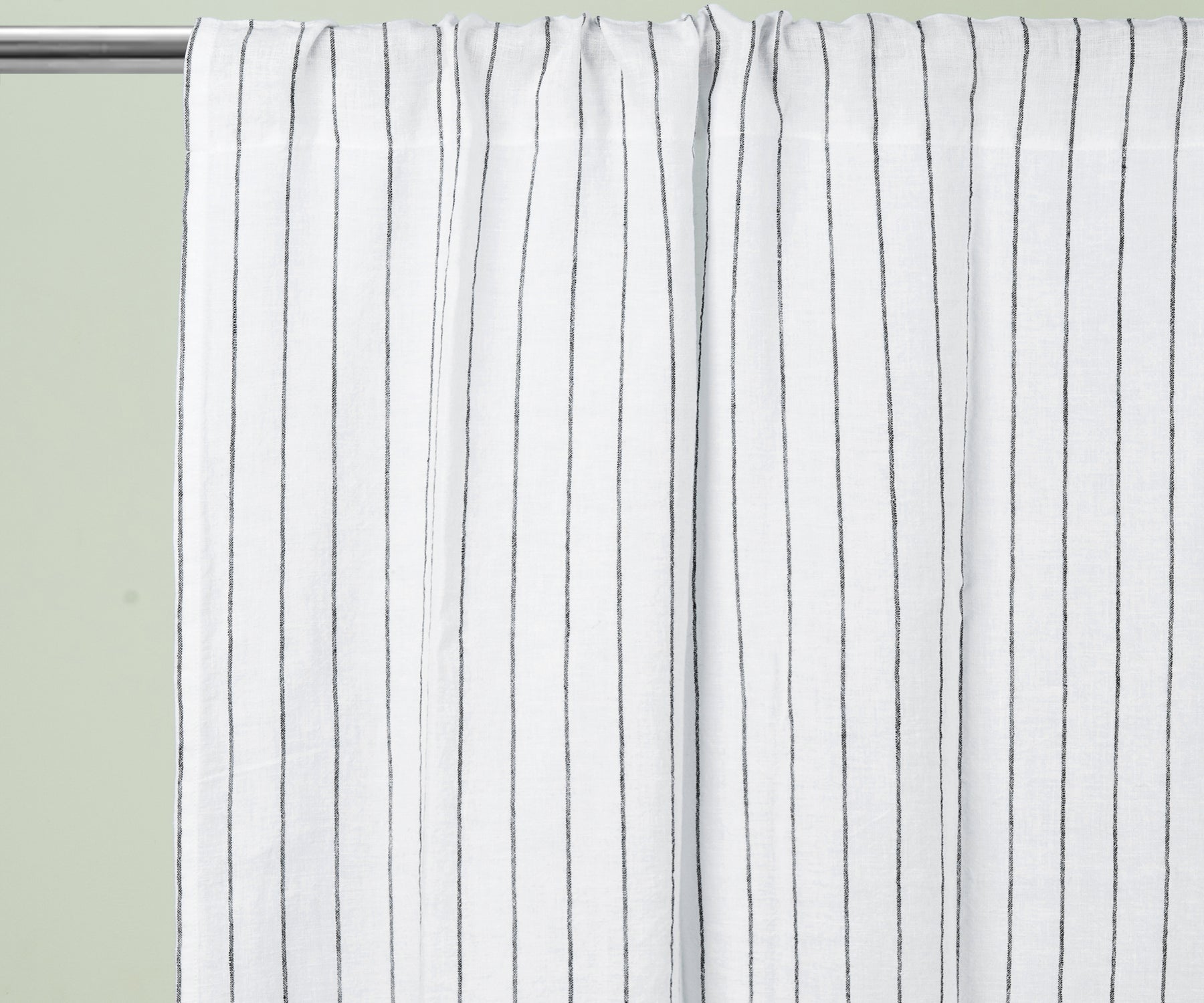
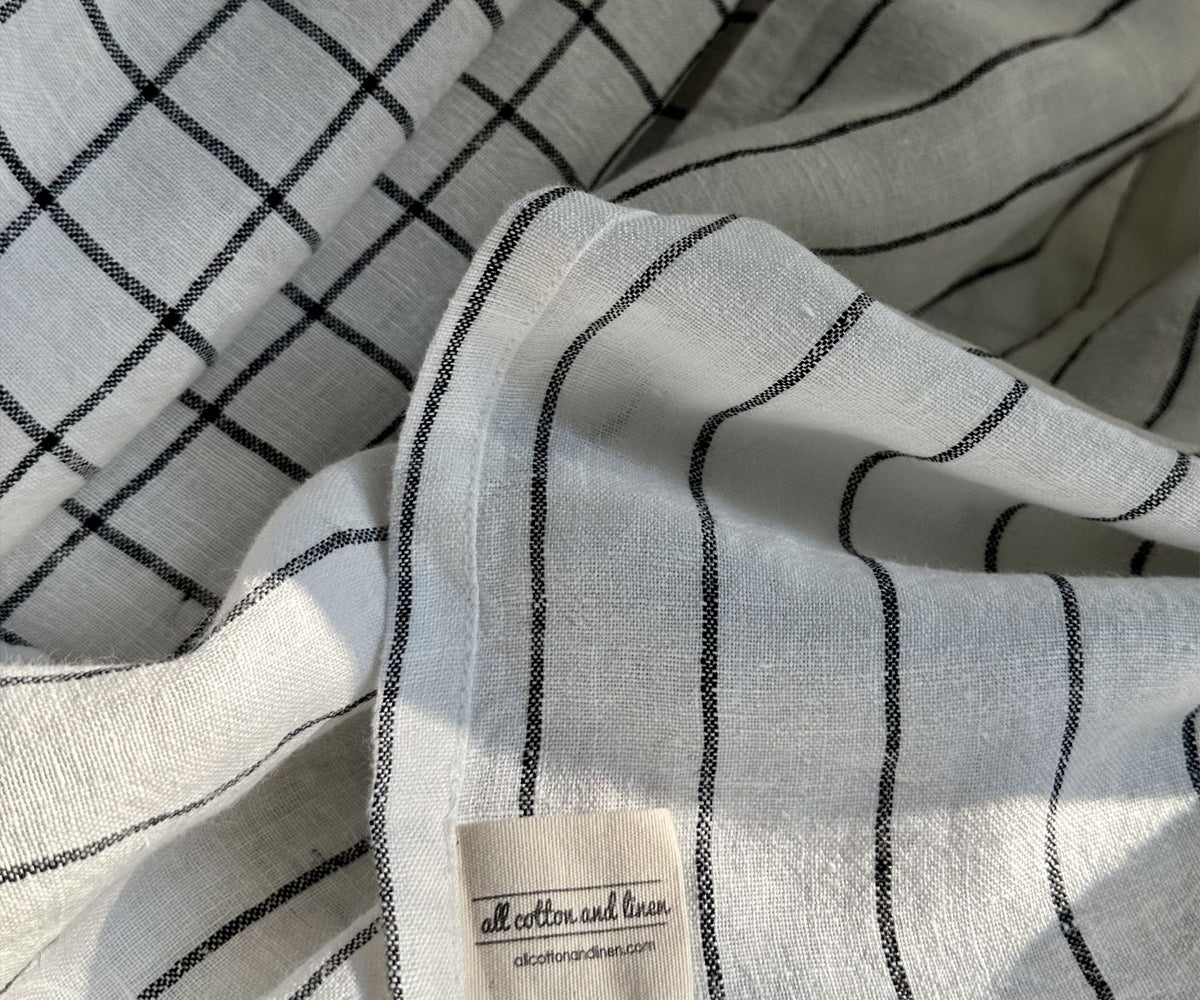
It is perhaps the single most important textile in a Japandi living room. Its natural texture, slightly rough, with the characteristic slubs and variations of the flax weave, embodies the wabi-sabi principle of beauty in natural imperfection. Linen cushion covers in warm cream, dusty sage, or warm grey add softness and visual depth to a sofa or armchair without introducing pattern or colour complexity. Linen throws, linen curtains in a sheer or medium weight, and linen upholstery all belong in this space.
Cotton
works alongside linen in a Japandi room, softer, more yielding, equally natural. A chunky cotton knit throw draped over a low armchair. Cotton cushions in muted, earthy tones. A lightweight cotton rug in natural undyed fibres that grounds the seating area without competing with the wood tones of the furniture. Cotton and linen in the same room feel harmonious because they share the same natural fiber language; they belong together in a way that neither would belong alongside a synthetic alternative.

Rattan and bamboo
Bring organic structure and a lightness of form that heavier wood cannot provide. A rattan accent chair, a bamboo storage basket, and a woven side table. These elements introduce fine, linear texture that contrasts beautifully with the solidity of wooden furniture and the softness of textile elements.
Stone and ceramic
Appear in Japandi living rooms as decorative and functional accents, such as a smooth stone bowl, a cluster of handcrafted ceramics in muted glazes, and a concrete or travertine side table. These materials carry the wabi-sabi quality most fully: every ceramic is slightly different, every stone has its own natural variation, and those differences are precisely what make them beautiful.
Living plants
Complete the natural material story in a Japandi space. Bonsai trees, chosen for their meditative, sculptural quality, are the most traditionally Japanese choice. Peace lilies, Chinese money plants, and large-leaf tropical varieties all work well. Plants add the only true green in a Japandi room, a living, growing green that no paint colour can replicate.
You May Also Like: Interior Design Trends 2025: What’s In and What’s Out
Lighting the atmosphere maker
Lighting in a Japandi living room is never harsh, never clinical, and never reliant on a single overhead source. Light is layered from multiple sources at different heights to create a warm, diffused atmosphere that shifts gently from morning to evening.
The target colour temperature is 2700–3000K, a warm, golden-white light that feels soft and welcoming rather than cool and functional. All lighting should be dimmable, allowing the room to transition from a bright, airy daytime atmosphere to a warm, candlelit evening mood without any physical rearrangement.

Layered light sources in a Japandi living room typically include floor lamps with natural shades of linen, cotton, or rice paper that diffuse light softly rather than directing it sharply. Table lamps in ceramic or wood bases with natural fibre shades sit at lower heights, creating pools of warmth at seated eye level. Pendant lights in natural materials, such as paper, bamboo, rattan, or woven cotton, hang as both light sources and sculptural objects, contributing to the room's material story as much as to its illumination.
Japanese paper lanterns, chochin, are one of the most specific Japandi lighting choices. Their diffused, ethereal glow is unlike any other light source and immediately evokes the calm atmosphere of a Japanese interior. Used as pendants or as large floor lanterns, they bring both cultural reference and genuine warmth to a Japandi living room.
Candles, used thoughtfully, complete the layered lighting picture. In the hygge tradition, candles are fundamental to creating the warm, intimate atmosphere of a truly comfortable room. In a Japandi space, unscented or subtly scented natural beeswax or soy candles in simple ceramic or stone holders contribute both light and texture without introducing visual complexity.
Textiles layering for warmth and depth
Textiles are where hygge enters the Japandi living room most fully. A room that is minimal in its furniture and restrained in its colour palette needs the warmth and tactile richness of well-chosen fabrics to feel genuinely liveable rather than merely edited.
Cushions are the most immediate textile opportunity in a Japandi living room. Choose a mix of textures rather than patterns, linen cushions alongside cotton knit cushions, alongside a slightly more textured woven piece. Keep the colour palette consistent: warm neutrals with one or two deeper-toned accents. Resist the urge to mix too many colours; the visual complexity should come from texture, not colour variation.
Throws add hygge directly, a chunky cotton knit or a loose-woven linen throw draped naturally over a sofa arm or the back of a low armchair invites the room's occupants to reach for it. In a Japandi room, the throw should look as though it landed there naturally rather than being arranged as a decorative prop.
Rugs define the seating zone and ground the whole arrangement. A flat-woven cotton rug in natural undyed fibers, a jute rug with its inherent organic texture, or a low-pile wool rug in a warm neutral all belong in a Japandi living room. The rug should be large enough to sit under the front legs of all seating pieces. Undersized rugs are among the most common mistakes in living room styling.
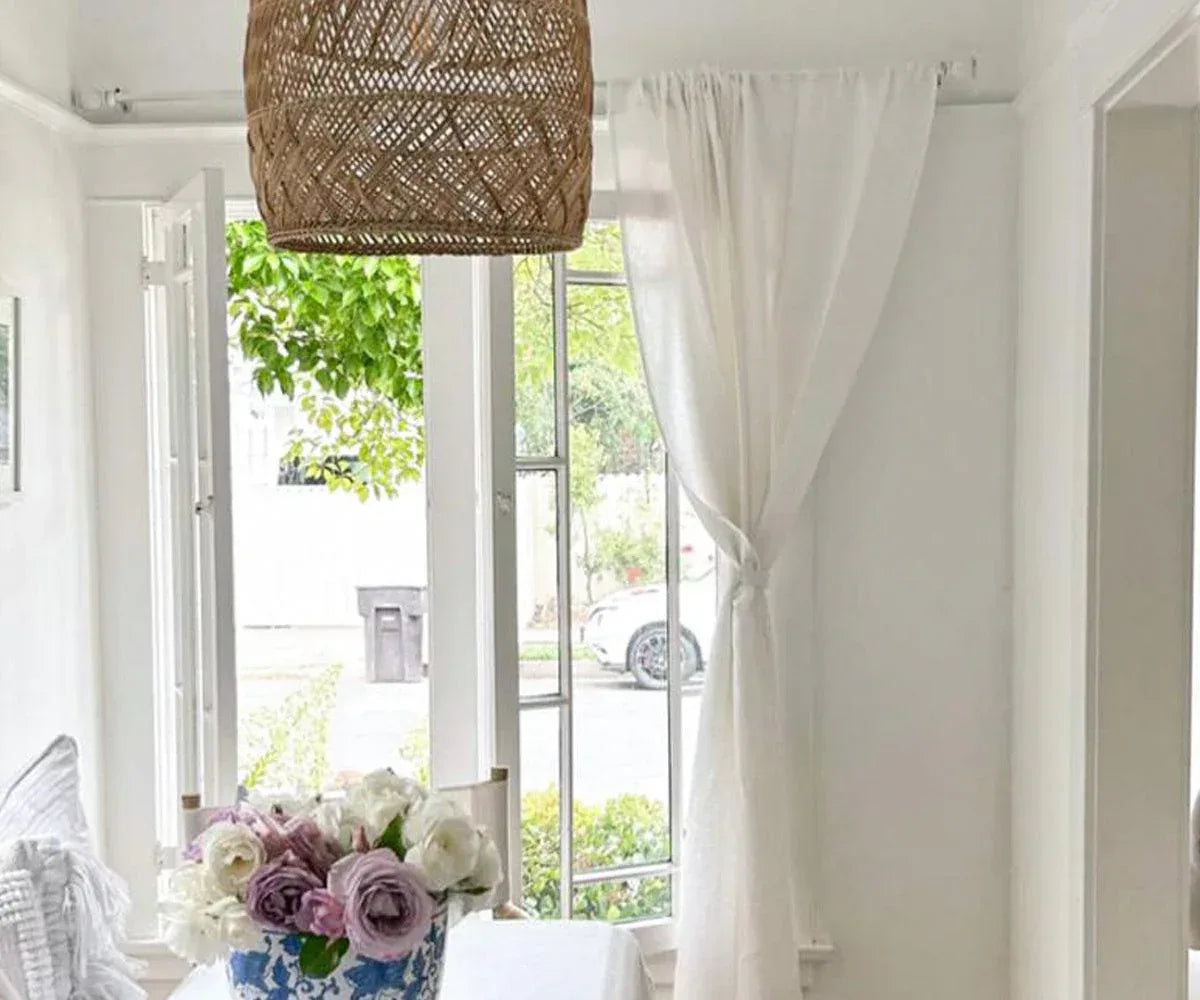
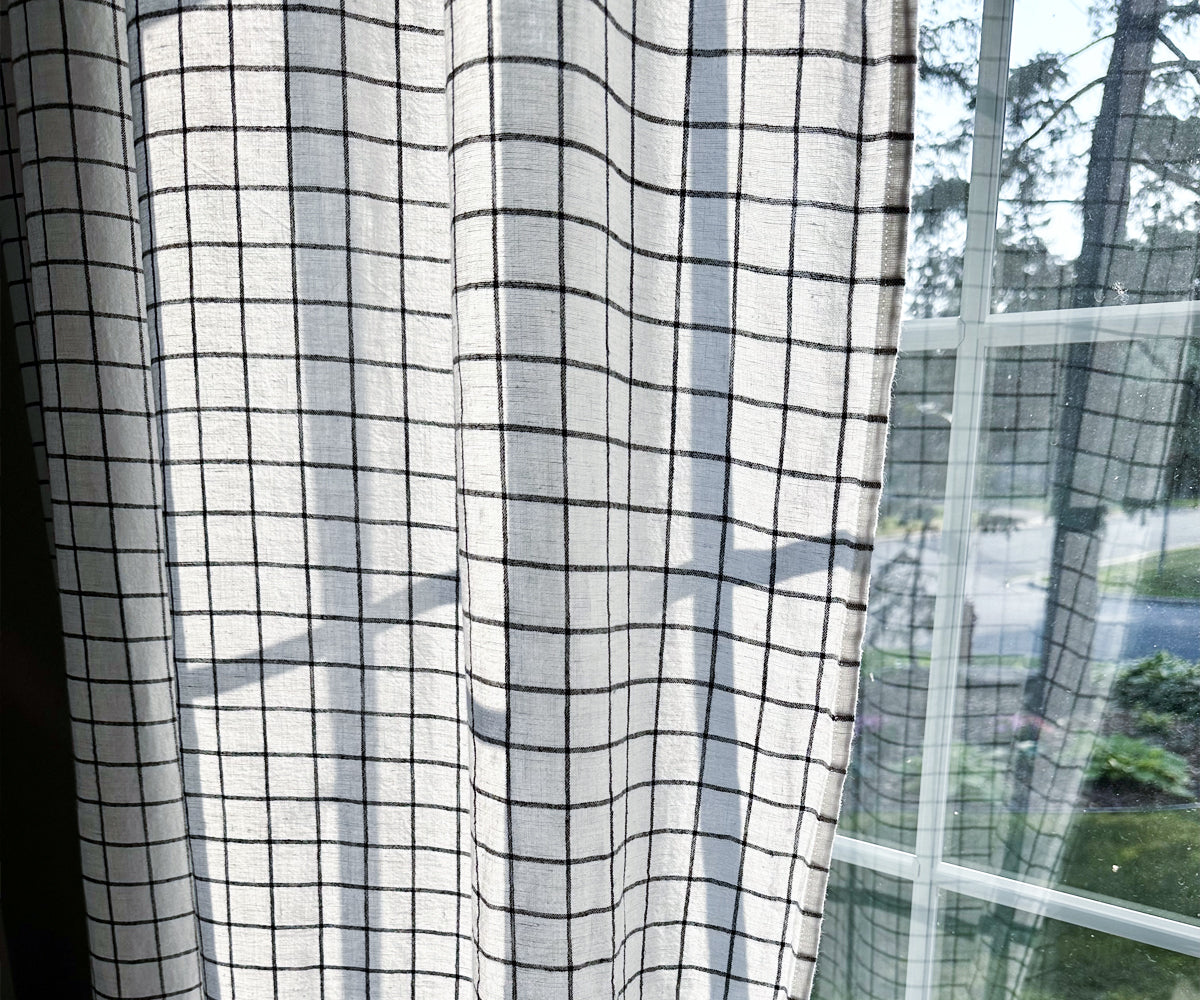
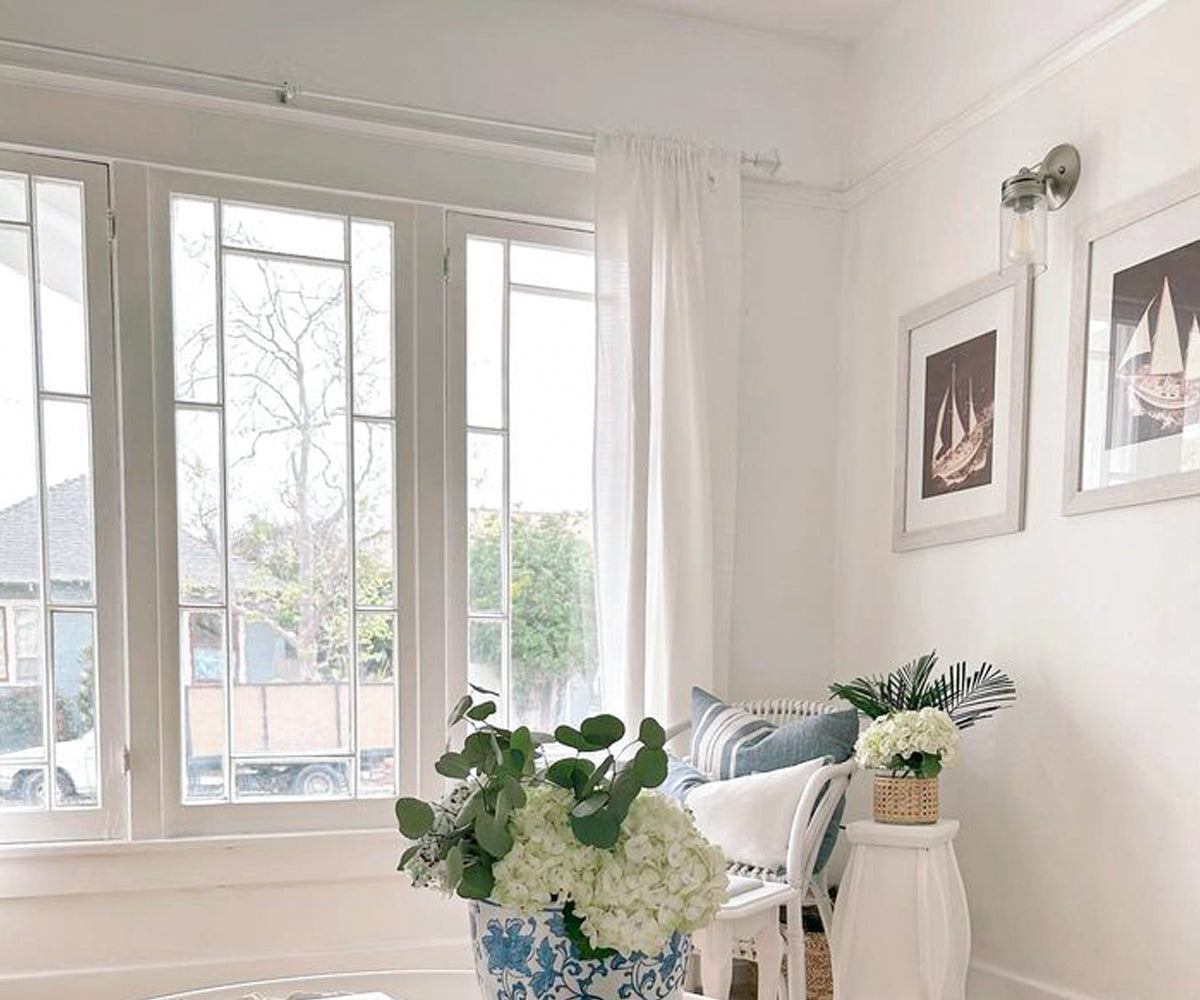
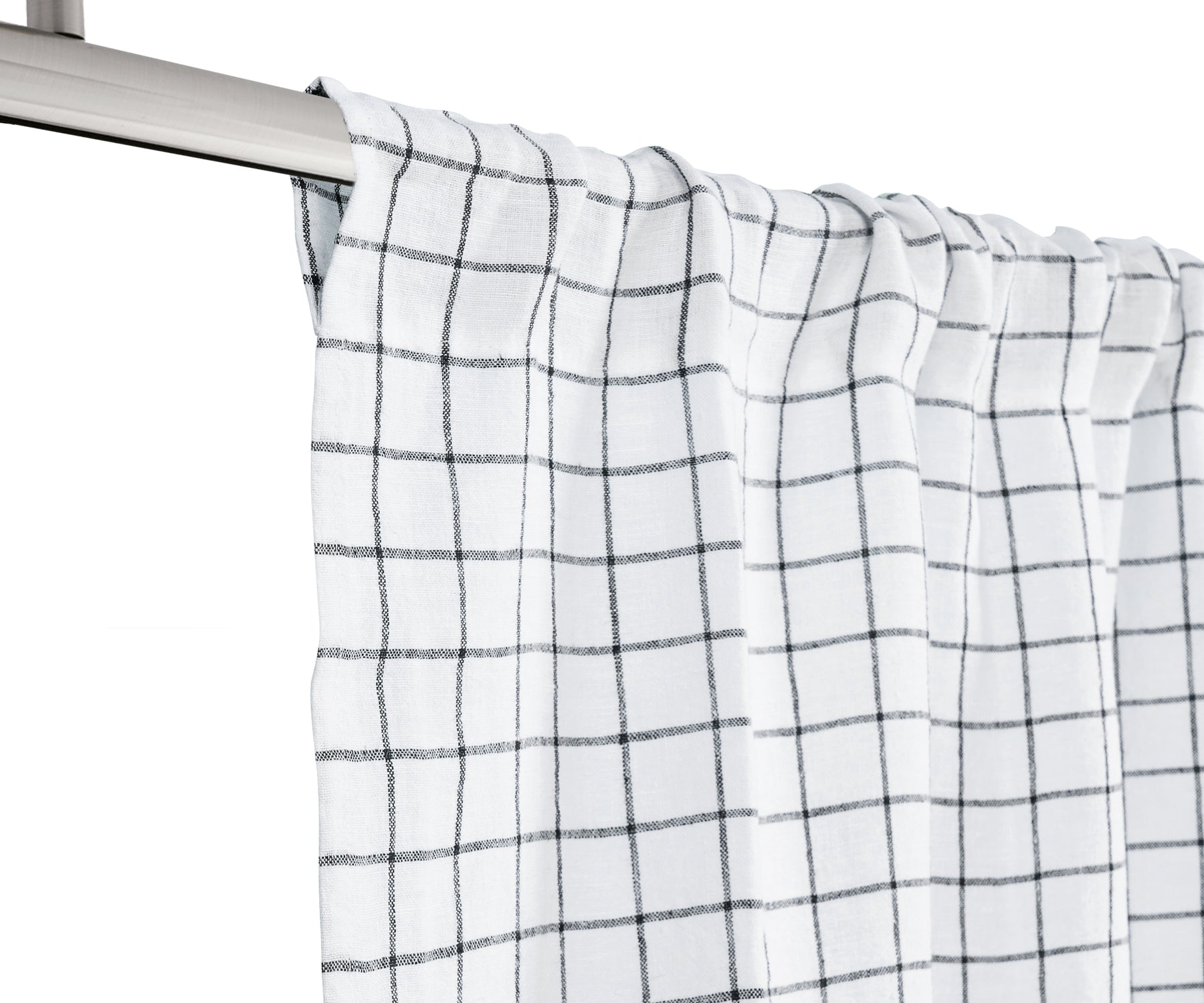
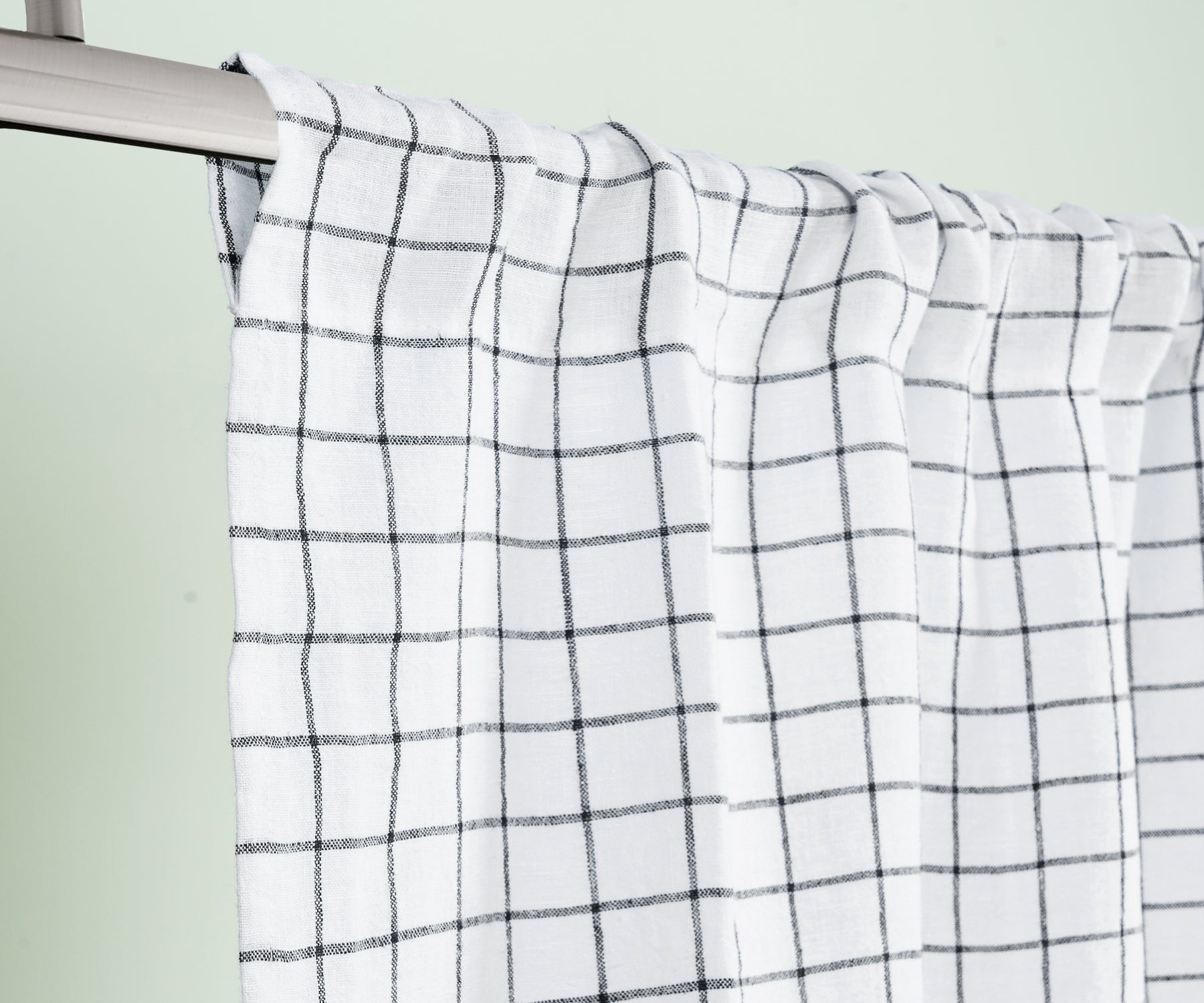
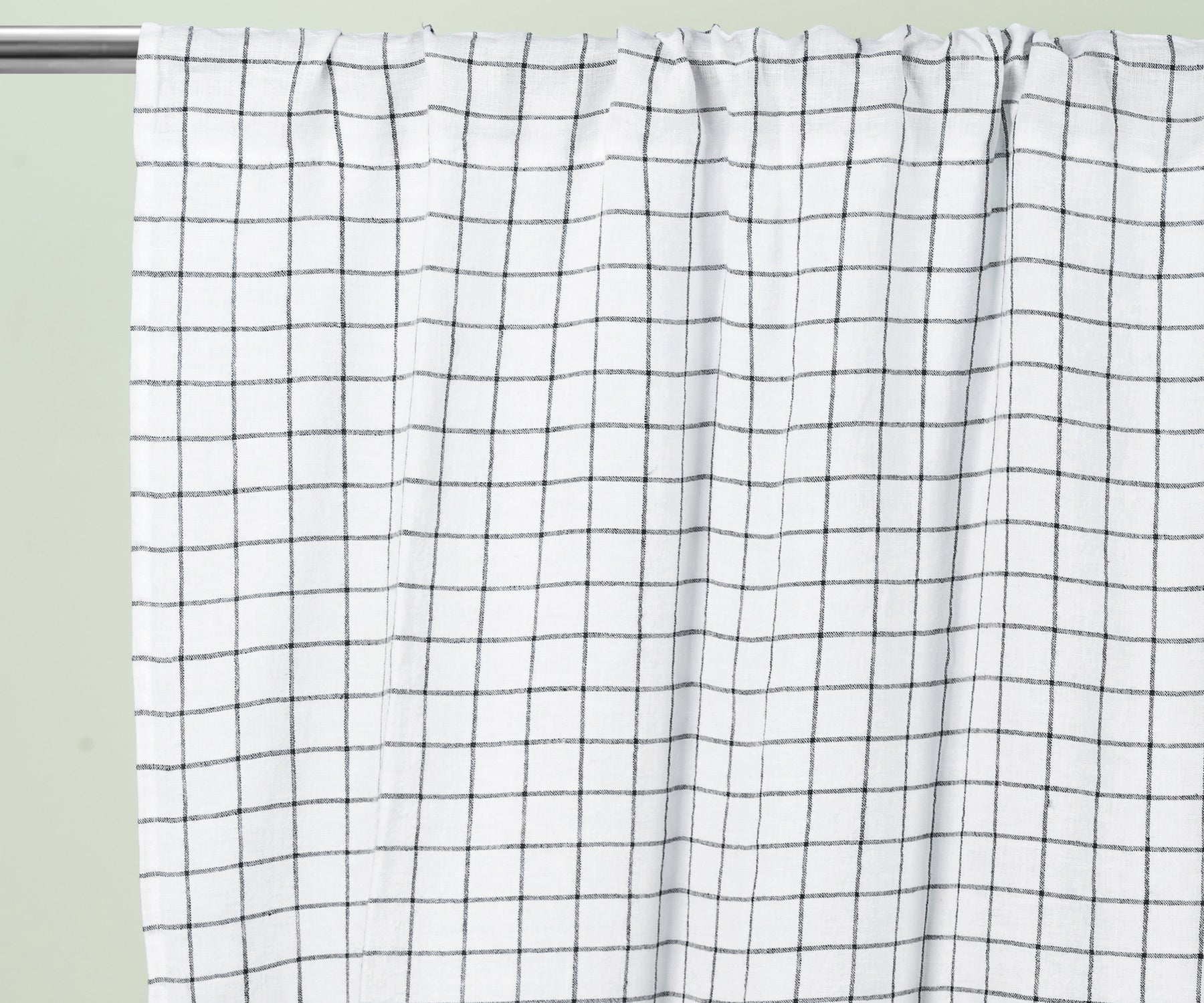
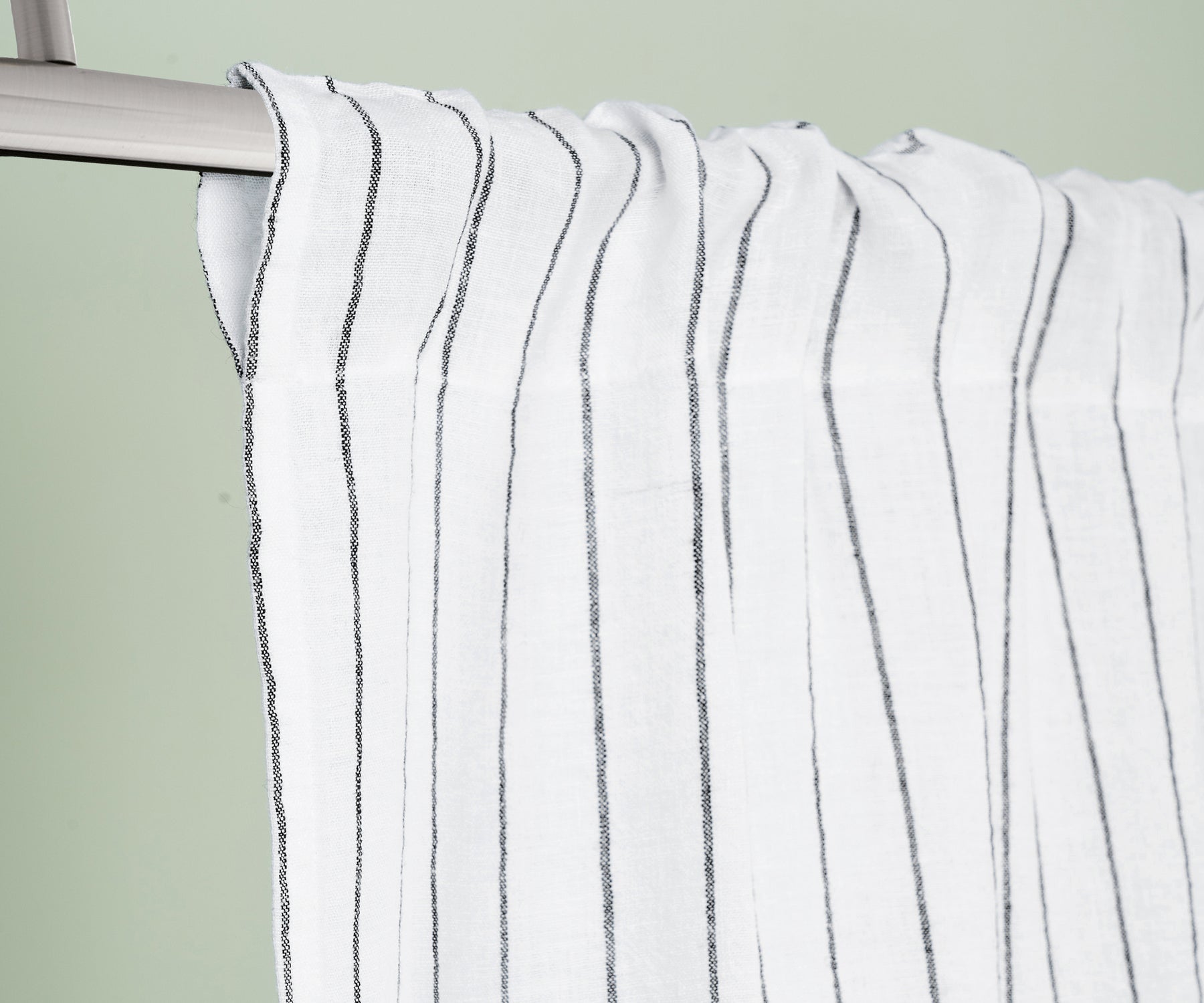
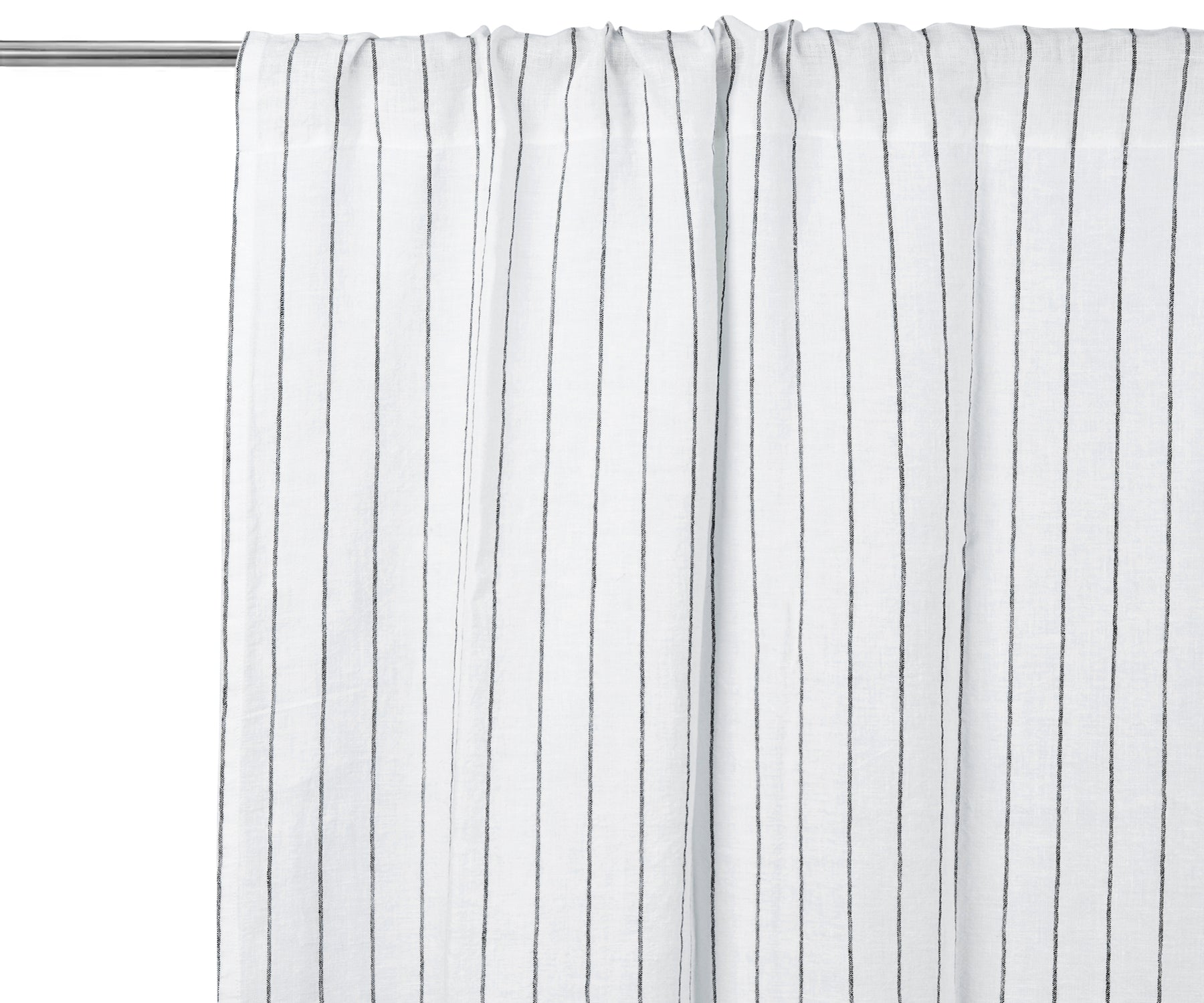
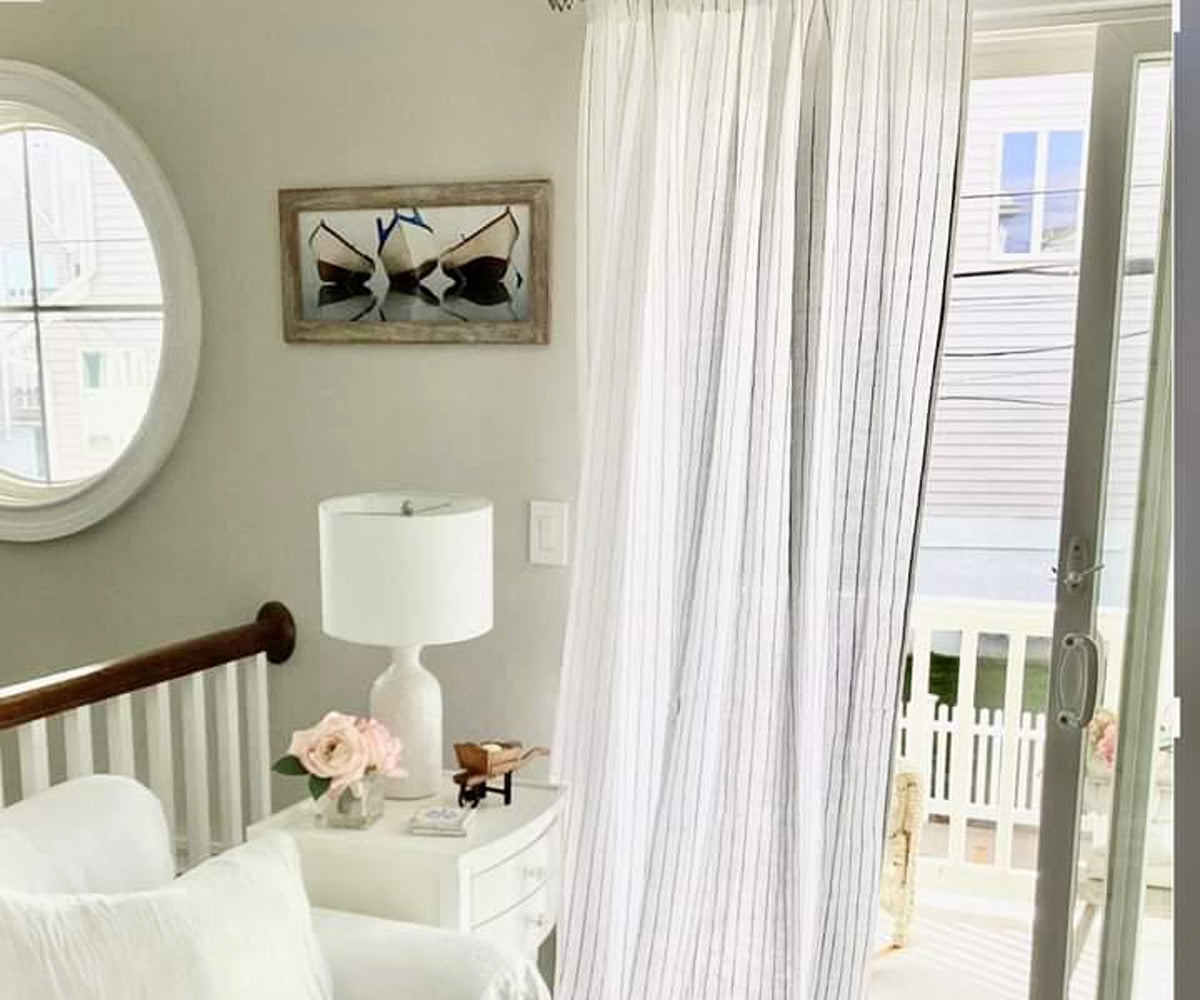
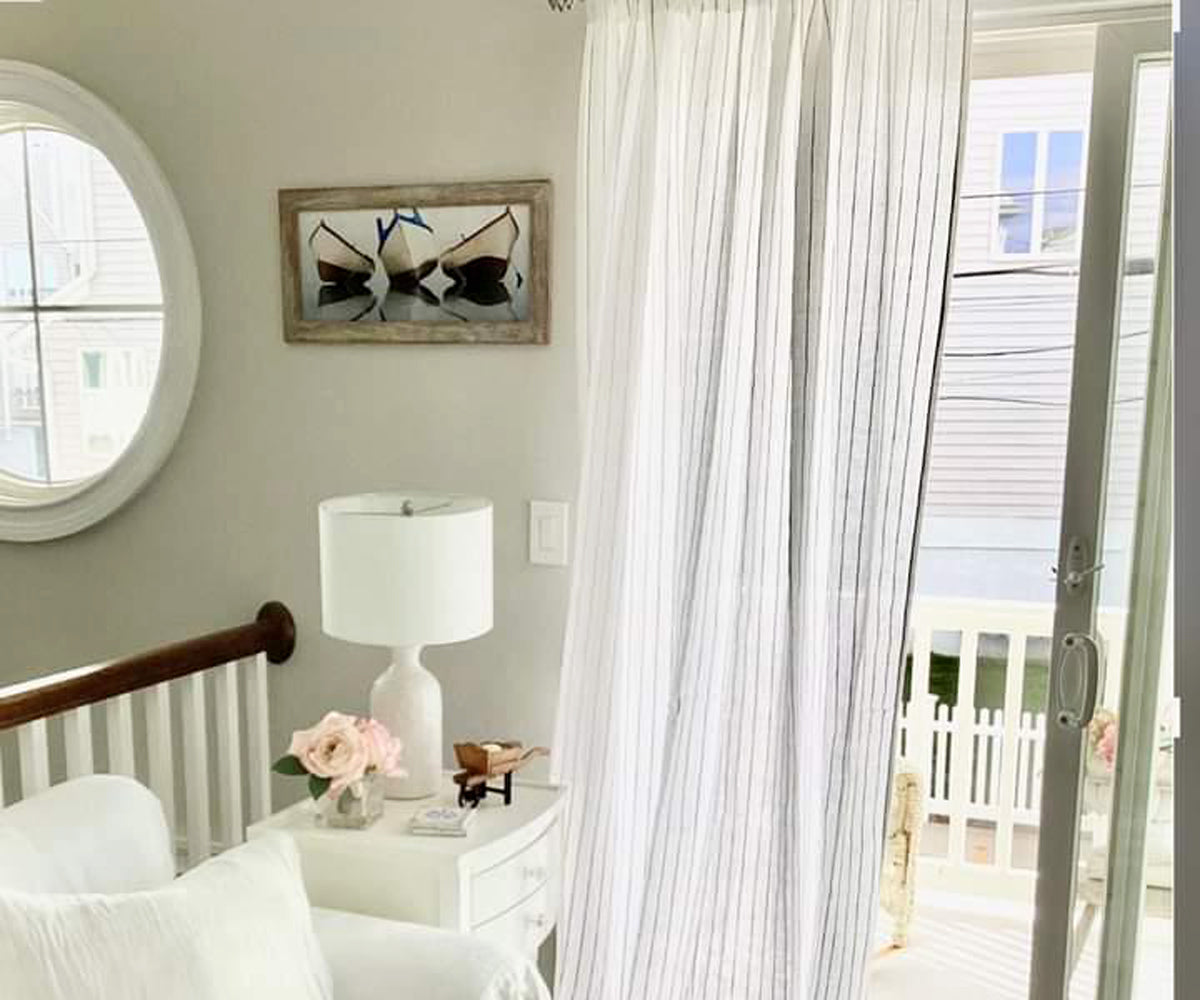
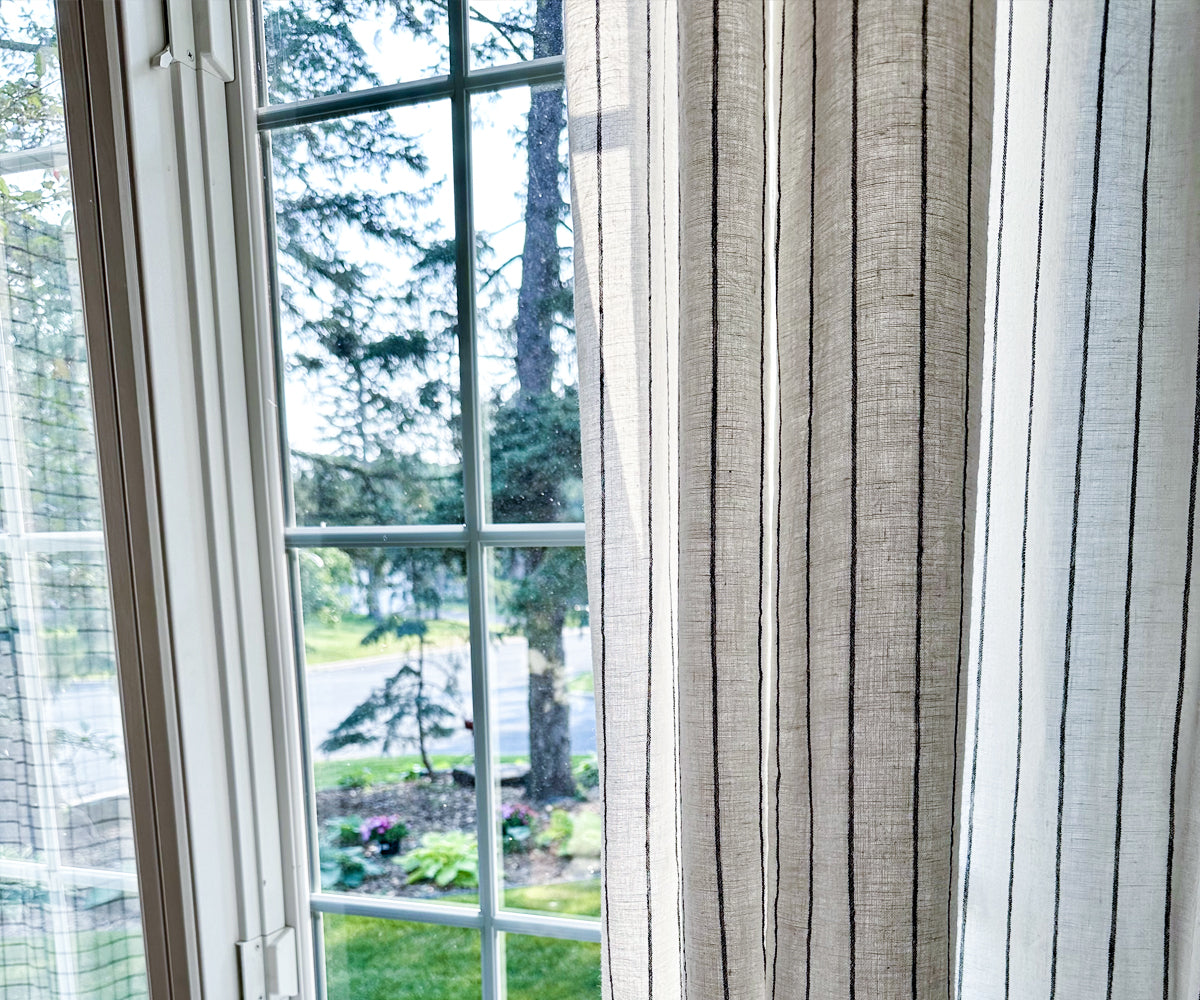
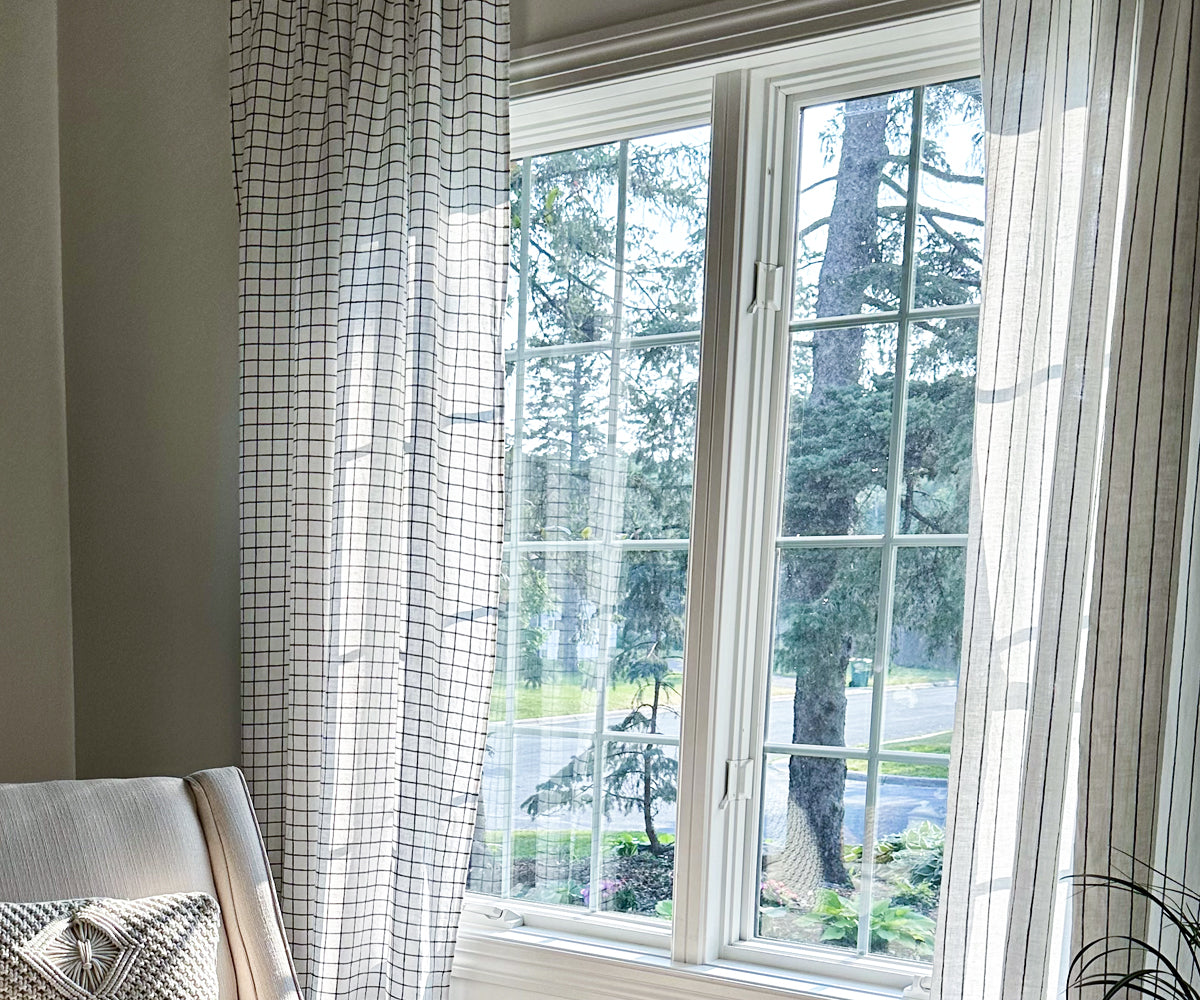
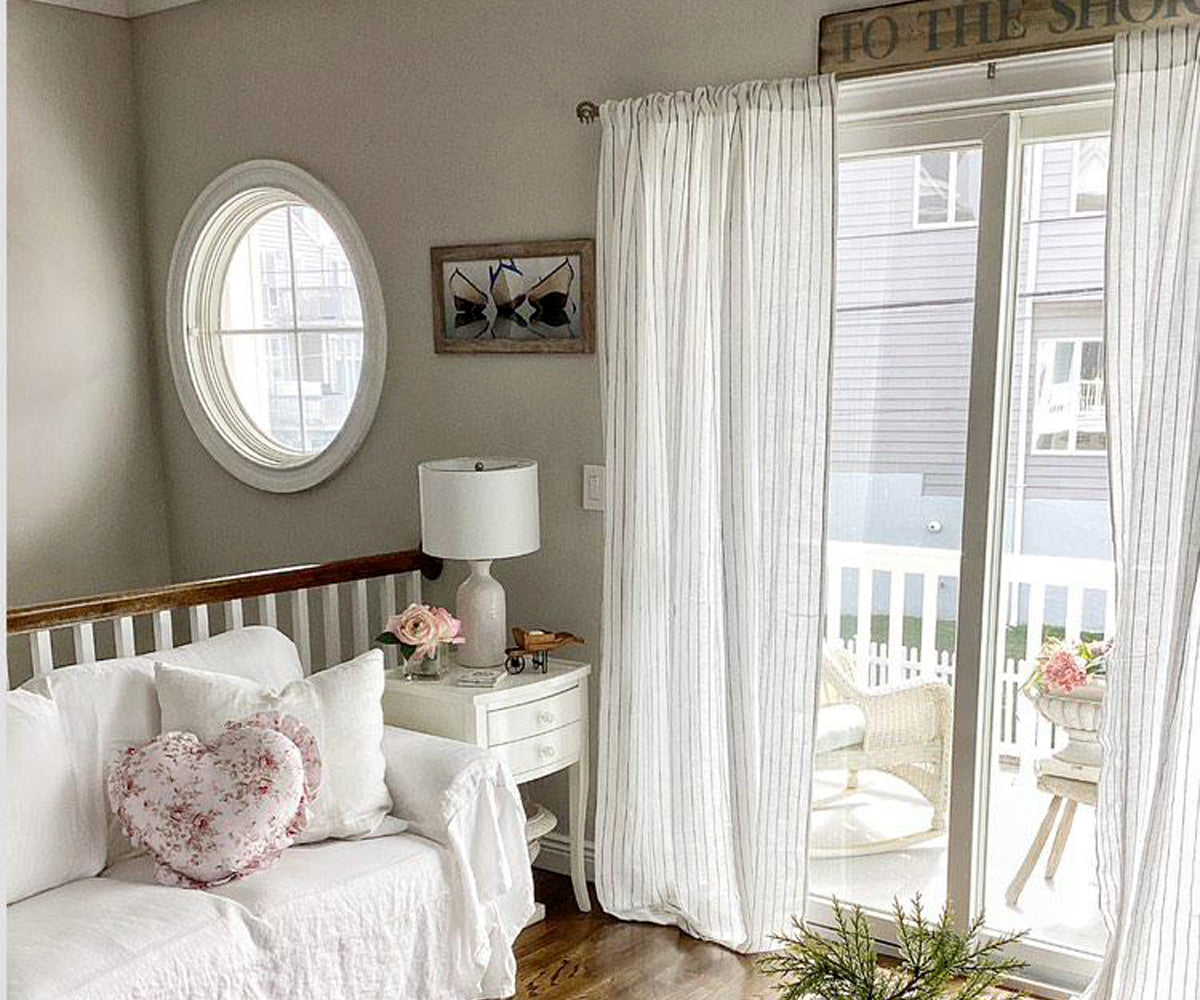
Curtains in a Japandi living room should be light-filtering rather than blocking sheer linen panels that soften direct sunlight while keeping the room connected to the natural light outside. Floor-to-ceiling curtains in a warm white or natural linen tone make the ceiling feel higher, and the room feel more expansive without introducing any visual complexity.
Decluttering and spatial intention: the Japandi edit
The most important and often most difficult aspect of achieving a genuine Japandi living room is the edit. Not the addition of the right pieces, but the removal of everything that does not belong.
Japandi interiors are not empty. They contain furniture, textiles, plants, ceramics, and books. But every element present has earned its place through beauty, function, or both. Objects that serve no function and carry no meaning, decorative items bought without intention, accumulated objects with no relationship to each other or the room, have no place in a Japandi space.
The Japandi edit asks of every object: Does this serve a purpose? Does it have natural beauty? Does it belong in a relationship with the other things in this room? If the answers are no, no, and no, the object leaves. What remains is a room that breathes.
Storage in a Japandi room is concealed or made beautiful. Built-in cabinetry with flat-fronted doors, rattan baskets that make storage decorative, modular wooden shelving where books and ceramics are arranged with deliberate spacing rather than packed in, all of these keep the room clear without requiring the removal of everything that is needed.
Also Read: Why Linen Curtains Are Your Must-Have Investment for 2025?
Bringing linen and cotton into a Japandi living room, the All Cotton and Linen connection
Linen and cotton are not incidental to the Japandi aesthetic; they are fundamental to it. These natural fibers appear in every layer of a true Japandi living room: in the sofa upholstery, the cushion covers, the throws, the curtains, and the rugs. Their natural texture, their organic warmth, and their tendency to improve with washing and use make them the textile embodiment of wabi-sabi.
At All Cotton and Linen, every piece in our collection, from linen cushion covers and cotton throws to natural linen runners and undyed cotton napkins, belongs naturally in a Japandi living room. The textures are honest. The colors are organic. The materials are the ones this style was built around.
Whether you are beginning a full Japandi transformation or making a single, considered addition to an existing room, the right natural fiber textile is where the Japandi atmosphere begins.
Final thoughts
A Japandi living room is not a style you achieve once and then leave unchanged. It is a practice of editing, of choosing with intention, of resisting the accumulation of things that do not earn their place. It asks you to slow down both in the design process and in the daily life you live inside it.
The rooms that most fully embody the Japandi spirit are not the ones with the most expensive furniture or the most carefully curated objects. They are the ones where natural materials are allowed to age gracefully, where soft light creates warmth at every hour of the day, where the textiles invite touch, where the absence of clutter creates the kind of calm that most people only find outside the home.
That calm is achievable. It starts with the right philosophy, the right palette, and the right materials. And in a Japandi living room, the right materials are almost always natural wood, stone, ceramic, and above all, the honest, beautiful, time-tested warmth of cotton and linen.
Shop our linen and cotton collection — cushion covers, throws, curtains, and natural fiber textiles for your Japandi living room →