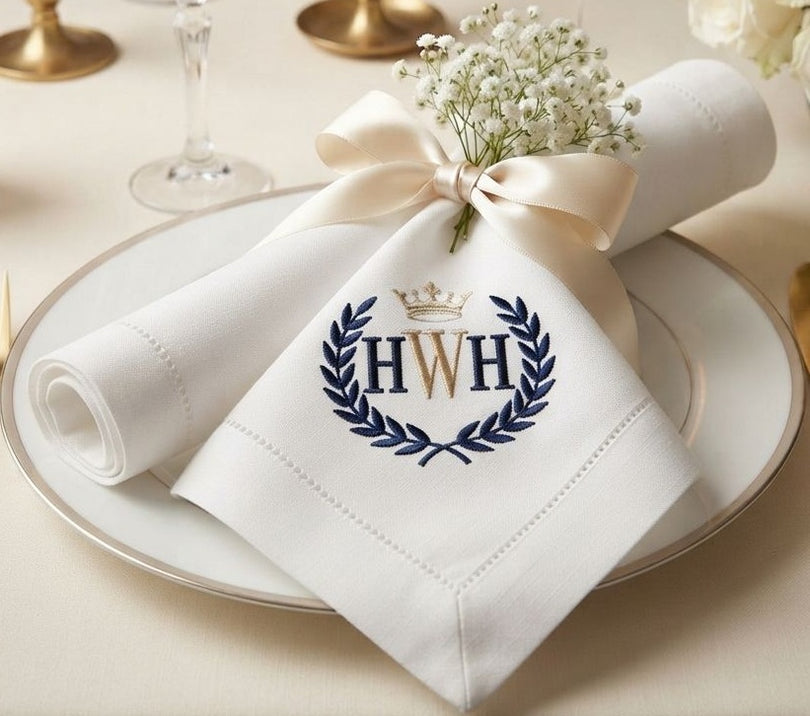

Quick facts: embroidered napkins
| Question | Answer |
|---|---|
| What are they? | Cloth napkins decorated with stitched designs: monograms, borders, florals or seasonal motifs |
| Common fabrics | Cotton and linen |
| Typical dinner napkin size | About 18 to 20 inches square |
| Cocktail napkin size | Smaller, roughly 10 to 12 inches square |
| Best for sustainability | Buy fewer, keep them for years, wash in cool water with a full load, line or air dry |
| Personalisation | Initials, names, dates or a wedding monogram |
| Wash care | Cool to warm, gentle cycle, inside out; avoid bleach |
| Good uses | Everyday dinners, holidays, weddings, gifts, hosting |
Embroidered napkins are eco-friendly and elevate your table setting with a touch of elegance and personalisation.
Cloth vs paper: the honest comparison
Cloth napkins are not automatically greener in every situation, and it is worth knowing why.
| Factor | Paper napkins | Embroidered cloth napkins |
|---|---|---|
| Use | Once, then thrown away | Hundreds of uses over many years |
| Waste | A steady stream of trash | Minimal; fabric is washed and reused |
| Water and energy | Used in manufacturing, bleaching and transport for every napkin | Used in making the napkin once, then in washing |
| Washing impact | None | Small if washed with regular loads in cool water |
| Biggest factor | Recycled content and unbleached options | How long you keep them and how you wash them |
Researchers and environmental organisations note that there is no single simple answer: cloth napkins are strongest when they are used at home for many years, washed in cold water and line-dried. If you wash a single napkin in a hot, half-empty machine, much of the benefit disappears. Linen and cotton also have different growing footprints, so look at the fibre and where it is from.
How to make cloth napkins greener: wash them with other laundry, use cool water, line-dry when you can, and wash only when they are dirty.

What makes an embroidered napkin last?
A napkin that lasts is sustainable. Look for:
Fabric: cotton and linen are durable and soften with washing.
Stitch quality: dense, even stitches that lie flat and do not pucker.
Thread: colourfast thread that matches the weight of the fabric.
Hems: neat, tight hems that do not fray.
Placement: embroidery set in a corner or along a border so it does not take the brunt of folding and wiping.
Embroidered cotton napkins instantly elevate your table setting, adding a touch of sophistication lacking in disposable options. Whether you choose a classic monogram or a playful design, embroidered napkins add a personal touch that speaks volumes about your style.
5 ways to style embroidered napkins
1. Everyday dinners: quiet detail
Pick a napkin with a small border or a single initial in a tone-on-tone thread. It elevates a plain weeknight table without feeling dressy. Keep a stack in a basket near the table so they are easy to use.
2. Holiday tables: seasonal motifs
Use napkins with small holly, snowflakes, stars or other seasonal motifs for Christmas, and keep the cloth plain so the embroidery stands out. After the holiday, wash and store them flat in a dry place for next year.

3. Monograms for hosts
A monogram on a napkins makes guests feel looked after. Place the initials in a lower corner so they show when the napkin is folded into a rectangle. Use a single initial or a three-letter monogram for formal dinners.
4. Mix embroidered and plain
Pair embroidered napkins with a plain tablecloth and plain plates so the stitching is the only decoration. Alternatively, use embroidered napkins on a patterned runner with solid dishes. Stay within one colour family so the mix looks intentional.
5. Gifts that get used
A set of four or six embroidered cloth napkins in a pretty box or tied with twine is a gift that people use for years. Choose initials, a wedding date or a simple motif. Add a handwritten card about how to care for them.
Personalise your napkins: monogram ideas
| Style | Best for | Tip |
|---|---|---|
| Single initial | Everyday and gifts | Subtle; works in any colour |
| Three-letter monogram | Weddings, formal tables | Place in a lower corner |
| Name or date | Anniversaries, showers | Keep text short so stitches stay clear |
| Border or motif | Holidays and seasons | Choose one motif and repeat it |
See our monogram guide for styles and thread colours.
How to care for embroidered napkins
Treat stains early: blot, do not rub, and rinse in cold water.
Wash gently: turn napkins inside out and wash in cool to warm water on a gentle cycle with a mild detergent.
Avoid bleach and strong stain removers on coloured thread.
Dry carefully: air dry or tumble dry on low; high heat can shrink fabric and distort embroidery.
Iron on the reverse: place the napkin face down on a folded towel and iron so the stitches stay raised.
Store flat or loosely folded in a dry place.
Always follow the care label on your napkins.
How many embroidered napkins do you need?
| Use | How many |
|---|---|
| Everyday for a household | One per person per day, plus a spare set |
| Dinner party | One per guest, plus a few extra |
| Holiday set | A set of 8 or 12 that you reuse each year |
| Gift | A set of 4 or 6 |
Bottom line
Embroidered napkins are a good eco-friendly choice when you keep them for years, wash them sensibly and choose fabric and stitching that last. They also make the table feel personal, which is a good reason to keep using them.