
Quick Facts
| Category | Details |
|---|---|
| What it is | A drawn-thread border: threads are removed beside the hem, and the remaining threads are stitched in bundles |
| How it's made | Traditionally by hand; today usually by machine (sometimes called "punchspoke") |
| Common fabrics | Cotton, linen, cotton-linen blends |
| Dinner sizes | 18", 20", 22"; cocktail sizes start around 10" |
| Looks best for | Weddings, formal dinners, holidays, classic everyday tables |
| Care | Gentle wash, no chlorine bleach, low or air dry, press from the back |
| Our hemstitch cotton napkins | 100% cotton, 160 GSM, 10" to 22", 1" or 2" hems, sets of 6 to 48 |
What Are Hemstitch Napkins?
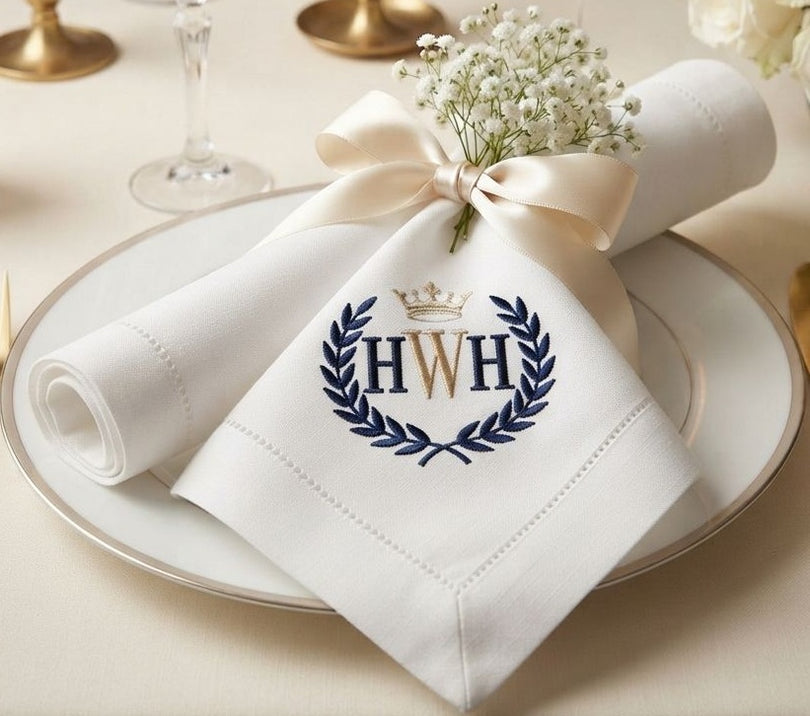
Hemstitch napkins are known for their delicate, hand-sewn hemstitching that runs along the edges of the fabric. This timeless sewing technique creates small, neat openings in the fabric that are both decorative and functional. The careful detailing offers a subtle yet classy look that can complement any table setting.
Single vs Double Hemstitch
You'll see these terms used in two ways, so it's worth checking product photos:
- Single hemstitch usually means one row of openwork along the edge. It's understated and works for both casual and formal tables. See our single hemstitch napkins.
- Double hemstitch usually means two parallel rows of openwork, giving a more detailed border that reads as more formal. See our double hemstitch napkins.
Hem width is a separate choice. A 1-inch hem looks delicate and classic, while a 2-inch hem creates a bolder frame that shows clearly from across the table. Our hemstitch cotton napkins come with either hem width.

Whether you choose single or double hemstitch napkins, these pieces make a strong statement of sophistication and refined taste.
How Hemstitching Is Made
Hemstitching is a form of drawn-thread work. The edge of the fabric is folded under to form a hem, then a few threads running parallel to that hem are carefully pulled out. That leaves a narrow band of exposed vertical threads, which are wrapped and grouped with stitches while the hem is secured at the same time.
Historically, this was slow handwork on even-weave linen, which is why hemstitched linens were treasured and passed down. Today, most hemstitched napkins are finished by machine: a specialized needle pierces the fabric and stitches around each opening to hold it open, recreating the look much more quickly and consistently. Some linen makers call this "punchspoking."
Hand vs. machine: Hand hemstitching has subtle irregularities and costs more. Machine hemstitching is uniform across a whole set, which helps when you're setting 12 or 120 places. Both deliver the same classic look.

Read More: Maximalist Christmas Decorating Ideas for Your Table That Prove More is More
Hemstitch vs Plain Hem
| Category | Hemstitched edge | Plain hem |
|---|---|---|
| Look | Line of tiny openings; tailored, heirloom feel | Simple folded edge |
| Best for | Weddings, formal dinners, holidays, gifting | Everyday, casual, kids' meals |
| Care | Gentle; avoid snagging the openwork | Very easy |
| Price | Usually a little higher | Usually lower |
| Monogramming | Pairs especially well with a corner monogram | Works fine |

How to Choose Hemstitch Napkins
1. Pick the fabric.
- Cotton: soft, absorbent, easy to wash and crisp when ironed. A great all-rounder.
- Linen: natural texture and a relaxed elegance; it softens over time and suits garden weddings and warm-weather tables.
2. Pick the size.
| Use | Typical size |
|---|---|
| Cocktail hour, drinks | 10" to 12" |
| Luncheon, tea, brunch | About 15" to 18" |
| Dinner | 18" to 20" |
| Formal or multi-course dinner | 20" to 22" |
3. Check the details.
- Openings should be even, with no skipped or loose stitches.
- Corners should be neatly mitered (a diagonal seam at each corner) or squarely finished, not bulky.
- The hem should lie flat after washing.
4. Pick the color
White and ivory are the classic choice for weddings and formal tables. Natural (undyed-look) tones suit rustic and farmhouse settings. Navy or deeper colors are elegant and forgiving for everyday use.
White Hemstitch Napkins: The Classic Choice
White hemstitched napkins are the traditional formal napkin because the openwork border shows clearly against a clean background, and they match any dinnerware or flowers. They are equally at home on a wedding reception table and a simple Sunday dinner. To keep them bright, see our guide on why napkins are white and how to keep them that way.

If you're looking to buy napkins for a wedding or another formal event, consider exploring options like those available at All Cotton and Linen, where you can find a range of table linens, napkins, kitchen towels, sustainable grocery bags, and tablecloths.
Read Related: How to Ensure Quality When Shopping for Home Décor Online
How to Use Hemstitch Napkins for Weddings and Events
Hemstitch napkins are a favourite for receptions because they look refined in photos and suit almost any theme.
Ivory or white: classic and timeless; pairs with any flowers.
Navy: elegant for evening or coastal weddings.
Red or burgundy: dramatic for winter celebrations.
Black: modern and formal.
For larger events, ordering wedding napkins in bulk keeps every table consistent. Add a corner monogram with the couple's initials for a keepsake detail, or pair the napkins with hemstitched tablecloths for a coordinated look. For cocktail hour, smaller natural cotton cocktail napkins carry the same hemstitched detail.
Using Hemstitch Napkins Every Day
There's no need to save them for special occasions. A simple single-hemstitch cotton napkin makes takeout or a weeknight pasta feel like a real dinner, and it washes like any cloth napkin. Natural or navy colors hide everyday marks better than white if you'd rather not worry about stains.

Styling Ideas
Classic rectangle on the plate: Fold into thirds so the hemstitched edge runs across the front.
Pocket fold: Holds flatware or a menu card; keep the openwork border at the top edge.
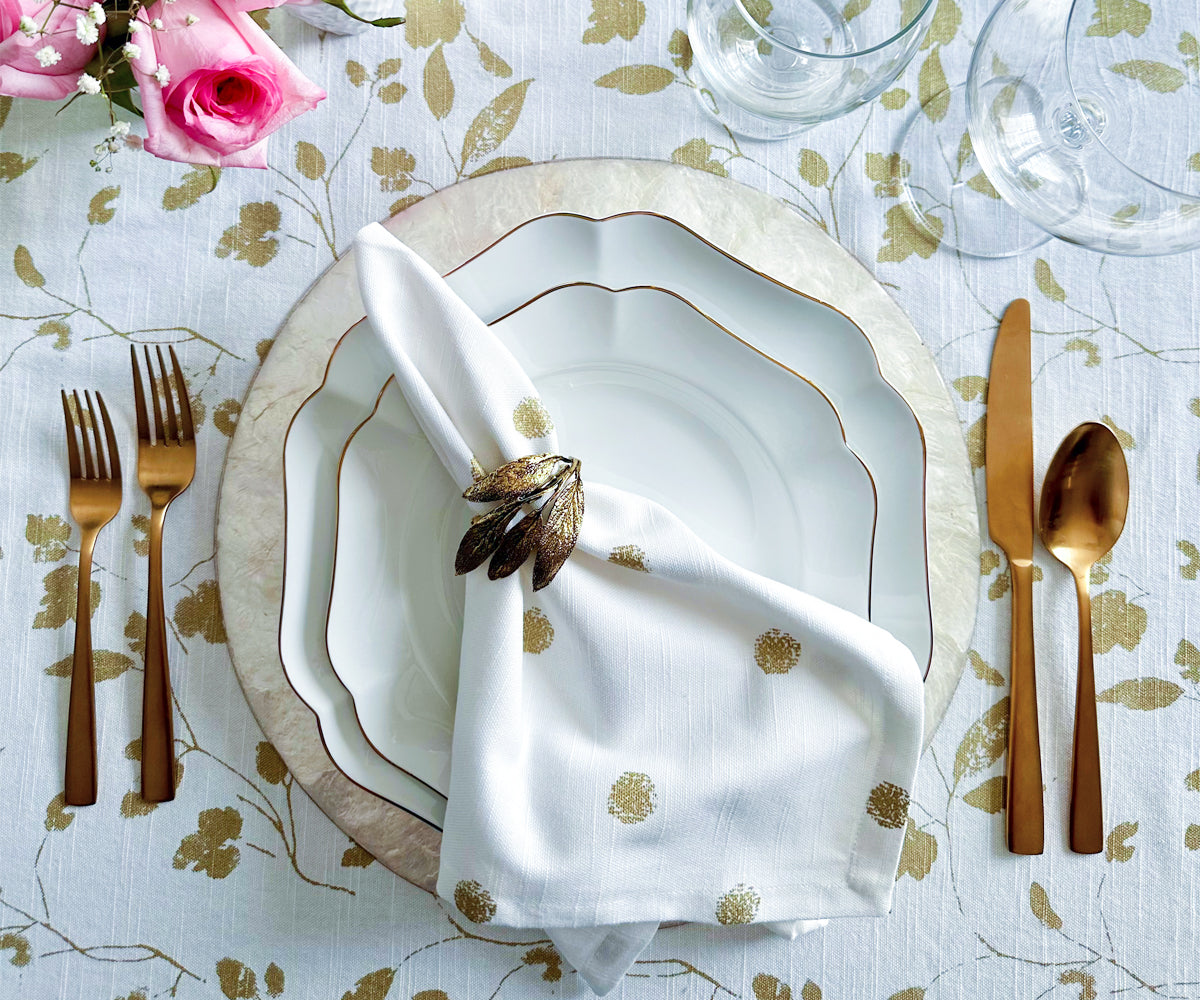
Napkin rings: Brass or wood rings contrast nicely with the fine border.
Layered setting: Napkin on a charger or hemstitched placemat for a polished, tone-on-tone look.
How to Care for Hemstitch Napkins
The openwork is durable but can catch on zippers, hooks or rough fabrics, so a little care goes a long way:
Wash gently. Use a gentle cycle and mild detergent, following the care label. Our hemstitch cotton napkins are labelled machine wash at normal temperature, tumble dry gentle, no bleach.
Use a mesh laundry bag or wash with other table linens rather than jeans and towels.
Skip chlorine bleach. It weakens the fibers and the stitches holding the openwork.
Dry low or air-dry, then remove promptly to reduce wrinkles.
Press from the back while slightly damp. Press straight down along the hemstitch rather than dragging the iron sideways, which can distort the openings.
Never pull loose threads. Trim them carefully with small scissors.
The Bottom Line
Hemstitch napkins combine a time-honored finishing technique with everyday practicality. Choose cotton for easy care or linen for relaxed texture, decide between single or double rows and a 1- or 2-inch hem, and size them to your occasion. Wash gently, skip bleach and press from the back, and they'll stay crisp for years.
Browse our hemstitch napkin collection to find your size and color.