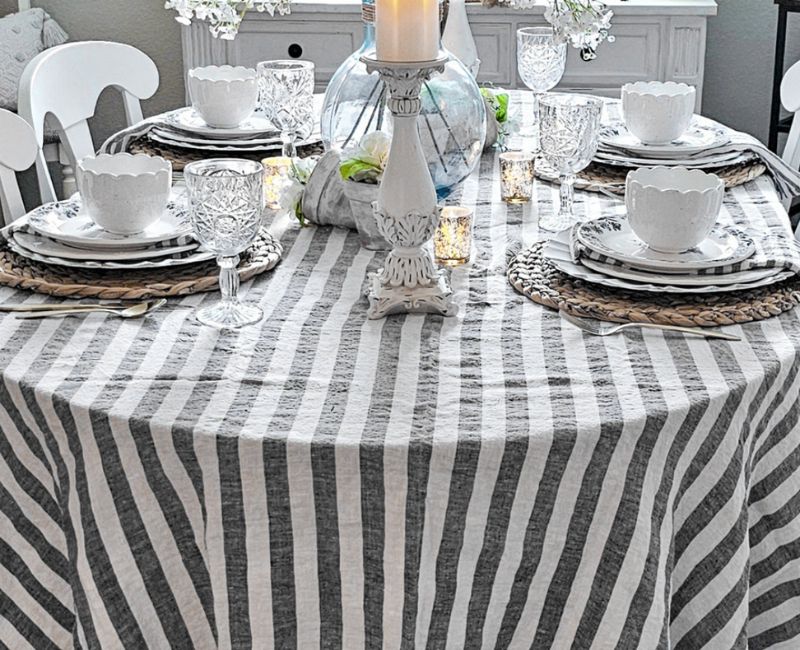


This guide is different from a general overview. It's a decision tool designed to help you match the right placemat to your specific table, your lifestyle, and the way you actually eat.
Step 1: Start with Your Table
Before you choose a placemat, understand what you're protecting.

Wood Tables
Wood is beautiful but vulnerable. Heat marks, water rings, and scratches accumulate quickly without protection.
You need placemats with good heat resistance and moisture absorption. Cotton and linen are ideal because they absorb spills before they reach the wood surface.
Glass or Marble Tables
These surfaces are prone to scuffs from plates, bowls, and cutlery. They also show every fingerprint and crumb.
Choose placemats with a soft, non-slip backing or fabrics that provide cushioning between the dish and the surface.
Outdoor or Casual Tables
If you dine on a patio, deck, or garden table, prioritise weather-resistant materials that can handle moisture, sun exposure, and easy wipe-downs. Jute, seagrass, rattan, and bamboo placemats bring organic texture while standing up to outdoor conditions.
Step 2: Consider Your Lifestyle
How you eat matters as much as where you eat.

Daily Family Meals
You need placemats that survive frequent use and laundering. Cotton is the most practical material for everyday dining.
It absorbs spills without letting them spread immediately, machine washes easily on a gentle or normal cycle, holds colour and pattern well through repeated washing, and softens slightly over time without losing its structure.
It is the placemat that works for Tuesday night dinner and Saturday's dinner party without requiring any styling compromise between the two.
Formal Entertaining
For dinner parties, holidays, and special occasions, prioritise elegance. Linen placemats bring a refined, slightly textured finish that signals thoughtfulness.
Hemstitch details a decorative stitching technique that involves pulling threads to create delicate patterns add craftsmanship and sophistication.
These placemats are ideal for formal settings such as dinner parties, weddings, or holiday celebrations.
Young Children at the Table
If children are part of your dining routine, choose placemats that are easy to wipe clean and stain-resistant. Silicone placemats are flexible, heat-resistant, and perfect for children's meals.
Alternatively, cotton placemats in darker colours or busy patterns hide the inevitable spills.
Outdoor Dining
For al fresco meals, natural fibre placemats like jute, rattan, and seagrass bring a rustic, organic quality to the table that cotton and linen don't replicate.
They suit farmhouse, bohemian, and coastal styles and they handle the elements better than most fabrics.
To Know: How to Set a Formal Dinner Table: Step-by-Step Guide for Elegant Dining
Step 3: Match Your Decor Style
Placemats are decorative elements as much as practical ones. They add colour, texture, and style to your dining table.

Minimalist / Modern
Choose solid colour cotton or linen placemats in clean, versatile shades. Neutral tones like cream, taupe, and warm greige work across seasons and settings.
Rustic / Farmhouse
Plaid placemats bring warmth and comfort. Jute and seagrass add organic texture. These work beautifully in both rustic and modern dining rooms.
Classic / Traditional
Hemstitch placemats add refinement. Striped patterns bring a fresh, timeless quality.
Contemporary / Trend-forward
Round placemats offer a modern alternative to the standard rectangle. They work particularly well with round or oval tables, creating a cohesive and balanced look.
Step 4: Get the Size Right
Size is a critical consideration. The right size ensures your table looks balanced and organised.

|
Shape |
Dimensions |
Best For |
|
Rectangular |
12" x 18" |
Standard dining tables, everyday meals |
|
Rectangular |
14" x 20" |
Larger tables, formal settings |
|
Oval |
13" x 19" |
Larger dining tables, formal settings |
|
Round |
13"–16" diameter |
Round or oval tables with a contemporary look |
A good rule of thumb: each place setting should have approximately 24 inches of space from centre to centre. Your placemat should comfortably hold a dinner plate, silverware, and a glass without feeling cramped.
Quick Comparison: Placemat Types at a Glance
|
Type |
Best Material |
Best Occasion |
Size Range |
Care |
Price |
|
Cotton |
100% cotton or cotton-linen blend |
Every day, casual entertaining |
12"×18" to 14"×20" |
Machine washable |
Low–Medium |
|
Linen |
100% linen or linen blend |
Formal, special occasions |
13"×19" to 14"×20" |
Gentle machine wash |
Medium–High |
|
Hemstitch |
Cotton or linen with hemstitch border |
Semi-formal, holiday, everyday elegant |
13"×19" to 14"×20" |
Gentle machine wash |
Medium |
|
Round |
Cotton, linen, jute, or natural fibre |
Contemporary, round tables |
13"–16" diameter |
Varies by material |
Low–Medium |
|
Natural Fibre |
Jute, rattan, seagrass, bamboo |
Rustic, outdoor, bohemian |
12"×18" to 14"×20" |
Spot clean or wipe |
Low–Medium |
How Placemats Compare to Other Table Linens
|
Feature |
Placemats |
Tablecloths |
Runners |
|
Protects table surface |
✅ Yes |
✅ Yes |
❌ No (centre only) |
|
Defines individual space |
✅ Yes |
❌ No |
❌ No |
|
Easy to clean |
✅ Yes (small) |
❌ No (large) |
✅ Yes |
|
Covers table imperfections |
❌ No |
✅ Yes |
❌ No |
|
Adds centreline decoration |
❌ No |
❌ No |
✅ Yes |
|
Cost |
Low |
Medium–High |
Low |
Read About: How to Fold a Rectangular Tablecloth Without Wrinkles
Placemats and table runners work beautifully together. Think of it like dressing a bed; each layer adds depth, dimension, and visual interest.
Choosing the right placemat isn't complicated, but it does require thinking about how you actually use your table. Start with your table material, consider your lifestyle, match your decor, and get the size right. The result? A dining experience that feels more intentional, more protected, and more welcoming every single day.