
Why Quality Placemats Are Worth the Investment
A placemat does three things at once. It protects the table surface from heat, moisture, and scratches. It defines each guest's individual space at the setting. And it contributes to the overall visual character of the table, adding colour, texture, and intention to every meal.
Placemats play an important role in both the look and function of a table setting, yet they are often overlooked. Many people continue using the same placemats for years, even when they no longer match their décor, table linens, or dining style.
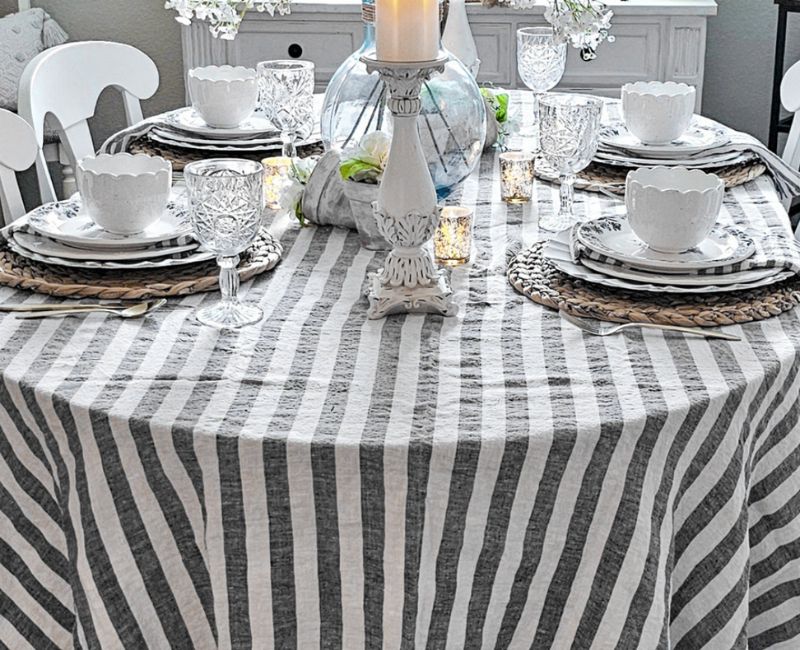
Today, there are more options than ever. Natural fiber placemats made from cotton, linen, and jute have become popular for their durability and eco-friendly appeal. Round placemats, hemstitch designs, and woven natural styles are also gaining attention for adding texture and personality to the table.
This guide explores the five best placemat types to help you find the perfect option for your dining table, lifestyle, and entertaining needs.
The Five Best Types of Placemats
Choosing the right placemat depends on your dining style, table decor, and how often you entertain guests. Here are five popular placemat options to consider:
1. Cotton Fabric Placemats
Cotton placemats are one of the most practical choices for everyday dining. They are soft, durable, and easy to clean, making them ideal for family meals and casual gatherings. Most cotton placemats are machine washable and available in a wide range of colors and patterns.
2. Linen Fabric Placemats
Linen placemats bring a refined and natural look to the table. Their textured finish adds depth to place settings, making them a popular choice for formal dinners, celebrations, and special occasions. Linen is also durable and becomes softer with use.
3. Hemstitch Placemats
Hemstitch placemats feature decorative stitched borders that add a classic touch to the table. They work well for both everyday dining and elegant entertaining. Their simple design pairs beautifully with a variety of tableware styles.
4. Round Placemats
Round placemats create a unique and modern table setting. They are especially suitable for round dining tables and contemporary décor styles. Available in cotton, linen, and natural fibers, they help soften the look of a table while adding visual interest.
5. Woven Natural Fiber Placemats
Made from materials such as jute, rattan, seagrass, and bamboo, woven placemats add texture and warmth to any dining space. They are a great choice for rustic, coastal, outdoor, and bohemian-inspired table settings. Their natural appearance makes them easy to pair with a variety of table décor styles.
Pick one cotton fabric placemat
Why cotton is the everyday champion
Cotton fabric placemats are the most widely used placemat type in the world, and the reason is simple. Cotton combines softness, absorbency, durability, washability, and an enormous range of colours and patterns in a single, accessible natural material. It is the placemat that works for Tuesday night dinner and Saturday's dinner party without requiring any styling compromise between the two.

What makes cotton placemats the everyday standard:
-
Machine washable in cold or warm water — survives frequent use and laundering without degrading
-
Soft and comfortable under arms and hands throughout long meals
-
Available in more colours, patterns, and sizes than any other placemat material
-
Natural and breathable — does not trap heat under hot dishes
-
Available at every price point — from simple everyday cotton to premium woven cotton with decorative detail
Popular Cotton Placemat Styles
Cotton placemats come in a variety of styles, making it easy to find an option that suits your dining table and décor.
Solid Colour Cotton Placemats
Solid-colored cotton placemats are a versatile choice for everyday dining. Their simple design pairs well with different table settings and makes it easy to mix and match with tablecloths, runners, and napkins.
Striped Cotton Placemats
Striped cotton placemats bring a fresh and relaxed feel to the table. They are especially popular for summer dining, outdoor gatherings, and coastal-inspired décor. The subtle pattern adds interest without overwhelming the table.
Cotton Placemats with Border Details
Placemats with stitched, embroidered, or printed borders offer a more polished appearance. These styles work well for both daily use and special occasions, adding a refined touch to place settings.
Quilted Cotton Placemats
Quilted cotton placemats feature extra padding, making them a practical option for family meals. They provide additional protection from heat while adding texture and structure to the table.
Cotton-Linen Blend Placemats
Combining the softness of cotton with the texture of linen, cotton-linen blend placemats offer the best of both materials. They create a natural, relaxed look that works beautifully throughout the year and complements both casual and formal dining settings.
Best colours for cotton placemats:
Mid-toned, earthy colours work hardest in everyday use, such as sage green, terracotta, dusty blue, warm rust, and natural linen, which hide daily marks and coordinate naturally with most tablecloth colours and dinnerware. White and ivory look beautiful but require more diligent stain treatment for everyday use.
Care for cotton placemats:
Machine wash cold or warm water, normal cycle. Tumble dry low. Remove promptly from the dryer to reduce wrinkles. Iron warm if needed. Pre-treat stains immediately before washing.
Best for: Every household. The most practical starting point for any placemat collection. If you own no other placemats, start with a set of quality cotton placemats in a mid-toned colour that suits your tablecloth.
Pick two linen placemats
Why linen is the elevated choice
Linen placemats occupy a specific and irreplaceable position in the table linen hierarchy. They are the placemat that makes a table feel genuinely refined. The natural texture of linen, the characteristic slubs and variations in the flax weave, the way it catches light differently from cotton, and the progressive softening with every wash all contribute to a material that communicates quality before anyone sits down.
What makes linen placemats exceptional:
-
More durable than cotton, linen fibres get stronger with washing rather than weakening over time
-
More breathable than cotton, the hollow flax fibre structure allows significantly more airflow
-
Naturally hypoallergenic and antibacterial linen resists dust mites and bacteria without chemical treatment
-
Improves with every wash; new linen placemats are slightly stiff; two-year-old linen placemats are silky, soft, and more beautiful than the day they arrived
-
Most eco-friendly mainstream placemat material, flax, requires minimal water and no pesticides

Linen placemat textures and weights:
|
Linen weight |
Feel |
Best use |
|
Lightweight linen |
Soft, slightly translucent |
Spring, summer, warm weather dining |
|
Medium-weight linen |
Structured, good drape |
Year-round, most dining occasions |
|
Heavy linen |
Substantial, holds shape |
Formal dining, placemats used without a tablecloth |
|
Linen-cotton blend |
Softer than pure linen, less structured |
Every day elegant, all-season use |
The honest consideration:
Linen wrinkles more than cotton and requires either ironing or a deliberate embrace of its natural, slightly relaxed texture. For formal occasions, ironing is worth the 2–3 minutes per placemat. For everyday use, the relaxed texture of linen is entirely appropriate and increasingly fashionable.
Best colours for linen placemats:
Natural undyed linen warm beige-ivory is the single most versatile linen placemat colour. It pairs with every tablecloth, every dinnerware colour, and every season. White linen has a crisper, more formal quality. For coloured linen placemats, sage green, dusty blue, deep rust, and charcoal are the most seasonally flexible choices.
Care for linen placemats:
Gentle machine wash cycle in cool water. Air dry or tumble dry low. Iron on the reverse side while slightly damp for crispest results. Linen gets softer and more beautiful with every wash. Do not over-process it.
Best for: Households that entertain regularly. Holiday and special occasion tables. Anyone who wants placemats that will still look genuinely beautiful after five years of weekly use.
Pick three hemstitch placemats
Why is hemstitch the most refined detail in the placemat category
A hemstitch placemat takes the base material, cotton or linen, and adds a decorative border created by drawing threads from the fabric and grouping the remaining threads into a stitched pattern. The result is a delicate, open-work border detail that runs around the perimeter of the placemat and catches light differently from the surrounding fabric.
The effect is subtle but immediately visible to guests; it signals craftsmanship, quality, and intention. A hemstitch linen placemat on a bare wood dining table, paired with matching hemstitch linen napkins, is one of the most quietly elegant table settings available at any price point.

Why hemstitch placemats work so well:
-
The border detail adds visual interest without pattern complexity it coordinates with virtually any tablecloth
-
Hemstitch is a timeless detail; it does not date the way printed or novelty patterns do
-
Available in cotton and linen, accessible at everyday price points, and in luxury linen versions
-
Works across every formality level equally at home, at a casual dinner, and at a formal occasion
-
Photographs beautifully, the stitched border catches light in close-up place setting photography
Popular Hemstitch Placemat Styles
Classic Single Hemstitch
A timeless design with a single row of decorative stitching. Perfect for both everyday dining and special occasions.
Double Hemstitch
Features two rows of stitching for a more refined look. Ideal for formal dinners and celebrations.
Colored Hemstitch
Contrasting border stitching adds a modern touch and a subtle pop of color to the table.
Mitered Corner Hemstitch
Designed with neatly joined corners for a polished finish. A great choice for elegant and formal table settings.
Best colours for hemstitch placemats:
White and ivory hemstitch placemats are the most classic and widely used; they work on any tablecloth colour and for any occasion. For a more contemporary approach, natural linen with a white hemstitch border, or a deep navy placemat with an ivory hemstitch border, creates a modern, refined look.
Care for hemstitch placemats:
Gentle machine wash cycle in cool or warm water. Avoid vigorous agitation that could pull the hemstitch threads. Air dry or tumble dry low. Iron carefully around the hemstitch border. The open-work detail is delicate. Store folded rather than rolled to maintain the border shape.
Best for: Households that want an everyday placemat with a formal quality. Holiday tables. Gift sets. Anyone who wants a single placemat type that works from a casual weeknight to a Christmas dinner.
Read Related: Christmas Table Setting with Red Tablecloth: A Festive Guide
Pick four round placemats
Why round placemats are the contemporary choice
Round placemats have grown significantly in popularity in recent years, and the reason is aesthetic: they break the expected visual rhythm of a rectangular table setting in a way that feels deliberately contemporary rather than simply different.
A round placemat on a rectangular table creates an interesting tension between shape and surface. The circular form softens the linearity of a rectangular table, creates visual rhythm across the setting, and works with almost any dinnerware shape because it does not dictate a particular plate or bowl geometry.

What makes round placemats work:
-
Soft, contemporary visual character works in modern, Japandi, and bohemian interiors
-
Suits all table shapes, works on rectangular, square, and round tables equally well
-
The circular form naturally accommodates a dinner plate at the centre without directing placement
-
Available in every material, cotton, linen, jute, bamboo, cork, and woven natural fibre
-
Can be mixed with rectangular placemats for an eclectic, layered table aesthetic
Round placemat size guide:
|
Round placemat diameter |
Best suited for |
|
13 inches |
Small plates, side settings, casual use |
|
14 inches |
Standard dinner plates — the most common size |
|
15 inches |
Larger dinner plates, more generous coverage |
|
16 inches |
Large plates, generous settings, outdoor dining |
Round Placemats: Materials, Colors, and Care
Best Materials
Cotton and linen round placemats are great for both everyday and formal dining. For casual, rustic, or outdoor settings, jute, seagrass, and rattan placemats add natural texture and warmth. Cork placemats are ideal for modern homes and provide excellent heat protection.
Best Colors
Natural shades like jute, beige, and rattan are popular because they pair easily with wood, stone, and other natural materials. For fabric placemats, choose colors that contrast with your tablecloth to create a balanced and eye-catching table setting.
Care Tips
Fabric round placemats can usually be machine-washed according to the fabric type. Jute, seagrass, and other woven placemats should be spot cleaned with a damp cloth. Always store round placemats flat to help maintain their shape.
Best For
Round placemats are perfect for round dining tables, contemporary dining rooms, Japandi-inspired interiors, and anyone looking to add visual interest without changing their tablecloth or dinnerware.
Pick Five Woven Natural Placemats
Why Choose Woven Natural Placemats?
Woven natural placemats are a great choice for adding texture and warmth to your dining table. Made from materials such as jute, rattan, seagrass, bamboo, and water hyacinth, they offer a unique look that fabric placemats cannot replicate.
Unlike cotton or linen placemats, woven natural placemats are crafted from plant fibers and natural strips, creating a sturdy surface that lies flat on the table. Their durable construction also provides excellent protection from heat and everyday wear.
One of their biggest advantages is their organic appearance. Natural variations in color, weave, and texture give each placemat its own character. These details help create a relaxed and inviting table setting that feels connected to nature.
Woven placemats are especially popular in rustic, coastal, farmhouse, bohemian, and outdoor dining spaces. Their earthy tones pair beautifully with wood furniture, ceramic dinnerware, and natural table décor, making them a versatile option for many styles of entertaining.

What makes woven natural placemats stand out:
-
Outstanding heat resistance — the structural density of woven plant fibre provides better heat protection than most fabric placemats
-
Textural richness that no woven fabric can fully replicate — each placemat is slightly different
-
Pairs beautifully with natural wood tables, rattan furniture, and organic textile settings
-
Most environmentally sustainable placemat option — all materials are renewable, biodegradable, and require no synthetic processing
-
Adds instant warmth and organic character to any table setting
The honest consideration:
Woven natural placemats are not machine washable; they can be damaged by submersion in water, which causes swelling and structural damage to the woven fibres. They are cleaned by spot wiping, dry brushing, or a damp cloth. For households with young children where placemat washing is a daily necessity, woven natural placemats work better as a seasonal or occasional complement to a washable primary placemat set.
Best colours:
Natural and undyed jute, rattan, and seagrass placemats come in their natural material colours (warm tan, honey, golden brown, earthy green-brown), which coordinate naturally with any table setting.
Best for: Rustic, coastal, Japandi, and bohemian dining rooms. Outdoor and al fresco dining. Households that want a natural, organic table aesthetic. As a complement to a primary fabric placemat set for textural variety.
Placemat Sizing Complete Reference Guide
Standard sizes by shape and table type
|
Placemat shape |
Standard sizes |
Best suited for |
|
Rectangular |
12"×18", 13"×19", 14"×20" |
Most dining tables — the universal choice |
|
Round |
13", 14", 15", 16" diameter |
Round tables, contemporary settings |
|
Oval |
12"×18", 13"×19" (oval profile) |
Oval and rectangular tables |
|
Square |
12"×12", 14"×14" |
Square tables, bistro tables |
Sizing formula
A placemat should be large enough to accommodate a full dinner plate with at least 1 inch visible on all sides, with cutlery resting on the placemat rather than the table surface.
Quick check: Place a dinner plate in the centre of the placemat. If 1 inch of the placemat is visible on all sides and your cutlery fits comfortably on the placemat without falling off the edge, the size is correct.
You May Also Like: How To Choose Placemats for Dining Table?
How many placemats to buy
|
Household size |
Recommended quantity |
Why |
|
2 people |
4–6 placemats |
Rotation for laundry days |
|
4 people |
6–8 placemats |
One set in use, one set clean |
|
6 people |
8–10 placemats |
Covers a full table plus spares |
|
Frequent entertainers |
12+ placemats |
Covers extended table plus extras |
Choosing the Right Placemat Color
The right placemat color can enhance your table setting and create a balanced look.
Match Your Tablecloth
- White tablecloths pair well with navy, sage green, terracotta, and natural linen placemats.
- Cream or ivory tablecloths look beautiful with dusty blue, rust, and warm white tones.
- Natural linen tablecloths work well with white, ivory, navy, and forest green.
- Bare tables offer the most flexibility and can be styled with almost any placemat color.
Seasonal Placemat Colors
Spring
Choose soft shades like sage green, blush pink, powder blue, and warm white for a fresh look.
Summer
Bright colors such as cobalt blue, coral, and natural linen tones create a light and cheerful atmosphere.
Autumn
Terracotta, burnt orange, mustard, and deep rust bring warmth to fall table settings.
Winter
Forest green, deep red, navy, charcoal, and ivory help create a cozy and festive table.
Year-Round Favorites
Natural linen, white, and navy remain classic choices that work in every season.
Easy Placemat Styling Tips
Layer Over a Tablecloth
Use placemats over a tablecloth to add contrast and define each place setting.
Style a Bare Table
Natural linen or woven placemats highlight the beauty of wood, marble, or stone tables.
Mix Shapes
Try round placemats on rectangular tables for added visual interest.
Coordinate with Napkins
Pair placemats with matching fabric napkins for a cohesive look.
Update Seasonally
Switch placemat colors throughout the year to keep your dining table feeling fresh and inviting.

Complete care guide by placemat type
|
Placemat type |
Wash |
Dry |
Iron |
Storage |
|
Cotton fabric |
Machine wash cold/warm |
Tumble dry low |
Warm iron |
Fold flat along seams |
|
Linen |
Gentle cycle, cool |
Air dry or tumble low |
Warm iron on reverse, damp |
Fold loosely — avoid sharp creases |
|
Hemstitch (cotton or linen) |
Gentle cycle, cool |
Air dry preferred |
Carefully warm the iron around the hemstitch |
Fold flat — protect border detail |
|
Round (fabric) |
As per the fabric type above |
As per the fabric type |
Store flat — do not fold |
|
Woven natural (jute, rattan) |
Spot clean or wipe only |
Air dry flat |
Do not iron |
Store flat — do not fold or stack |
Overview
The right placemat is not the most expensive one or the most elaborate one. It is the one that suits your table, your lifestyle, and your occasions, made from the right material, in the right colour, at the right size.
Cotton for everyday. Linen for occasions that deserve more intention. Hemstitch for the household that wants a refined detail in their everyday setting. Round for the contemporary dining room. Woven natural for the table that wants to feel connected to the earth it is sitting on.
At All Cotton and Linen, our placemat collection covers all five types in high-quality natural cotton and linen, in a wide range of colours and sizes, made to last through years of daily use and weekly washing.