

The 10 Types of Kitchen Towels
Understanding the different types of kitchen towels before you buy saves money and frustration. A towel that is great for drying wine glasses is often the wrong choice for mopping up a greasy spill. Here is what each type does well.
1. Linen Kitchen Towels

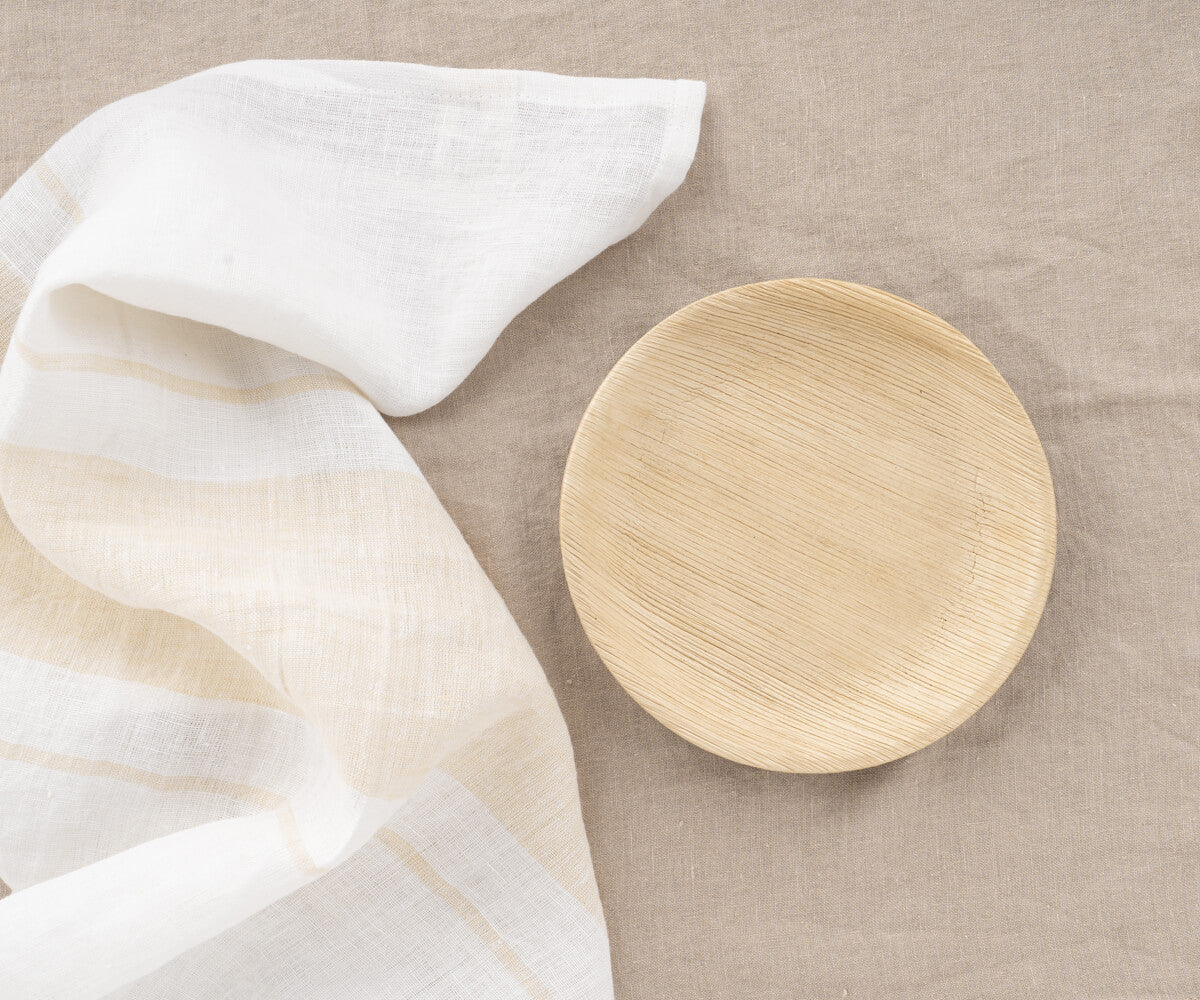
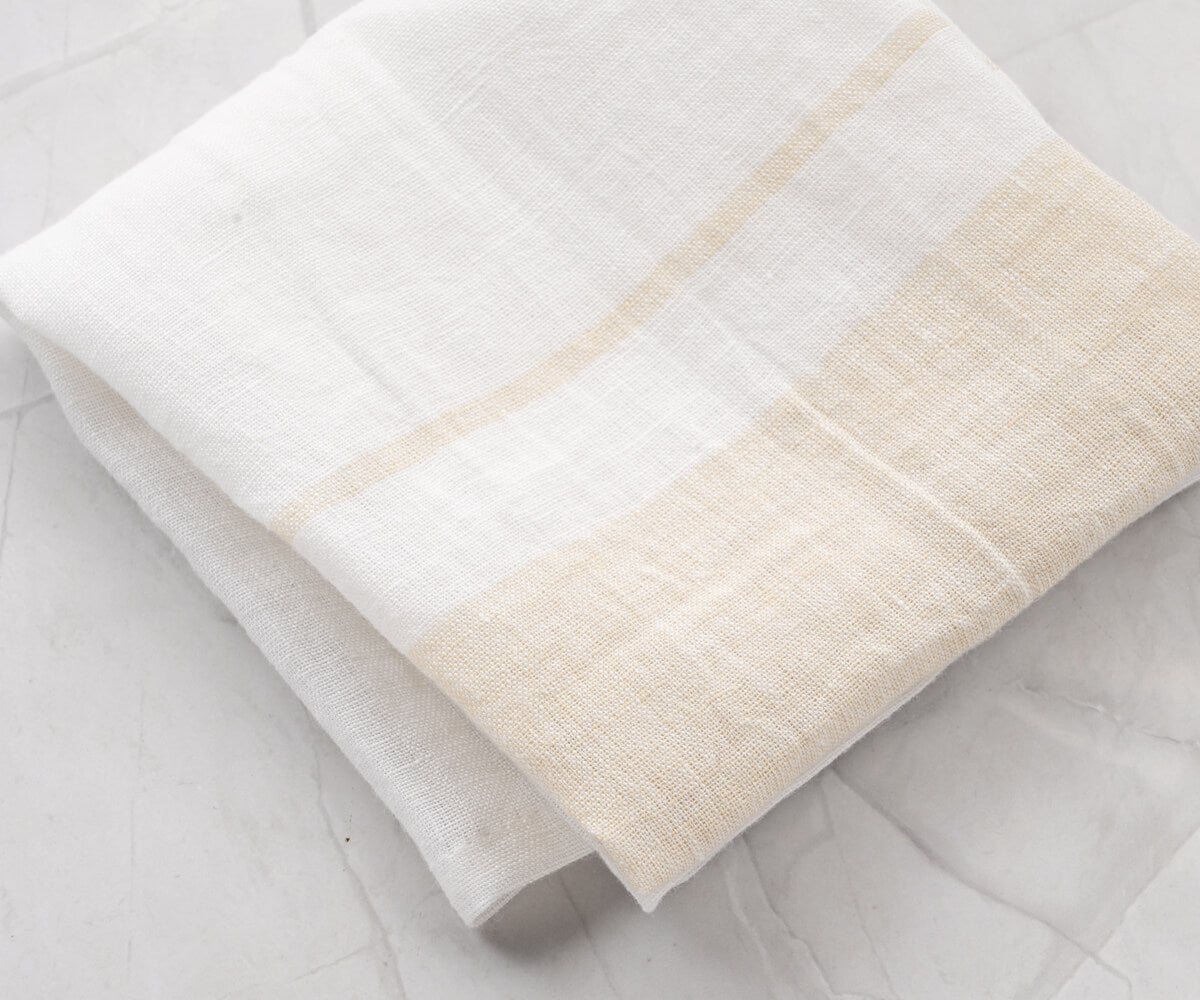
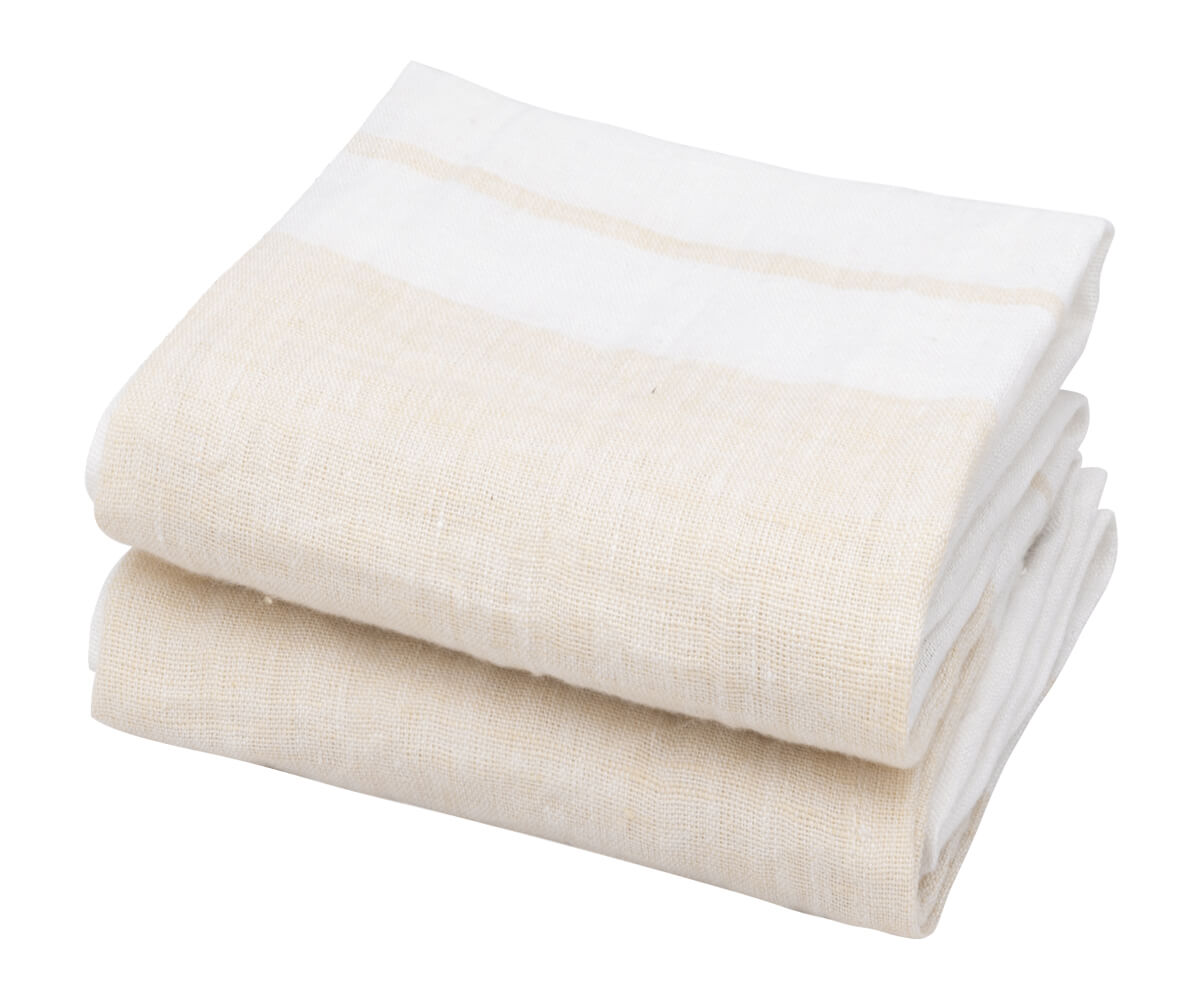
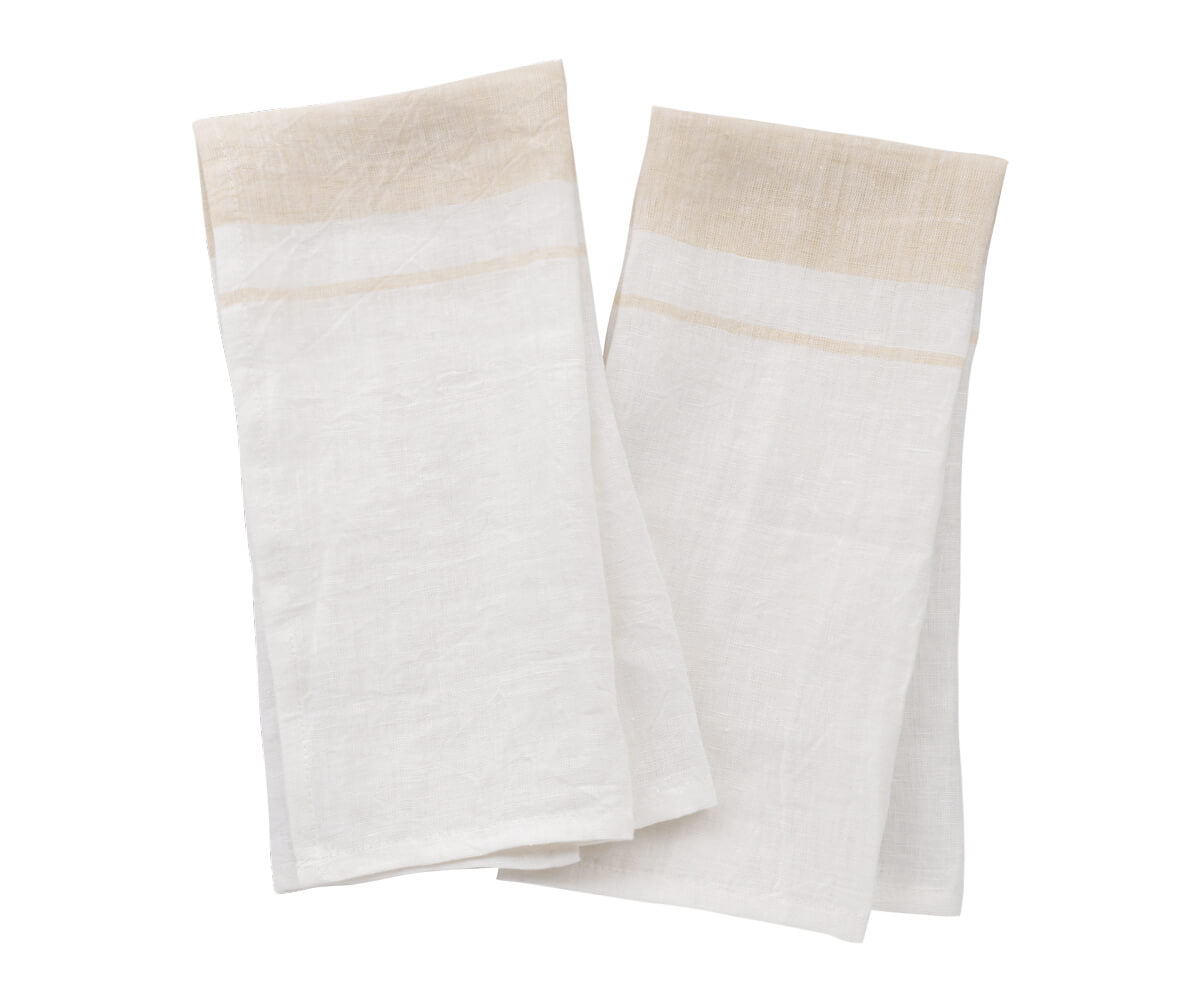
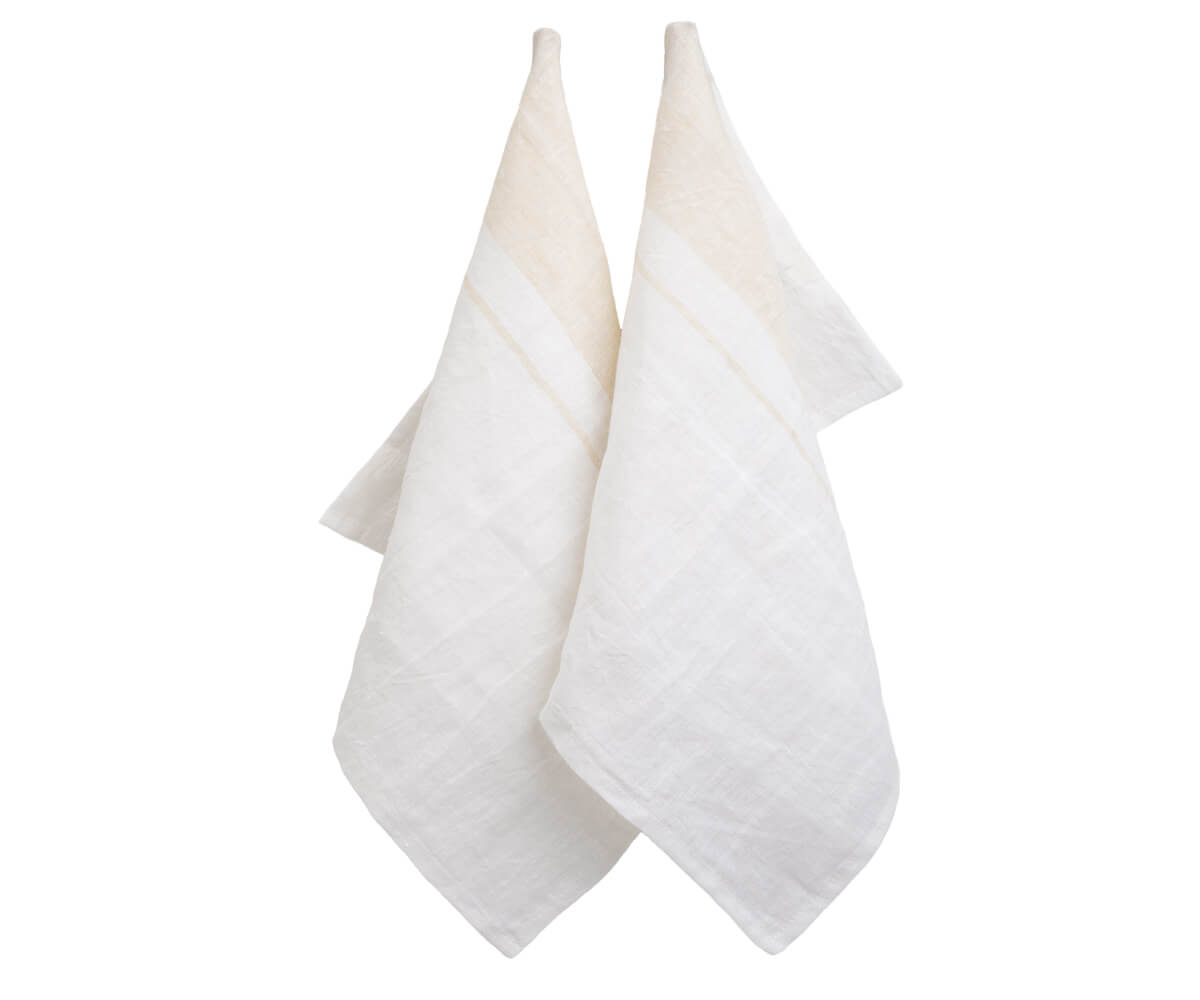
Linen kitchen towels are made from flax fibers, which produce a fabric that is naturally strong, fast-drying, and resistant to bacteria. Flax fibers are long and smooth, which means linen towels leave no lint on dishes or glassware. That lint-free quality makes them the top choice for polishing wine glasses and drying delicate ceramics.
Linen also releases moisture much faster than cotton. A linen towel left on the counter after use dries out in minutes rather than sitting damp for hours. This keeps bacteria from building up between uses.
These towels become softer with every wash and hold their shape through years of laundering. If you own only one premium kitchen towel, a linen one covers the widest range of tasks.
Best for: drying glassware, lint-free tasks, heavy daily use, quick drying between tasks
Also Read: Why are Kitchen Towels so Important?
2. Flour Sack Towels
Flour sack towels are tightly woven from 100% cotton and cut into a large square shape, usually around 28x28 inches. Bakers reach for these first because they are big enough to cover a full bread loaf while it rises and breathable enough not to trap too much heat.
The tight weave produces a smooth surface that releases moisture well and leaves no lint. This makes flour sack towels one of the best kitchen towels for drying dishes when you need a no-streak result. They also double as a cheesecloth substitute for straining stocks, nut milk, or yogurt.
Best for: covering rising dough, straining liquids, lining baskets, drying dishes, and glassware
3. Cotton Dish Towels
Cotton dish towels are the standard everyday workhorse of most kitchens. They are thicker and more structured than tea towels, built to handle the volume of drying that comes with cooking three meals a day.
Good cotton dish towels that are absorbent and lint-free use a tightly woven construction with a higher GSM (grams per square meter) for better moisture pickup.
Loose-weave cotton dish towels fray faster and absorb less efficiently, so fabric quality matters more here than price. A set of well-made cotton dish towels will outlast several rounds of budget alternatives.
Best for: drying dishes, wiping hands, countertop cleanup, general kitchen tasks
4. Tea Towels
Tea towels are lighter and thinner than dish towels. They originated in British kitchens for drying fine china and serving at the table. Today, they serve as both a functional and decorative piece in most home kitchens.
They work well for lining serving trays, draping over proofing dough, and adding color to an oven handle or drawer pull. For heavy drying tasks, they are not the strongest option, but for anything presentation-related, they are the natural choice. Belgian linen tea towels, in particular, are valued for their softness and clean drape.
Best for: serving and presentation, light drying, kitchen decor, tray lining
5. Plaid Kitchen Towels
Plaid kitchen towels bring a farmhouse-inspired look to any kitchen. The buffalo check and plaid patterns coordinate well with wood tones, open shelving, and neutral kitchen palettes. Most are woven from durable cotton and hold their pattern color through repeated washing.

These are a practical, daily-use towel that also functions as a low-cost decor update. Swapping in a fresh set of plaid towels is one of the fastest ways to refresh a kitchen's look without any renovation.
Best for: everyday kitchen use, farmhouse and rustic kitchen styles, decor-forward spaces
6. Striped Kitchen Towels
Striped kitchen towels are a kitchen staple across much of Europe and are growing steadily in popularity in American homes. The classic stripe construction typically uses a tighter warp thread count, which adds durability and absorbency without adding bulk.
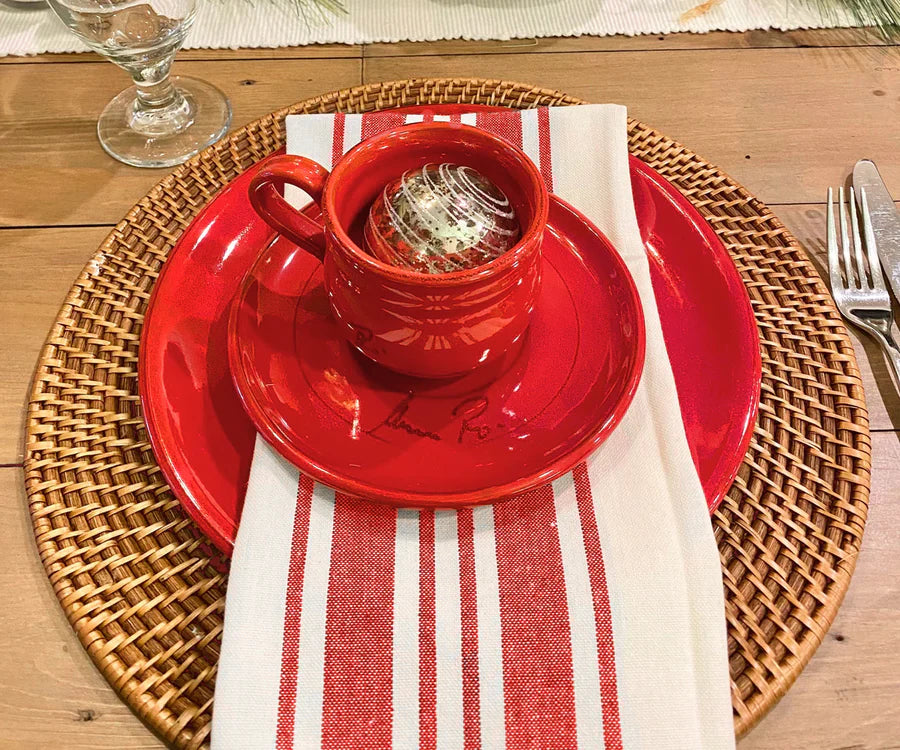
French stripe linen dish towels, in particular, are known for lasting through years of hard use. The stripe pattern also hides light staining better than solid-color towels, making them a practical choice for active cooking households.
Best for: drying dishes, modern and European-style kitchens, high-use households
7. Turkish Cotton Kitchen Towels
Turkish kitchen towels are woven from extra-long-staple cotton grown in Turkey. The longer fiber length produces a towel that is thinner and lighter than most cotton options but becomes significantly more absorbent after the first few washes.
They dry extremely fast after use, which reduces odor buildup. The tight, flat weave also makes them naturally resistant to bacteria.
For kitchens where towels go through several uses per day and laundering happens frequently, Turkish cotton is one of the strongest performers.
Best for: high-use kitchens, frequent laundering, fast drying between uses
8. Waffle Weave Kitchen Towels
The textured grid pattern of waffle weave towels creates significantly more surface area than a flat-woven towel of the same size. That extra surface area means more contact with wet dishes and faster moisture absorption per square inch.
Waffle weave towels also release that moisture quickly during drying, so they are ready to use again faster than thick terry cloth alternatives. They look distinctive hanging from an oven handle and perform well for both hand drying and dish drying.
Best for: fast hand drying, quick dish drying, high-traffic kitchens
9. Bar Mop Towels
Bar mop towels are thick, heavily looped cotton towels first developed for commercial kitchen and bar use. Their dense construction makes them suitable for absorbing large spills, scrubbing surfaces, and handling tasks that would destroy a thinner towel.
They are not the most decorative option, but for function in a busy kitchen, they are unmatched in durability. Many home cooks keep a dedicated set of bar mop towels under the sink specifically for cleanup tasks.
Best for: heavy spills, scrubbing, commercial-style, and professional home kitchens
10. Huck Towels (Glass Towels)
Huck towels use a distinctive honeycomb-pattern weave that produces a surface ideal for polishing without scratching. They are lint-free by construction and absorb moisture evenly across the full surface of the towel.
Restaurant staff and bartenders rely on huck towels to bring glassware to a spotless finish. For anyone who entertains regularly or owns fine stemware, adding a few huck towels is a functional step up from standard dish towels.
Best for: polishing glassware, streak-free finishing, entertaining, lint-sensitive tasks
Read More: The Best Kitchen Towels for Drying Dishes and Cleaning Countertops
Material Comparison: Cotton, Linen, and More
The best material for kitchen towels depends on what you cook, how often you wash your towels, and whether you prioritize speed of drying or maximum absorbency.
|
Material |
Absorbency |
Dry Speed |
Durability |
Lint-Free |
Best Use Case |
|---|---|---|---|---|---|
|
100% Cotton |
Very High |
Moderate |
Good |
Moderate |
Every day drying and cleanup |
|
Linen (Flax) |
High |
Very Fast |
Excellent |
Yes |
Glassware, daily heavy use |
|
Cotton-Linen Blend |
High |
Fast |
Excellent |
Yes |
All-purpose, mixed-task kitchens |
|
Turkish Long-Staple Cotton |
High |
Fast |
Very Good |
Yes |
Frequent washing, high-use kitchens |
|
Waffle Weave Cotton |
Very High |
Fast |
Good |
Yes |
Hand drying, quick tasks |
|
Flour Sack Cotton |
High |
Moderate |
Good |
Yes |
Baking, straining, food prep |
Linen towels perform best for speed and lint-free results. Cotton leads for maximum softness and initial absorbency. A cotton-linen blend sits in the middle and covers both needs well.
Read On: The Ultimate Guide to Kitchen Towel Materials
Kitchen Towel Size Guide
Towel size determines how useful a towel is for a given task. A flour sack towel needs to be large enough to cover a proofing loaf. A hand towel should be easy to grab and dry quickly.
|
Towel Type |
Standard Dimensions |
Primary Use |
|---|---|---|
|
Standard Dish Towel |
18 x 28 inches |
Drying dishes, pots, and hands |
|
Tea Towel |
20 x 28 inches |
Serving, lining trays, and light drying |
|
Flour Sack Towel |
28 x 28 inches |
Baking, straining, covering dough |
|
Bar Mop Towel |
16 x 19 inches |
Heavy cleanup, scrubbing surfaces |
|
Hand Towel |
16 x 24 inches |
Hand drying near the sink |
|
Glass Towel (Huck) |
18 x 28 inches |
Polishing glassware and stemware |
Most home cooks find that a mix of 18x28 dish towels and 28x28 flour sack towels handles the majority of daily kitchen needs.
Best Towel for Each Kitchen Task
Matching the towel to the task is the fastest way to improve kitchen efficiency. Using a thin tea towel to dry a large cast-iron pan leads to a soggy towel and a still-wet pan.
|
Kitchen Task |
Best Towel Type |
Why It Works |
|---|---|---|
|
Drying dishes quickly |
Linen or Turkish cotton |
Fast moisture release, no lint |
|
Polishing wine glasses |
Linen or huck glass towels |
Streak-free, no fiber transfer |
|
Covering rising bread dough |
Flour sack |
Breathable, large format |
|
Absorbing large spills |
Bar mop or cotton dish towel |
Dense construction, high absorption |
|
Drying hands frequently |
Waffle weave or cotton dish towel |
Dries fast, handles repeated use |
|
Serving and table presentation |
Tea towels |
Lightweight, decorative patterns |
|
Lining produce or bread baskets |
Flour sack or plain cotton |
Food-safe, neutral surface |
|
Handling warm cookware briefly |
Folded thick cotton dish towel |
Dense layers for short-term grip |
You May Also Like: What Kitchen Towels Do Chefs Use?
Seasonal Kitchen Towels
Seasonal kitchen towels are one of the simplest ways to update a kitchen's look throughout the year.

Christmas Kitchen Towels: Red and green plaid, snowflake motifs, and festive seasonal prints work well for November and December. They hold up through heavy holiday cooking and double as an inexpensive gift for hosts.
Halloween Kitchen Towels: Deep orange, black, and patterned October designs are popular with families and those who decorate seasonally. Pumpkin and harvest prints are the most common.
Fall Kitchen Towels: Warm earth tones, harvest patterns, and leaf motifs carry a kitchen from September through November. Rust, ochre, and deep burgundy coordinate well with autumn table settings.
Easter Kitchen Towels: Soft pastel prints in sage, blush, and sky blue work for March and April. These lighter colors brighten a kitchen as natural light increases in spring.
For towels that work across all seasons, white kitchen towels and pink kitchen towels pair with nearly any kitchen palette year-round.
Kitchen Towels vs Paper Towels
The average American household uses approximately 80 rolls of paper towels per year, according to EPA waste data. Switching to reusable cloth kitchen towels cuts that cost significantly and reduces ongoing waste.
|
Factor |
Paper Towels |
Cloth Kitchen Towels |
|---|---|---|
|
Annual cost (est.) |
$80 to $120 |
$30 to $60 upfront, multi-year use |
|
Environmental waste |
Single-use, landfill-bound |
Washable, lasts 200+ wash cycles |
|
Absorbency per use |
Good for one use |
Excellent across multiple uses |
|
Suitable tasks |
Quick one-off spills |
All kitchen tasks |
|
Eco credentials |
Low |
High, especially for linen and organic cotton |
|
Long-term savings |
None |
Significant over 2 to 3 years |
Linen is made from flax, a crop that requires significantly less water and fewer pesticides than conventional cotton. Choosing organic cotton or linen kitchen towels is one of the most practical, sustainable choices a home cook can make.
How to Care for Kitchen Towels
Proper care is the single biggest factor in how long kitchen towels last and how well they perform. Follow these five steps consistently, and a set of quality cotton or linen towels will stay in good shape for years.

Step 1: Wash before the first use: New towels often carry a light factory finish that reduces absorbency. One wash before first use opens the fibers and brings them to full performance.
Step 2: Wash in warm water with a mild detergent: Warm water at around 40°C (104°F) is sufficient for everyday washing and gentler on the fabric than hot water. For towels used on raw food or heavy grease, a hotter cycle is appropriate.
Step 3: Skip the fabric softener entirely: Fabric softener coats the cotton and linen fibers with a waxy residue. The towels feel softer immediately, but absorb water much less effectively after a few washes. Leave it out every time.
Step 4: Tumble dry on medium heat or air dry on a rack: High heat breaks down fibers faster than necessary and reduces the towel's lifespan. Medium heat or air drying preserves both shape and texture for longer.
Step 5: Wash kitchen towels separately from clothing: Kitchen towels carry grease and food particles that transfer to clothing in a shared load. Washing them separately also lets you use a higher temperature when needed without risking delicate fabrics.
Know About: How to Properly Clean and Maintain Linen Kitchen Towels
Build a Kitchen Towel Set That Works for You
A well-stocked kitchen towel drawer makes every cooking session cleaner and less frustrating.
A practical starting set looks like this: two to three linen kitchen towels for daily dish drying and glassware, two to three flour sack towels for baking and food prep, and two to three plaid kitchen towels or striped kitchen towels for everyday hand drying and countertop work.
For specialty tasks, add a few huck glass towels for entertaining and a set of bar mop towels for heavy cleanup under the sink.
Upgrade Your Kitchen with All Cotton and Linen
Wondering where to buy kitchen towels? All Cotton and Linen offers a wide selection of premium-quality towels that suit every need. Whether you prefer the natural elegance of linen kitchen towels, the absorbency of flour sack kitchen towels, or the charm of cute kitchen towels, we have something for you.
Explore our collection today and discover the ideal kitchen towels set for your home!