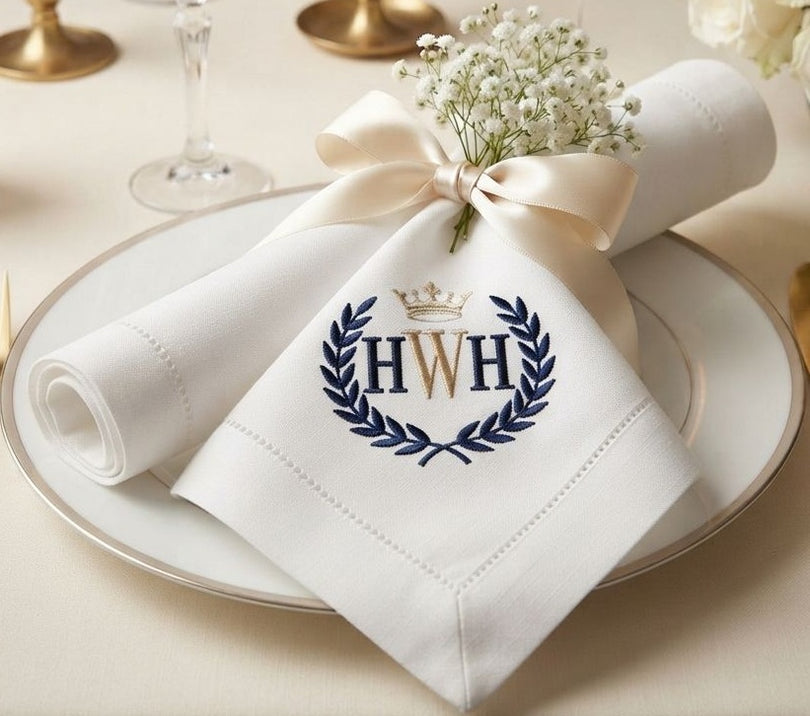

Quick Facts: What Makes a Cloth Napkin High Quality
| Quality signal | What to look for |
|---|---|
| Fiber | 100% cotton, 100% linen or a cotton-linen blend |
| Weave | Tight and even; little light passing through when held up |
| Weight | Feels substantial, not papery; GSM listed is a plus |
| Hems | Straight, double-folded or mitered corners, or a neat hemstitch |
| Stitching | Small, even stitches with no loose threads |
| Size | 18–20 in for everyday dining; larger for formal meals |
| Labeling | Clear fiber content, care instructions; third-party certifications are a bonus |
Why Quality Matters More with Cloth Than with Paper
A paper napkin only has to last one meal. A cloth napkin has to survive hundreds of uses, food stains, washing machines and dryers and still look good on the table. Small construction differences that are invisible on day one, such as a loose weave or a single-folded hem, show up after a few months as fraying, shrinking, fading or twisting. Investing in a well-made set usually means fewer replacements and a better experience at every meal.
If you're still deciding whether cloth is worth it at all, our guide to switching to cloth napkins covers the environmental research, costs and how many napkins to buy.

1. Start with the Fiber: Cotton, Linen or a Blend
Natural fibers are the foundation of a quality napkin. They absorb well, soften with washing and don't shed plastic microfibers the way synthetics do.
| Fiber | Feel | Strengths | Trade-offs | Best for |
|---|---|---|---|---|
| 100% cotton | Soft, smooth | Absorbent, easy to launder, tolerates warmer water | Can wrinkle; lighter weaves may thin over time | Everyday family meals, high-use homes |
| 100% linen | Textured, crisp, softens with use | Very strong fiber that dries quickly; elegant drape | Wrinkles easily; usually costs more | Entertaining and everyday use for those who like a relaxed look |
| Cotton-linen blend | Between the two | Softer than linen with more texture than cotton | Characteristics vary with the blend ratio | One set for daily use and guests |
| Polyester / synthetics | Smooth, slick | Resists wrinkles | Usually less absorbent; sheds microfibers in washing | Not recommended for dining napkins |
Linen comes from flax, which the CFDA's fiber guide describes as stronger, stiffer and faster drying than cotton. Cotton's advantage is softness and easy care from the first use. On synthetics, research has shown that synthetic textiles shed microfibers during washing, with worn and loosely constructed fabrics shedding more.
Compare options in our cotton napkins, linen napkins and cotton-linen napkins collections.
You May Also Like: Capsule Wardrobe Essentials | Build a Stylish Wardrobe
2. Check the Weave
A tight, even weave is one of the clearest signs of quality. It makes a napkin more absorbent, more durable and less likely to fray or snag.
How to check:
Hold it up to the light. Some light through linen is normal, but large gaps or uneven patches suggest a loose weave.
Look closely at the surface. Threads should look even, without thick and thin spots (some irregular "slubs" are natural in linen and add character).
Gently pull on the bias. A well-woven napkin springs back rather than staying distorted.

3. Feel the Weight (and Look for GSM)
Weight affects how a napkin feels in your lap, how it drapes and how it holds a fold. Fabric weight is often listed as GSM (grams per square meter); the higher the number, the heavier the fabric.
Very light napkins can feel thin and lose shape quickly.
Mid-weight napkins balance softness, absorbency and drape for daily use.
Heavier napkins feel luxurious and hold crisp folds for formal tables, but take longer to dry.
As a real example, our hemstitch cotton napkins and bistro striped cotton napkins both list a 160 GSM fabric weight on their product pages. GSM is only one signal, though: weave and fiber quality matter as much as weight.
4. Inspect the Hems and Corners
Hems are where cheap napkins fail first. A good hem keeps edges straight through repeated washing.
Double-folded hems: the raw edge is folded under twice and stitched, so it can't unravel.
Mitred corners: corners are folded at a 45-degree angle for a flat, neat finish without bulky overlaps — a hallmark of careful construction.
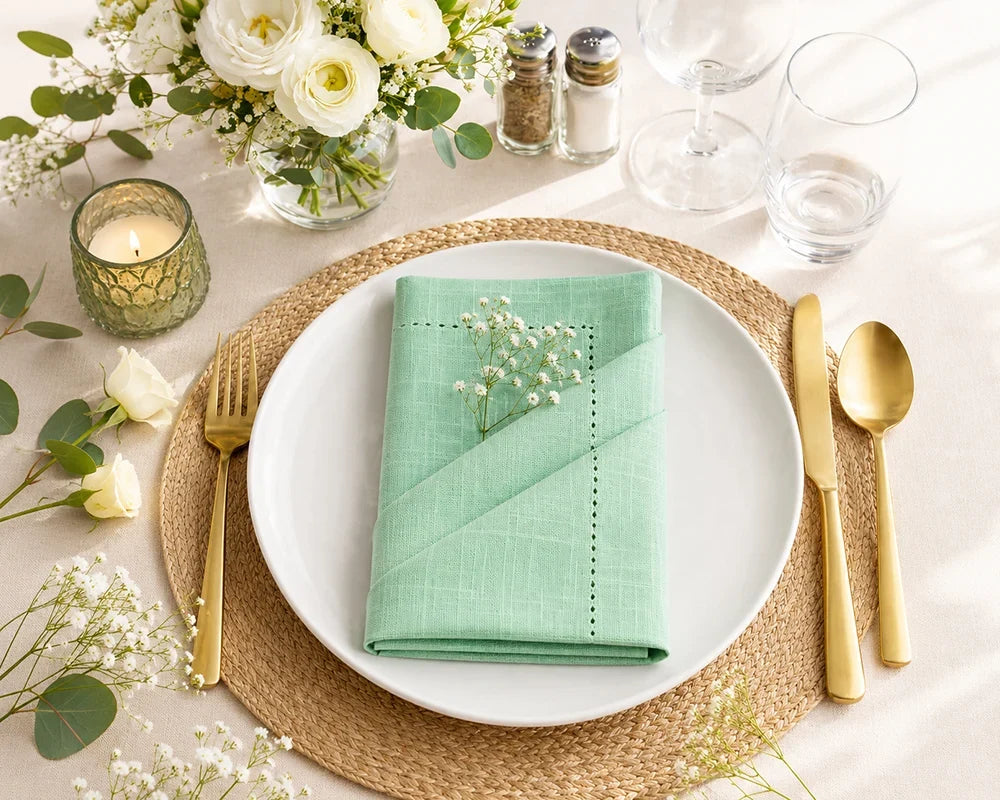
Hemstitching: a decorative open-work border created by drawing out threads and stitching the edge. It looks refined and, when well made, is durable.
Scalloped or merrow edges: dense satin stitching along a shaped edge; check that stitches are tight and continuous.
Red flags: single-folded or raw edges, wavy hems, puckered corners and loose thread ends.
See examples in our hemstitched napkins and scalloped napkins.
Explore More: What Is a Destination Wedding? How to Plan It in 2026
5. Look at the Stitching and Finish
Turn the napkin over. Stitching should be small, even and consistent along all four sides, with secured ends. On embroidered or monogrammed napkins, the back should be tidy without long loose threads that can snag in the wash. Pre-washed or stone-washed finishes, when offered, can mean softer fabric from the start and less surprise shrinkage.
6. Choose a Practical Size
Size affects both usefulness and appearance. Traditional guidelines place informal dinner napkins at 18–20 inches and formal dinner napkins at 21–26 inches, with luncheon napkins at 14–16 inches.
- Everyday dining: 18 × 18 in or 20 × 20 in covers the lap and folds easily.
- Formal dinners: 20–22 in or larger for generous lap coverage.
- Drinks and appetizers: small cocktail napkins.
Our border linen napkins and white hemstitched linen napkins are 18 × 18 in, while our plain linen napkins come in sizes from 10 × 10 in up to 20 × 20 in. For more detail, read what is the best size for cloth napkins.
7. Read the Label: Fiber, Care and Certifications
A quality napkin tells you what it's made of and how to care for it.
Fiber content: "100% cotton" or "100% linen" is clear; vague terms like "linen-look" or "linen-like" often signal synthetic or blended fabric.
Care instructions: look for realistic machine-wash guidance. If a napkin requires dry cleaning, it isn't practical for regular dining.
Colorfastness: dyed napkins should hold their color through washing; darker shades and reds are worth a closer look in reviews.
Certifications: third-party labels such as OEKO-TEX STANDARD 100 (tested for harmful substances) or GOTS (organic textiles) are helpful extras. Look for certificate numbers you can verify rather than general claims.
Your Quick Quality Checklist
Before you buy, run through these seven checks:
- Natural fiber: 100% cotton, 100% linen or a cotton-linen blend
- Tight, even weave with no large gaps
- Substantial weight (GSM listed is a plus)
- Double-folded hems, mitered corners or a neat hemstitch
- Small, even stitching with secured ends
- Size suited to how you'll use it (18–20 in for everyday)
- Clear fiber and machine-wash care labeling
How Long Should High-Quality Cloth Napkins Last?
There's no fixed number; lifespan depends on fiber, construction, how often you use them and how you wash them. BestReviews notes that even well-maintained napkins in regular use often need replacing after about five years, while rarely used sets can last much longer. Linen's strong fibers tend to age well, often becoming softer and more absorbent with washing. And when napkins do wear out, they make excellent cleaning rags.
Care habits that extend life:
- Wash with like colors in cool to warm water; avoid overloading the machine.
- Pre-treat stains promptly and check they're gone before drying.
- Tumble dry low or line dry; remove promptly to reduce wrinkles.
- Avoid chlorine bleach on colors and linen.
- Rotate sets so the same napkins aren't washed every few days.
For linen-specific tips, see our linen care guide.
Matching Quality Napkins to How You Dine
| Your dining style | What to prioritize | A good place to start |
|---|---|---|
| Busy family, daily meals | Absorbent, easy-care cotton; patterns or darker colors | Bistro striped cotton napkins |
| Relaxed everyday + occasional guests | Linen or a blend with a natural texture | Border linen napkins |
| Frequent entertaining | Neutral linen, generous size, fine hem detail | White hemstitched linen napkins |
| Weddings and events | Coordinated colors, custom details, bulk quantities | Custom napkins |
Want styling ideas once you've chosen? See how to style your table with linen napkins.
The Bottom Line
High-quality cloth napkins are easy to spot once you know what to look for: natural fibers, a tight weave, enough weight, strong hems, neat stitching, a practical size and honest labelling. Choose the fiber that suits how you dine, care for your napkins gently, and a good set will serve your table and later your rag drawer for years.
Ready to compare? Browse our full cloth napkin collection to find well-made cotton and linen sets for every table.