


Quick facts: removing candle wax from a tablecloth
| Question | Answer |
|---|---|
| Time | About 20 to 30 minutes (plus washing) |
| You need | Dull knife or spoon, plain paper (parchment or brown paper bag), iron, dish soap, towel |
| What kind of stain? | Oil-based (the wax melts into an oily mark) |
| First move | Let the wax harden; never rub it while soft |
| Heat | Warm iron through paper, no steam |
| Colored wax | Treat the dye after the wax is gone |
| Never | Put it in the dryer before the stain is gone |
| Works on | Cotton and linen best; check care labels for blends, lace and embroidery |
Steps at a glance: how to remove candle wax from a tablecloth
Let the wax harden completely (10 to 15 minutes).
Scrape off the raised wax with a dull knife, spoon or old credit card.
Melt the rest into paper: place plain paper over the wax, press with a warm iron (no steam), and swap the paper as it absorbs wax.
Treat the oily mark with dish soap, working it in gently.
Treat any dye from coloured wax with an oxygen-based stain remover.
Wash according to the care label, check the spot, and air dry until you are sure the stain is gone.
First, act calmly: let the wax harden.
Do not scrub or smear warm wax; rubbing pushes it deeper into the weave and can spread dye from a coloured candle. Blow out nearby candles so no more wax joins the spill, and remember hot wax can burn skin. Leave the cloth alone until the wax is firm, usually within 10 to 15 minutes at room temperature.
Step 1: Scrape off the excess (and use the freezer if needed)
Once the wax is hard, scrape from the outer edge toward the centre with a dull knife, spoon or old credit card so you do not spread it. Lift the wax instead of digging into the threads.
Freezer method for a whole cloth: fold the tablecloth with the waxy area on top and place it in the freezer for a few minutes. Cold wax turns brittle and flakes off in pieces. For a single spot, hold a bag of ice against it for a minute or two.
Check your fabric before you add heat
| Fabric | Iron guidance | Notes |
|---|---|---|
| Cotton | Medium to warm; follow the care label | Handles heat well |
| Linen | Medium to warm; follow the care label | Strong, but do not scrub hard |
| Cotton-polyester blend | Low to medium | Test on a hidden corner first |
| Polyester or synthetic | Low; use extra paper | Can melt or shine under high heat |
| Lace, embroidery, trims | Avoid direct ironing on the stitching | Use the freezer and scrape method, then ask a professional if needed |
| Silk, rayon, delicate | Do not iron at home | Take to a dry cleaner |
Always check the care label and test your iron on an inconspicuous corner.
Step 2: Melt the remaining wax into paper
- Lay the cloth flat on an ironing board or a thick towel with the stain facing up. Place another towel or old cloth underneath.
- Cover the wax with plain parchment paper or a brown paper bag. Printed paper can transfer ink onto your cloth.
- Set the iron to a low or warm setting with no steam (use the heat level your fabric allows) and press for a few seconds at a time.
- The wax melts and soaks into the paper. Lift it, move to a clean section of paper, and repeat until no more wax transfers.
No iron? Use a hair dryer on medium heat pointed at the paper-covered stain so the wax melts into the paper.
Step 3: Treat the oily residue
Even after the wax is gone, a faint oily mark usually remains because wax is oil-based. Dab a little liquid dish soap onto the spot, work it in gently with your fingers or a soft cloth, and leave it for about ten minutes. For stubborn residue on a colourfast fabric, a cotton ball of rubbing alcohol (isopropyl) can help dissolve it; test on a hidden area first and blot, do not rub. Avoid strong solvents such as acetone on acetate, rayon or dyed fabrics.
If your Christmas tablecloth has multiple wax spots scattered across it, perhaps from a full row of taper candles down the centre, the iron-and-paper method spot by spot can take a while. A boiling water treatment handles this more efficiently.
Step 4: Remove dye from coloured candles
Red, green and gold candles can leave a tinted shadow after the wax is gone. Soak the stain in a gentle oxygen-based stain remover following its instructions before washing. This is kinder to cotton and linen than chlorine bleach. Older or deeply pigmented stains may not come out completely; if the cloth is valuable, take it to a professional cleaner.
Step 5: Wash, check, then dry
Wash the cloth according to its care label, using the warmest water it allows. Check the spot while the cloth is still wet. If any wax or dye remains, repeat the treatment before drying, because the dryer's heat can set the stain permanently. Air dry if you are unsure.
Once the cloth is clean, iron it while slightly damp to restore a crisp finish, and store it flat or loosely folded in a dry place.
No iron? The boiling-water method
If a cloth has several wax spots, for example from a row of taper candles, boiling water can be faster.
- Hold the stained section taut over a sink or a large heat-safe bowl.
- Pour boiling water slowly onto the wax from a short height, keeping your hands clear of the stream.
- Repeat until the water runs clear, then treat any residue and wash.
Safety: boiling water can scald. Keep children and pets away and use a kettle with a controlled pour. Use this method only on sturdy, colourfast cotton or linen; skip it on lace, synthetics, blends and delicate finishes, and always check the care label.
Which method for which situation?
| Situation | Best method | Avoid |
|---|---|---|
| A few drips on a cotton or linen cloth | Scrape, then iron through paper | Rubbing the wax |
| Large area or many spots | Freezer then scrape; boiling water on sturdy fabric | Washing before treating |
| Coloured wax stain | Remove the wax first, then oxygen-based remover | Chlorine bleach |
| Old, dried wax | Freezer, scrape, paper and heat, then dish soap; may need a pro | Hot-washing and drying |
| Blend or synthetic fabric | Low heat through extra paper; test first | High iron setting |
| Lace or embroidery | Freezer and gentle scraping; ask a professional | Ironing directly on stitching |
| Tablecloth already dried in a dryer | Repeat the paper-and-heat method before washing again | Drying again |
Wax on napkins, runners and lace
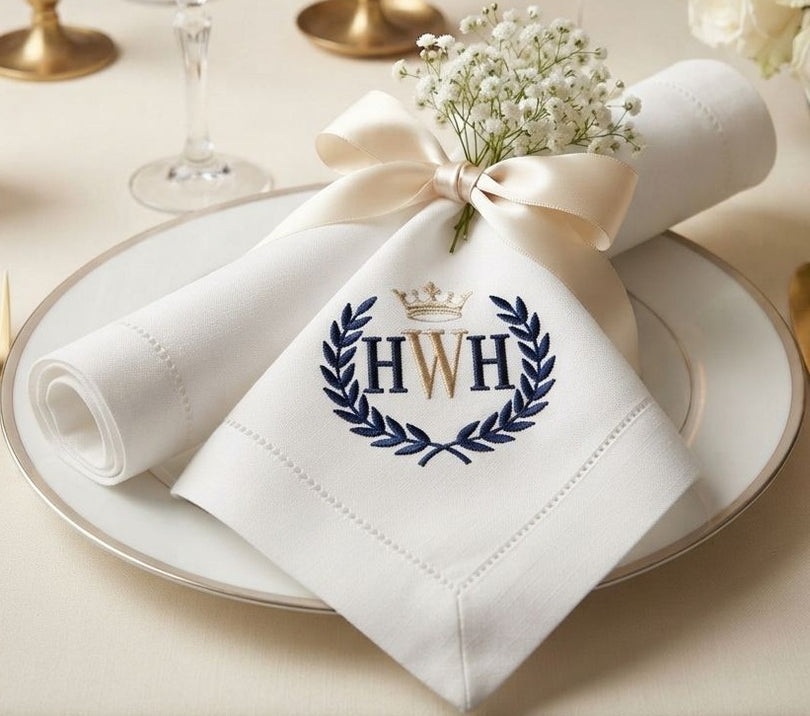
The same steps apply to napkins and table runners, which are usually cotton or linen. Because they are smaller, the freezer method is quick: fold, freeze a few minutes, scrape, then iron through paper. For lace or embroidered pieces, avoid pressing heat directly onto stitching; scrape carefully after freezing and consult a professional cleaner if wax is embedded in the threads.
Mistakes to avoid
Washing or drying before you treat the wax. Heat and agitation can set the stain and coat your machine.
Using the hair dryer without paper. Melted wax simply moves deeper; paper gives it somewhere to go.
Scrubbing hard on linen. Heat-softened fibres can thin or fray.
Using strong solvents or chlorine bleach on coloured, acetate or delicate fabrics.
Ironing with printed paper towel, which can transfer ink.
How to stop candle wax dripping on your tablecloth
- Choose dripless taper candles or candles in containers.
- Stand tapers in holders with a wide catch base, or set them on a candle plate, ceramic tile or trivet to protect the cloth.
- With a table runner, keep candles along the centre so drips fall on the runner.
- Use flameless candles near greenery, children or pets.
- Keep a dull knife and paper towels within reach during dinner, so you can lift a cooled spill quickly.
The Takeaway
A candle wax spill does not have to mean the end of your favourite holiday tablecloth. Let the wax harden, scrape off what you can, then use heat and absorbent paper to draw out the rest. Treat any lingering dye with dish soap or a gentle stain remover, and always check the care label before reaching for an iron or boiling water.
With the right approach, your cotton and linen table linens can look candlelit-centrepiece perfect again. Clean them well, store them properly, and they will be ready for next year's gathering.
Quick Answers
Does candle wax come out of a tablecloth permanently?
Yes, in most cases. Letting the wax harden, scraping it off, then drawing out the residue with an iron and paper towel removes nearly all of it from cotton and linen.
Can you remove candle wax without an iron?
Yes. Boiling water poured over the stretched fabric melts the wax just as effectively, and a hair dryer works too, as long as you place absorbent paper beneath the fabric first.
Does hot water set a wax stain?
Boiling water melts and removes wax when poured directly through the fabric. The concern is putting a wax-stained cloth through a full hot wash cycle before treating it, since the agitation can drive the stain deeper.
What removes wax stains from white linen best?
A gentle oxygen-based stain remover, soaked before laundering, lifts leftover wax residue and dye without the harshness of chlorine bleach.
Related Readings: