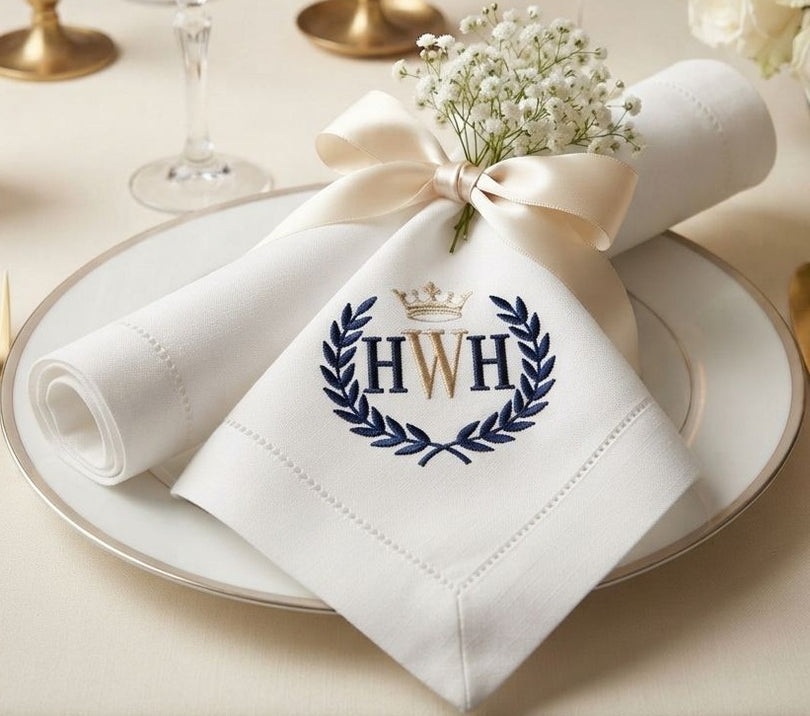

This guide covers everything for both sides of the wedding table: how couples and planners choose wedding tablecloths (style, fabric, size, color), and the dining etiquette every guest should know for a polished, respectful reception experience.
Choosing Wedding Tablecloths
Why the Tablecloth Matters at a Wedding
The tablecloth is the single largest textile element at most wedding receptions. It covers every guest table, the head table, the cake table, the buffet or cocktail tables, and often the gift and sign-in table. In most reception venues, the tablecloth is more visually dominant than the florals, tableware, or chair covers.
Getting it right creates a unified, elegant setting that makes every other decorative element look better. Getting it wrong, the wrong size, leaving exposed table legs, a synthetic fabric that reflects light poorly under venue lighting, or a pattern that clashes with the centerpieces, creates a visual discord that photographs permanently into the wedding record.

Wedding Tablecloth Fabrics: What to Choose
Cotton tablecloths are the most versatile and widely used wedding tablecloth fabric. 100% cotton in white, ivory, or soft neutrals creates a clean, elegant backdrop for any centerpiece or tableware. Cotton tablecloths are machine washable, easy to press for a smooth, wrinkle-free surface, and available in every style from plain hem stitched to embroidered and printed. For outdoor and garden weddings, cotton is the most practical choice, as it handles light moisture and moderate wind better than synthetic alternatives.
Linen tablecloths are the premium choice for formal weddings. Natural linen has a distinctive texture, slightly relaxed in appearance but deeply refined in quality that reads as effortlessly luxurious in photographs and in person. Hemstitched linen tablecloths with a drawn-thread border at each edge are a particularly elegant choice for formal dining tables. Linen's natural drape is superior to cotton and dramatically better than synthetic alternatives.
Cotton-linen blend tablecloths offer the softness and washability of cotton with the texture and drape of linen. For couples who want the linen aesthetic without the higher cost and care requirements of pure linen, a quality cotton-linen blend is an excellent middle ground.
What to avoid: Synthetic tablecloths (polyester, vinyl) are widely used in rental contexts because of their low cost and easy cleaning. For a wedding, the difference between a quality cotton or linen tablecloth and a polyester rental is immediately apparent in photographs. Synthetic fabric reflects light differently, wrinkles more persistently, and lacks the natural warmth of cotton or linen. If the budget allows, cotton or linen tablecloths are worth the investment.
Also Read: Difference between table cover and tablecloth

Wedding Tablecloth Colors and Patterns
White and ivory are the most traditional and enduring wedding tablecloth colors. They photograph beautifully under all lighting conditions, coordinate with every floral color and tableware style, and create the clean, elevated backdrop that formal wedding design requires.
White has a crisp, modern quality; ivory and cream have a warmer, more romantic tone. For outdoor and garden weddings, ivory reads as more intentional than white, which can appear stark in natural daylight.
Soft neutrals, such as pale champagne, blush, soft sage, dusty blue, and warm grey, are popular alternatives to white and ivory for weddings with a defined color palette. These tones coordinate with bridesmaid dresses, floral arrangements, and stationery when the wedding's color scheme is clearly established.
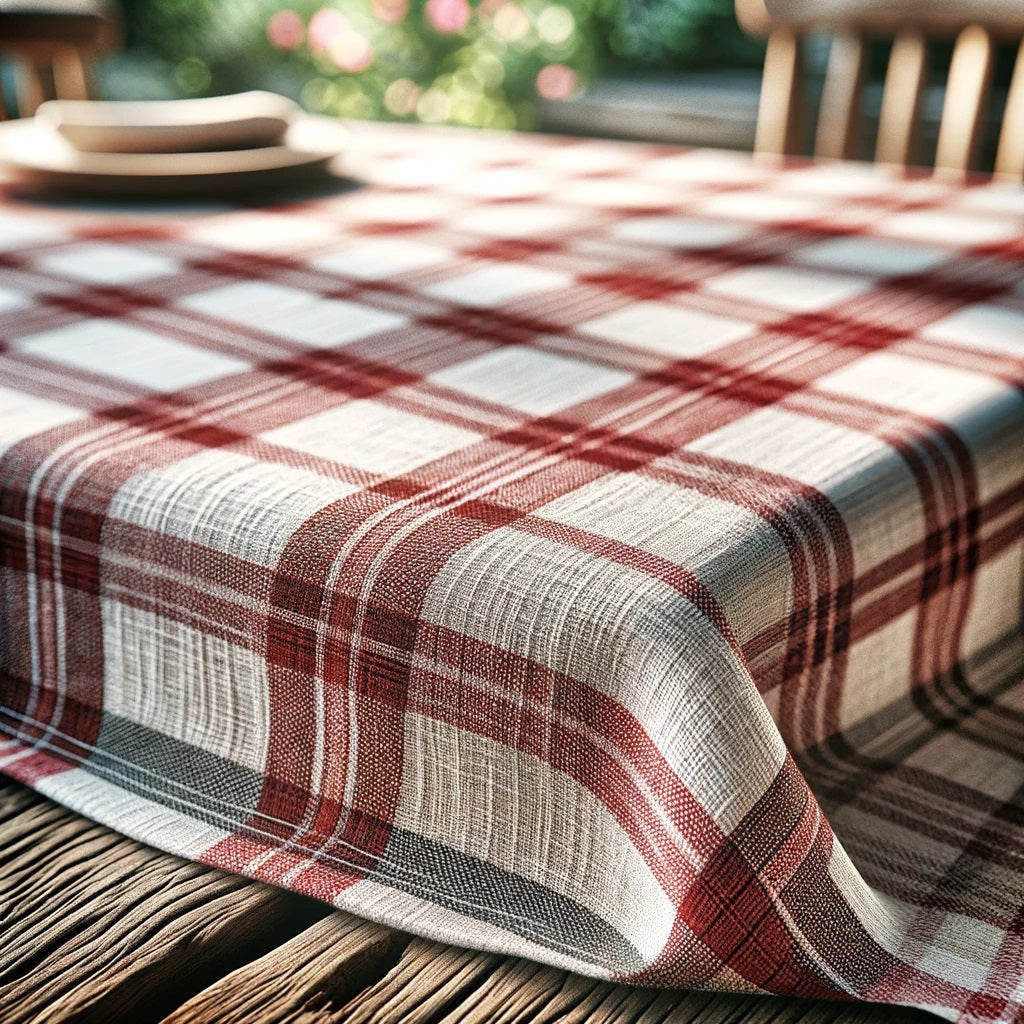
Patterned tablecloths, checkered, striped, embroidered, and printed designs suit casual, rustic, and bohemian wedding styles. A buffalo check or gingham tablecloth at an outdoor barn wedding, or a printed botanical tablecloth at a garden party reception, creates a visual warmth that plain white tablecloths don't achieve in those settings.

Metallic and jacquard tablecloths with subtle woven patterns in silver, gold, or champagne suit black-tie and formal evening receptions where a degree of luxury and shimmer is appropriate.
Wedding Tablecloth Sizes: Getting the Drop Right
The drop in the length of the tablecloth that hangs over each side of the table determines how formal and finished the table looks.
Floor-length drop (full drop):
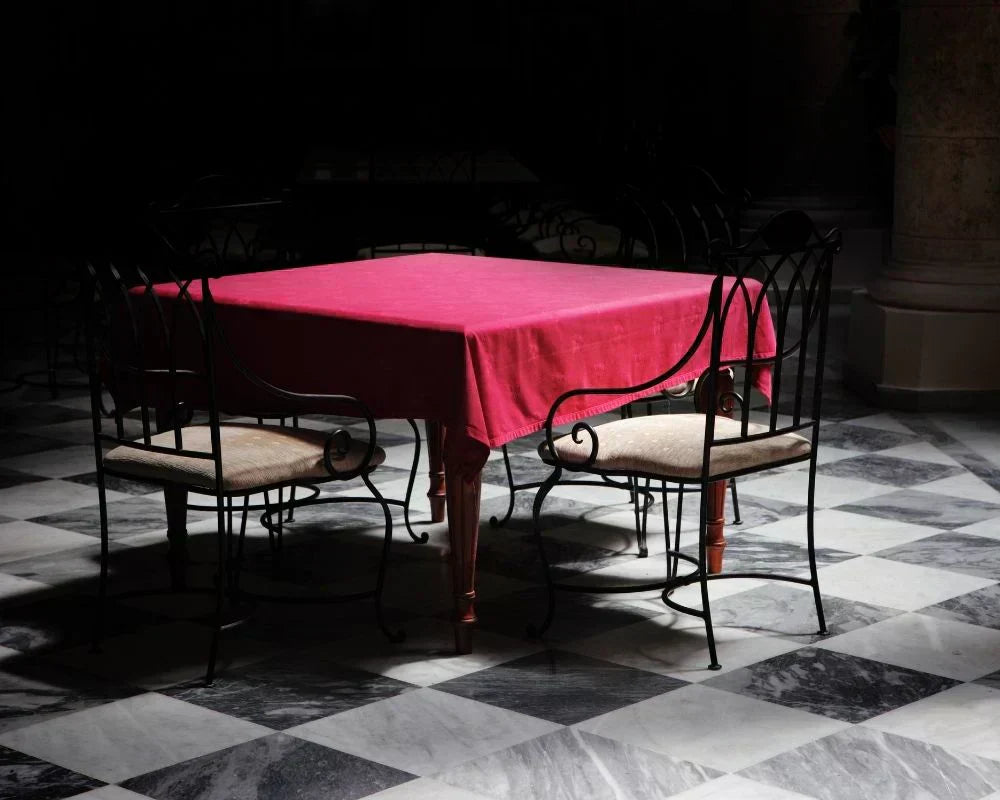
The tablecloth reaches the floor on all sides, completely covering the table legs and base. This is the most formal look and is appropriate for black-tie and white-tie receptions, head tables, and any setting where maximum elegance is the goal. It also covers imperfections in rental tables and creates a seamless, polished appearance.
Standard drop (10–15 inches):
The tablecloth covers the table edge and drops 10–15 inches below the tabletop on each side, exposing the lower part of the table legs. This suits semi-formal and casual receptions and coordinates naturally with chair skirts or bare chairs, depending on the style.
How to calculate the size needed:
Measure the table's length and width (or diameter). Add twice the desired drop to each dimension.
For a 60-inch round table with a floor-length drop to a table height of 30 inches: 60 + (30 × 2) = 120-inch round tablecloth.
For a 6-foot (72-inch) rectangular table with a 15-inch drop: 72 + (15 × 2) = 102 inches length; table width (30 inches) + (15 × 2) = 60 inches width. Use a 60 × 102-inch tablecloth.
Standard Wedding Table Sizes and Matching Tablecloth Sizes
|
Table Type |
Table Size |
Floor-Length Cloth |
Standard Drop Cloth |
|
Round (seats 6–8) |
60" diameter |
120" round |
90" round |
|
Round (seats 8–10) |
72" diameter |
132" round |
108" round |
|
Rectangular (6 ft) |
30" × 72" |
60" × 132" |
60" × 102" |
|
Rectangular (8 ft) |
30" × 96" |
60" × 156" |
60" × 120" |
|
Banquet/head table |
Varies |
Floor-length recommended |
— |
Coordinating Tablecloths with the Full Table Setting
A wedding tablecloth works as part of a coordinated table setting, not in isolation. The most polished wedding table settings follow this layering logic:
Base: White or ivory cotton or linen tablecloth, floor-length drop.

Overlay (optional): A sheer, lace, or patterned overlay placed on top of the base cloth adds texture and formality without replacing the foundational white cloth.
Table runner:
A linen or cotton table runner down the center of the table coordinates with or contrasts the tablecloth color and provides a defined zone for the centerpiece and candles.
Napkins:
Cloth napkins in the same material family as the tablecloth, hemstitched cotton or linen napkins in white or a coordinating soft tone, are the appropriate choice for a wedding table. Paper napkins are not appropriate at a seated wedding reception.
Placemats (optional):
At semi-formal and casual receptions, individual cotton or linen placemats at each seat under the dinner plate add another layer of texture and define each setting more explicitly.
Read Related: Best Tablecloths for Outdoor Dining
Part Two: Wedding Dining Etiquette for Guests
Finding Your Seat
At most seated wedding receptions, guests are assigned a specific table and seat. A seating chart or escort card will direct you to your table, while place cards indicate exactly where you should sit.
Do:
-
Check the seating chart or escort cards as soon as you enter the reception area.
-
Find your assigned table before gathering near the entrance, which can slow the flow of arriving guests.
-
Follow the seating arrangement chosen by the couple.
Don't:
-
Move place cards to sit with different guests. Seating plans are carefully arranged, and changing them can create confusion.
-
Sit at an unassigned table, even if it appears empty. Certain tables may be reserved for family members, the wedding party, or special guests.
Approaching the Table
Once you locate your seat, take a moment to settle in and introduce yourself to the people around you.
Do:
-
Wait until the wedding party and couple have been seated if the reception follows a formal format.
-
Greet fellow guests at your table and make friendly introductions.
-
Wait for any blessing, welcome speech, or opening toast before beginning your meal.
Don't:
-
Start eating or drinking before the hosts signal that the meal has begun.
Wedding Napkin Etiquette
The cloth napkin is more than a decorative detail. Proper use helps maintain a polished dining experience throughout the reception.
Do:
-
Place the napkin on your lap shortly after sitting down.
-
Fold it in half with the open edge facing your body.
-
Gently dab your mouth when needed instead of wiping.
-
Place the napkin on your chair if you leave the table temporarily.
-
Leave the napkin loosely to the left of your plate when the meal is finished.
Don't:
-
Tuck the napkin into your collar or waistband.
-
Use the napkin to clean the tablecloth or wipe up large spills.
Respecting the Wedding Tablecloth
Wedding table linens are an important part of the reception décor and should be treated with care.
Do:
-
Notify a server immediately if you spill food or a drink.
-
Place your napkin over a spill while waiting for assistance.
Don't:
-
Put handbags, cameras, phones, or gifts on the table.
-
Pull, tug, or lean heavily on the tablecloth.
-
Use the tablecloth to clean your hands, glasses, or utensils.
Understanding Your Place Setting
Formal wedding receptions often include multiple pieces of cutlery for different courses.
Do:
-
Use utensils from the outside inward as each course is served.
-
Rest your knife and fork on your plate between bites.
-
Place your knife and fork parallel on the plate when you have finished a course.
Don't:
-
Worry if you accidentally use the wrong utensil. Simply ask a server for a replacement if needed.
Toasts and Speeches
Toasts are one of the most meaningful parts of a wedding reception and deserve your full attention.
Do:
-
Pause eating and drinking during speeches.
-
Hold your glass and listen respectfully.
-
Stand if invited to join a toast.
-
Clink glasses gently and drink after the toast is complete.
Don't:
-
Drink before the person giving the toast has finished speaking.
-
Use your phone during speeches or toasts unless specifically requested.
Dining Etiquette During the Reception
Wedding meals are designed to be enjoyed at a relaxed pace while celebrating with friends and family.
Do:
-
Enjoy each course slowly.
-
Participate in conversation with the guests at your table.
-
Follow the serving order established by the venue and hosts.
Don't:
-
Rush through the meal.
-
Join a buffet line before you are invited to do so.
-
Request special menu changes that were not communicated before the event.
-
Create a scene if your dietary needs were not noted; speak discreetly with a server instead.
Following these simple guidelines helps create a comfortable experience for everyone and allows the couple's carefully planned celebration to unfold smoothly. Good table manners show respect for the hosts, the venue, and the guests sharing the occasion with you.
Overview
A beautifully dressed wedding table does more than hold plates and centerpieces. It creates the setting for conversations, celebrations, and memories that will be captured in photographs for years to come. Choosing the right tablecloth, coordinating linens thoughtfully, and paying attention to table etiquette all help create a polished and welcoming reception experience.
For guests, simple gestures such as using your napkin properly, keeping personal items off the table, and being attentive during speeches show respect for the couple and the effort behind their special day. For hosts and planners, well-chosen linens bring the entire tablescape together and set the tone for the celebration.
If you are looking for premium cotton and linen wedding tablecloths, napkins, table runners, and other table linens, explore the collection at All Cotton and Linen. Thoughtfully crafted natural fabrics can help create a warm, inviting wedding setting that feels both beautiful and memorable.