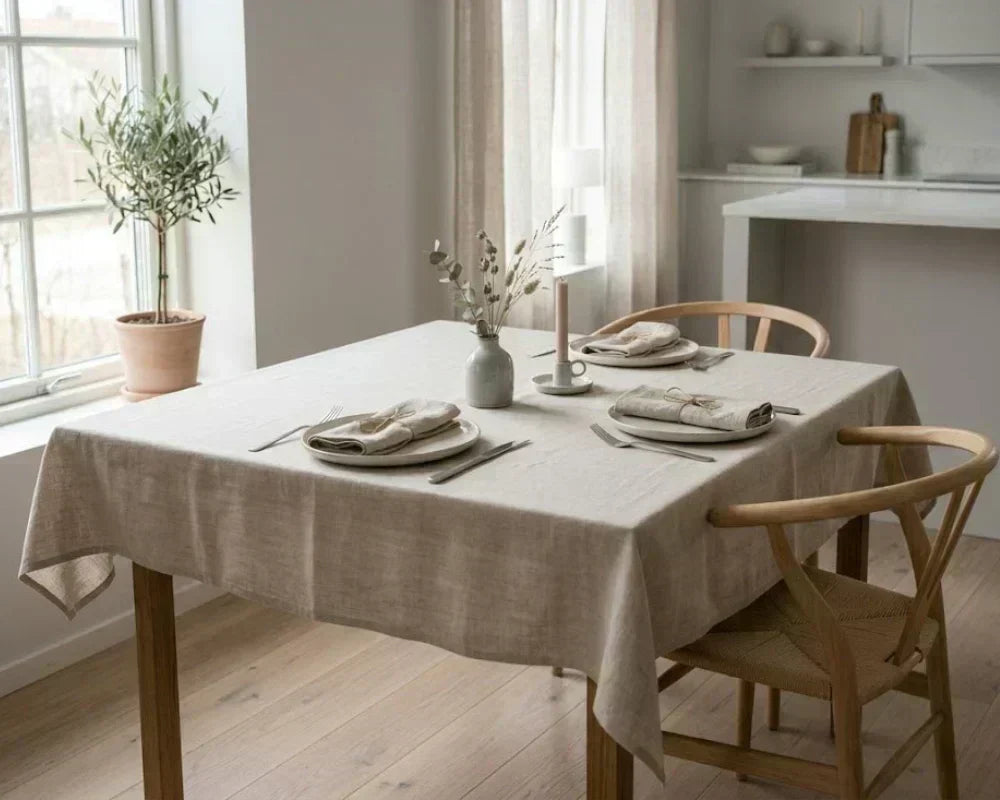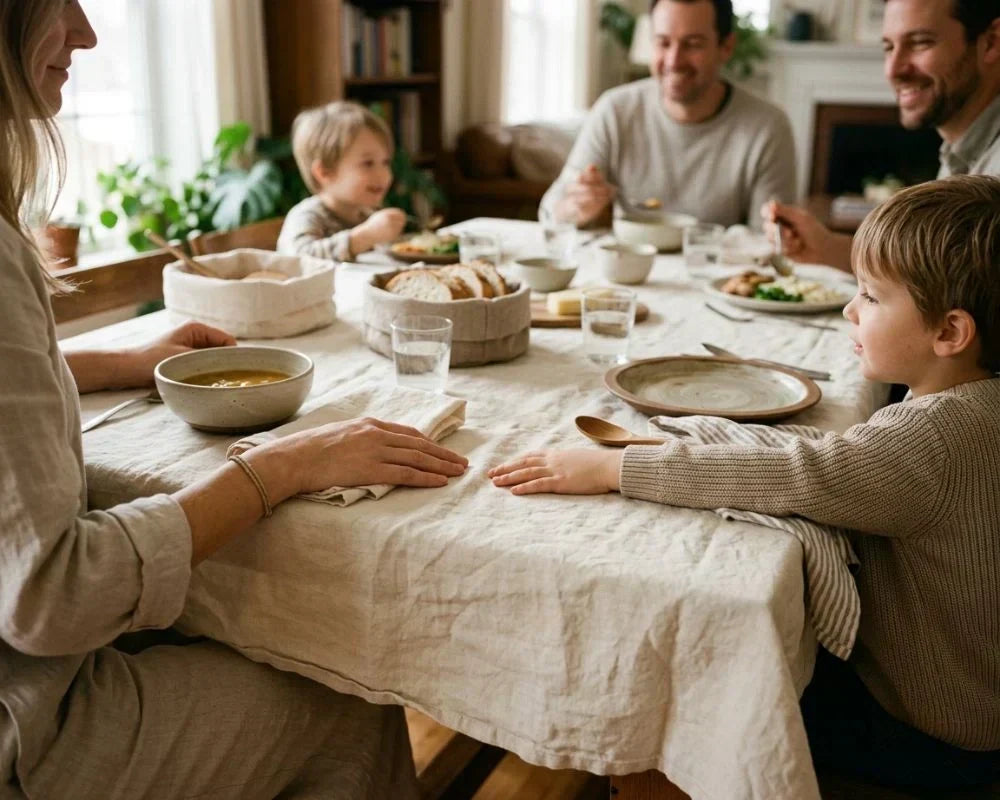

The key styling rule is contrast: a cloth napkin should contrast with the tablecloth in colour or texture rather than matching it, so that each place setting reads as individually defined rather than uniform.
Why are cloth napkins a popular choice for dining tables?
Cloth napkins add comfort, style, and practicality to any table setting. Unlike paper napkins, they create a more welcoming dining experience and show attention to detail. Whether you are hosting guests or enjoying a family meal, a well-chosen cotton or linen napkin makes the table feel more complete and thoughtfully prepared.

Beyond appearance, cloth napkins are also more functional. They are softer, more absorbent, and durable enough to last through an entire meal without tearing or losing shape. Reusable and easy to maintain, they offer a simple way to elevate everyday dining while reducing waste. That combination of comfort, performance, and presentation is why cloth napkins remain a favorite choice for homes, restaurants, and special occasions.
What is the best material for cloth napkins?
The material of a cloth napkin affects everything: how it feels, how it drapes, how it holds a fold, how it looks on the table, and how it performs through actual use. Here are the four most relevant options.
Cotton is the most widely used cloth napkin material for everyday home dining. It is soft, highly absorbent, machine washable, and available in the widest range of colours and sizes of any napkin fabric. A quality cotton napkin washed dozens of times still performs well and softens gradually with each wash. Cotton napkins are appropriate for every occasion, from a weekday breakfast to a casual dinner party.
Linen is the preferred choice for semi-formal and formal dining. The natural texture of flax fibre gives linen a visual richness that cotton alone cannot replicate. Linen napkins drape more elegantly, hold folds more crisply, and improve with washing in a way that few other fabrics do, becoming softer and more refined with each wash rather than thinning or pilling. Linen is also more absorbent than cotton, naturally antibacterial, and the most eco-friendly mainstream napkin fabric available.

Cotton-linen blend combines the softness of cotton with the texture and durability of linen. A blend napkin is slightly more textured than plain cotton, slightly less demanding to care for than pure linen, and genuinely beautiful on any table. It is the most versatile single material choice for households that want natural fibre quality without specialised care requirements.
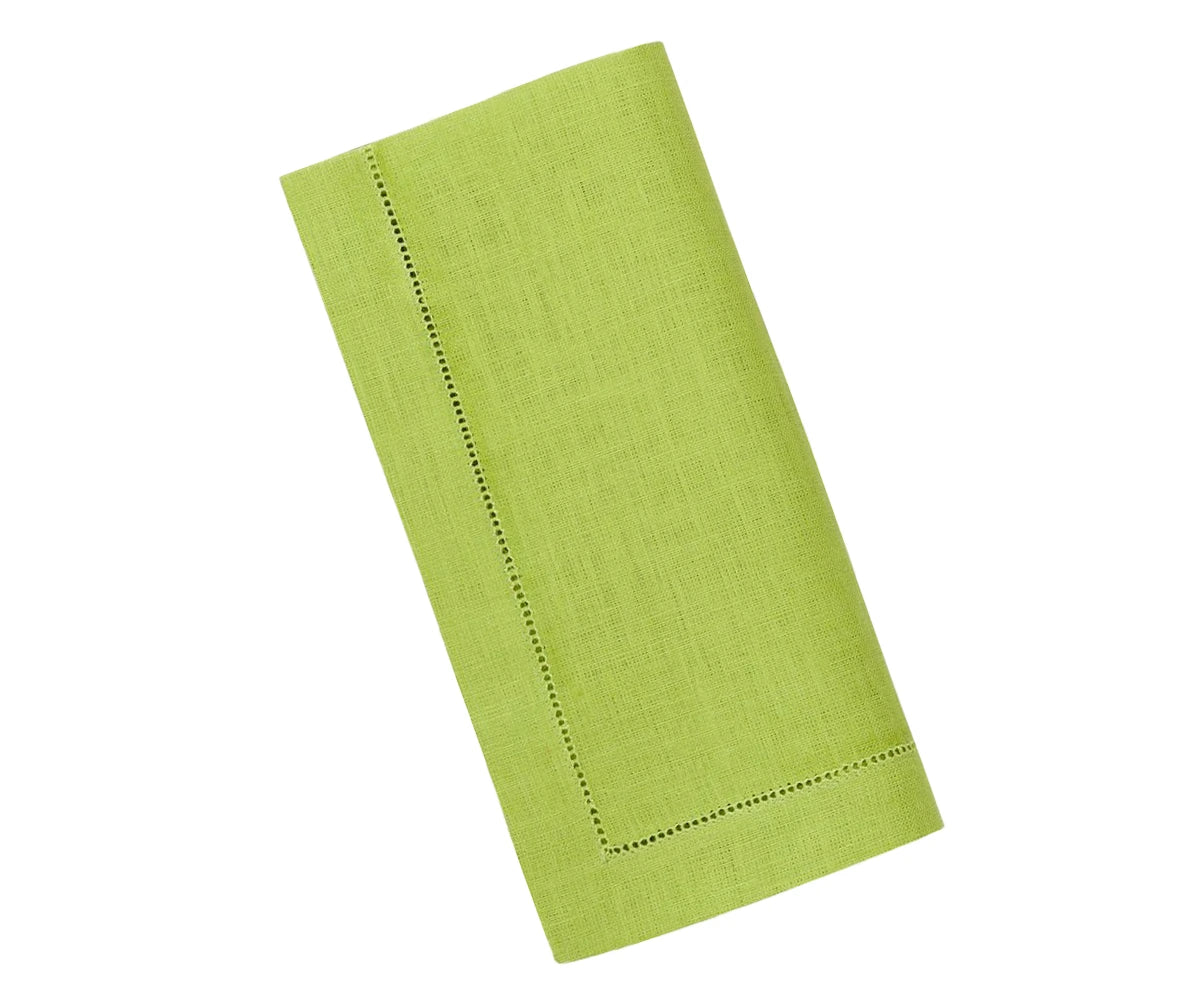
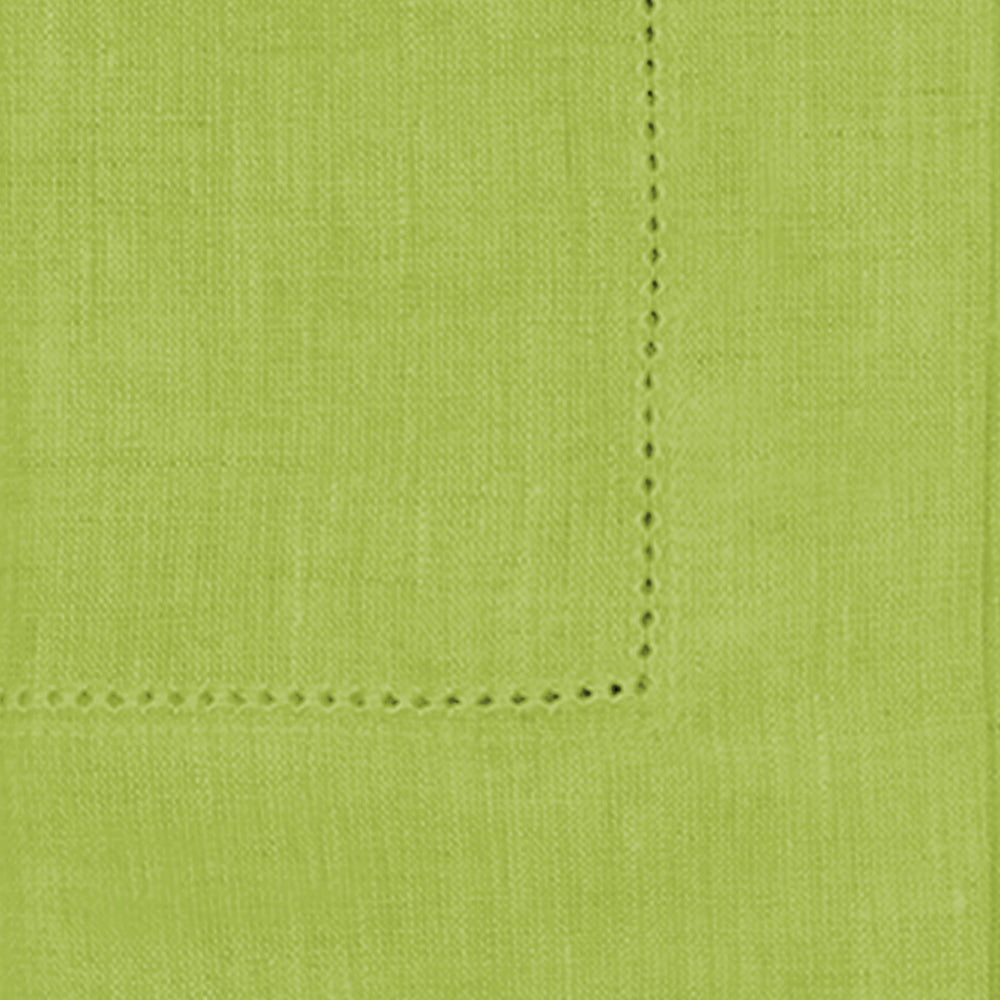
Hemstitch linen or cotton takes any of the above materials and adds an open-work decorative border created by drawing threads from the fabric and stitching the remaining threads into a delicate pattern. The hemstitch detail adds craftsmanship and refinement to the napkin edge that is visible at close range and communicates quality at every place setting. Hemstitched napkins are appropriate for everyday elegant dining through to formal occasions.
Material |
Feel |
Best occasion |
Care |
|
100% cotton |
Soft, smooth |
Every day through casual entertaining |
Machine wash warm |
|
100% linen |
Textured, natural |
Semi-formal through formal |
Gentle cycle cool |
|
Cotton-linen blend |
Soft with texture |
Year-round all occasions |
Gentle cycle cool |
|
Hemstitch cotton |
Refined cotton |
Every day is elegant through formal |
Gentle cycle cool |
|
Hemstitch linen |
Most refined |
Formal, wedding, special occasion |
Gentle cycle cool |
What are the best cloth napkin colours for 2026?
Colour is where a cloth napkin becomes a genuine styling tool rather than just a functional item. In 2026, the strongest cloth napkin colour directions are built around earthy, natural tones that coordinate effortlessly with the organic tablecloth and dinnerware directions that dominate the year's table decor aesthetic.
Sage green is the single most versatile napkin colour for 2026. It coordinates naturally with white, ivory, and natural linen tablecloths, pairs beautifully with most stoneware and ceramic dinnerware, and suits every dining occasion from a casual family meal to a dinner party. Sage reads as botanical and grounded, never demanding, always considered.
Warm terracotta and dusty rust are the strongest seasonal accent tones. Against a natural linen or white cotton tablecloth, a terracotta napkin adds instant warmth and personality. These tones are particularly strong for autumn entertaining and for outdoor summer dining, where the earthy palette coordinates with the natural surroundings.
Natural undyed linen sits between white and ivory with an organic warmth that coordinates with any tablecloth and any dinnerware colour. It is the most universally flattering napkin colour available. It never clashes, never dominates, and looks better after every wash as the linen fibres soften and develop their natural patina.
Dusty blue and chambray are the strongest cool-toned directions for 2026. Against a white tablecloth, dusty blue napkins create a clean, considered contrast that reads as smart casual at a minimum and effortlessly elegant at its best. Pale blue and pastel blue are appearing strongly across 2026 tablescaping content, confirming this direction as a sustained trend rather than a passing moment.
Warm ivory and champagne are the most formal-appropriate neutral napkin colours after white. On a formal table with a white tablecloth, warm ivory napkins create a tonal relationship, both light, both neutral, subtly different that reads as quietly luxurious rather than identical.
Napkin colour |
Best tablecloth pairing |
Best occasion |
2026 trend strength |
|
Sage green |
White, ivory, natural linen |
All occasions year-round |
Very strong |
|
Terracotta |
Natural linen, white |
Autumn, outdoor, casual |
Strong |
|
Natural undyed linen |
Any |
Year-round all occasions |
Enduring |
|
Dusty blue |
White, ivory |
Smart casual, spring, summer |
Strong 2026 |
|
Warm ivory |
White, champagne |
Formal, semi-formal |
Classic |
|
Deep navy |
White, ivory |
Formal evening, year-round |
Classic |
|
Warm white |
White, ivory, natural linen |
Everyday through formal |
Always relevant |
How do you use cloth napkins to create a stylish table setting?
The place and position of a cloth napkin at the table setting affect the visual character of the whole composition. There are three standard placement options, each creating a different atmosphere.
On the charger plate is the most formal placement. The folded napkin sits in the centre of the charger, slightly below the rim, and is often accompanied by a menu card or place card positioned on or beside it. This placement says clearly that the table was set with intention. The fold should be precise and consistent across every setting.
To the left of the forks is the most traditional and widely used everyday placement. The napkin sits alongside the outermost fork, either standing in the ring or lying flat in a simple fold. This position is practical, easy to execute consistently across multiple place settings, and works for every occasion from casual to semi-formal.
On the placemat without a charger is the most relaxed placement, appropriate for everyday home dining, where the setting is considered but not formal. Position the napkin flat to the left of the cutlery or folded simply on the placemat itself. The placemat provides a clean surface that makes the napkin visible and accessible without the formality of a charger.
You May Also Like: Eco-Friendly Hosting Tips with Cotton and Linen
What Are the Best Napkin Fold Styles for a Stylish Table?
The best napkin fold styles combine beauty, simplicity, and practicality. A well-folded cloth napkin can instantly elevate a table setting, but consistency matters more than complexity. A clean, neatly executed fold often creates a stronger impression than an elaborate design that looks uneven or rushed.
Rectangle Fold: The Classic Choice


How do you coordinate cloth napkins with the rest of the table?
The most reliable coordination rule is contrast over matching. A napkin that matches the tablecloth in both colour and fabric provides no visual definition at the individual place setting. The napkin should be in a contrasting colour, a different texture, or both so that it reads as a separate, deliberate layer within the overall table composition.
A practical guide to the most effective coordination combinations:
White tablecloth with sage, terracotta, dusty blue, or natural linen napkins. The white base provides maximum visual contrast for any napkin colour.
Natural linen tablecloth with white, ivory, or deep navy napkins. The warm organic tone of the linen base makes crisp white napkins look particularly considered.
Navy tablecloth with ivory or warm white napkins. Strong colour contrast that reads as formal and deliberate.
Patterned or printed tablecloth with solid napkins in one colour from the pattern. Let the tablecloth provide the visual complexity and the napkin provide a clean, solid accent.
The napkin should also coordinate with the dinnerware tone rather than clash with it. A terracotta napkin alongside cobalt blue plates creates uncomfortable visual competition. The same terracotta napkin alongside warm cream stoneware or natural wood service creates a cohesive, grounded palette.
What are the cloth napkin trends for 2026?
In 2026, the table decor and cloth napkin trends confirmed by Homes and Gardens and multiple tabletop design sources point strongly in three directions.
Botanical and floral motifs are at their strongest in years. Florals and leaf prints on napkins are reported as one of the defining table decor trends of 2026 — not the bold, high-contrast florals of earlier trend cycles but the more restrained, smaller-scale botanical prints that sit naturally alongside natural linen tablecloths and stoneware dinnerware.
Earthy, warm colour palettes dominate. Sage green, terracotta, dusty rose, warm amber, and natural undyed tones are the consistent colour directions across every table decor report for 2026. These colours are replacing the cooler, grey-led neutrals of 2020 to 2023 with a warmer, more organic palette.
Mix and match sets are growing significantly. Rather than a uniform set of identical napkins, households are increasingly choosing two or three coordinating but not identical cloth napkins for a table, with different tones within the same palette, or different textures within the same colour. This approach reads as personally curated and more interesting than perfectly matched sets.
Also Read: The Sustainable Choice: Eco-Friendly Options for Plaid Napkins
How do you care for cloth napkins to keep them looking their best?
The most important care rule is to treat stains immediately rather than allowing them to dry and set before washing. A food or wine stain on a cotton or linen napkin treated within minutes is significantly easier to remove than one that has dried and been through a full wash cycle without pre-treatment.
Machine wash cotton napkins in warm water on a normal cycle. Linen napkins wash best on a gentle cycle in cool water. Both materials improve with washing rather than degrading, which makes regular laundering genuinely beneficial for the fabric rather than damaging.
Do not use fabric softener on cloth napkins. Fabric softener coats the cotton fibres with a chemical layer that reduces absorbency over time. White vinegar added to the rinse cycle is a better natural alternative that softens without leaving residue.
Iron linen napkins while slightly damp on the reverse side for the crispest finish. Cotton napkins iron well while warm from the dryer. For occasions where precision matters, ironing takes a cloth napkin from clean to genuinely polished in under a minute per napkin.
Store loosely folded in a linen drawer or breathable cotton bag. Never store cotton or linen napkins in plastic, which traps moisture and can cause mildew.
Overview
A cloth napkin at every place setting is one of the simplest and most effective things you can do for a dining table. It costs very little, requires only the habit of putting it out and washing it regularly, and communicates something to every person who sits down at the table.
In 2026, the cloth napkin is not a formal accessory. It is an everyday one. The household that sets out cotton or linen napkins for a Tuesday night dinner has simply decided that the people sharing that meal are worth the small effort. That decision is what stylish dining actually is: not expensive dinnerware or elaborate centrepieces, but the consistent, daily choice to treat the table as a space worth caring for.
At All Cotton and Linen, our cloth napkin collection covers every style, material, and colour direction in this guide: cotton, linen, hemstitch, solid, and patterned, in the earthy and neutral tones that 2026 table decor calls for.