



Each of these changes is small individually. Together, they make a measurable difference: less plastic leaving the store with you, less food ending up in the bin, and less money spent replacing things that ran out or spoiled before you could use them.
This guide covers the most practical and impactful tips for sustainable grocery shopping, what to bring, how to shop, what to buy, and how to store it when you get home.
1. Bring the Right Bags and Actually Remember Them
The single most impactful change most shoppers can make is switching from single-use plastic bags to reusable alternatives. Plastic grocery bags are used for an average of twelve minutes, but persist in the environment for hundreds of years. Most curbside recycling programs don't accept them because they jam sorting machinery, so the vast majority end up in landfills or as environmental pollution.
Reusable cotton bags replace this cycle entirely. A single cotton tote bag used twice a week for three years displaces over three hundred plastic bags. A set of mesh produce bags eliminates the dozens of thin plastic produce bags most households use each month.
The bags you need:
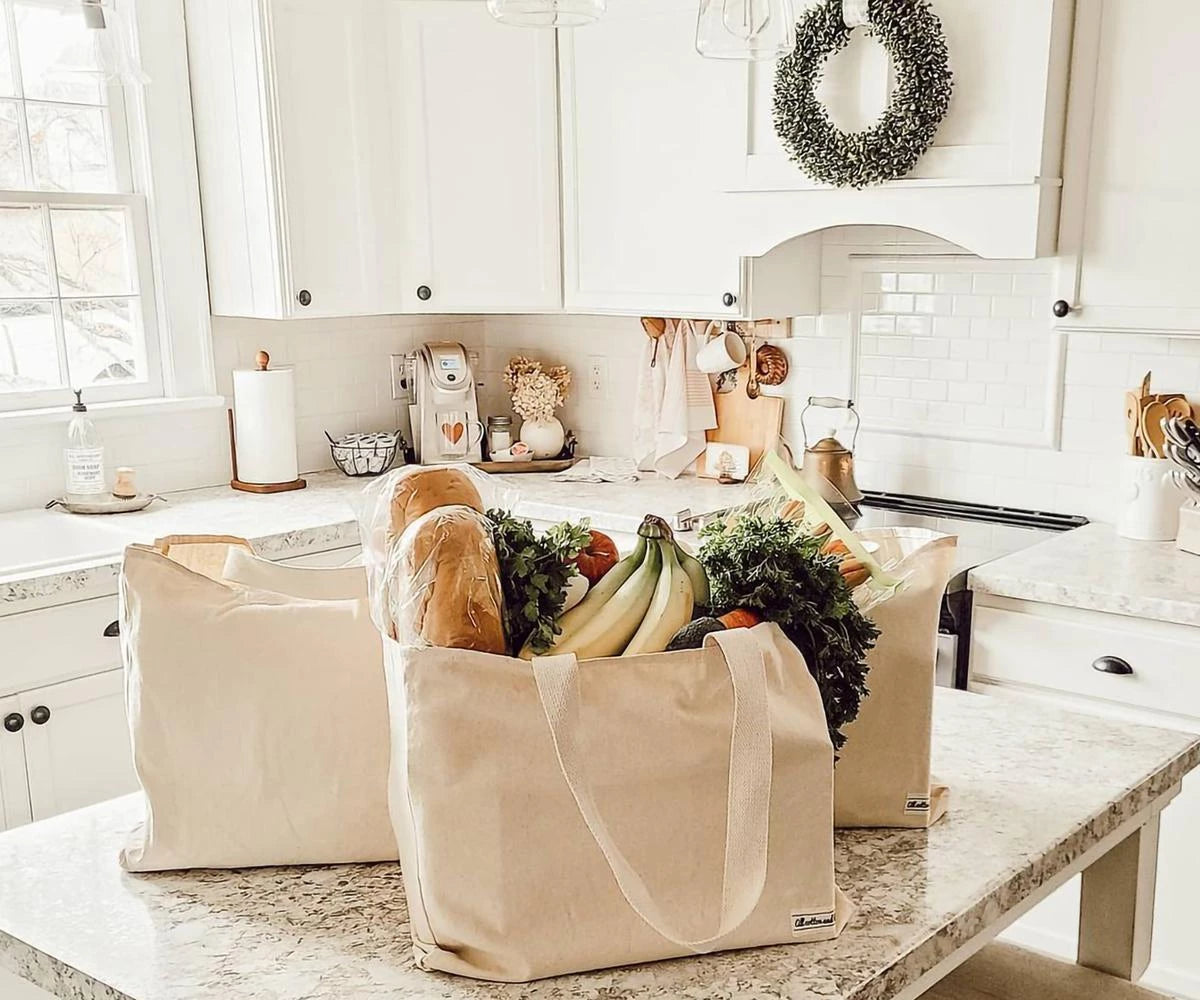
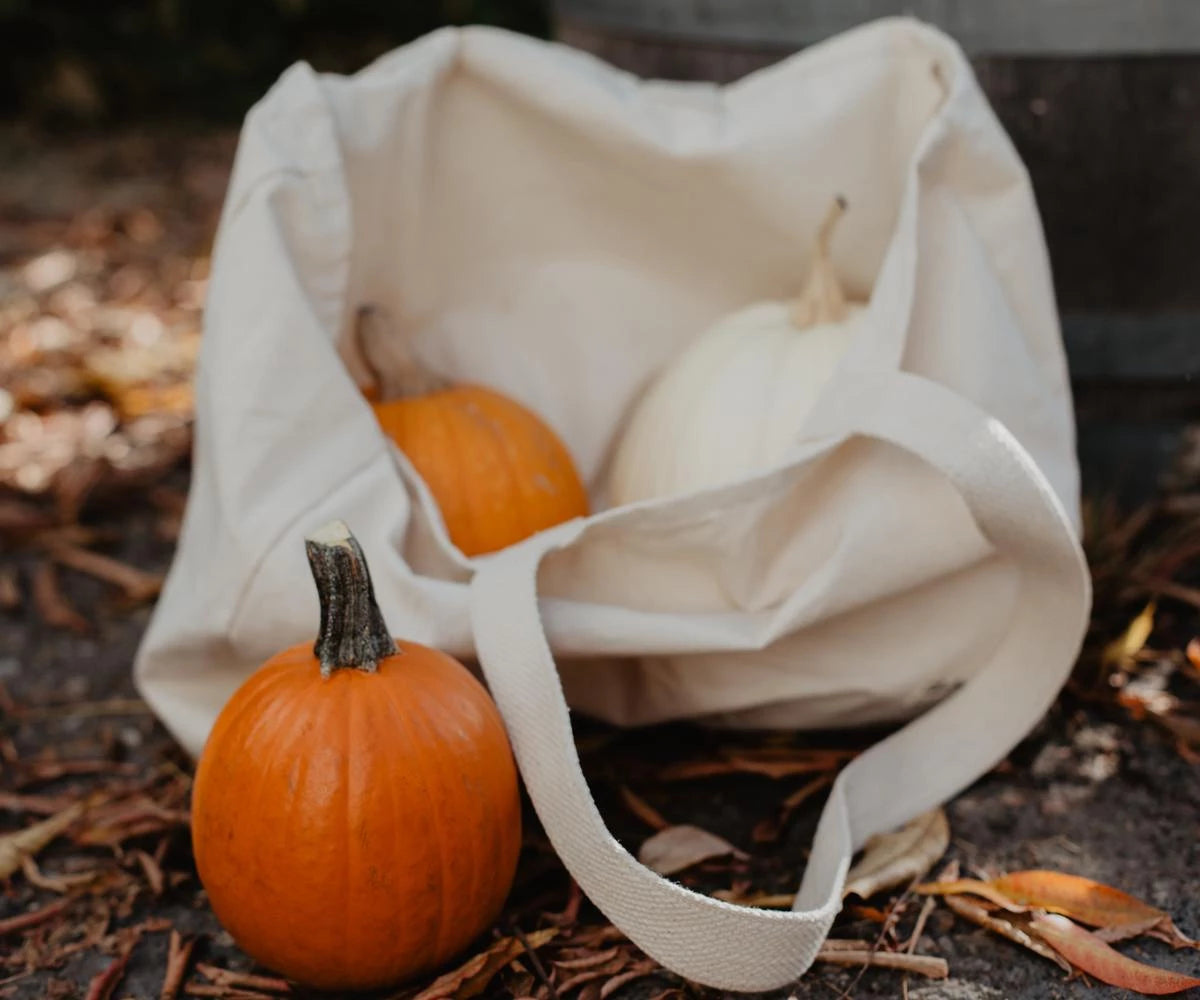
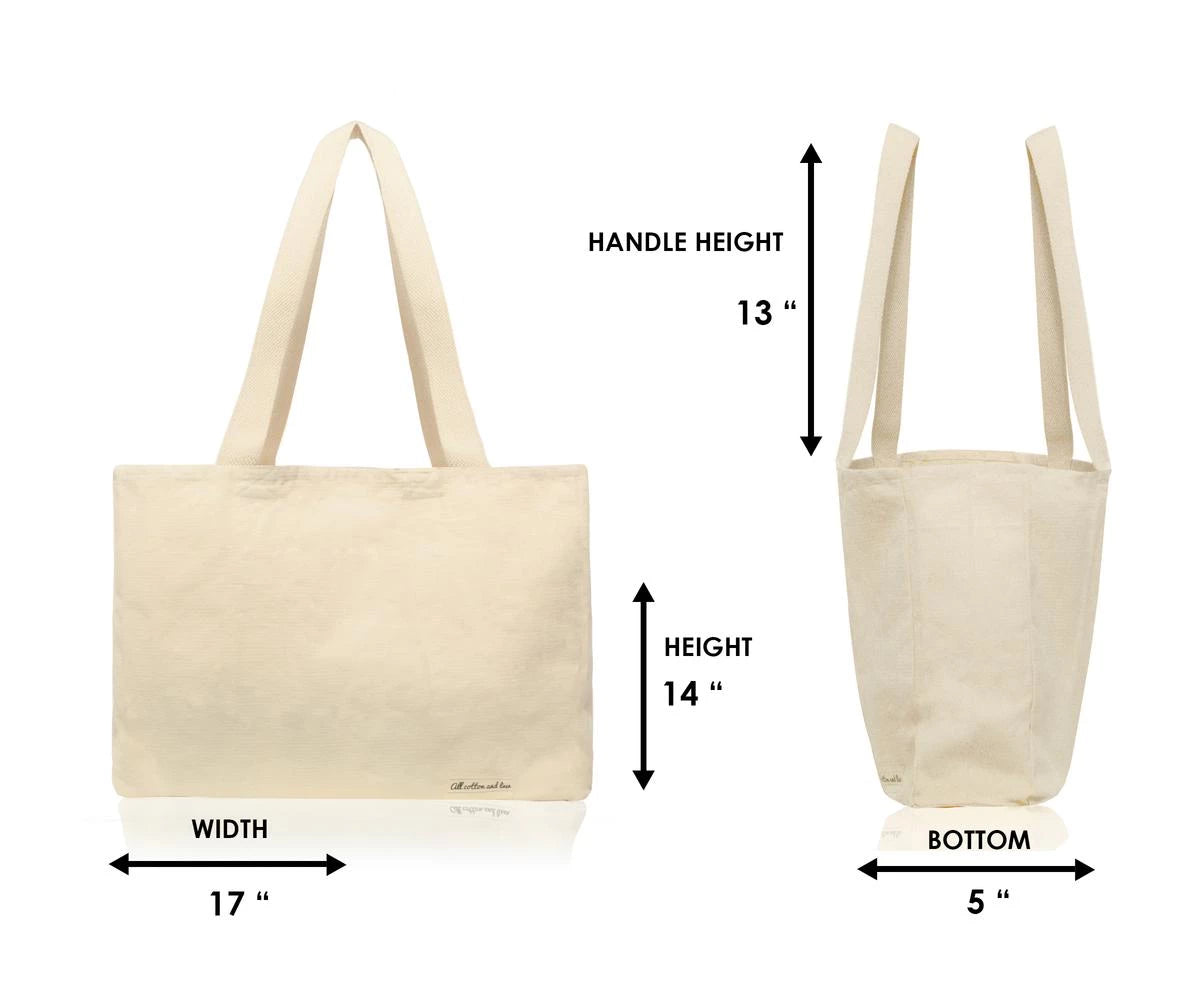
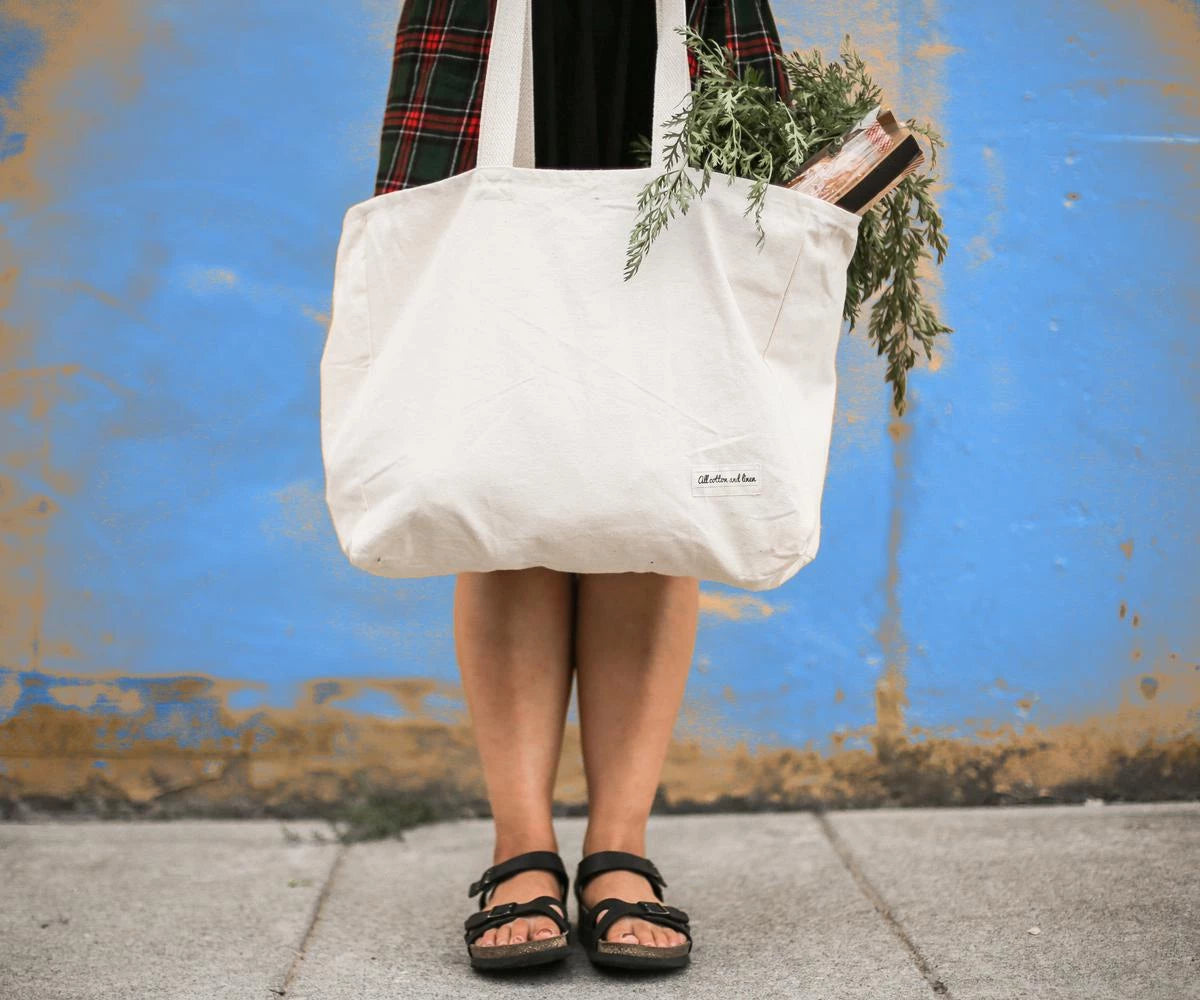
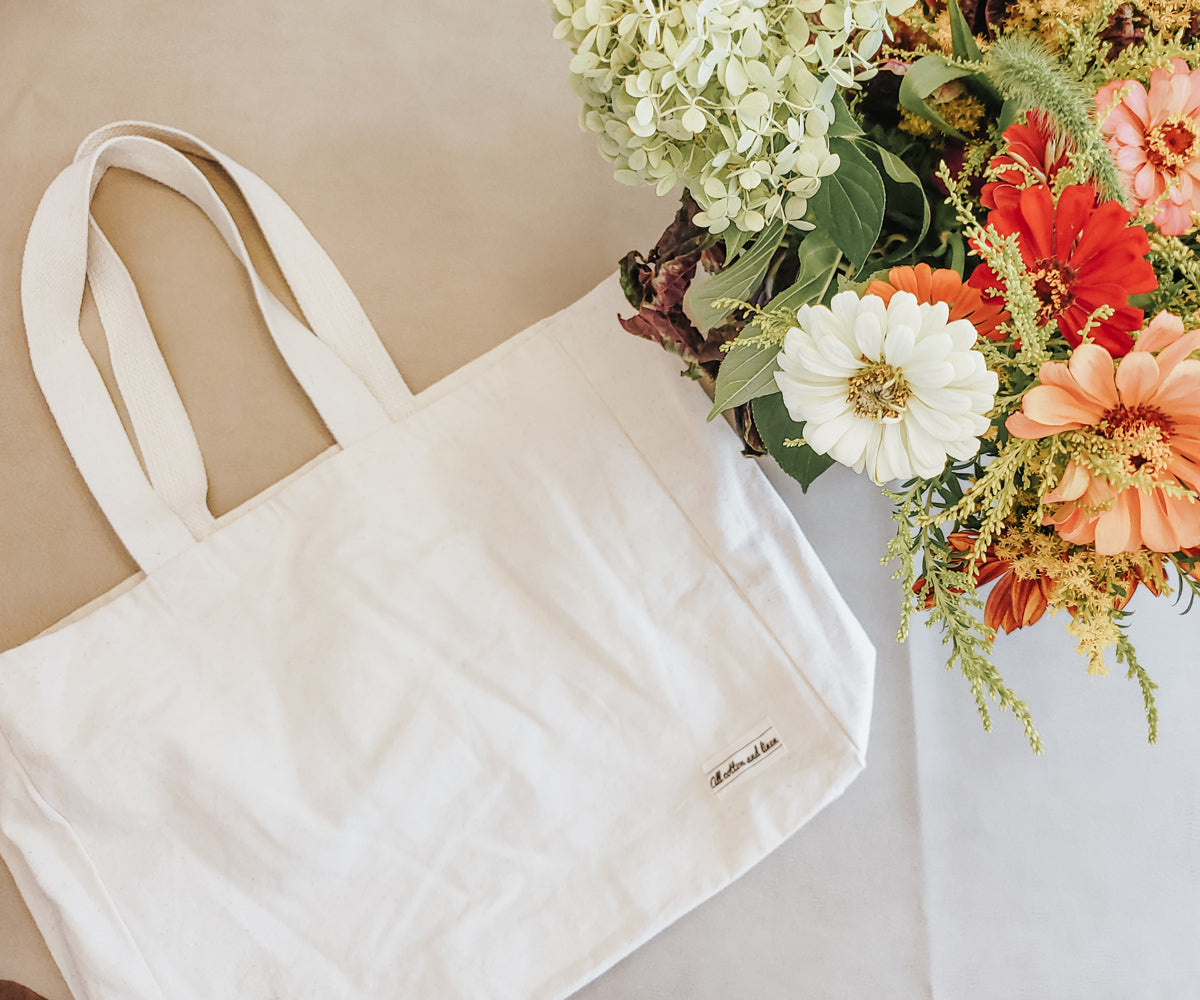
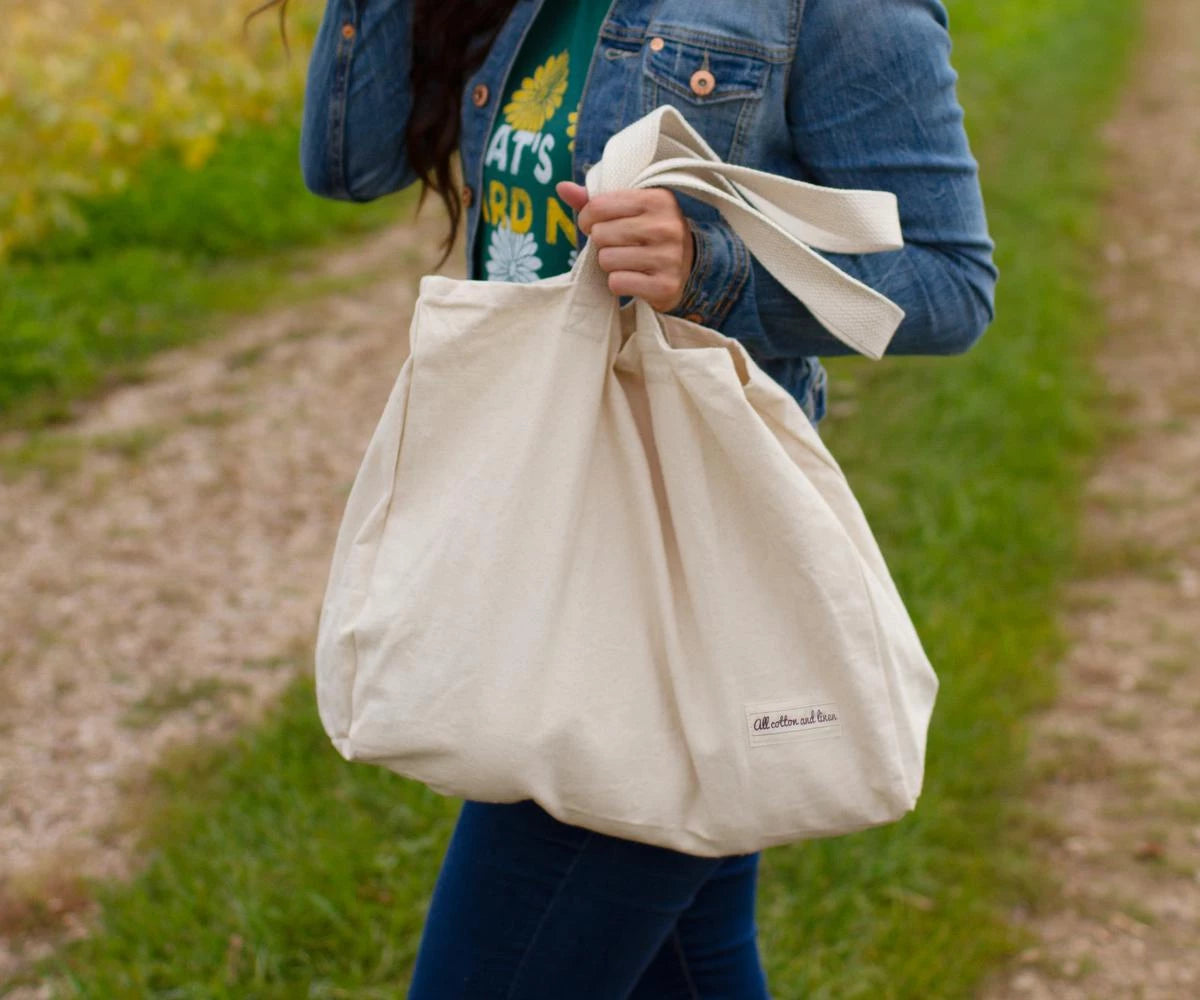
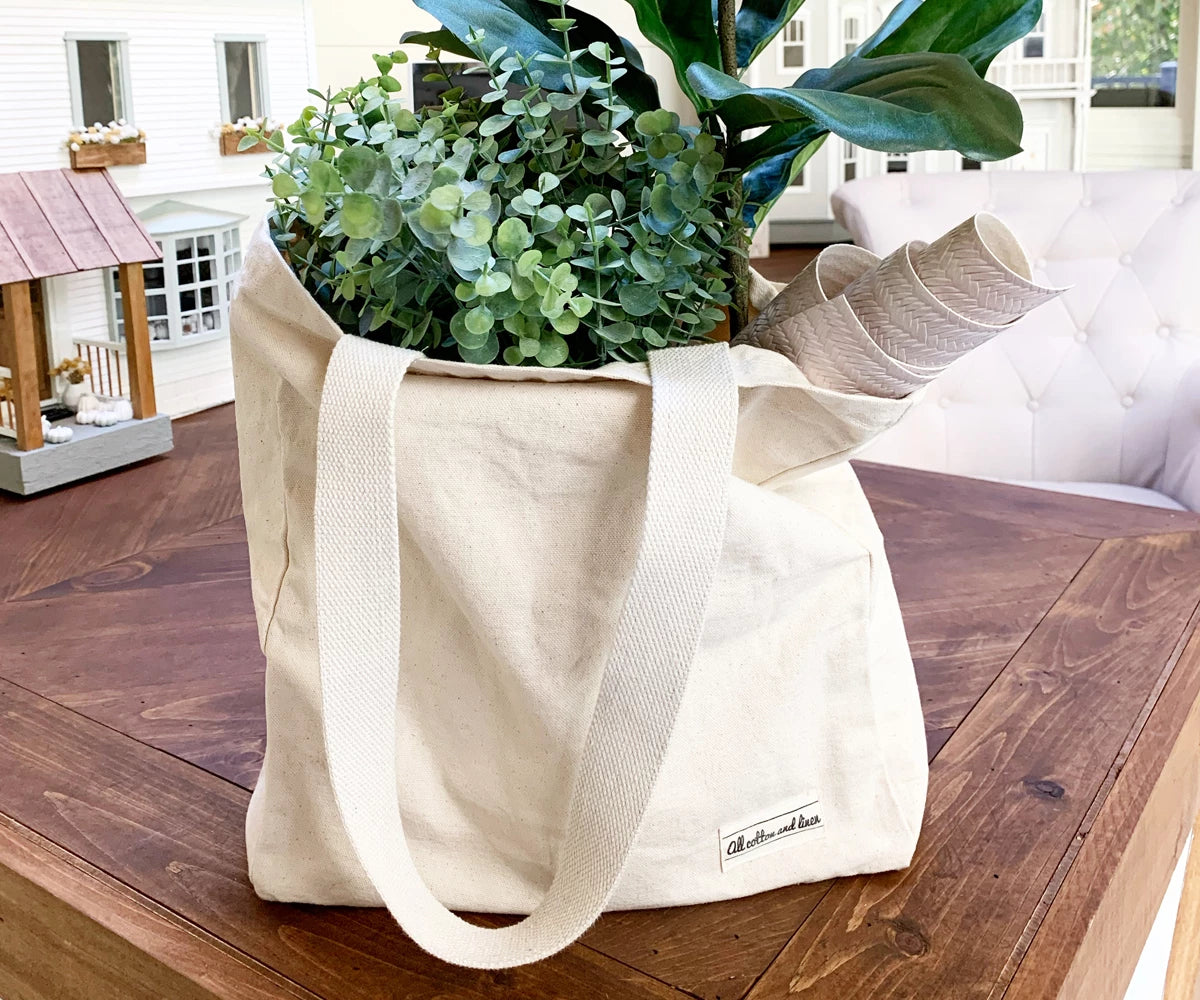
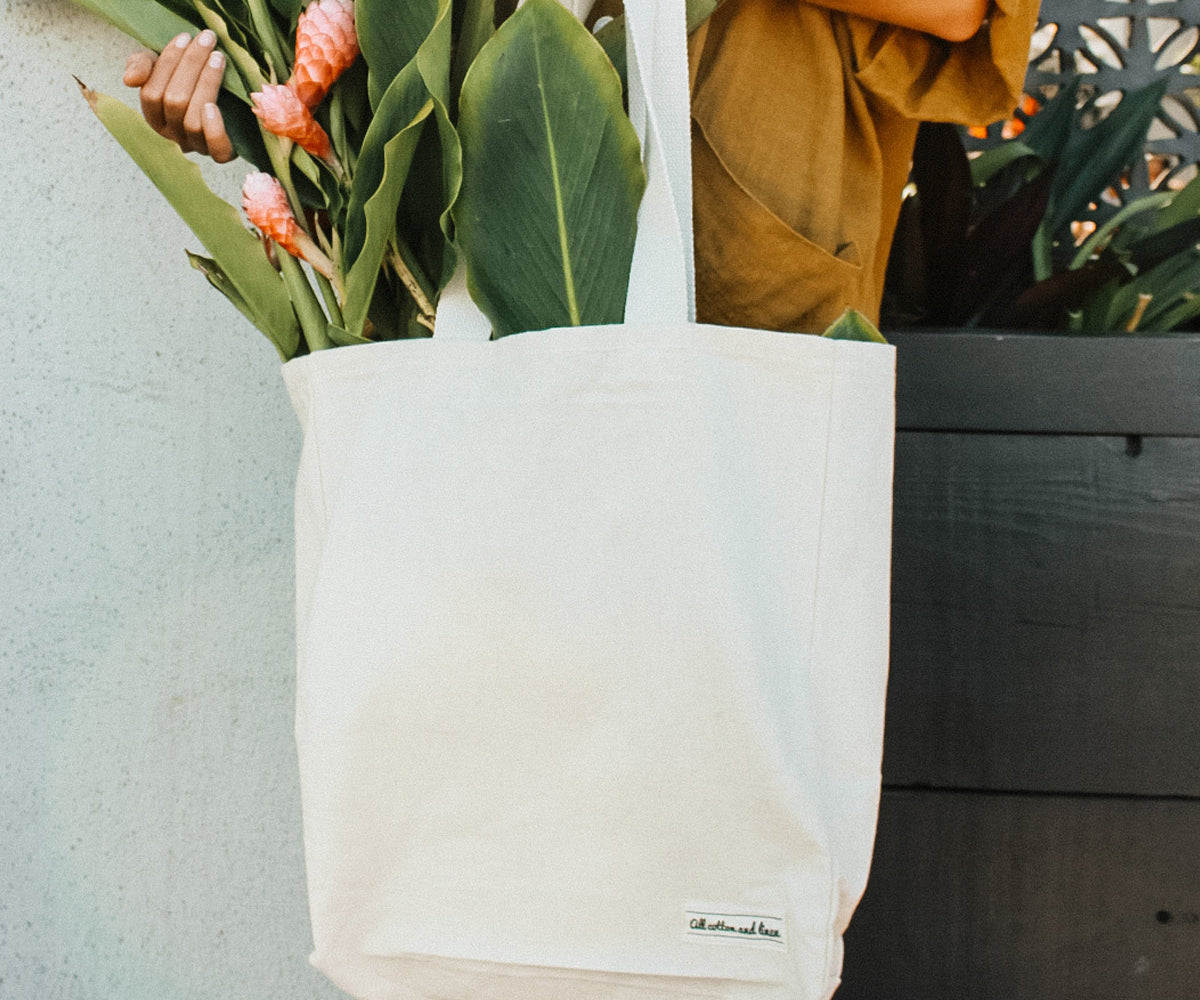
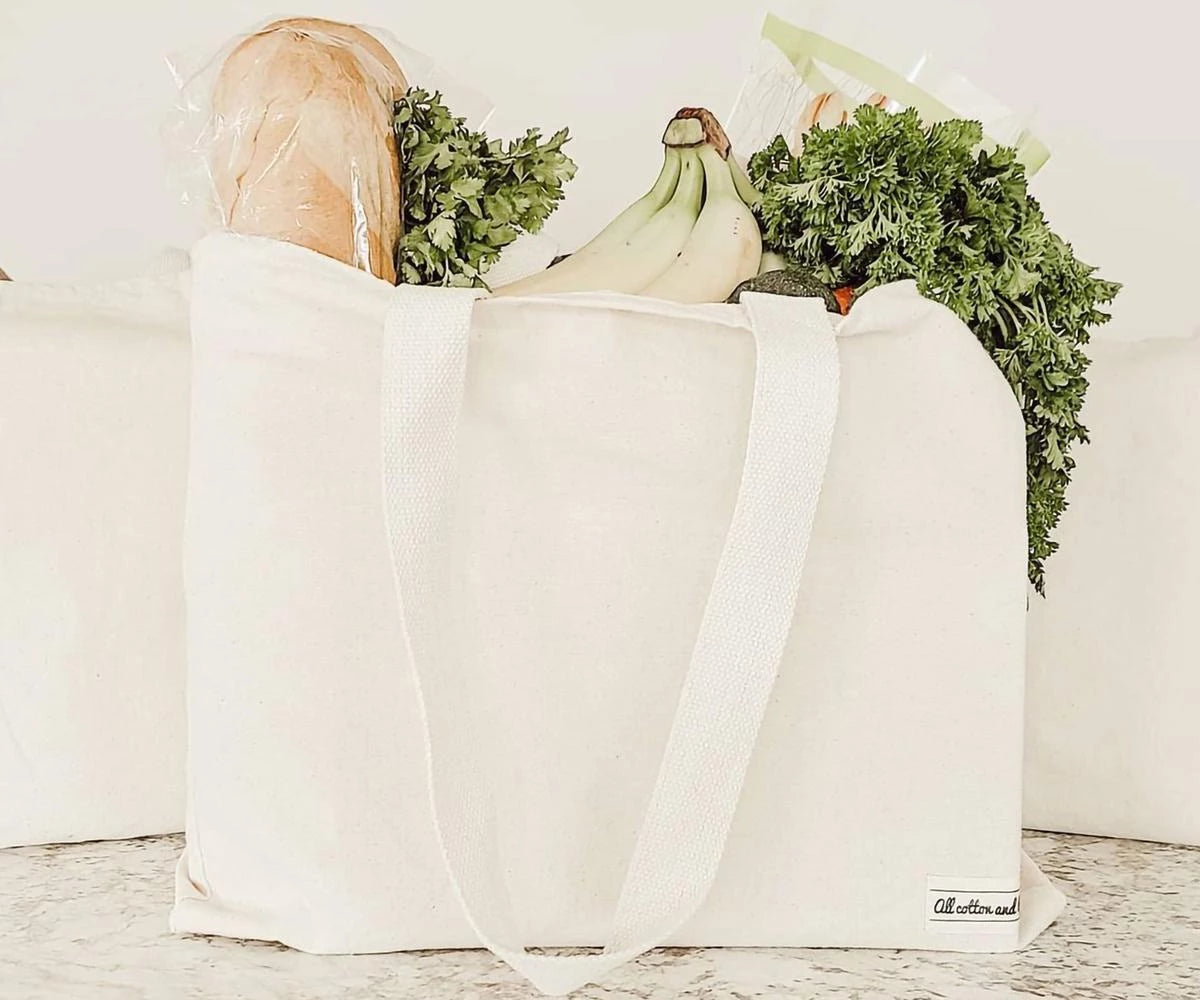
Cotton tote bags — for carrying the full grocery load. Choose a sturdy flat-bottomed tote that can hold weight without tipping. Keep one or two in your car and one by the door so you never leave without them.
Mesh produce bags — for loose fruit, vegetables, mushrooms, and herbs. The open weave lets cashiers see and scan contents without opening the bag, and the breathable mesh keeps produce fresher than sealed plastic during the journey home. A set of six in mixed sizes covers most shopping trips.

Muslin drawstring bags — for bulk dry goods at zero-waste stores or farmers markets, and for fine items that would escape through mesh. Muslin bags can be pre-weighed (tared) at the store so the bag weight is deducted at checkout.
The habit problem: Most people forget their bags because they're stored somewhere inconvenient. Keep a set folded inside each tote bag so they're always together. Store the tote bag on a hook by the front door, not in a cupboard. Visibility drives habit more reliably than intention.
2. Shop with a List and Stick to It
Food waste is one of the largest contributors to household environmental impact. A significant portion of the food bought in an average household is thrown away before it's eaten, produce that spoils, leftovers that sit forgotten, items bought speculatively and never used.
Shopping with a meal plan and a list directly addresses this. When you know what you're making and what you already have, you buy what you need rather than what looks appealing in the moment. Less surplus means less waste.
Practical steps:
-
Plan meals for the week before you shop. Even a rough outline of three dinners, lunches from leftovers, a few breakfast options — is enough to anchor the list.
-
Check what's already in the fridge, freezer, and pantry before writing the list. Buying a second jar of something you already have is a common source of waste.
-
Organize the list by store section (produce, dry goods, dairy, etc.), so you move through the store efficiently without doubling back and adding impulse items.
-
Buy perishables in quantities you'll actually use within their shelf life. Half a portion of something is better than a full portion wasted.
Read More: The Ultimate Guide to Choosing the Perfect Tablecloth Size
3. Choose Products with Less Packaging
Packaging, particularly single-use plastic packaging, is the most visible form of grocery shopping waste. Switching to products with less or better packaging is one of the most impactful changes available to shoppers without changing what they eat.

Practical swaps:
-
Buy loose produce instead of pre-packaged. A loose apple has no packaging; a bag of six apples has a plastic bag that goes straight to the landfill. Most produce sections offer loose options; use your mesh bags instead.
-
Choose cardboard over plastic where both are available. Cardboard is far more widely recycled than plastic. Eggs in cardboard cartons, pasta in cardboard boxes, and products in glass jars are all lower-impact packaging choices.
-
Buy in bulk when it makes sense. Buying rice, oats, lentils, flour, nuts, and other dry staples in larger quantities reduces the packaging-per-unit ratio significantly. Bulk bins at zero-waste stores eliminate packaging — bring your muslin bags and tear them at the counter.
-
Avoid single-serve and portion-pack formats. Single-serve yogurt cups, individually wrapped snacks, and portion-packed items generate significantly more packaging per unit of food than their full-size equivalents.
4. Buy Organic Where It Matters Most
Organic produce is grown without synthetic pesticides, herbicides, or chemical fertilizers, which contaminate soil and water and can leave residues on food. Not everything needs to be organic, but some produce retains significantly more pesticide residue than others.

The Environmental Working Group (EWG) publishes an annual Dirty Dozen list of the twelve types of produce with the highest pesticide residue levels in conventional farming. Shopping organically for these items has the greatest impact on reducing chemical exposure.
The EWG's current Dirty Dozen typically includes strawberries, spinach, kale, peaches, pears, nectarines, apples, grapes, bell peppers, cherries, blueberries, and green beans, though the specific list updates annually.
For produce with thick skins you don't eat (avocados, pineapples, onions, corn), conventional is generally a lower-risk choice and can help keep the grocery budget in check while still prioritizing organic where it matters.
5. Shop Locally and Seasonally
Local and seasonal food has a lower transport footprint, is typically fresher at the point of sale, and supports local agricultural economies. Farmers' markets are the most direct route to food that is grown nearby, sold by the people who grew it, and harvested at the peak of its season.
Seasonal produce also tends to cost less than out-of-season produce imported from long distances. Strawberries in June cost less and taste better than strawberries imported in December. Working with what's in season is one of the more enjoyable aspects of sustainable shopping once the habit is established.
Practical tips:
-
Visit a local farmers' market once a week or twice a month for produce and specialty items. Bring your mesh and muslin bags; most market vendors welcome them.
-
Use a seasonal produce guide for your region to know what's available locally throughout the year. Many are available as free printable charts or phone apps.
-
For items not available locally (coffee, tea, tropical fruit, spices), look for fair trade or sustainably certified options where available.
6. Reduce Meat and Dairy Consumption Where Possible
Animal agriculture, particularly beef and dairy, accounts for a disproportionately large share of food-related greenhouse gas emissions, land use, and water consumption. Reducing (not necessarily eliminating) meat and dairy consumption is one of the most impactful individual dietary changes available.

This doesn't mean going vegan. Replacing two or three meat-heavy dinners per week with plant-based alternatives, such as legumes, lentils, tofu, eggs, and whole grains, makes a meaningful difference without requiring a complete dietary overhaul.
When buying meat, dairy, and eggs, look for pasture-raised, grass-fed, or free-range certifications where your budget allows. These production systems have lower environmental impact and better animal welfare outcomes than conventional factory farming.
You May Also Like: The Best Reusable Grocery Shopping Bags for a Sustainable Lifestyle (2026)
7. Store Food Properly to Reduce Waste
Buying sustainably means little if the food spoils before it's used. Proper storage extends the life of produce, leftovers, and pantry staples, significantly reducing the amount that ends up in the bin.
Key storage tips:
-
Use mesh and muslin bags in the refrigerator. Breathable cotton keeps produce fresher longer than sealed plastic bags by preventing moisture buildup. Leafy greens, mushrooms, herbs, and root vegetables all benefit from breathable cotton storage.
-
Store herbs upright in a small amount of water, covered loosely with a muslin bag, in the refrigerator door. Treated this way, fresh herbs last one to two weeks instead of a few days.
-
Keep the fridge organized so nothing gets forgotten. Place items with shorter shelf lives at the front. Leftovers go at eye level. New groceries go behind older ones.
-
Freeze what you won't use in time. Bread, fruit, cooked grains, and many vegetables freeze well. Freezing something that would otherwise spoil eliminates the waste.
-
Label and date leftovers and bulk items. A simple label prevents the "mystery container" problem that leads to good food being thrown away.
8. Build Sustainable Shopping Habits Gradually
The most common mistake people make when trying to shop more sustainably is trying to change everything at once. Going fully zero-waste, organic, local, and plant-based in a single grocery trip is overwhelming and unsustainable.
A more effective approach: change one thing per shopping trip. This week, bring your reusable bags. Next week, buy loose produce instead of packaged. The week after, try bulk bins for one pantry staple. Each change becomes a habit before the next one is added, which means each change actually sticks.
Sustainable grocery shopping is a practice, not a destination. Every small, consistent step moves the needle, and small steps compounded over months and years add up to a genuinely different relationship with how you shop and what you bring into your home.
Quick Reference: Sustainable Grocery Shopping Checklist
Before you leave the house:
-
Tote bags are packed and by the door
-
Mesh produce bags inside the tote
-
Muslin bags for bulk items (if applicable)
-
Meal plan and grocery list ready
At the store:
-
Buy loose produce with mesh bags instead of pre-packaged
-
Choose cardboard over plastic packaging where available
-
Buy bulk dry goods with muslin bags where possible
-
Prioritize organic for high-residue produce (Dirty Dozen)
-
Buy quantities you'll actually use before they spoil
At home:
-
Store produce in breathable cotton bags in the fridge
-
Freeze anything you won't use in time
-
Keep the fridge organized so nothing gets lost
-
Reserve muslin bags for dry pantry storage
Overview
Sustainable grocery shopping is built on a few consistent practices: bringing reusable cotton bags for every trip, planning meals to reduce food waste, choosing loose and minimally packaged products, prioritizing organic for high-residue produce, shopping locally and seasonally where possible, and storing food properly so less of it goes to waste. None of these changes requires a perfect lifestyle, just a direction and a habit. Start with one change, establish it, then add the next. Over time, those habits compound into a meaningfully different and more sustainable relationship with how you shop.