
What Is My Birthstone? The Complete Month-by-Month Chart
A birthstone is a precious or semi-precious gemstone that is associated with a specific month of the year according to your birth month. Your birthstone depends on your birth month, not on your exact birthday. Some months have two or three official birthstones. See the following chart:
| Month | Official Birthstone(s) | Colors |
|---|---|---|
| January | Garnet | Deep red |
| February | Amethyst | Light to deep purple |
| March | Aquamarine, Bloodstone | Pale blue to blue-green; dark green with red flecks |
| April | Diamond | Colorless |
| May | Emerald | Vivid green |
| June | Pearl, Alexandrite, Moonstone | White or cream; green to reddish; milky white to gray |
| July | Ruby | Red |
| August | Peridot, Sardonyx, Spinel | Lime green; reddish-brown with bands; many colors |
| September | Sapphire | Blue |
| October | Opal, Tourmaline | Rainbow play of color; many colors |
| November | Topaz, Citrine | Golden-yellow to orange; yellow to orange |
| December | Tanzanite, Turquoise, Zircon | Blue-violet; blue to green; many colors |

January — Garnet
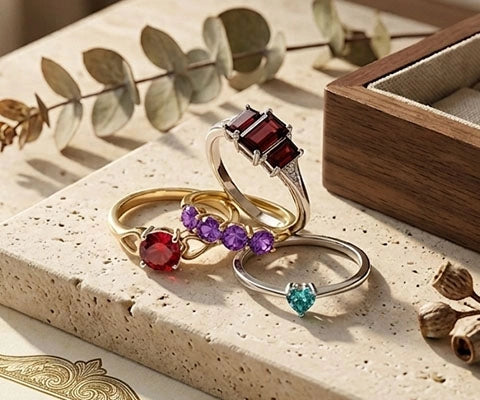
Garnet is most commonly found in the deep red color, although it can actually be found in nearly every color. The name of this gemstone comes from the Latin word for seeds, as they resemble pomegranate seeds. It symbolizes protection and power, and is a perfect gift for a new beginning.

February — Amethyst
Amethyst is a type of quartz mineral that comes in different shades of purple from almost white to deep violet. Ancient Greeks thought that it could help stay sober, which is why it was named Amethyst, meaning “not drunken” in Greek. It is said to bring tranquility and mental clarity.

March — Aquamarine and Bloodstone
Aquamarine is named after the Latin term for 'water of the sea' and it looks very pretty in its pale blue green color. Sailors used to carry pieces of this crystal as lucky charms to keep them safe at sea. The traditional alternative for March is bloodstone, a dark green stone flecked with red. This dark green stone is flecked with red, and has long been associated with courage.

April – Diamond
Diamond is the hardest mineral that occurs naturally on earth. It is highly valued for its beauty, brilliance, and rarity. A diamond in its purest form is colorless. It is linked to strength and everlasting love, and it is traditionally used for engagement rings.

May — Emerald
A vivid green variety of the mineral beryl that most often has visible impurities, hence its value is derived primarily from its color intensity, not from the absence of defects. Emeralds have been linked to rebirth, fertility, and love, so this stone is a great choice for the month of May.

June — Alexandrite, Pearl, Moonstone
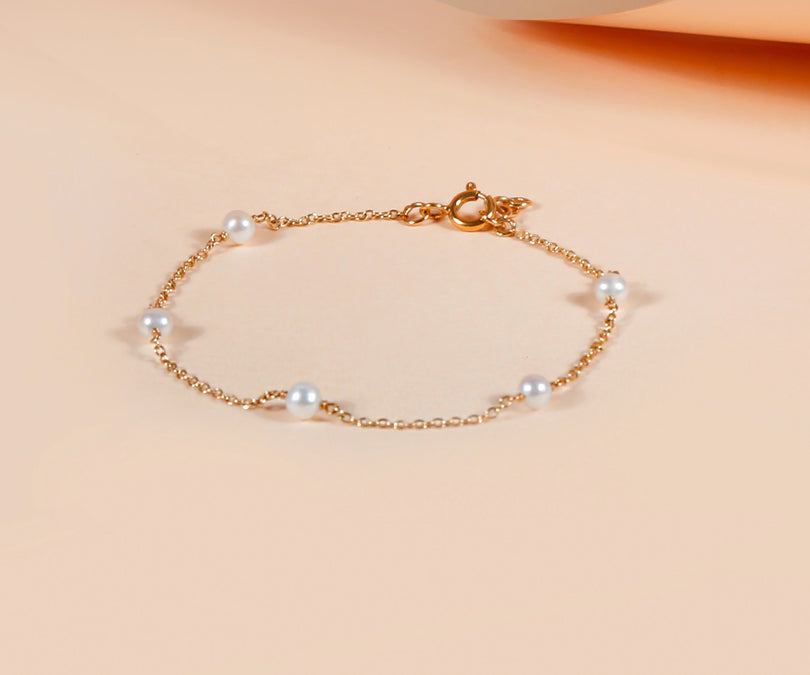
Alexandrite, a precious stone that changes color from green in daylight to reddish in incandescent light, was added to the list of June birthstones in 1952. The pearl, which graces June birthdays, is one of only a few gems that are formed by a living organism. The moonstone is associated with new beginnings and intuition.

July — Ruby
Ruby is a red variety of mineral corundum (the mineral of the sapphire family) and typically has a pinkish or reddish hue. This gemstone has long been considered valuable and associated with virtues such as love, protection, and energy.

August — Peridot, Sardonyx and Spinel
An interesting fact about Peridot is that it is one of only a few gemstones that only comes in one color — a distinctive lime to olive green color because of the iron content in the mineral. It is said to symbolize strength and healing properties. Sardonyx on the other hand is a traditional alternative for August, which is a combination of sard and onyx which have reddish brown and black or white colors respectively and is associated with the virtues of courage. Spinel, added in 2016, comes in many colors and was long mistaken for ruby.

September — Sapphire
Sapphire is a variety of corundum in all colors, except for red, which is called ruby. Blue sapphire is the most famous and popular. This stone has a traditional association with wisdom, fidelity, and nobility.

October — Tourmaline and Opal
Tourmaline occurs in more colors than almost any other gemstone, including pink, green, blue, and bi-color varieties. Opal, which has a "play of color" (flashes of different rainbow colors), is associated with hope and creativity.

November — Topaz and Citrine
Topaz is found in nature in a variety of colors; however, the most familiar colors are golden-orange (also called imperial topaz) and blue. Topaz symbolizes strength and healing. Citrine, the second November birthstone, is a yellow/orange form of quartz that derives its name from the citrus fruit and has long been associated with warmth and cheerfulness.

December — Tanzanite, Turquoise, Zircon
Tanzanite is a relatively young gemstone (only found in Tanzania), which explains its name. It has a beautiful blue-violet color. Turquoise is one of the oldest gems used in jewelry. It has an opaque blue-green color and has long been associated with protection. Finally, zircon is often mistaken for cubic zirconia, but it is a naturally occurring gemstone that can be found in a variety of colors and is associated with prosperity.

Why Do Some Months Have Two Birthstones?
The list most people use today was adopted by the National Association of Jewelers in 1912. It has been upgraded 3 times since, with 1952 adding alexandrite, citrine, tourmaline and zircon, 2002 bringing in tanzanite and 2016 introducing spinel. Traditional older stones have remained as options, hence some months have 2 or 3.

What does Each Birthstone Symbolizes?
The meaning of each birthstone is different, but most relate to some kind of protection and power (garnet, January), clarity and calm (amethyst, February), or love or new beginnings (emerald, May). Basically, it's all about tradition and legend, not actual science.
The meanings of each birthstone are important to know if you're thinking of buying someone a birthstone piece as a present. A stone that represents strength and protection, for example, would be a good present for a milestone birthday, while something that represents clarity and calm would be better for a more introspective birthday.
Birthstones vs. Zodiac Stones: What's the Difference?
Your birthstone is determined by the month you were born. A zodiac stone is associated with your sun sign, which changes between the 20th-22nd of every month, so they often differ. They also can be worn at the same time since neither is more important than the other.
A Light Way to Bring Your Birthstone Home
A room's palette might be loosely based on your birthstone's hue, from a rich garnet red to a soft amethyst lavender to a cool aquamarine.
If you want to put a personal touch on your bedroom or eat-in kitchen, look to your birthstone for inspiration. Choosing colors that echo the stone's hue is easy, and much more interesting than picking a random color scheme.
Key Takeaways
Whether you are checking your own birthstone or shopping for someone else, the chart above includes both the modern standard and traditional alternates, so you can be informed about the full story and not just one version of it. In case of ever needing to choose a color palette for a room, your birthstone is a great place to start!
Related Readings
What Is the February Birthstone?