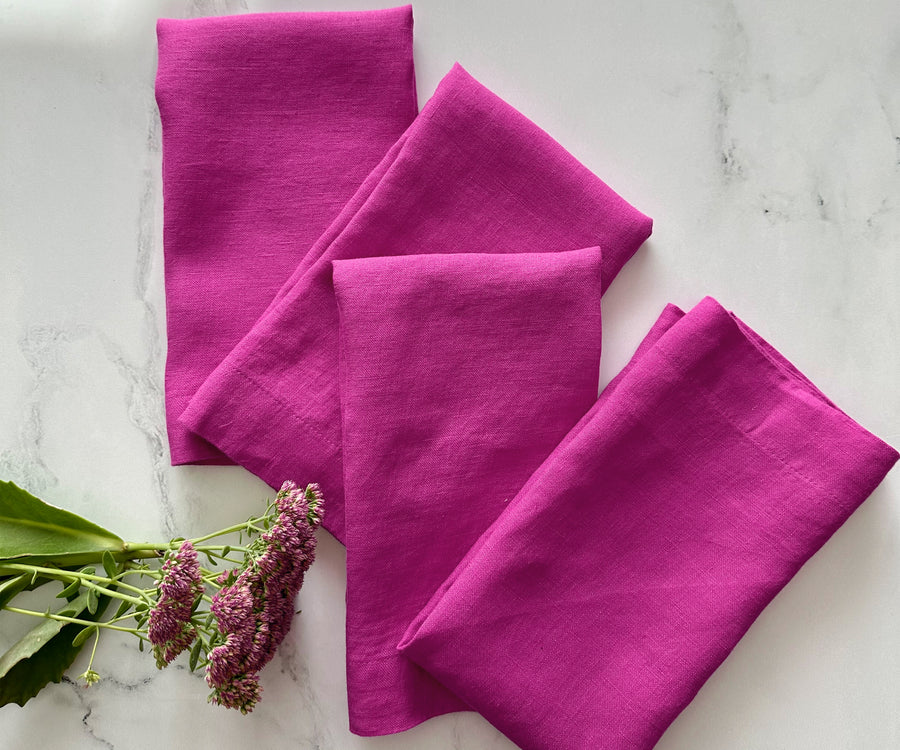


A tablecloth does two things at once: it protects your table and sets the mood for every meal. But walk into any linen store or scroll through one, and the choices multiply fast. Cotton. Linen. Polyester. Blends. Satin. Vinyl. Each one comes with a different feel, a different price point, and a very different set of rules for washing and storing.
So which tablecloth material is actually best?
The honest answer is: it depends. But this guide makes that decision straightforward. Below, we break down every major tablecloth fabric, what it is, what it does well, what it doesn't, and exactly when you should reach for it. By the end, you'll know precisely which material belongs on your table.
Cotton tablecloths are the everyday champion
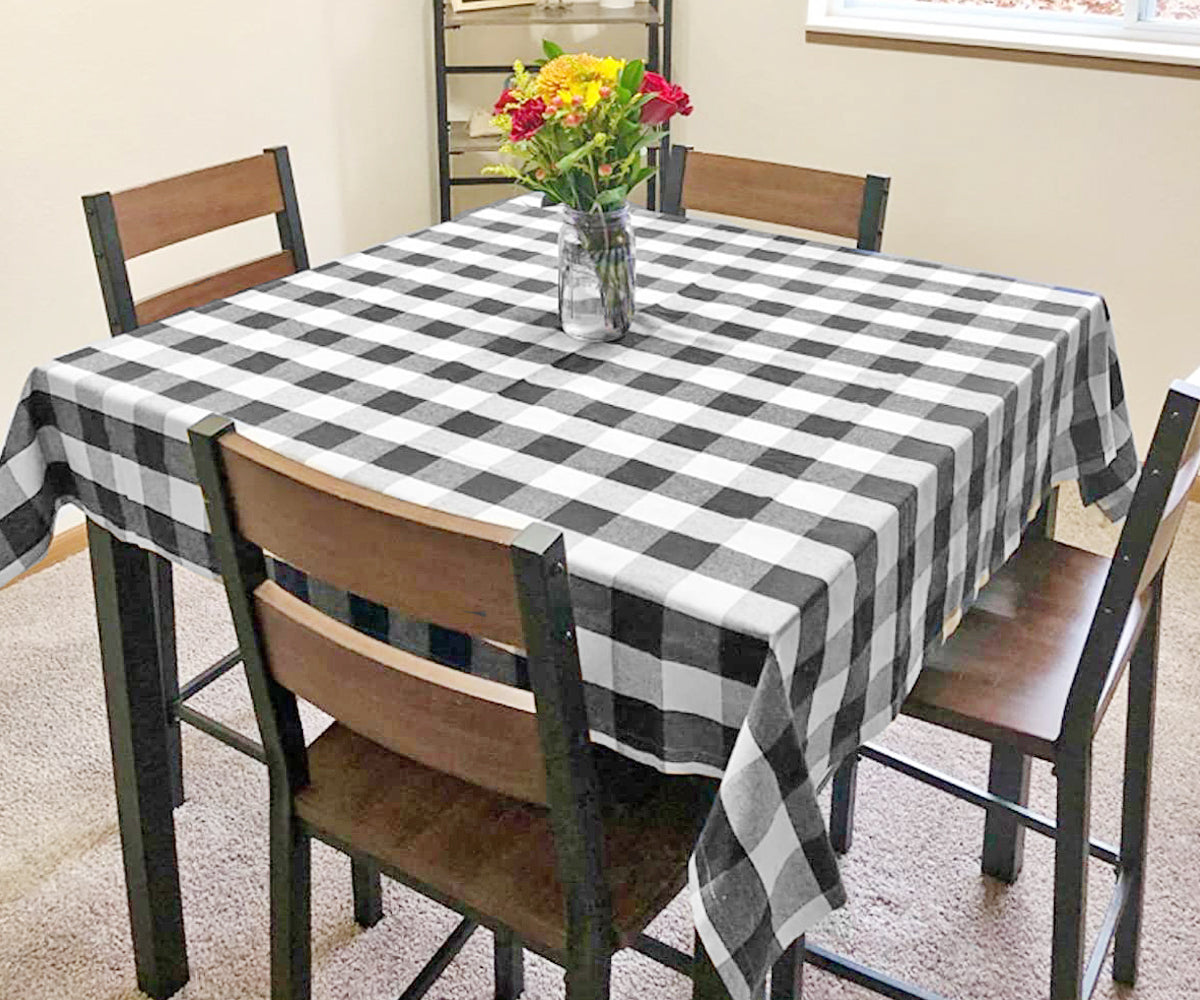
Cotton is the most popular tablecloth material in the world, and for good reason. It is a natural fiber that feels familiar and comfortable, drapes beautifully over any table shape, and handles the demands of regular use without complaint.
What makes cotton a great tablecloth fabric:
Cotton is soft to the touch and breathable; it does not trap heat the way synthetic fabrics can, which makes it comfortable for long dinners in any season. It absorbs spills rather than letting them slide around, giving you a few critical seconds to blot a mess before it sets. Cotton tablecloths are available in a vast range of colors, patterns, and weave weights, from lightweight everyday options to thick, structured pieces suited for formal settings.
They are also reliably easy to care for. Most cotton tablecloths are machine washable in cold or warm water, tumble dry on low, and are safe to iron. Pre-treating stains immediately before the cloth goes into the wash keeps them looking fresh wash after wash.

The honest drawbacks:
Cotton wrinkles. If you pull a cotton tablecloth straight from the dryer without folding or ironing it promptly, you will notice the creases. It also carries a moderate shrinkage risk if washed in hot water, so cold or warm cycles are strongly recommended. Over time and with heavy use, cotton can show signs of wear more quickly than linen.
Best for: Everyday dining, family meals, casual entertaining, all-season use, eco-conscious households
Care tip: Always wash in cold or warm water. Iron while slightly damp for the smoothest finish.
Read More: Does Linen Shrink in the Dryer? Tips and Best Practices
Linen tablecloths the elegant, enduring choice
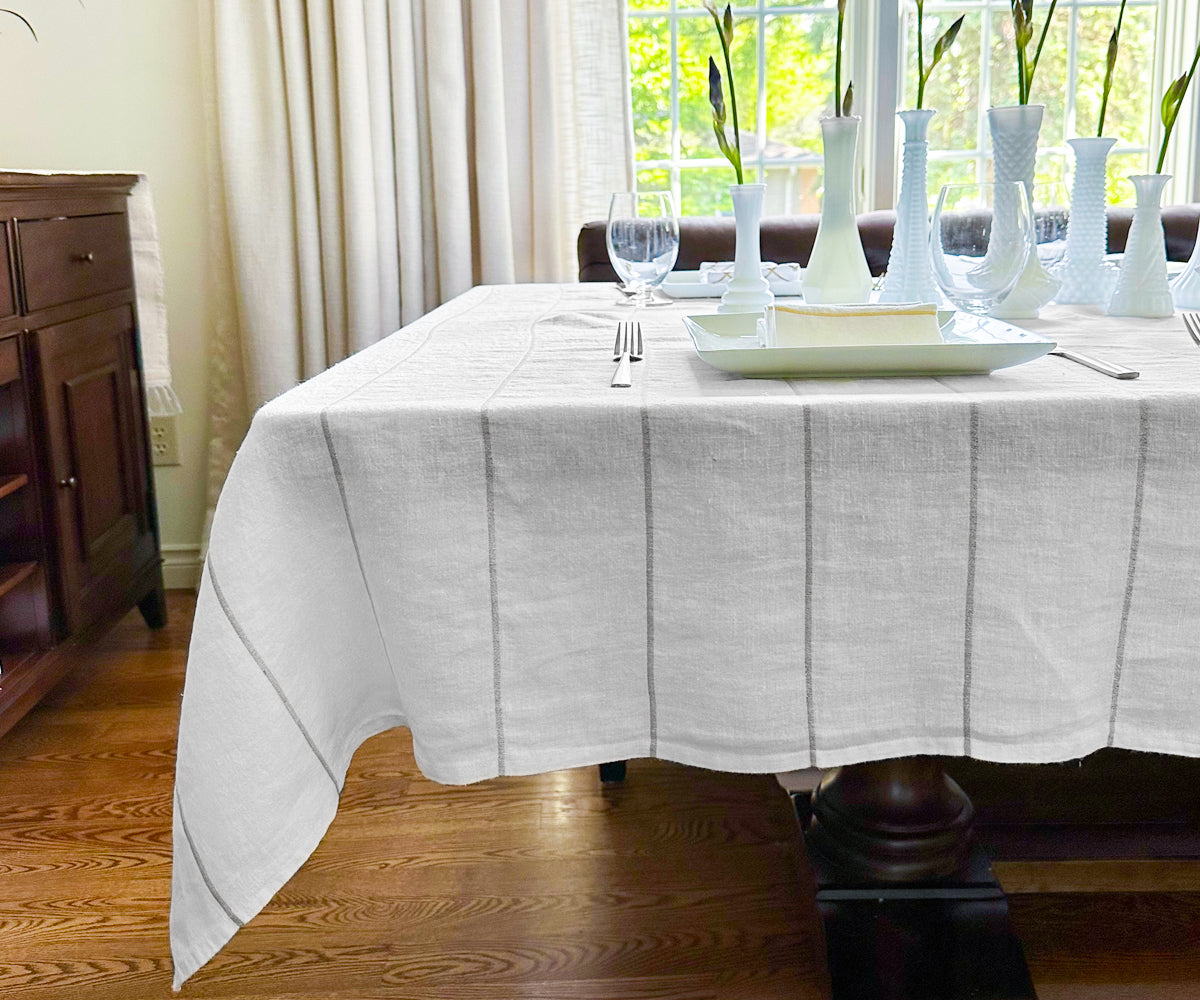
Linen is the fabric of slow Sunday lunches and candlelit dinner parties. Made from the fibers of the flax plant, it has a distinctive natural texture slightly rough when new, progressively softer with each wash, and a drape that no synthetic can replicate.
What makes linen exceptional:
Linen is one of the strongest natural fibers available. A well-maintained linen tablecloth does not just last years, it lasts decades, becoming more beautiful over time as the fibers soften and settle. It is highly absorbent, temperature-regulating (keeping tables cool in warm weather), and naturally resistant to bacteria. The textured, organic look of linen elevates both formal and relaxed table settings, which is why it is the preferred choice for upscale restaurants, wedding receptions, and holiday entertaining.
Linen is also the most sustainable mainstream tablecloth fabric. Flax requires far less water and pesticide than cotton to grow, making linen a strong choice for eco-conscious buyers.

The honest drawbacks:
Linen wrinkles significantly more than cotton, and more than most people expect. It requires ironing or intentional steaming to look its best, which is not ideal for low-maintenance households. It also carries a higher price tag than cotton, reflecting the labor-intensive production process. Some linen pieces require hand washing or gentle machine cycles with cool water.
Best for: Formal dinners, holiday tables, weddings and events, outdoor summer entertaining, eco-conscious buyers, long-term investment pieces
Care tip: Wash on a gentle or delicate cycle in cool water. Iron on the reverse side while slightly damp. Store loosely folded to minimize deep crease lines.
Polyester tablecloths: the practical powerhouse
Polyester is a synthetic fiber, and it is completely unashamed of it. While it lacks the organic warmth of cotton or linen, it makes up for that with a set of practical advantages that are hard to argue with, especially for families, event planners, and anyone who simply does not want to think too hard about tablecloth maintenance.
What makes polyester stand out:
Polyester is wrinkle-resistant, stain-resistant, and colorfast. It holds dye beautifully and does not fade after repeated washing. Spills bead up on the surface rather than immediately soaking in, giving you more time to wipe them away cleanly. Polyester tablecloths are the most affordable option in the market, available in a huge range of colors and sizes, and they are nearly impossible to ruin with normal use. Modern weaves have also come a long way; today's polyester fabrics feel far less stiff and plasticky than older versions, and some mimic the sheen of satin convincingly.
For events, weddings, corporate dinners, and family gatherings, polyester is the industry workhorse. It looks polished, survives transportation and heavy use, and can be washed and reused repeatedly without degrading.

The honest drawbacks:
Polyester is not a natural fiber. It is made from petroleum-derived synthetic materials, which means it is not biodegradable and has a higher environmental impact than cotton or linen. It also lacks the breathability of natural fabrics, which can make it feel less comfortable in warmer settings. And while modern polyester has improved considerably, it rarely achieves the same tactile richness as a quality linen or cotton weave.
Best for: Events and catering, outdoor dining, families with young children, high-frequency tablecloth use, budget-conscious buyers
Care tip: Machine wash in warm water, tumble dry on low. Avoid high heat it can cause synthetic fibers to pill or warp over time.
Cotton-linen blend tablecloths are the best of both
A cotton-linen blend is exactly what it sounds like: a fabric that combines the softness and easy-care properties of cotton with the natural texture and elegant drape of linen. The result is a tablecloth that looks refined and feels comfortable without the higher maintenance demands of pure linen.
Most blends are roughly 50/50 or 55/45 cotton-to-linen. They wrinkle less than pure linen, soften with washing like cotton, and carry that subtle texture that makes a table feel intentionally set rather than simply covered.
For buyers at All Cotton and Linen, a cotton-linen blend is often the sweet spot, especially for those who want an everyday tablecloth that can double as a slightly elevated piece for casual entertaining.
Best for: Everyday use with a touch of elegance, buyers who want natural fibers without high maintenance, year-round versatility
Know About: Organic cotton and Linen : What's the difference?
Polyester-cotton blend (poly-cotton) tablecloths
Poly-cotton blends typically 65% polyester and 35% cotton, or similar ratios, aim to combine the softness of cotton with the durability and wrinkle resistance of polyester. They are a popular choice for professional rental companies, fine dining establishments, and households that want a practical tablecloth with a softer hand than pure polyester.
Poly-cotton twill, in particular, has a tighter, more structured weave that gives it a more upscale appearance than standard polyester while retaining easy-care properties.
Best for: Semi-formal dining, professional use, buyers who want easy maintenance with a more natural look and feel
Satin tablecloths for a glamorous occasion
Satin is a weave style rather than a fiber type. Most satin tablecloths are made from polyester woven in a smooth, high-sheen pattern that catches light beautifully. Satin tablecloths are a popular choice for weddings, gala events, and formal occasions where visual impact is the priority.
They are elegant and eye-catching, but they are not built for everyday use. Satin snags easily, shows fingerprints, and requires careful washing and storage. Think of a satin tablecloth as occasion-specific formalwear for your table.
Best for: Weddings, gala events, formal celebrations, decorative tablescapes
Vinyl and oilcloth tablecloths for pure practicality
Vinyl and oilcloth tablecloths are the most practical option on the market for one specific scenario: situations where spills are guaranteed, and cleanup needs to be instant. Outdoor picnics, children's birthday parties, craft tables, and kitchen work surfaces all benefit from a wipeable, waterproof covering.

Vinyl wipes clean in seconds, requires no washing, and is extremely affordable. But it lacks the elegance of any woven fabric, can crack in cold weather, and is not environmentally friendly. It also feels plasticky to the touch, which is precisely what it is.
Best for: Outdoor use, children's tables, crafting, picnics, casual kitchen coverage
Read Related: What are the Best Cloth Napkins of 2026 for Elegant Dining
Side-by-side comparison of all tablecloth materials at a glance
|
Material |
Feel |
Durability |
Wrinkle Resistance |
Stain Resistance |
Eco-Friendly |
Best Occasion |
|
Cotton |
Soft, natural |
Good |
Moderate |
Moderate |
Yes |
Everyday use |
|
Linen |
Textured, luxurious |
Excellent |
Low |
Moderate |
Yes (very) |
Formal/special occasions |
|
Polyester |
Smooth, synthetic |
Excellent |
Excellent |
Excellent |
No |
Events, outdoor, busy families |
|
Cotton-linen blend |
Soft with texture |
Very good |
Good |
Good |
Yes |
Every day + casual entertaining |
|
Poly-cotton blend |
Soft, structured |
Very good |
Good |
Good |
Partial |
Semi-formal, professional use |
|
Satin |
Silky, high-sheen |
Moderate |
Good |
Low |
Partial |
Weddings, gala events |
|
Vinyl / Oilcloth |
Plastic, wipeable |
Good |
Excellent |
Excellent |
No |
Outdoor, kids, picnics |
How to choose the right tablecloth material: a quick-pick guide
You want something for everyday family dinners → Go with cotton or a cotton-linen blend. Both are washable, comfortable, and durable enough for regular use.
You are hosting a formal dinner or holiday table → Choose linen or a high-quality cotton damask. The natural texture and elegant drape make the table feel intentional and refined.
You are planning a wedding, party, or event → Polyester is the clear winner for events. It is affordable, available in every color, wrinkle-resistant, and survives transportation and heavy use without issue.
You have young children at the table → Polyester or a poly-cotton blend. Stain resistance and easy washing are the priorities here, not texture.
You are eating outdoors → Polyester for a reusable option, vinyl if you want zero cleanup effort.
You care about sustainability → Linen is the most eco-friendly mainstream tablecloth fabric, followed by organic cotton. Both are natural, biodegradable, and produced without the petroleum inputs that synthetic fabrics require.
You want the best of cotton and linen without the ironing. A cotton-linen blend is your answer. It softens with washing, wrinkles less than pure linen, and looks far more refined than polyester.
You are unsure and want a versatile everyday choice. You cannot go wrong with 100% cotton. It works for every occasion, every table shape, every season, and every budget level.
Tablecloth fabric care at a glance
|
Material |
Wash |
Dry |
Iron |
Stain Treatment |
|
Cotton |
Machine wash, cold/warm |
Tumble dry low |
Warm iron, slightly damp |
Pre-treat immediately |
|
Linen |
Gentle cycle, cool water |
Tumble dry low or air dry |
Warm iron on the reverse side, slightly damp |
Pre-treat, do not rub |
|
Polyester |
Machine wash, warm |
Tumble dry low |
Low heat or steam only |
Wipe spills immediately |
|
Cotton-linen blend |
Gentle cycle, cool/warm |
Tumble dry low |
Warm iron slightly damp |
Pre-treat promptly |
|
Satin (polyester) |
Gentle cycle, cool |
Air dry preferred |
Low heat only |
Hand-blot spills |
|
Vinyl |
Wipe clean |
N/A |
Never iron |
Wipe with a damp cloth |
Final thoughts
There is no single best tablecloth material. There is only the best material for you for your table, your lifestyle, your occasions, and your care routine.
If you are setting the table for Tuesday night dinner with your family, cotton is your friend. If you are hosting Thanksgiving or a holiday dinner for twelve, linen or a cotton-linen blend gives your table the presence it deserves. If you are planning an event and need twenty tablecloths that look polished and survive a washing machine without drama, polyester is your answer.
At All Cotton and Linen, we specialize in natural fiber table linens, cotton, linen, and cotton-linen blends because we believe the fabrics that come from the earth bring something to a table that synthetic materials simply cannot replicate. Whether you are looking for an everyday workhorse or a tablecloth you will pass down someday, the right natural fiber piece is waiting for you.