






How to Decorate a Kitchen Table: The Foundation First
Before reaching for decorative objects, the most impactful thing you can do for any kitchen table is get the foundation right. A clean cotton tablecloth, one well-chosen centerpiece, and coordinated napkins will make any kitchen table look intentional.
In 2026, the strongest kitchen table decorating trend is restraint. Natural materials, such as cotton, linen, raw wood, and unglazed ceramic, do more work than a crowded arrangement of decorative objects. Warm neutral tones like soft taupe, cream, warm white, and sage green are the dominant palette for everyday kitchen tables this year. Bold patterns and deep jewel tones are being used as accents rather than as the base.
Build your kitchen table around three decisions: the tablecloth color, the centerpiece scale, and the napkin fold. Everything else is detail.
15 Kitchen Table Decor Ideas for 2026
1. Start with a Cotton Tablecloth in a Warm Neutral
The tablecloth is the single most impactful piece of kitchen table decor. A solid cotton tablecloth in cream, warm white, or soft taupe creates a clean foundation that works with any season, any plate color, and any centerpiece you put on top.
For everyday kitchen use, cotton tablecloths are significantly more practical than linen because they are softer, machine-washable, and resistant to wrinkle memory at the same level. All Cotton and Linen's cotton tablecloths are made from 100% natural fibers, available in sizes that fit 4-seat kitchen tables through 8-seat dining tables. Start here before deciding on anything else.
For more on choosing the right tablecloth for different kitchen styles, the full guide on how a linen tablecloth transforms your table covers, fabric, and color decisions in detail.
2. Add a Table Runner Down the Center
A table runner is the fastest way to add visual interest to a kitchen table without replacing the tablecloth. Lay a runner down the center of your cotton tablecloth in a contrasting color, a subtle stripe, or a seasonal print, and the table immediately reads as intentional.
For everyday kitchen table setups, a neutral linen runner in sage, sand, or slate works across all seasons. For seasonal changes, swap the runner rather than the entire tablecloth. This approach costs less and takes about 30 seconds to change.
For a full guide on layering runners with tablecloths and napkins, the 10 ideas for decorating with table linens cover textures, color combinations, and layering approaches that work for kitchen and dining tables alike.
3. Keep the Centerpiece Low and Functional
The most effective kitchen table centerpiece is one that does not make conversation awkward across the table. Keeping centerpieces low, under 10 inches, is the practical rule so everyone can see each other without moving anything.
A few centerpiece options that consistently work for everyday kitchen tables:
|
Centerpiece Type |
Height |
Best For |
Cost |
|
Single low vase with seasonal flowers |
6 to 8 inches |
Year-round everyday tables |
Low |
|
Wooden bowl with fruit or seasonal produce |
4 to 6 inches |
Casual family kitchen tables |
Very low |
|
Three small candles grouped together |
3 to 5 inches |
Evening meals and dinner parties |
Low |
|
Ceramic pot with a small herb plant |
5 to 7 inches |
Kitchen tables with a farmhouse or natural style |
Low |
|
Shallow tray with seasonal objects |
3 to 4 inches |
Changing seasonally, easy to swap |
Low |
A shallow wooden tray works particularly well because it corrals the centerpiece items and keeps the table looking organized even on a busy weekday morning.
4. Use Cotton Placemats at Every Seat
Placemats serve two purposes: they protect the tablecloth, and they give each place setting a defined space. On a kitchen table that gets used every day, cotton placemats are more practical than linen because they absorb spills better and recover more cleanly in the wash.
For a coordinated look, choose placemats in the same color family as the tablecloth or in a complementary tone. A cream tablecloth with warm sand placemats reads as intentional. A white tablecloth with sage green placemats brings in a seasonal freshness without requiring any other changes.
All Cotton and Linen's cotton placemats are machine-washable, available in rectangular and round shapes, and sized for standard dinner plates. For more on the relationship between placemats and tablecloths across different table shapes and styles, the round dining table decor guide covers specific combinations for both round and rectangular kitchen tables.
5. Set Out Cloth Napkins Instead of Paper
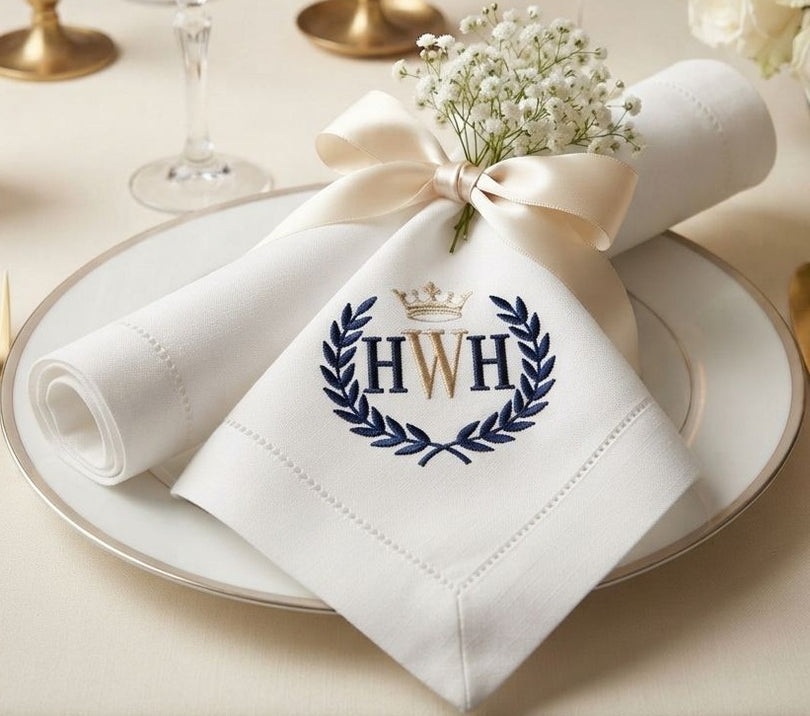
Switching from paper napkins to cloth napkins is the single change that makes an everyday kitchen table feel most different. Cotton and linen cloth napkins feel better in the hand, absorb better than paper, and make the table look finished rather than functional.
For an everyday kitchen table, fold napkins simply into a clean rectangle or a triangle fold and place them to the left of each plate. For occasions, fold them into a fan shape or stand them upright in a water glass.
All Cotton and Linen's dinner napkins are made from 100% natural cotton and linen and are available in seasonal prints and solid colors that coordinate with the full table linen collection.
6. Match Your Kitchen Table Decor to Your Kitchen Style
How to match a kitchen table with your decor depends on identifying the style that already exists in your kitchen and building toward it rather than against it.
|
Kitchen Style |
Best Tablecloth |
Runner Style |
Napkin Tone |
Centerpiece |
|
Farmhouse |
Buffalo plaid or natural linen |
Striped cotton in cream and rust |
Off-white or terracotta |
Wooden bowl, herb pots |
|
Modern minimal |
Solid white or warm grey |
Tonal runner, same color family |
White or charcoal |
Single low vase, clean lines |
|
Coastal or Scandi |
White or light blue |
Blue and white stripes |
White or pale blue |
Small ceramic, natural wood |
|
Eclectic or boho |
Natural linen base |
Patterned or embroidered runner |
Mixed earth tones |
Mix of ceramics and plants |
|
Classic traditional |
White hemstitched tablecloth |
Solid color runner |
Crisp white or deep navy |
Fresh florals, candles |
The most common kitchen table decorating mistake is mixing styles at the tablecloth level a farmhouse tablecloth under a modern dinnerware set looks unresolved. Match the tablecloth to the kitchen first, then add personality through the runner, napkins, and centerpiece.
For a deeper look at how to match tablecloths with the rest of your decor, the 2026 tablecloth trends guide covers the specific prints, patterns, and color combinations that are working in kitchens this year.
7. Use a Serving Tray as a Permanent Centerpiece
A beautiful serving tray placed at the center of the kitchen table serves as both a centerpiece and a functional surface. Keep a candle, a small plant or herb pot, and one decorative object on the tray. When you need to use the table for a meal, the whole tray lifts off in one move.
This approach works especially well for small kitchen tables where space is limited. The tray holds decorative objects, keeping the table surface uncluttered, and it can be moved to a sideboard or countertop during meals without disrupting the table setup.
8. Small Kitchen Table Decor Ideas That Work in Tight Spaces
Small kitchen table decor ideas require a different approach because every object competes for the same limited surface. A few principles that work consistently:
Use only one centerpiece; never a grouping. On a 2-seat or 4-seat kitchen table, a single small vase, a single candle, or a single low ceramic piece reads more confidently than a cluster of three small objects.
Choose placemats over a tablecloth when the table is very small. A tablecloth on a 24-inch round kitchen table can make the space feel visually heavy. Individual placemats at each seat achieve the same decorative effect with less visual mass.
Use a runner lengthwise on a small rectangular table. A narrow runner (12 inches wide) down the center of a small table draws the eye lengthwise and makes the table feel larger than it is.
Keep napkin color close to the tablecloth color on small tables. High contrast napkin-to-tablecloth combinations create visual busyness, which reads as clutter on a small surface.
9. Change the Tablecloth Seasonally, Not the Furniture
One of the most practical kitchen table decorating ideas is using seasonal tablecloths to completely change the mood of the kitchen without moving or replacing anything else. A cotton tablecloth in soft blush for spring, a buffalo plaid for fall, a deep green or red for the Christmas season, and a natural linen or white for summer can be stored flat in a drawer and swapped in about 60 seconds.
All Cotton and Linen's tablecloth collection covers every season, from spring florals and Easter pastels through holiday-specific prints for Thanksgiving and Christmas. Each tablecloth is machine-washable and designed to hold color wash after wash.
For a full seasonal table setup guide that shows how to build on a base tablecloth across the year, the dining room decor ideas 2025 guide covers specific seasonal combinations from spring through winter.
10. Layer Textures Rather Than Adding More Objects
Adding more objects to a kitchen table is rarely the answer when something looks flat or unfinished. Layering textures is. A cotton tablecloth under a loosely woven linen runner, with ceramic plates on top and softly folded cotton napkins to the side, creates a visually rich table without a single decorative object on it.
Texture layering for kitchen tables works best when you choose materials that contrast slightly. A very smooth cotton tablecloth pairs well with a rougher-textured runner. A smooth ceramic platter at the center contrasts well with a woven placemat underneath. The contrast between materials is what creates the sense of depth that makes a table feel dressed rather than merely covered.
11. Add Candles for Evening Kitchen Dinners
A set of candles changes a kitchen table from a daytime functional surface to an evening dining space. Two taper candles in simple holders on either side of a low centerpiece is the most reliable approach. Keep the candles in the same color family as the tablecloth: cream candles on a white tablecloth, natural beeswax on a linen tablecloth.
For everyday kitchen tables, battery-operated candles in realistic wax finishes solve the practical problem of open flames near children and pets while still creating the same warm, low-light effect at dinner.
12. Use Salt and Pepper Shakers as a Design Detail
Salt and pepper shakers sit on most kitchen tables all day, which makes them one of the most underused opportunities in kitchen table decor. Switching from standard glass or plastic shakers to ceramic ones in a color that fits your table's palette, sage, terracotta, dark navy, or matte white, adds a small but visible refinement to the everyday table.
Paired with a matching ceramic butter dish or small serving bowl on the same tray, these everyday functional pieces become part of the intentional table display rather than afterthoughts.
13. Create a Seasonal Centerpiece That Changes Four Times a Year
A rotating seasonal centerpiece is the single most practical kitchen table decorating idea for anyone who wants the table to feel current without constantly shopping for new decor.
|
Season |
Centerpiece Items |
Tablecloth Swap |
|
Spring |
Tulips or daffodils in a low vase, small ceramic eggs |
Blush, sky blue, or soft white cotton |
|
Summer |
Fresh herbs in terracotta pots, lemon or citrus in a bowl |
Natural linen, warm white, or pale stripe |
|
Autumn |
Small pumpkins, dried corn, and pinecones on a wooden tray |
Buffalo plaid, rust, or warm caramel cotton |
|
Winter |
Pine sprigs, white pillar candles, and small ornaments |
Deep green, red, or white hemstitched cotton |
For each seasonal transition, the tablecloth and centerpiece swap is all that changes. The placemats, napkins, and tray can stay in place. The four-item seasonal rotation takes about 15 minutes to execute and costs very little if you already own the base pieces.
For specific spring setup ideas, the spring table setting and centerpiece ideas guide covers 15 distinct spring table combinations in detail.
14. Keep the Kitchen Table Clear During the Day
The best kitchen table decor idea that no style guide talks about enough is leaving most of the table clear during non-meal times. A tablecloth, a small runner, and a single low centerpiece on a tray, and nothing else, make the kitchen feel spacious, ordered, and welcoming in a way that a full decorative setup cannot.
The table's natural surface, the tablecloth's color, and one good object are genuinely more visually satisfying than a crowded arrangement of decorative objects that compete for attention. Restraint is the strongest kitchen table decorating principle in 2026.
15. Coordinate the Full Table Linen Set for the Most Impact
The fastest upgrade for any kitchen table is a coordinated set of table linens: tablecloth, matching table runner, placemats, and cloth napkins in the same color family. When these four pieces work together, the kitchen table looks designed rather than assembled.
A white cotton tablecloth with cream placemats and off-white napkins reads as a deliberate neutral-toned set. A natural linen tablecloth with a sage runner and warm terracotta napkins creates a nature-inspired kitchen table palette. The coordination does not need to be matchy, it needs to be intentional.
All Cotton and Linen's table linen collection includes cotton tablecloths, linen tablecloths, table runners, placemats, and cloth napkins that are designed to coordinate with each other across the full range. Browse the full table linens collection for the complete range of kitchen table linen options.
Use code ACL15 at checkout on All Cotton and Linen for 15% off all table linens, including tablecloths, napkins, runners, and placemats.
How to Match a Kitchen Table with Your Decor: Quick Reference
Matching a kitchen table with existing decor requires looking at three things: the dominant material in the kitchen (wood, stone, painted surfaces), the color palette on the walls and cabinets, and the style of the dinnerware you use most often. The tablecloth and runner should bridge between the kitchen's fixed elements and the tableware placed on top.
If the kitchen has warm wood tones, natural linen and cotton tablecloths in cream, sand, or taupe create the strongest connection. If the kitchen is predominantly white or grey, a colored tablecloth or runner is the point where personality enters without disrupting the clean palette.
For full guidance on matching specific tablecloth styles and materials to different kitchen types, the interior design trends guide for 2025 covers how natural fibers and warm neutrals are being used across kitchen and dining room setups this year.