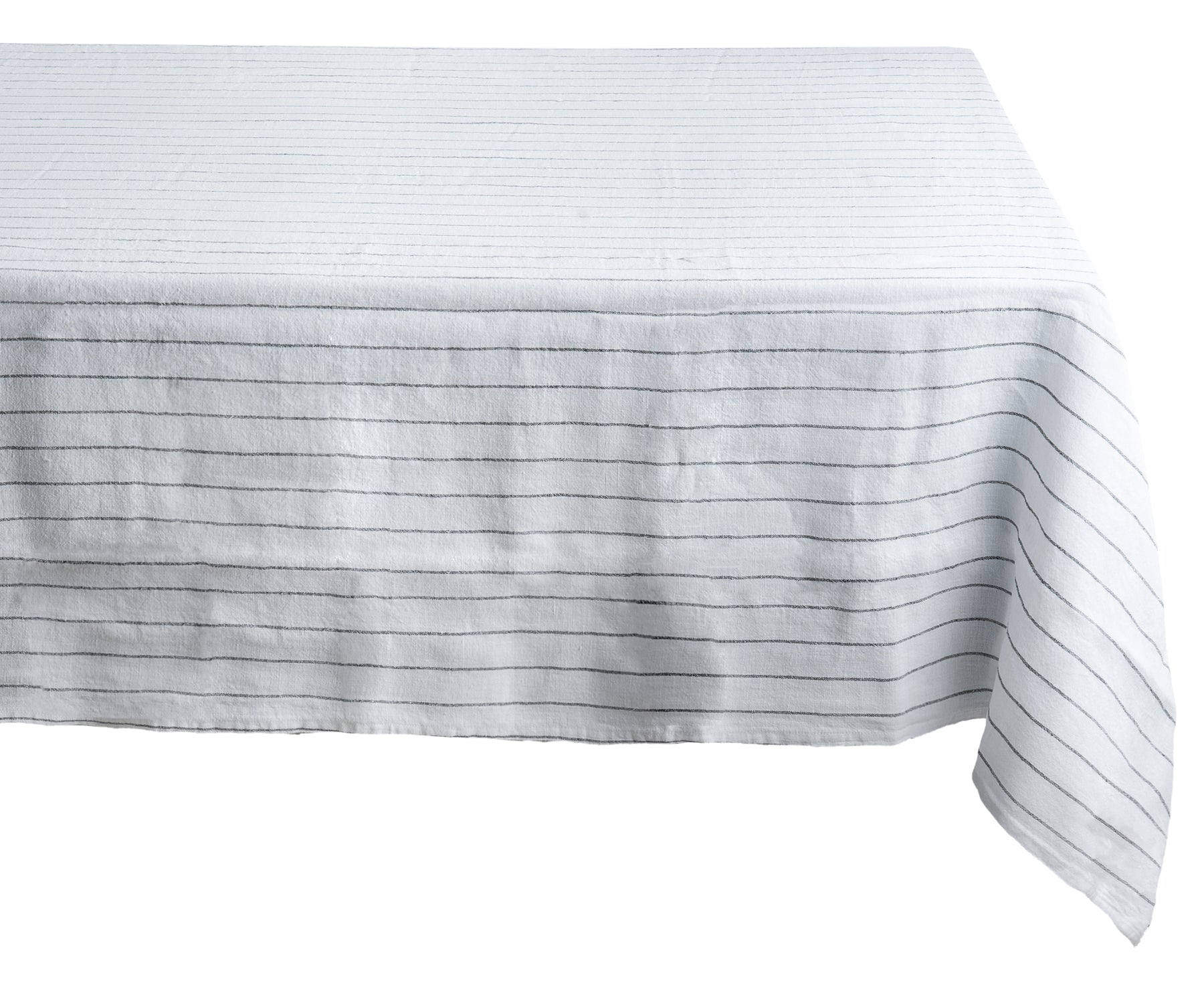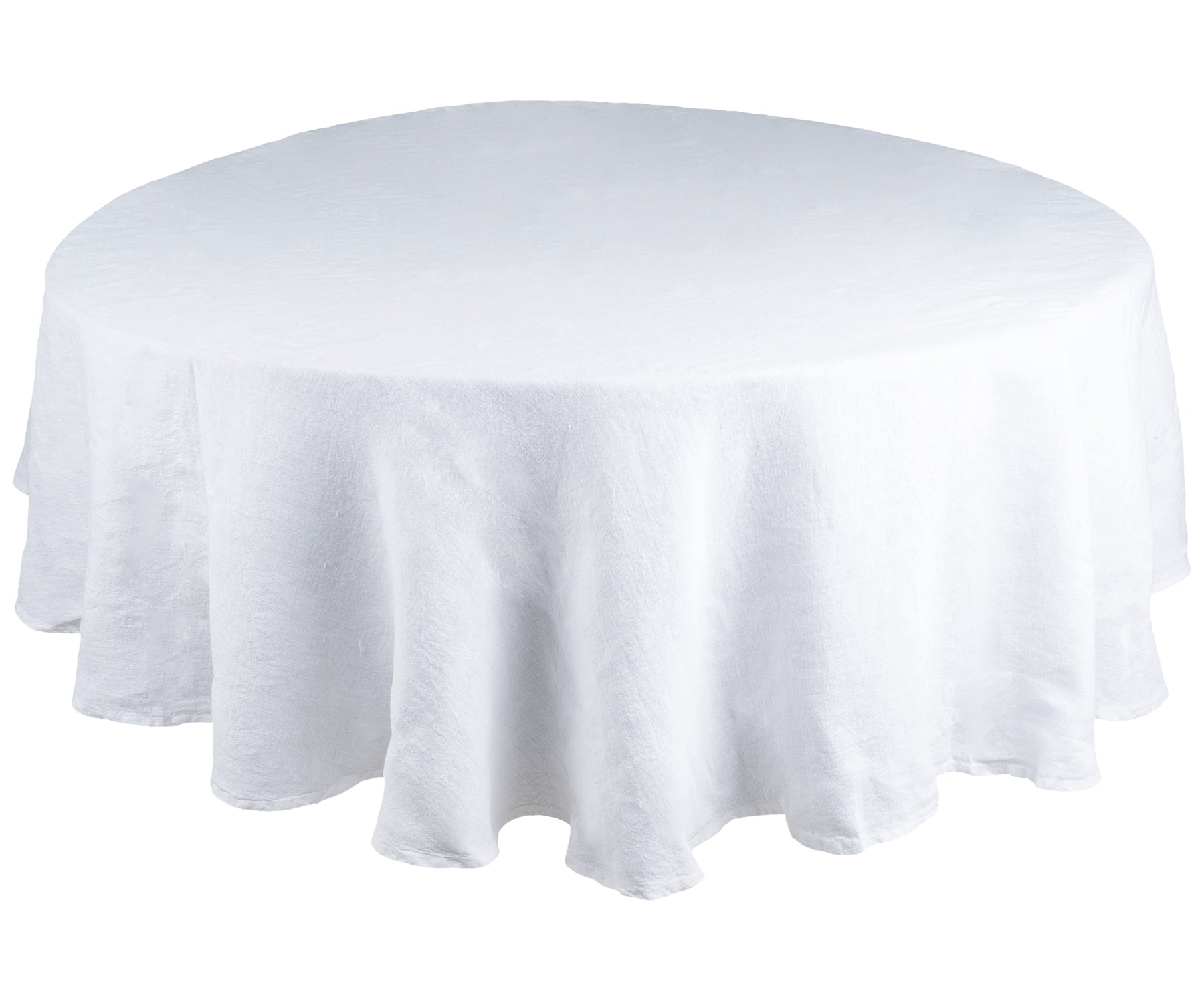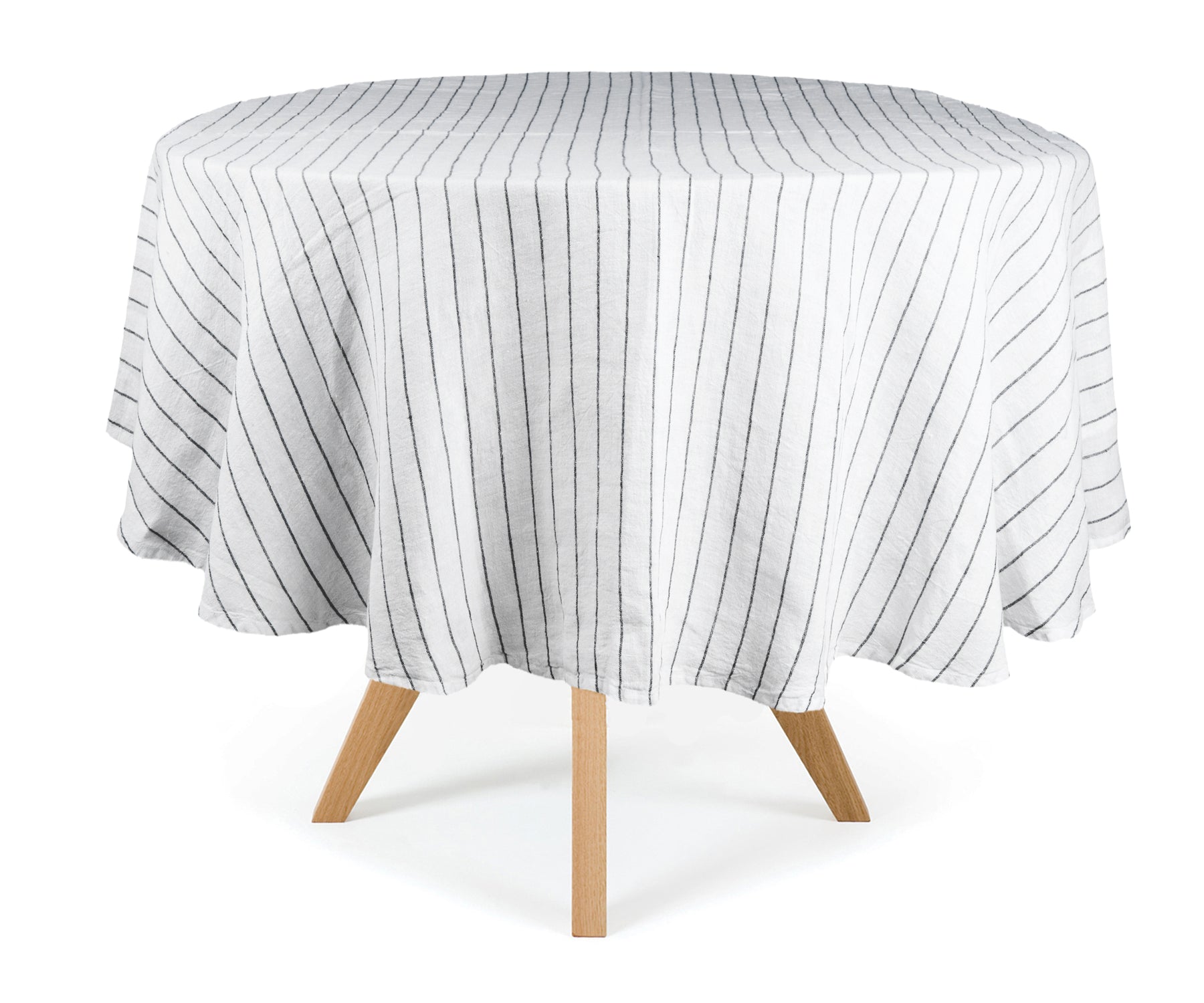


windowpane-linen-round-tablecloth-black-striped

Styling Your Space with Windowpane Tablecloths: The Complete Guide (2026)

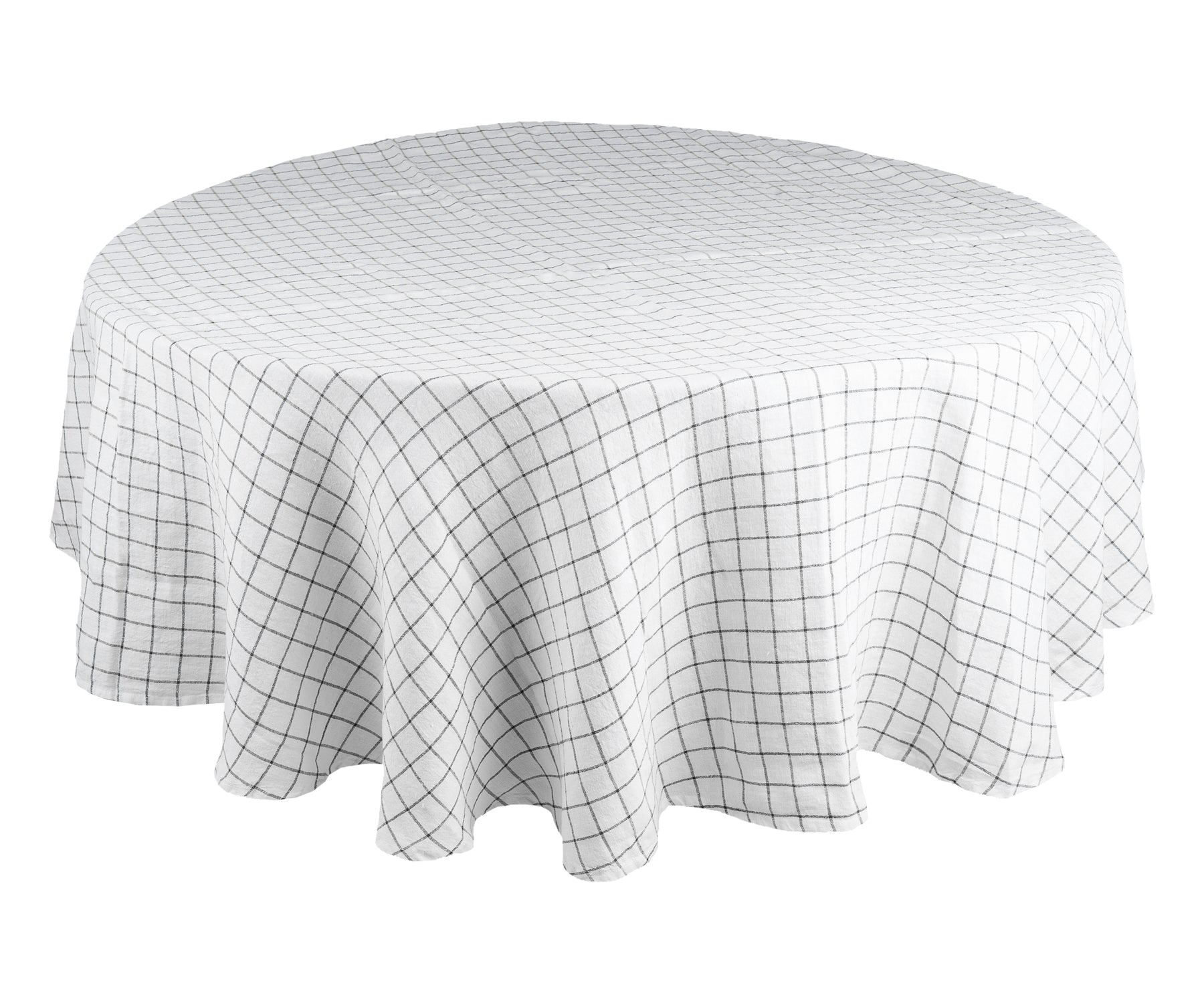
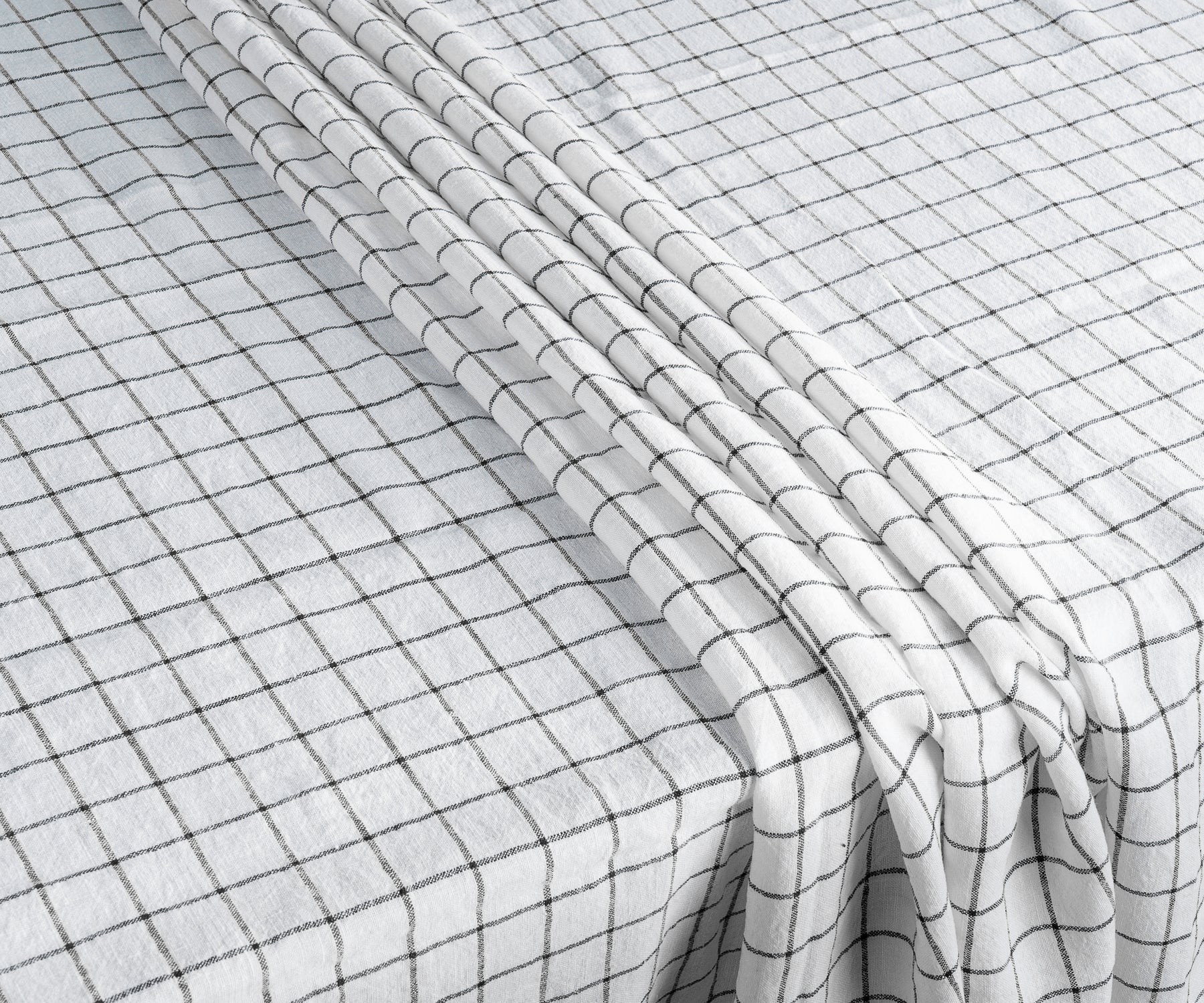
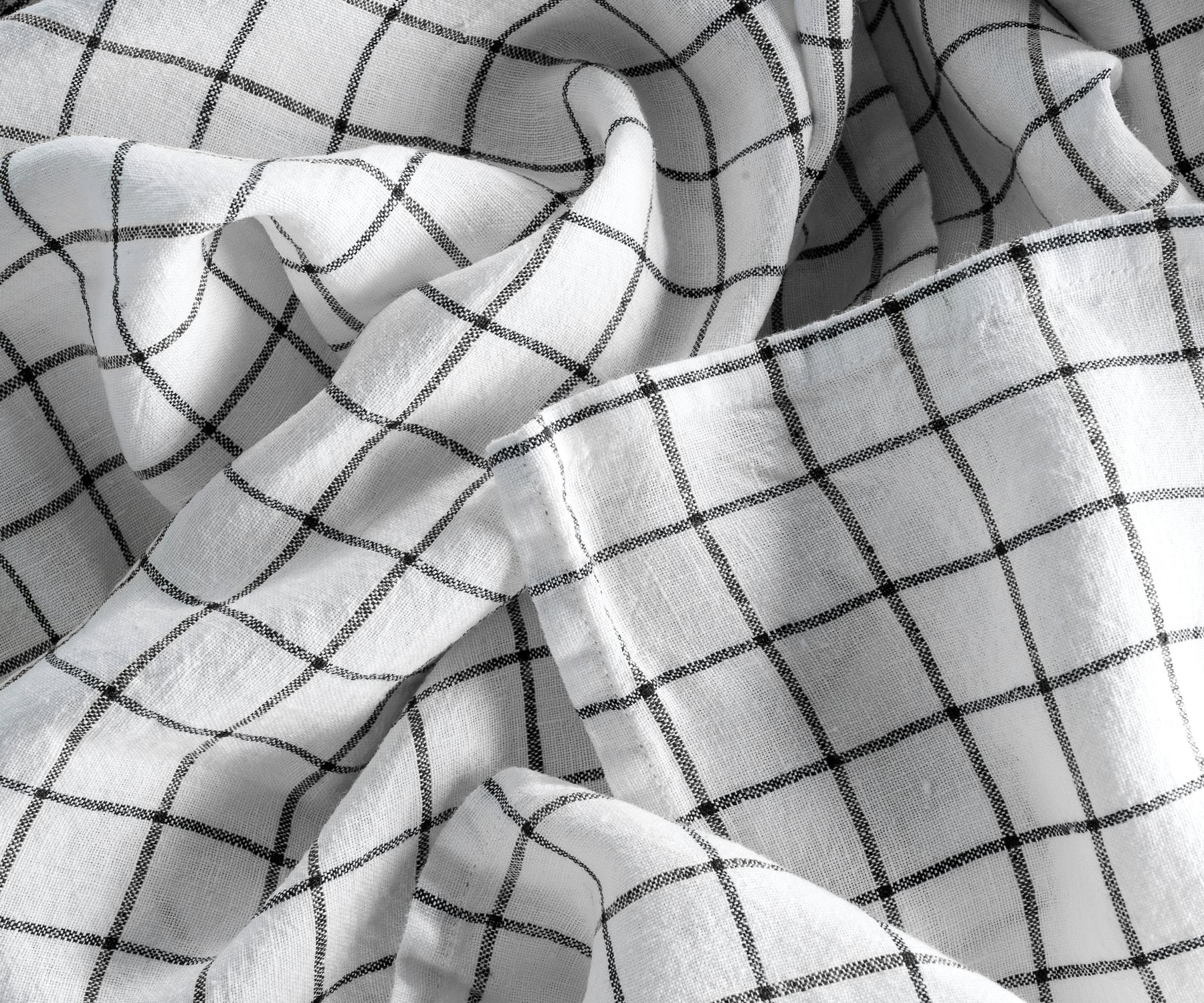
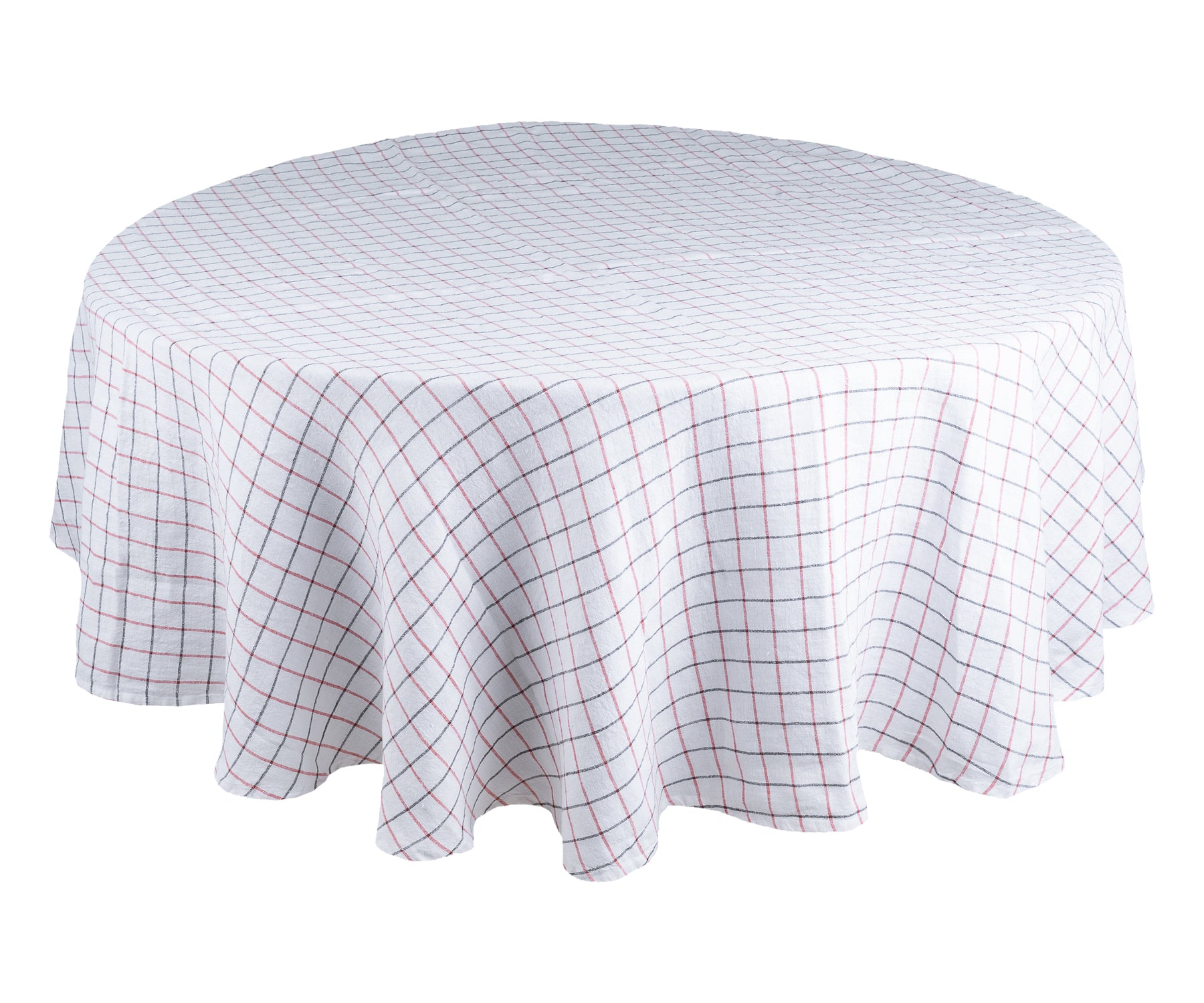
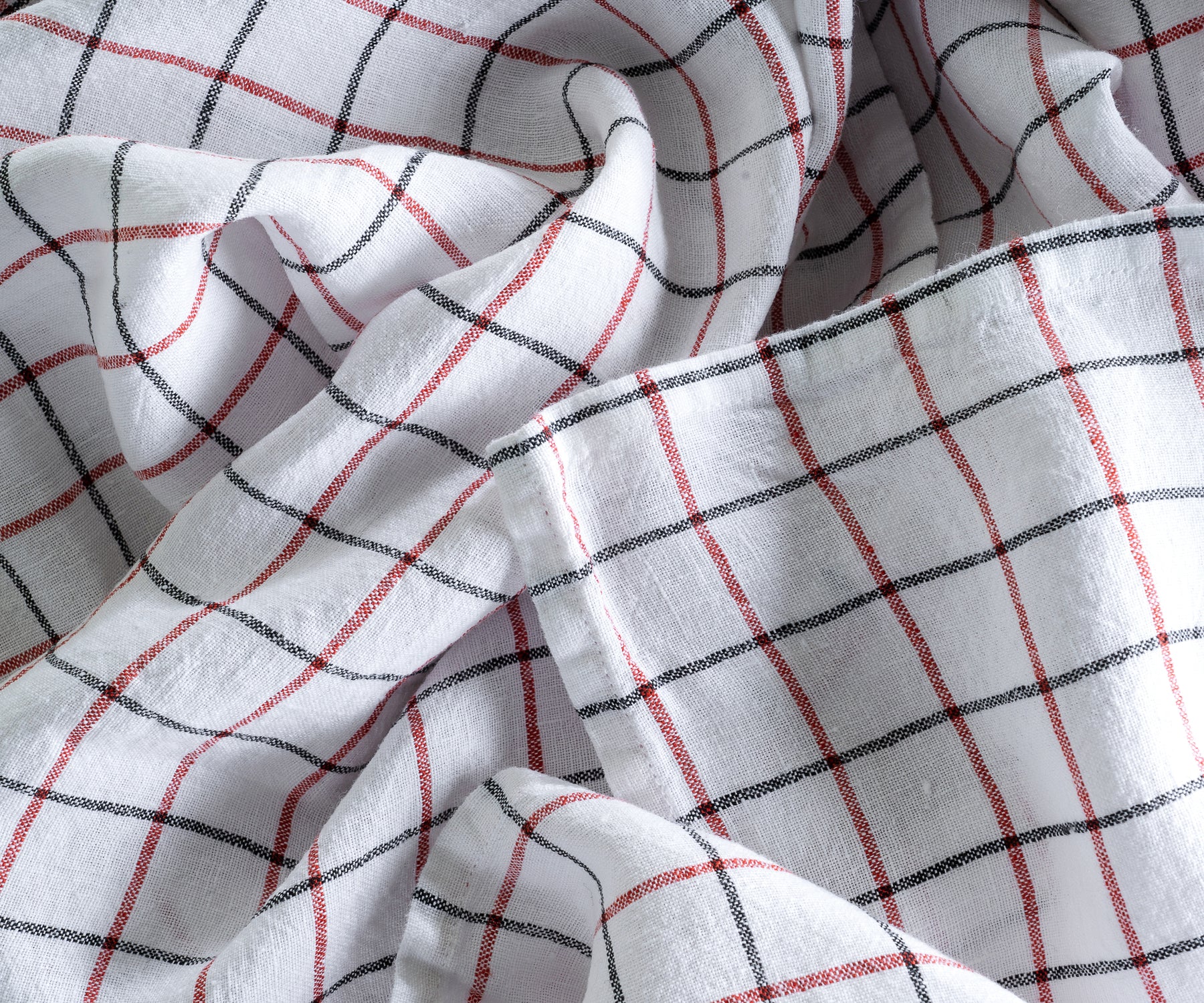
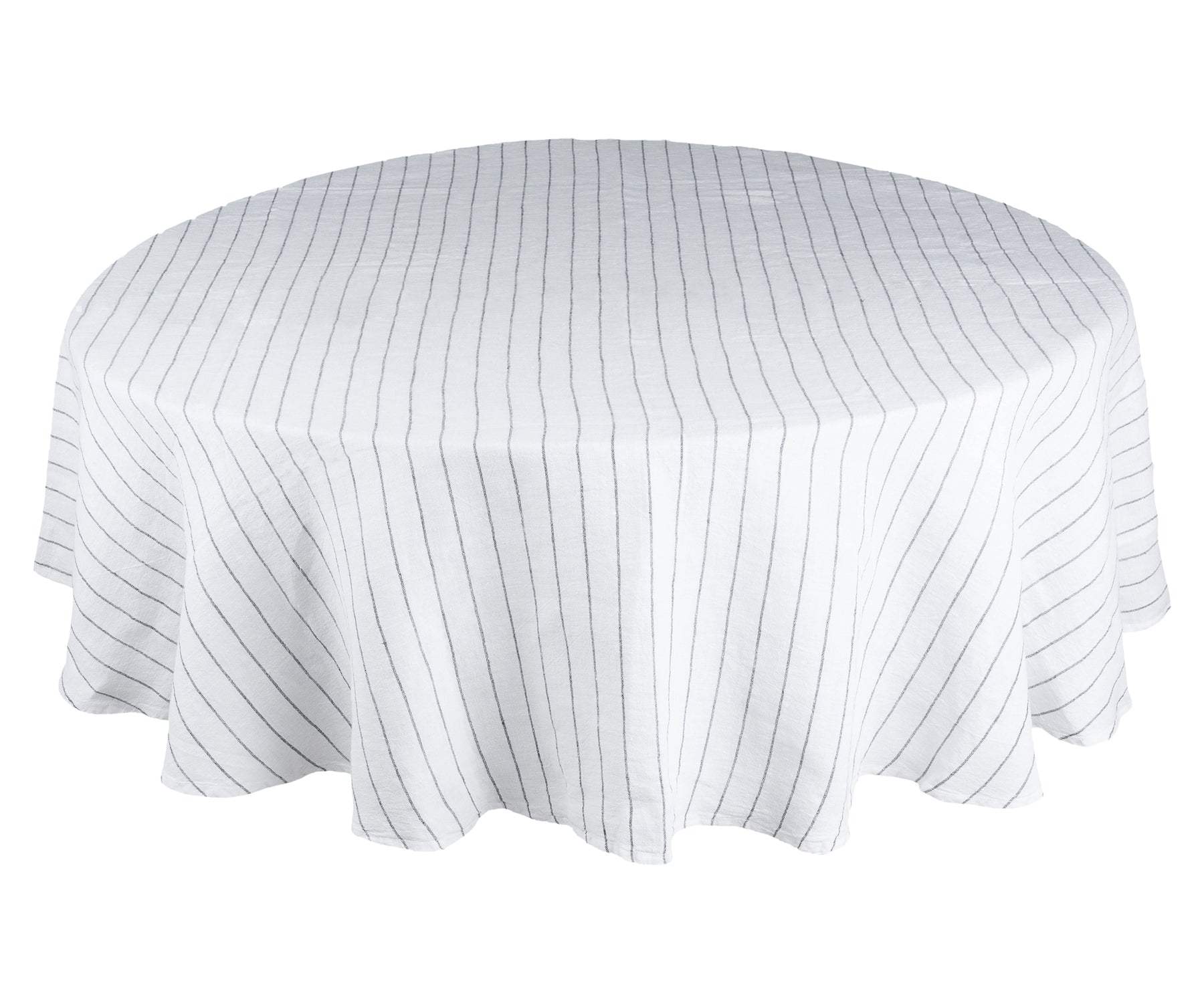
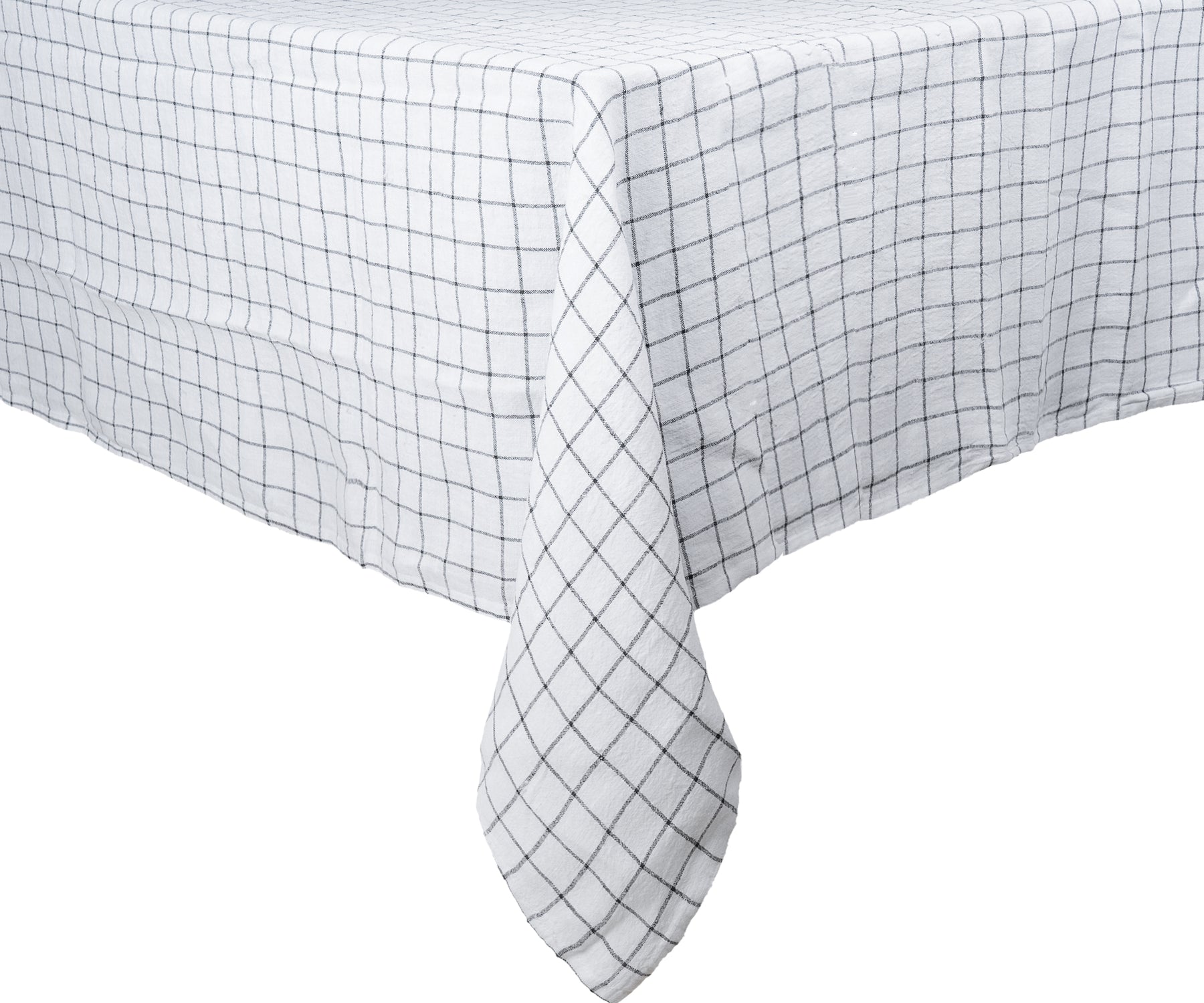
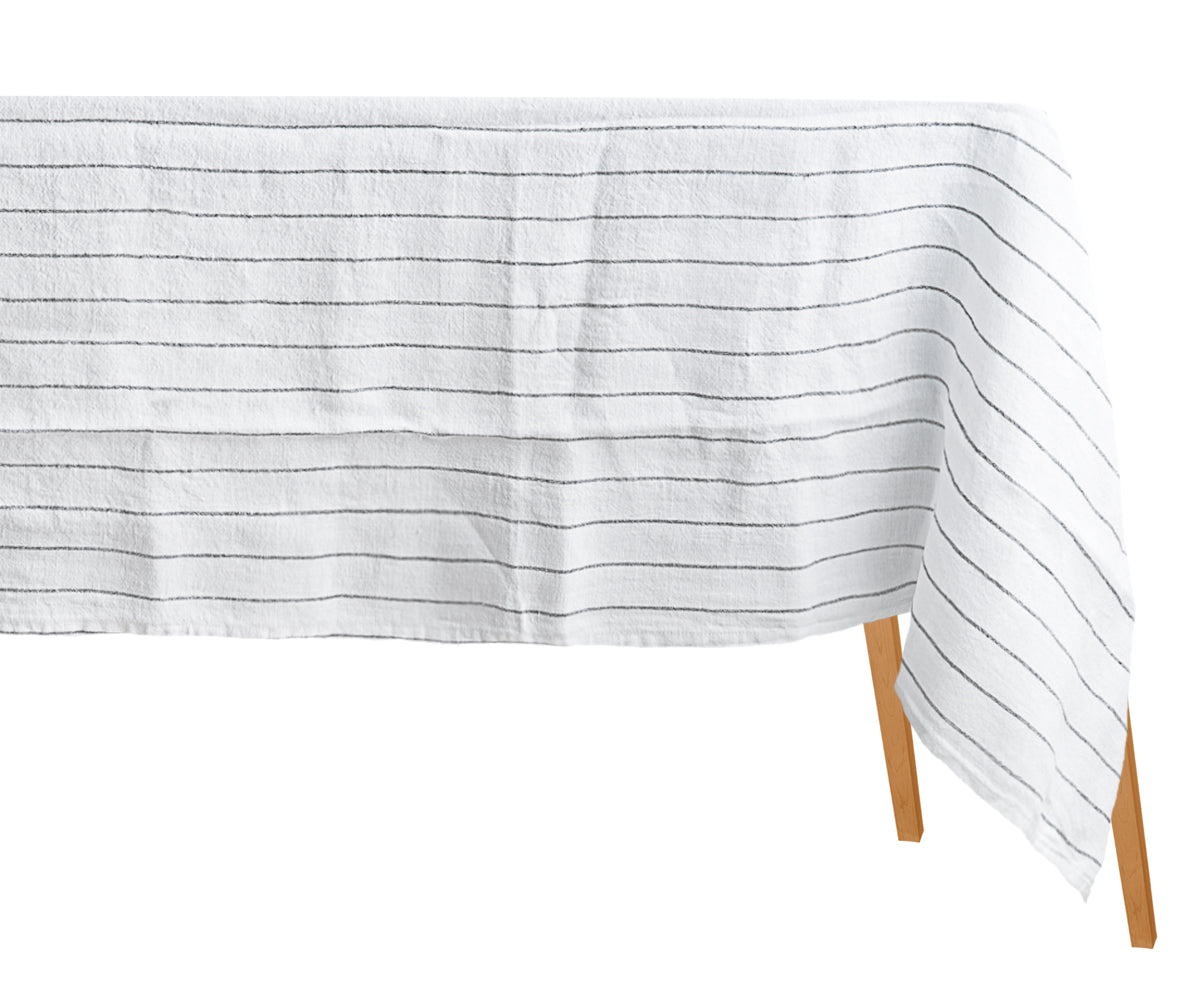
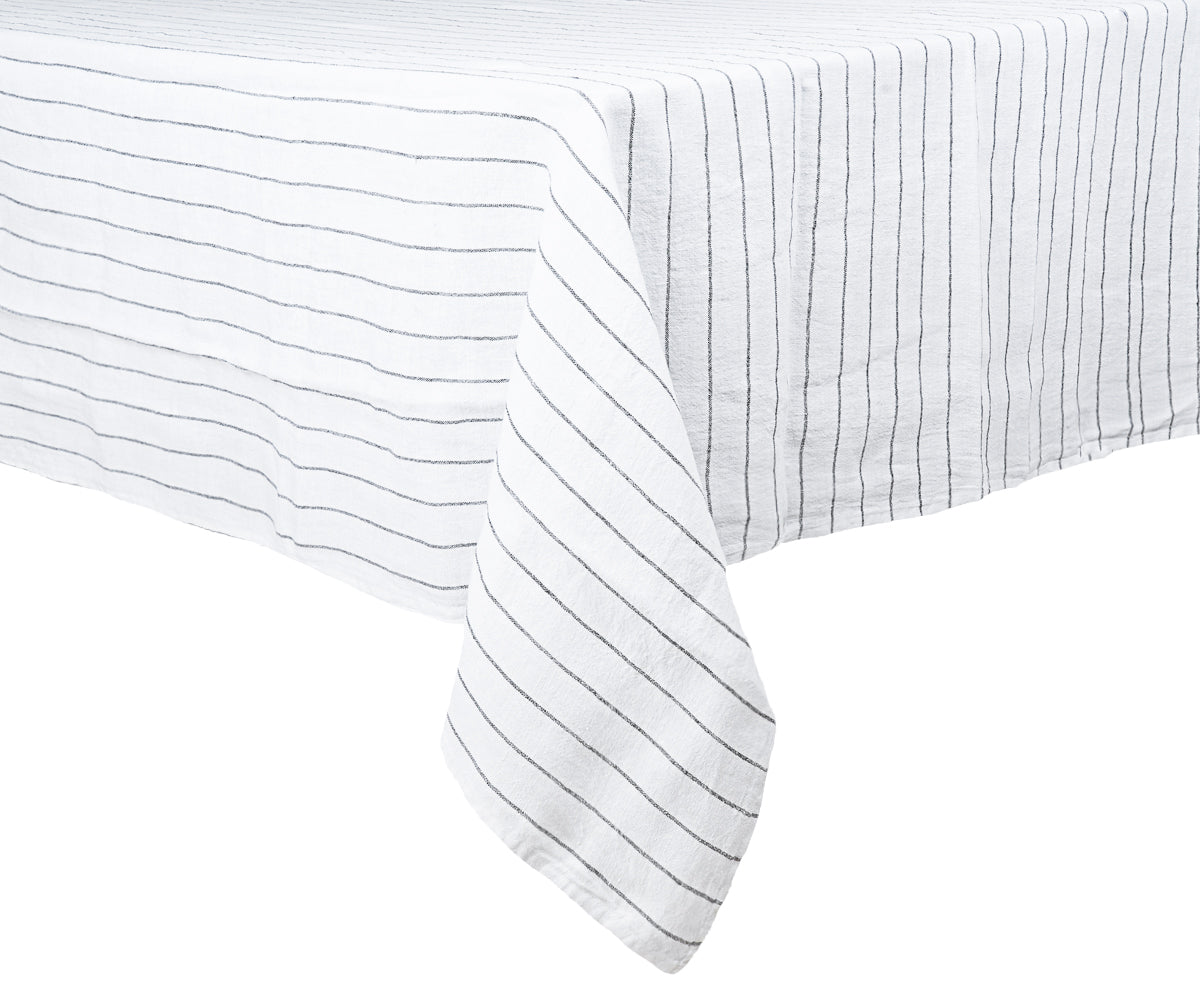
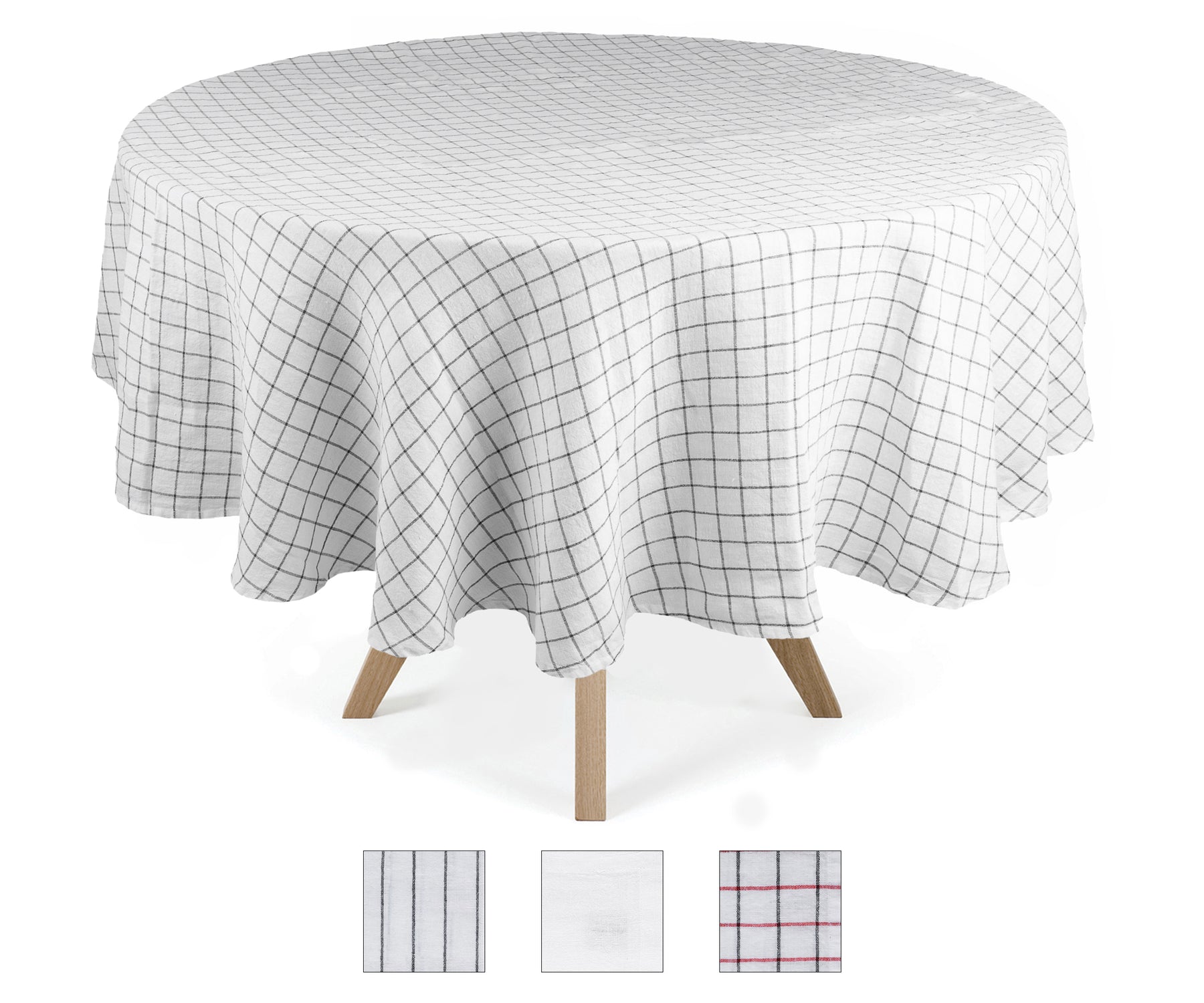
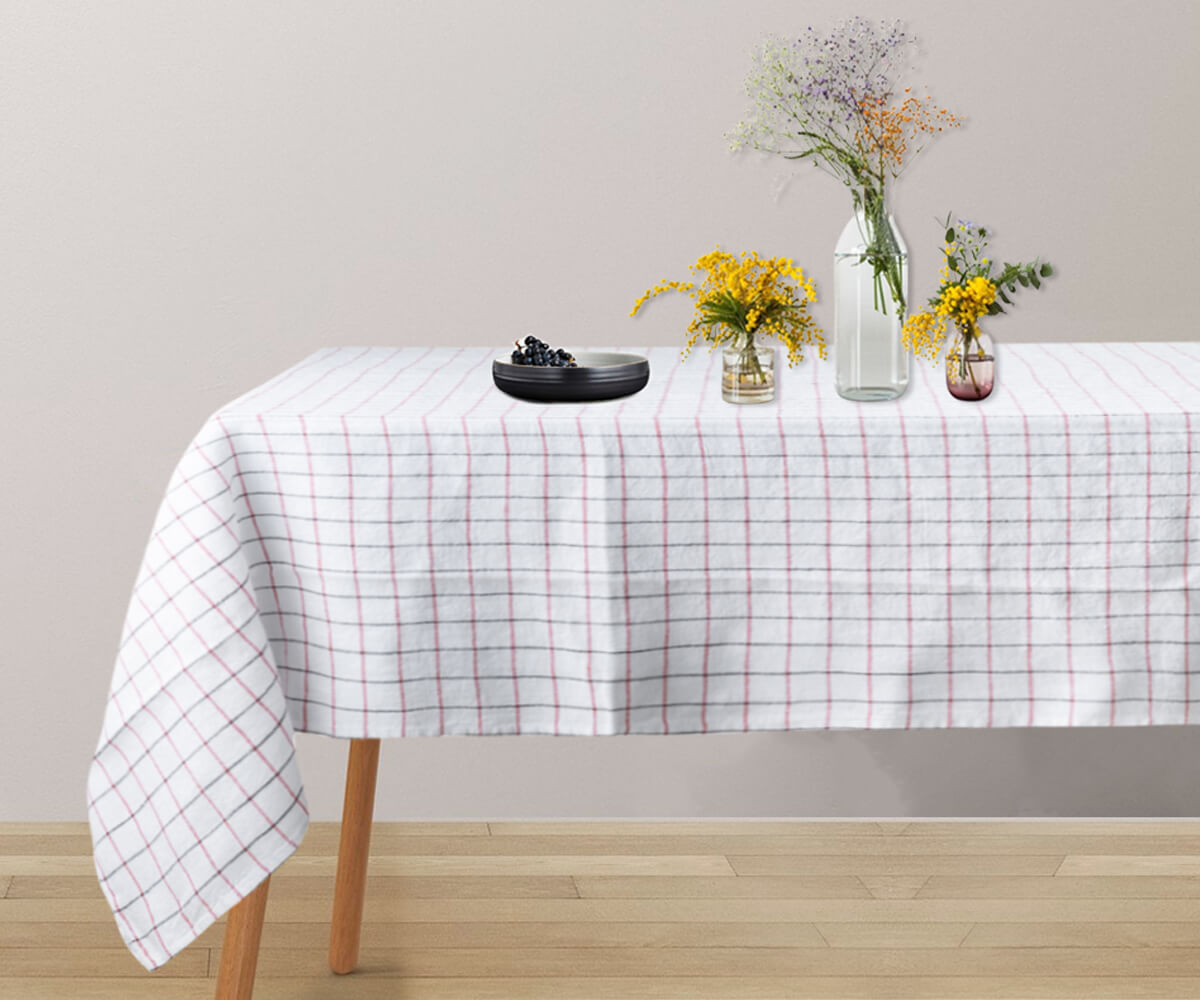
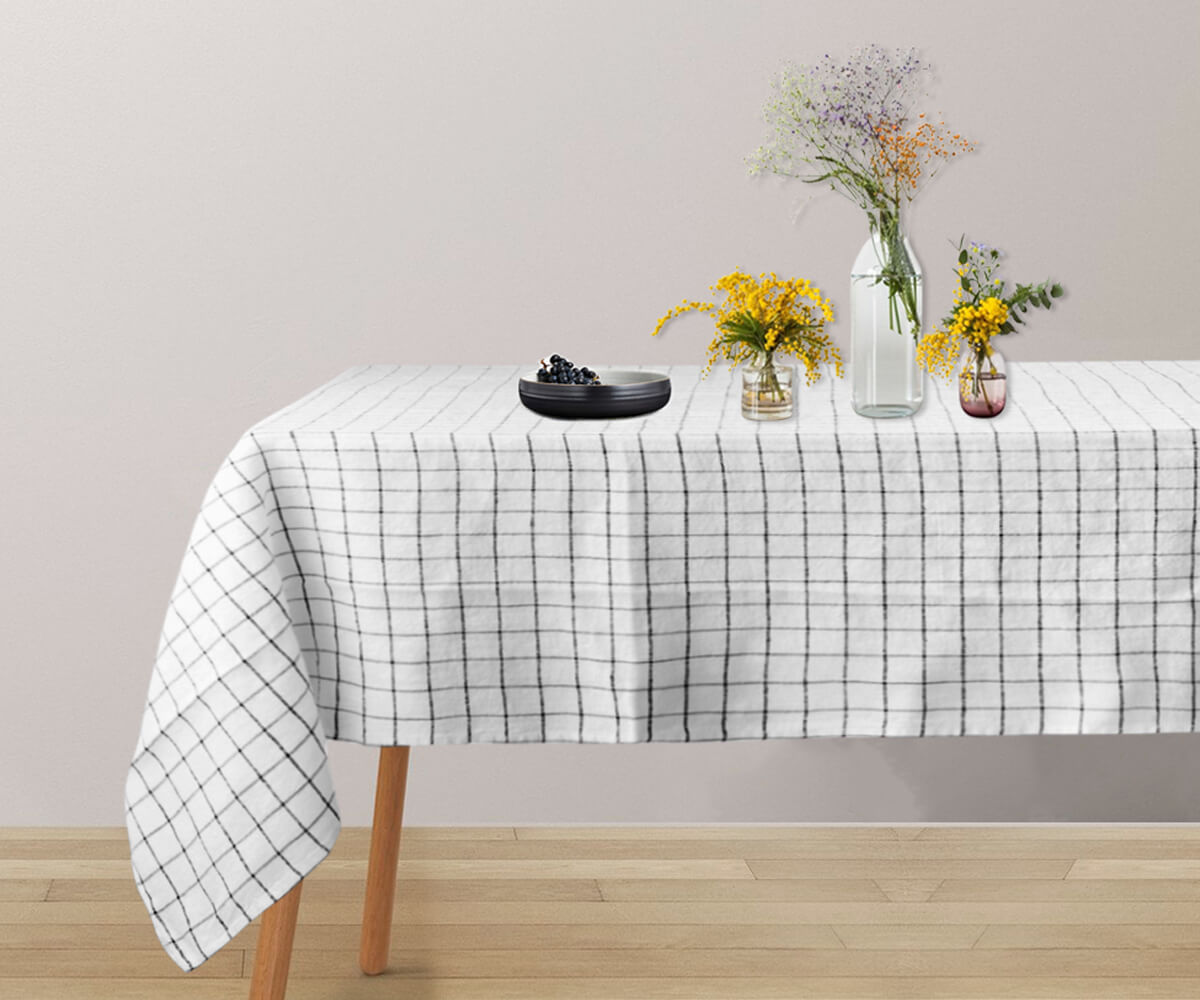
A windowpane tablecloth is a linen or cotton tablecloth featuring a pattern of thin intersecting lines that form a grid resembling window panes, also known as a French windowpane check or Brunswick check. It sits between a bold check and a plain solid, making it one of the most versatile tablecloth patterns available. The key to styling a windowpane tablecloth well is simplicity: because the pattern already provides visual structure, everything else on the table should be clean and uncluttered. 

Find the Perfect Bedding Style for Your Bedroom Reading Styling Your Space with Windowpane Tablecloths: The Complete Guide (2026) 12 minutes Next How To Choose Dish Towels For Your Kitchen
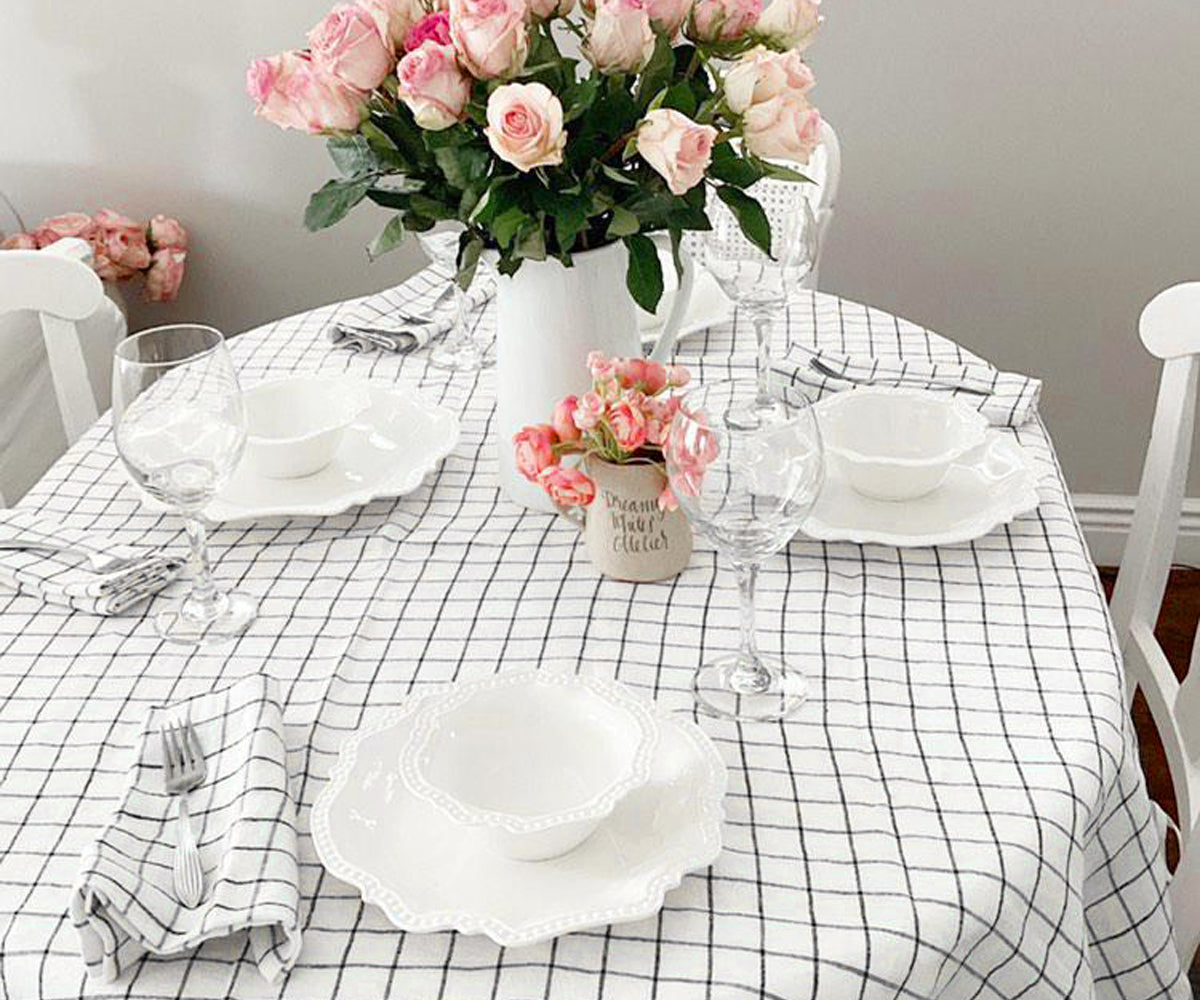
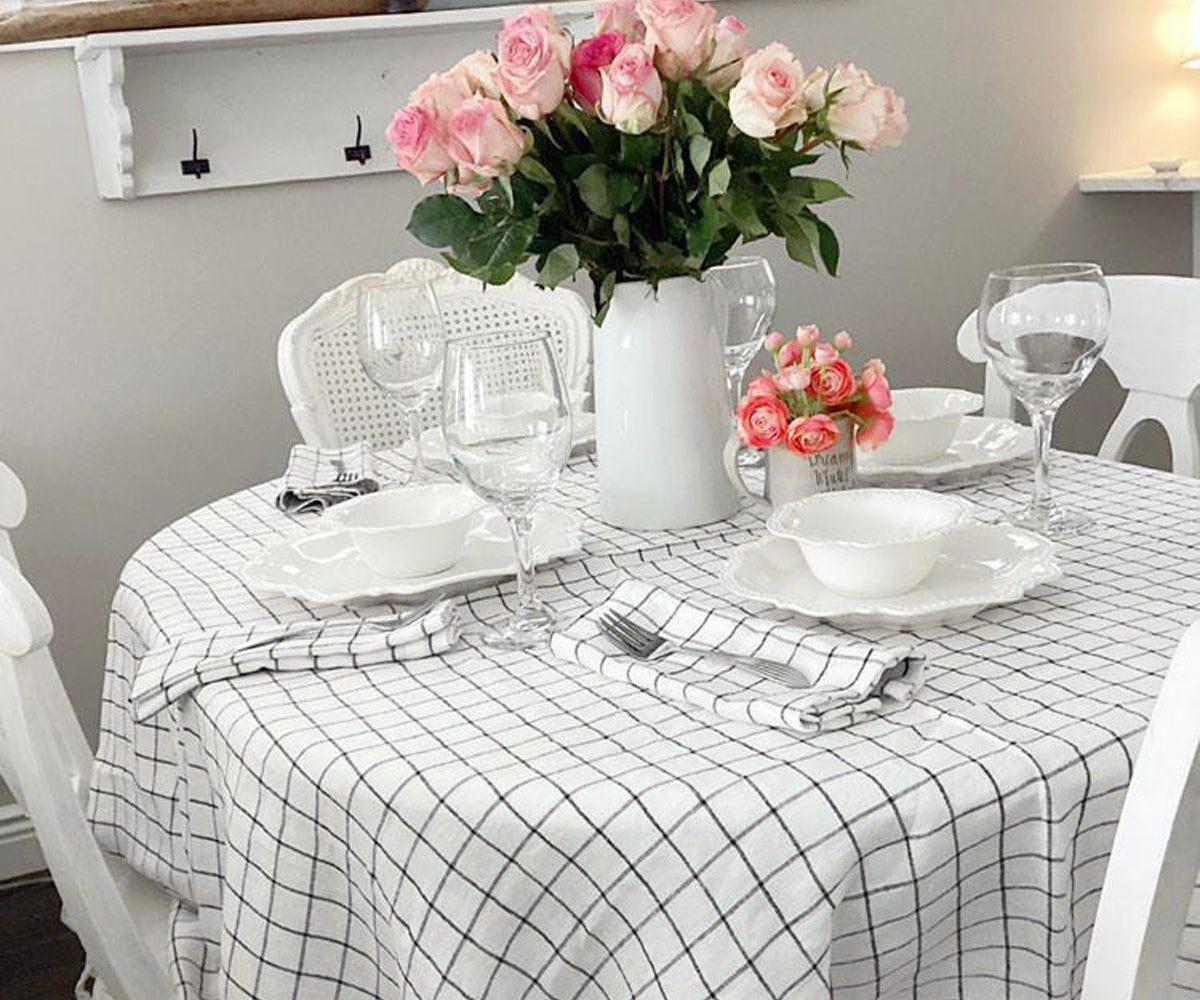
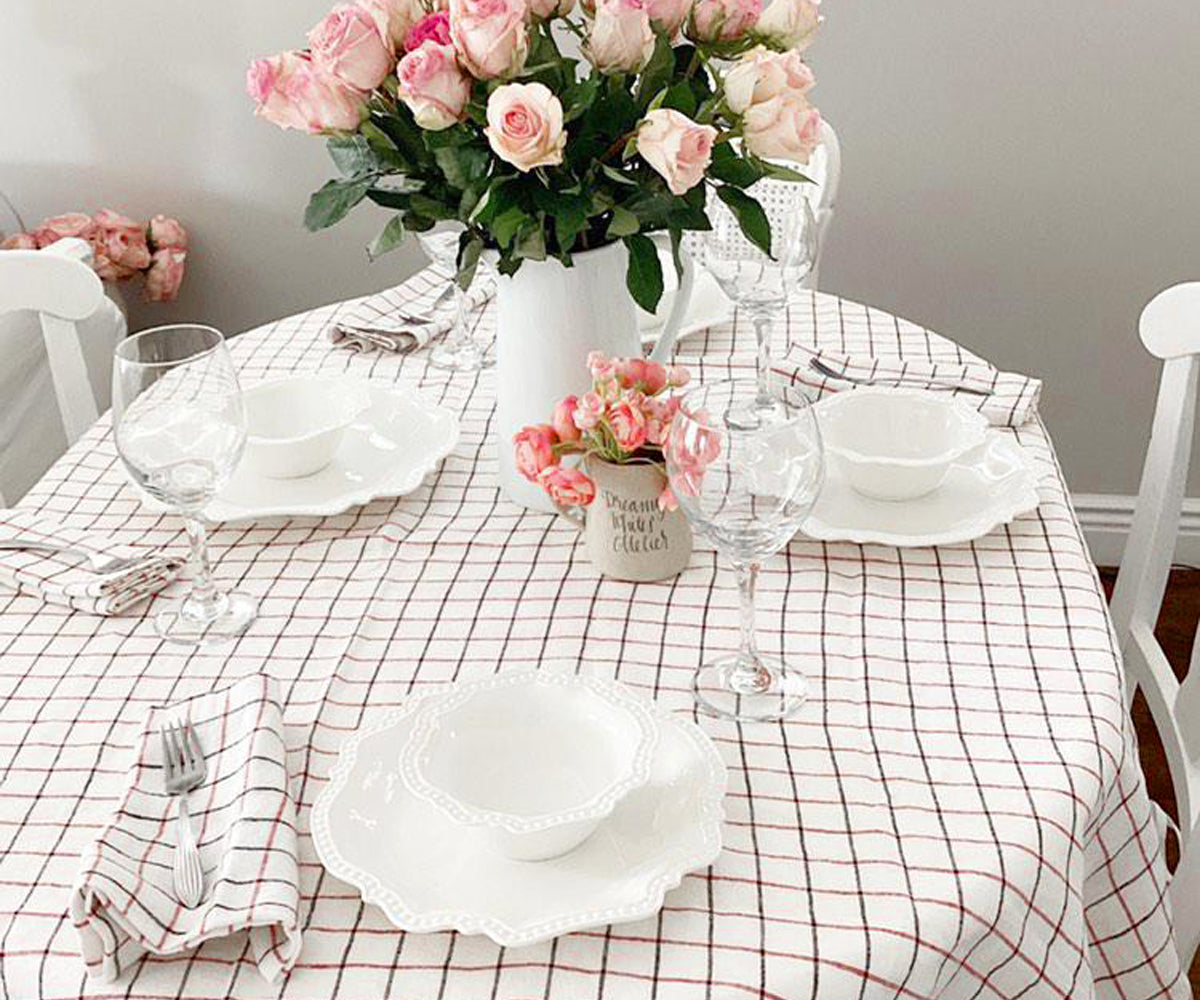
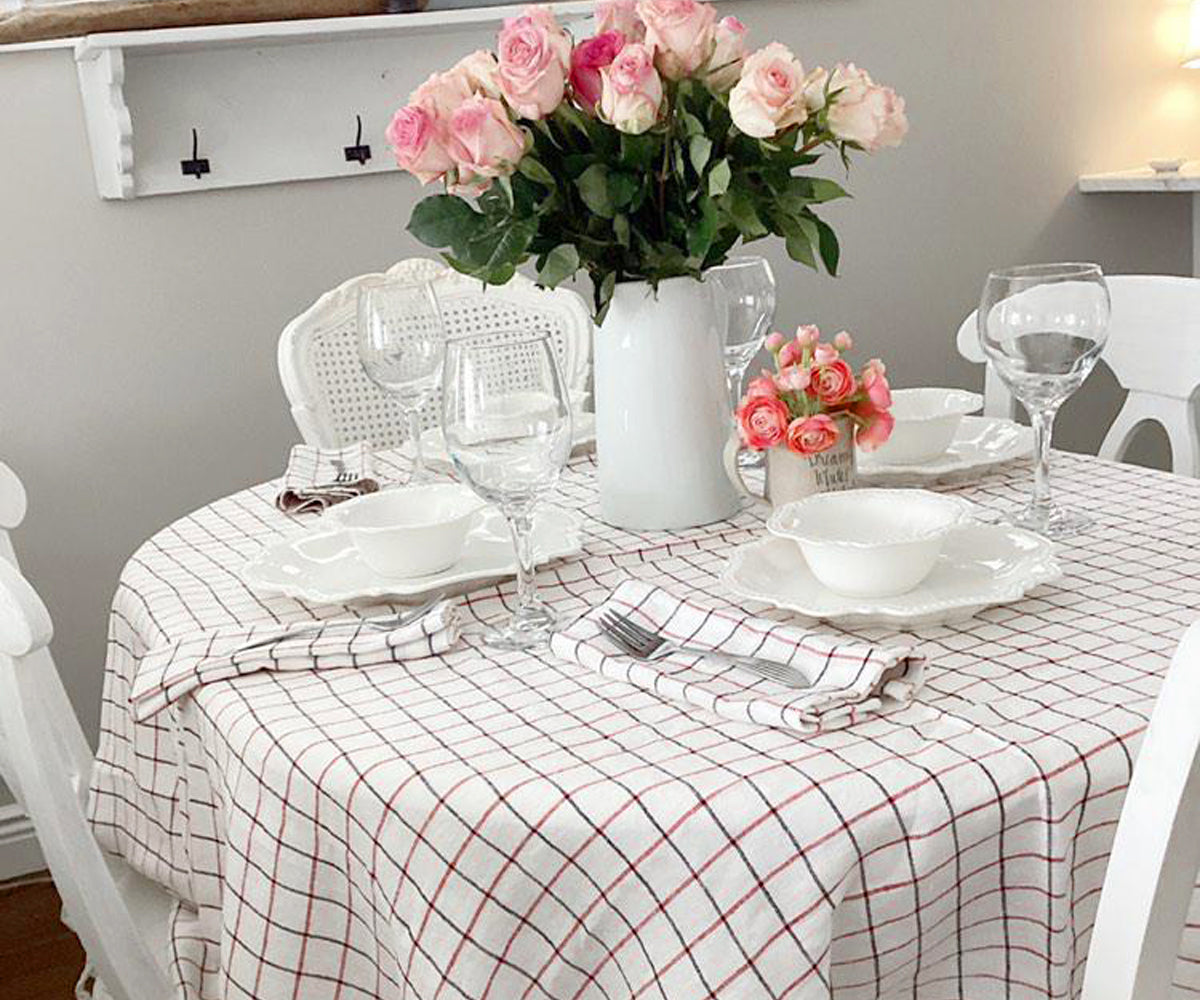
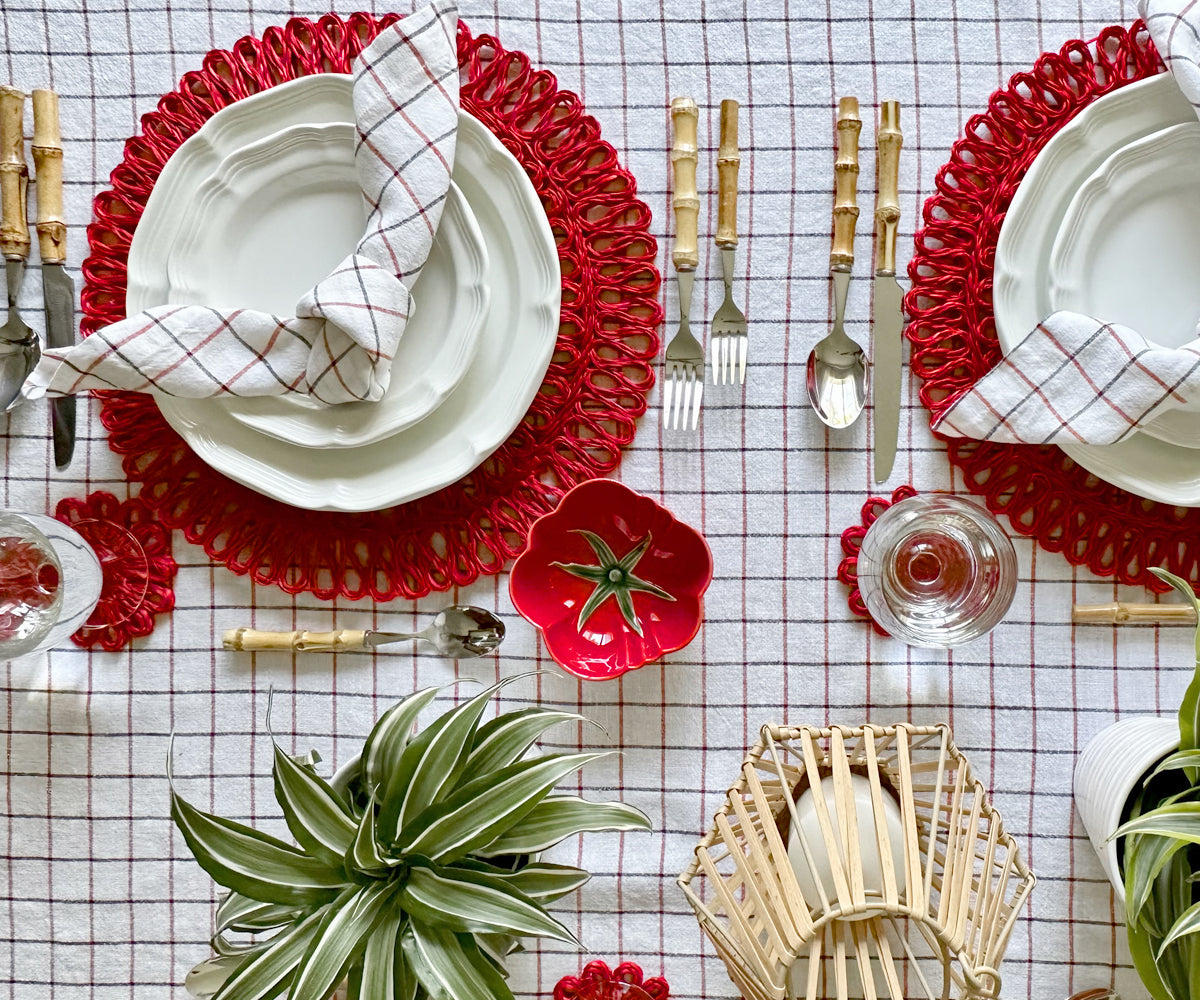
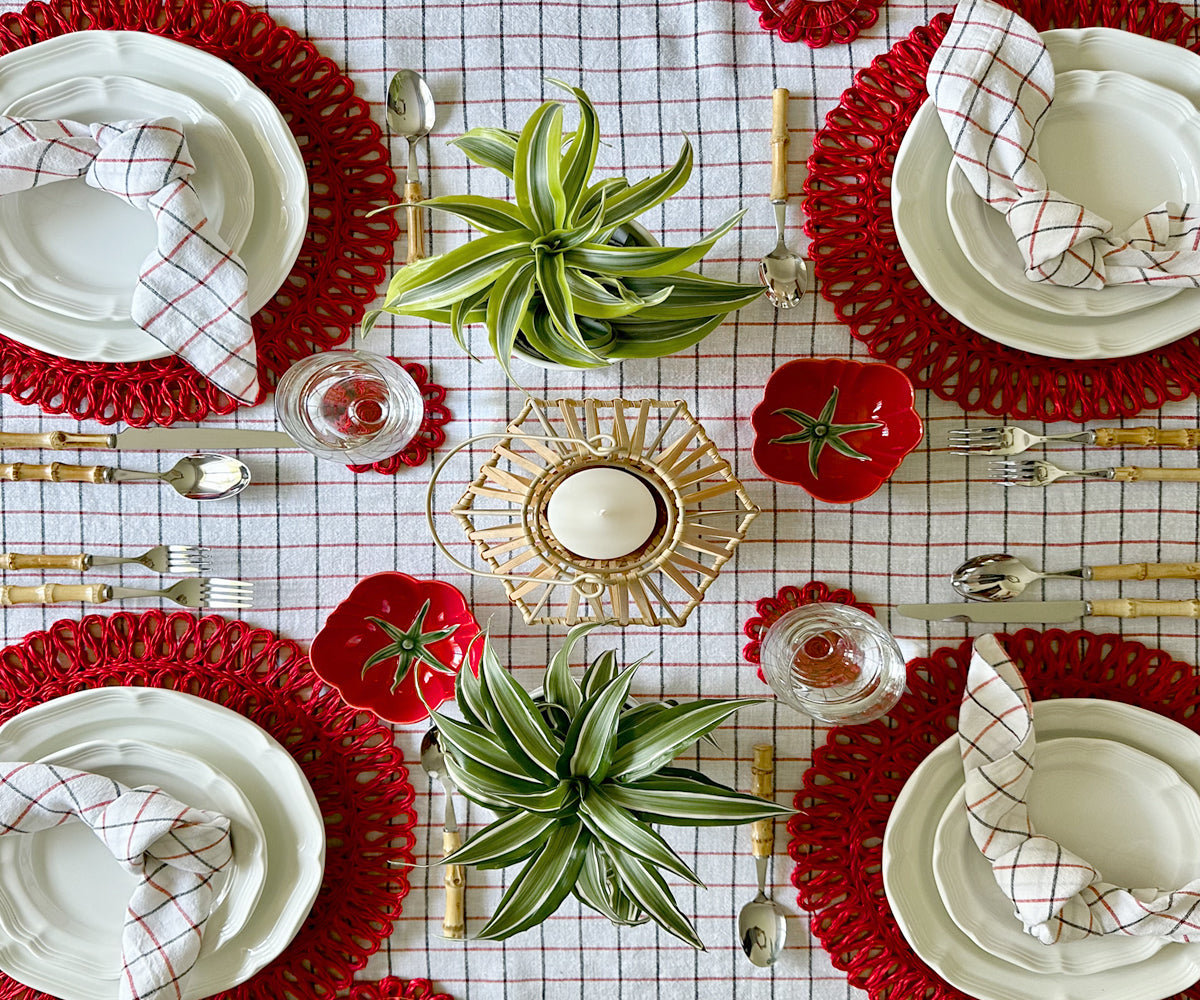
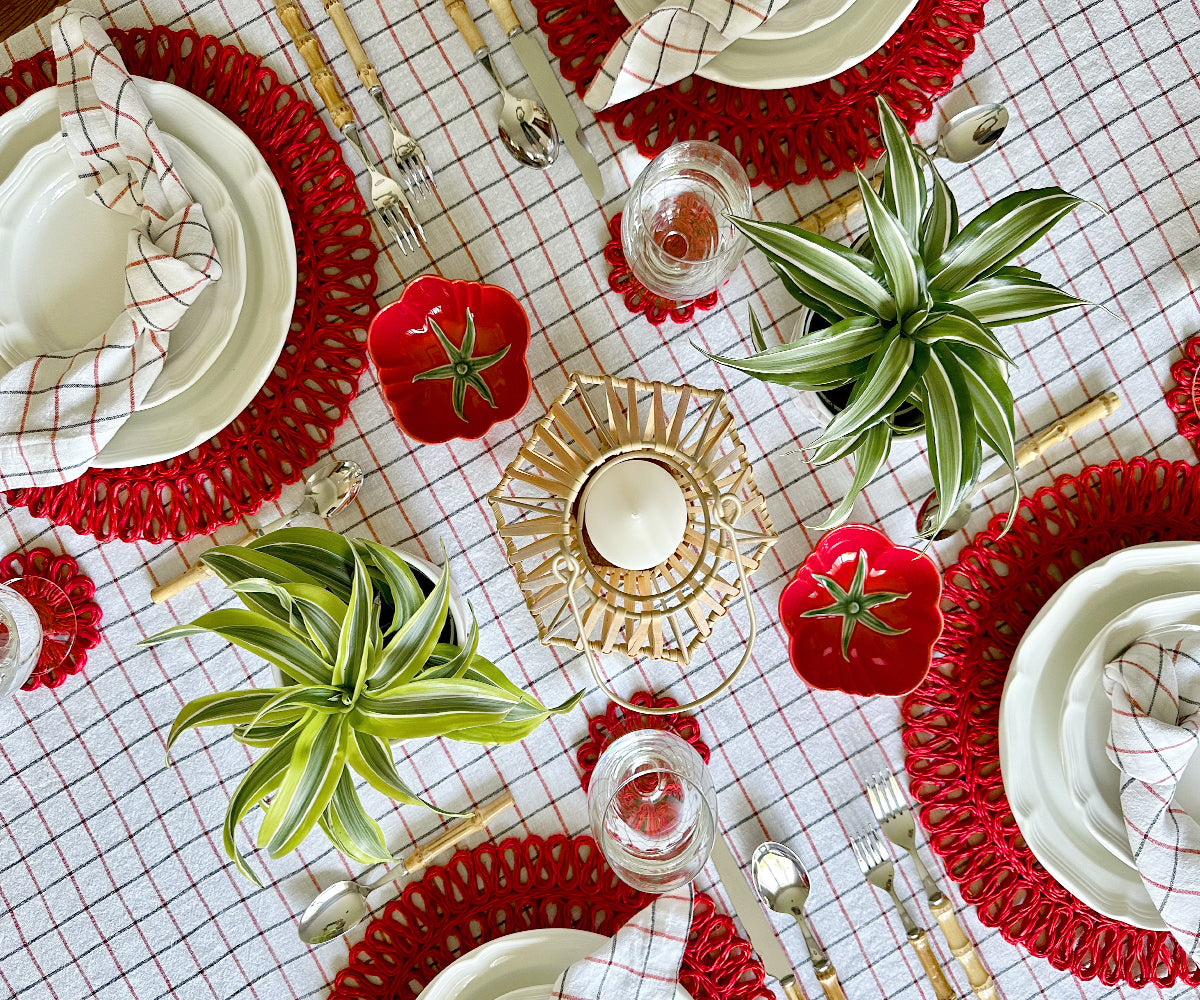
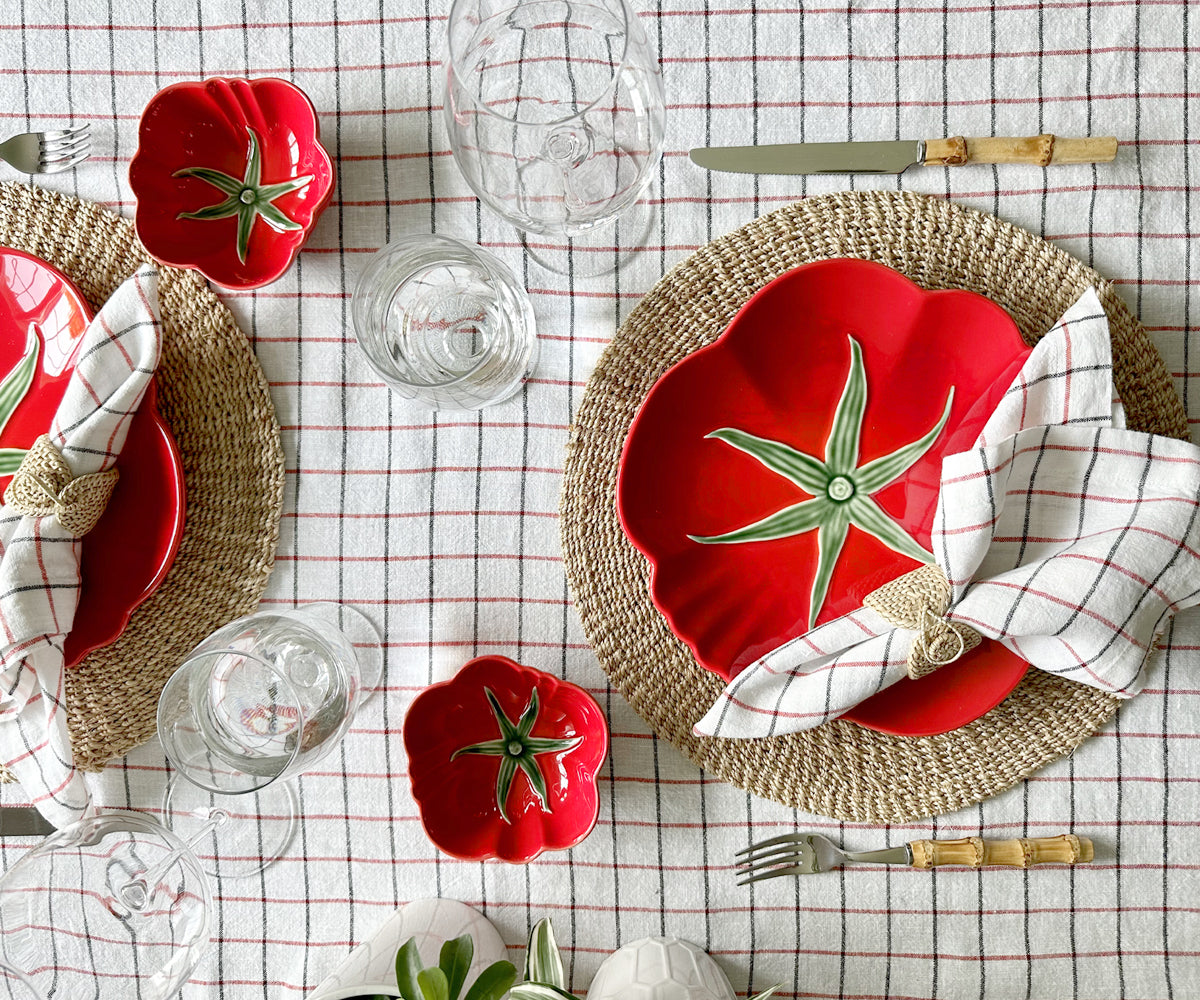
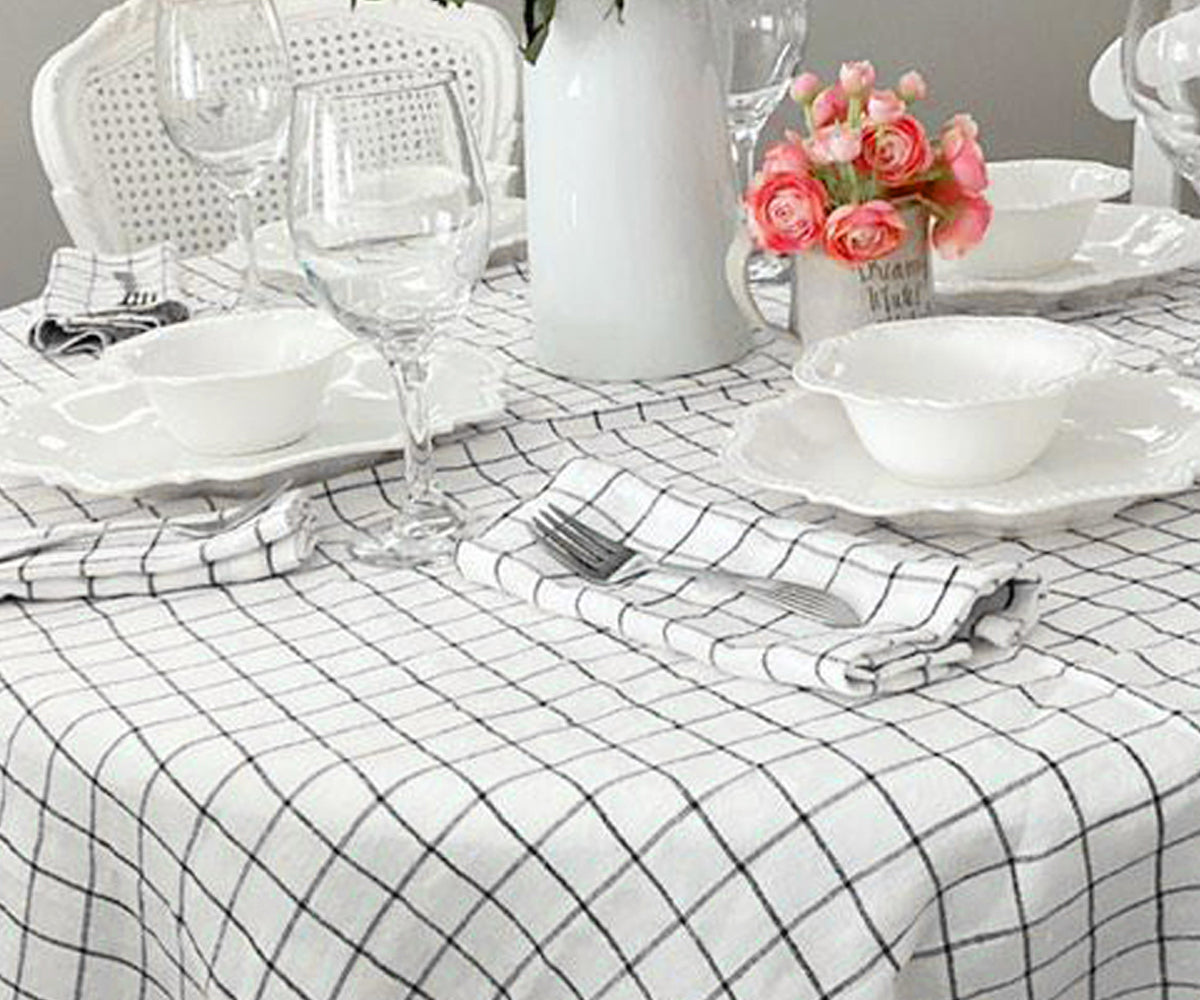
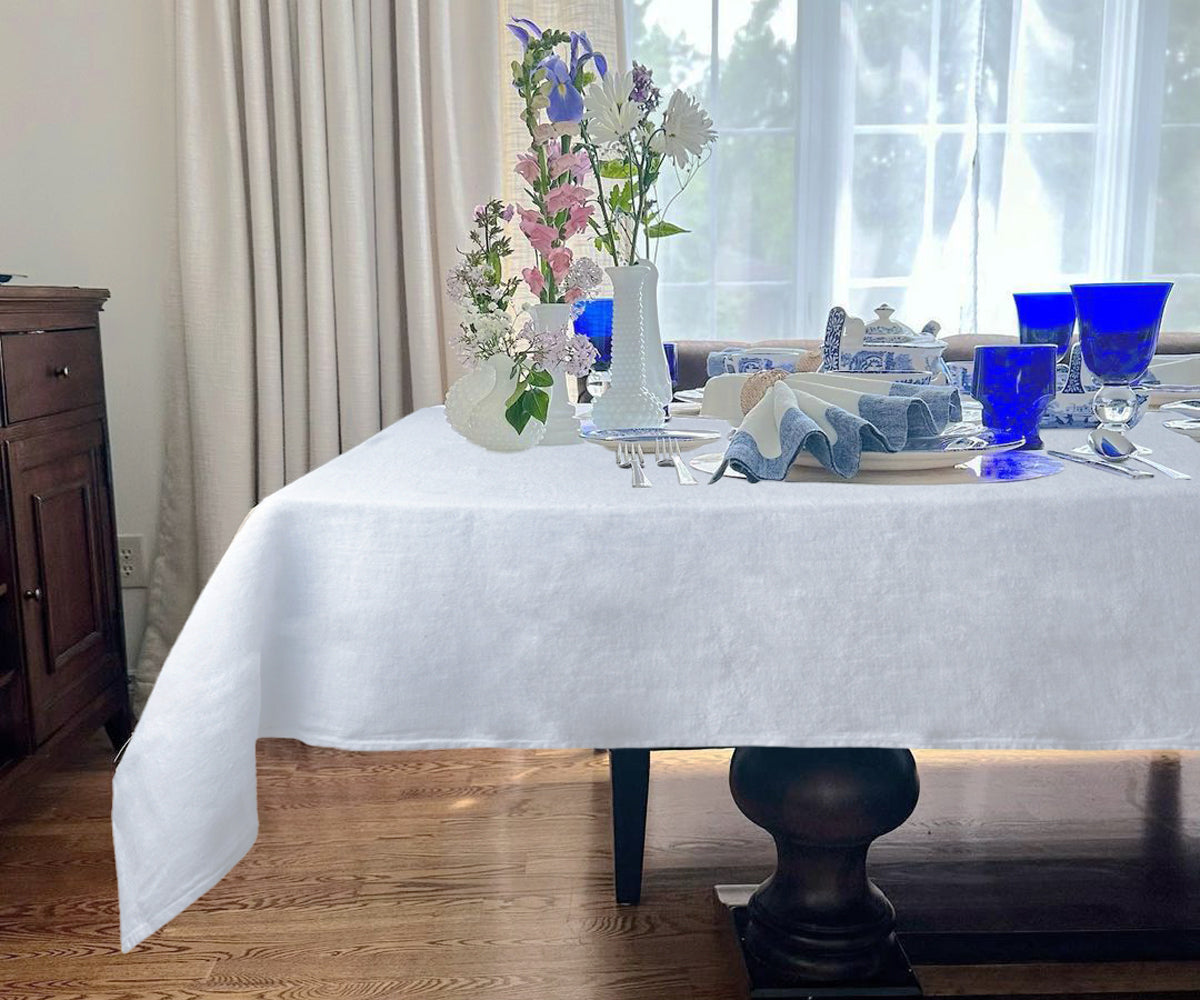
Solid-colour napkins in one tone from the check pattern, simple dinnerware, and natural centrepiece materials, fresh herbs, candles, and seasonal flowers allow the windowpane pattern to be the deliberate design choice it is meant to be.
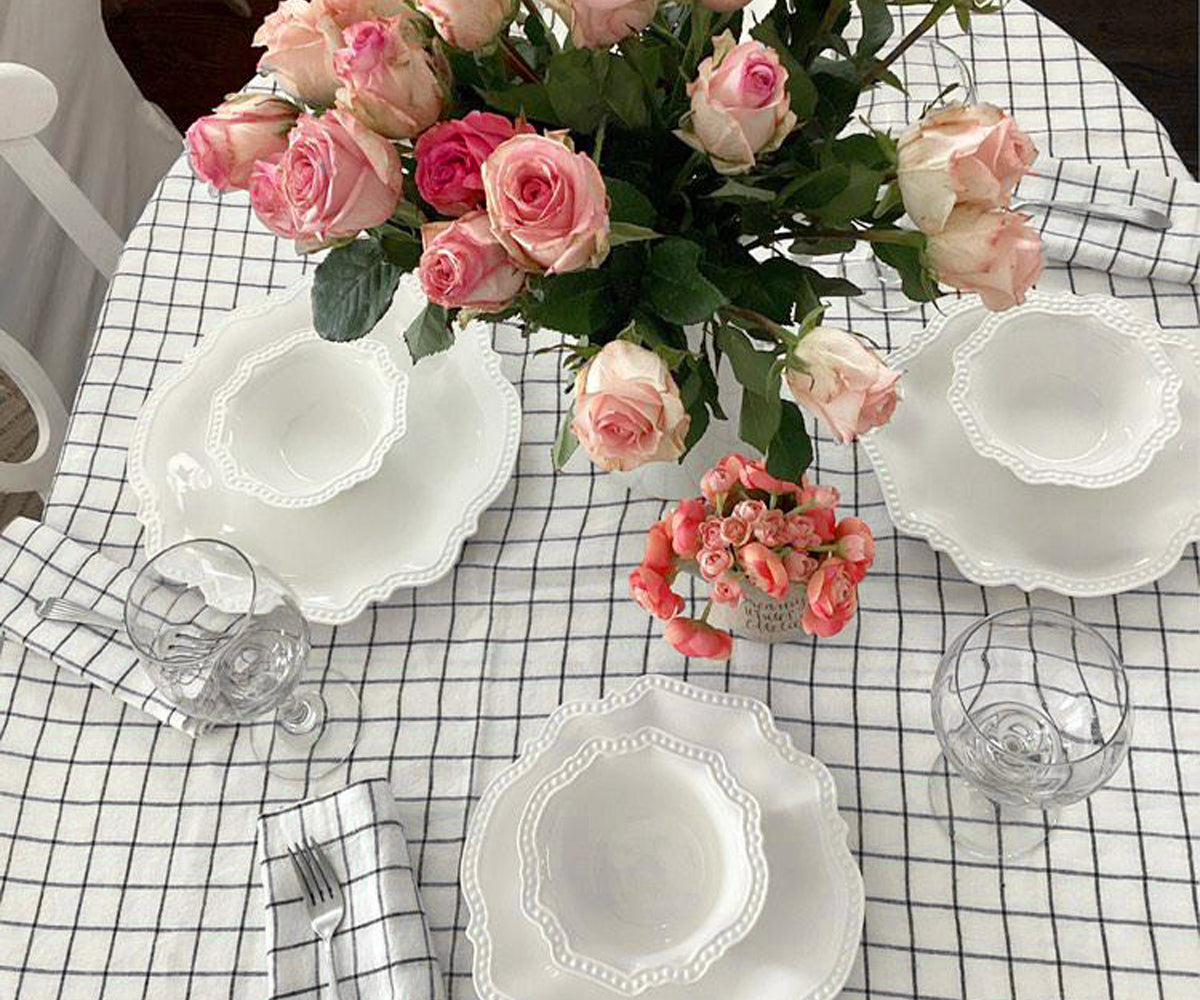
Tablecloth patterns fall into two categories: the ones that try to do everything, and the ones that do one thing perfectly. The windowpane check is in the second category.

Unlike florals, which need careful coordination with everything else on the table, or bold plaids, which dominate a setting and demand a specific aesthetic to work, the windowpane pattern provides structure and visual interest without asserting itself aggressively. The grid of thin intersecting lines on a contrasting background adds geometry and life to a table without requiring the entire dining room to revolve around it.
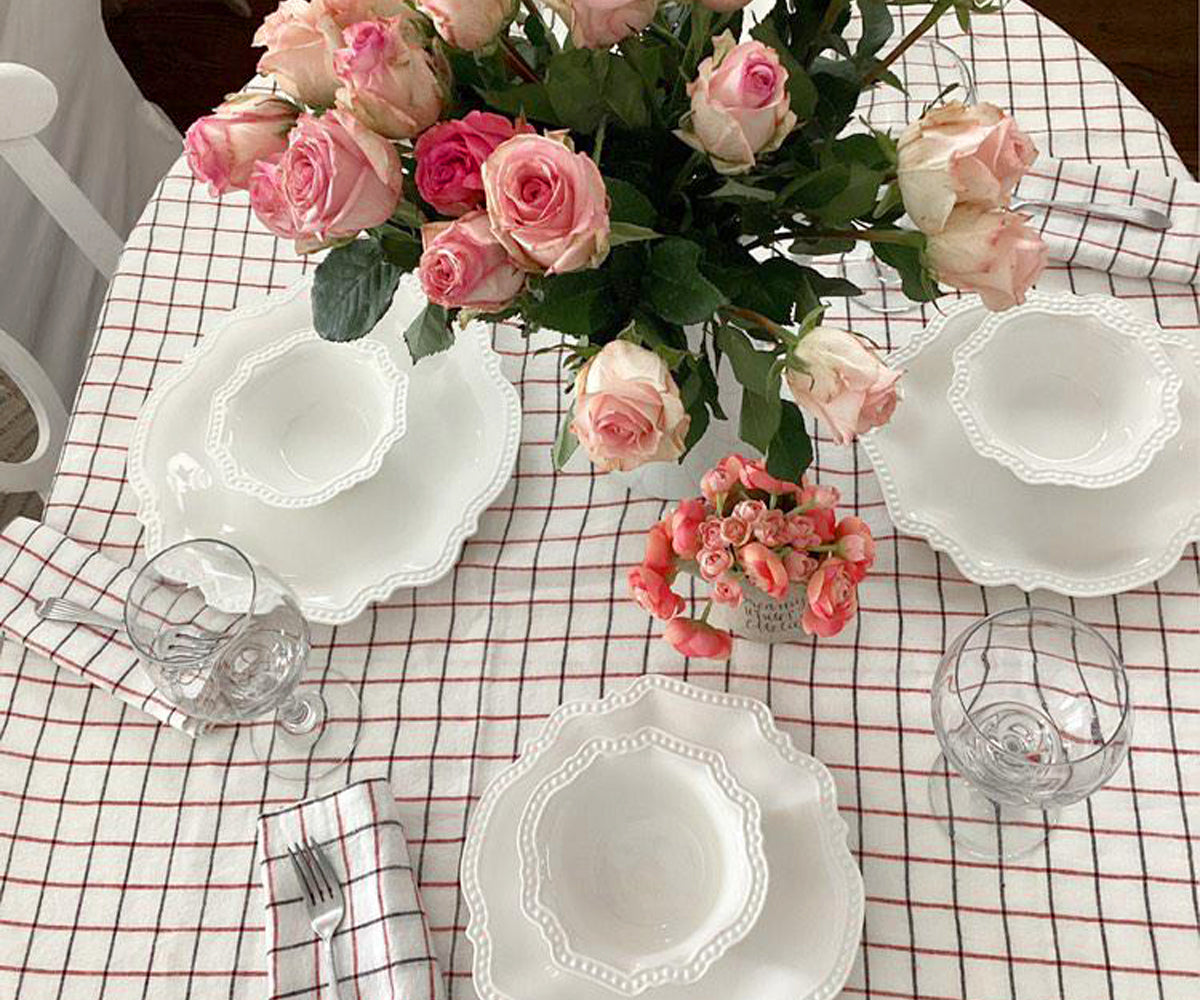
In 2026, check and windowpane patterns are among the strongest tablecloth design directions confirmed by both high-end interior publications and table linen market trends. They appear on tables from bistro casual to formal dinner, in fabric weights from lightweight summer linen to substantial cotton-linen blends, and in colour combinations from classic black-and-white to deep jewel-toned grids.

This guide covers what a windowpane tablecloth is, how to style it for every occasion, which colours work best, how to layer it with other table elements, and where it works beyond the dining table.

What is a windowpane tablecloth?

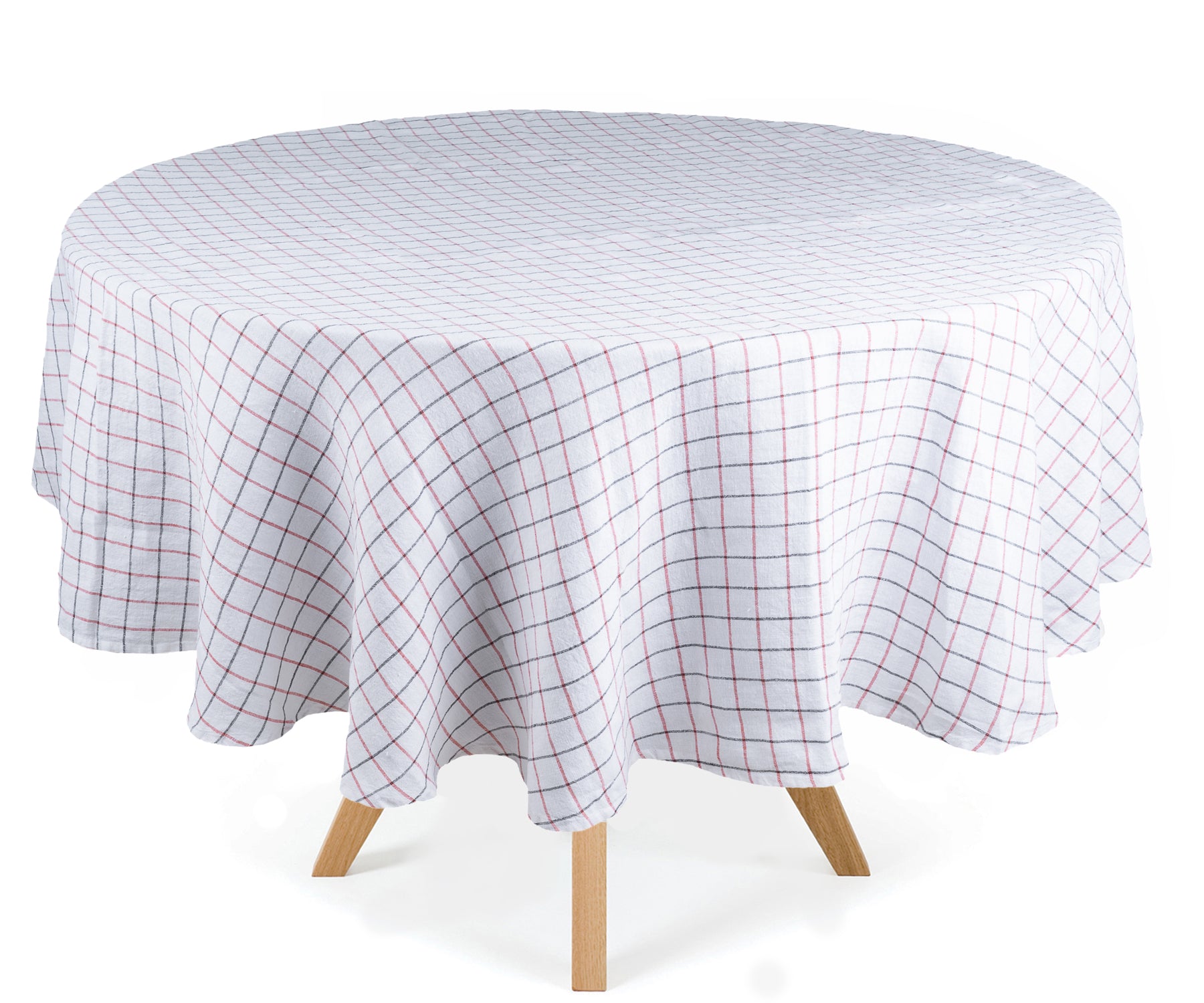
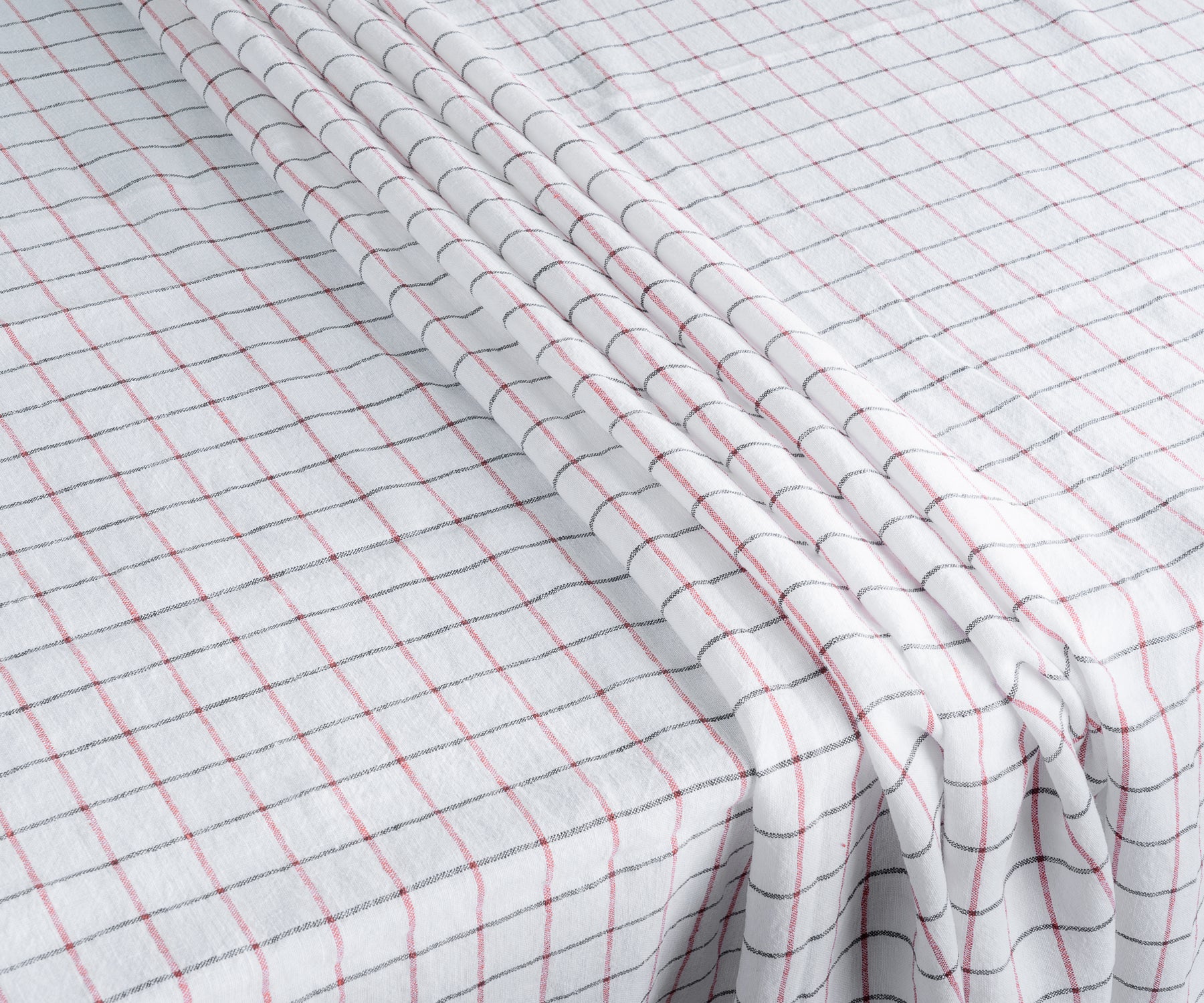
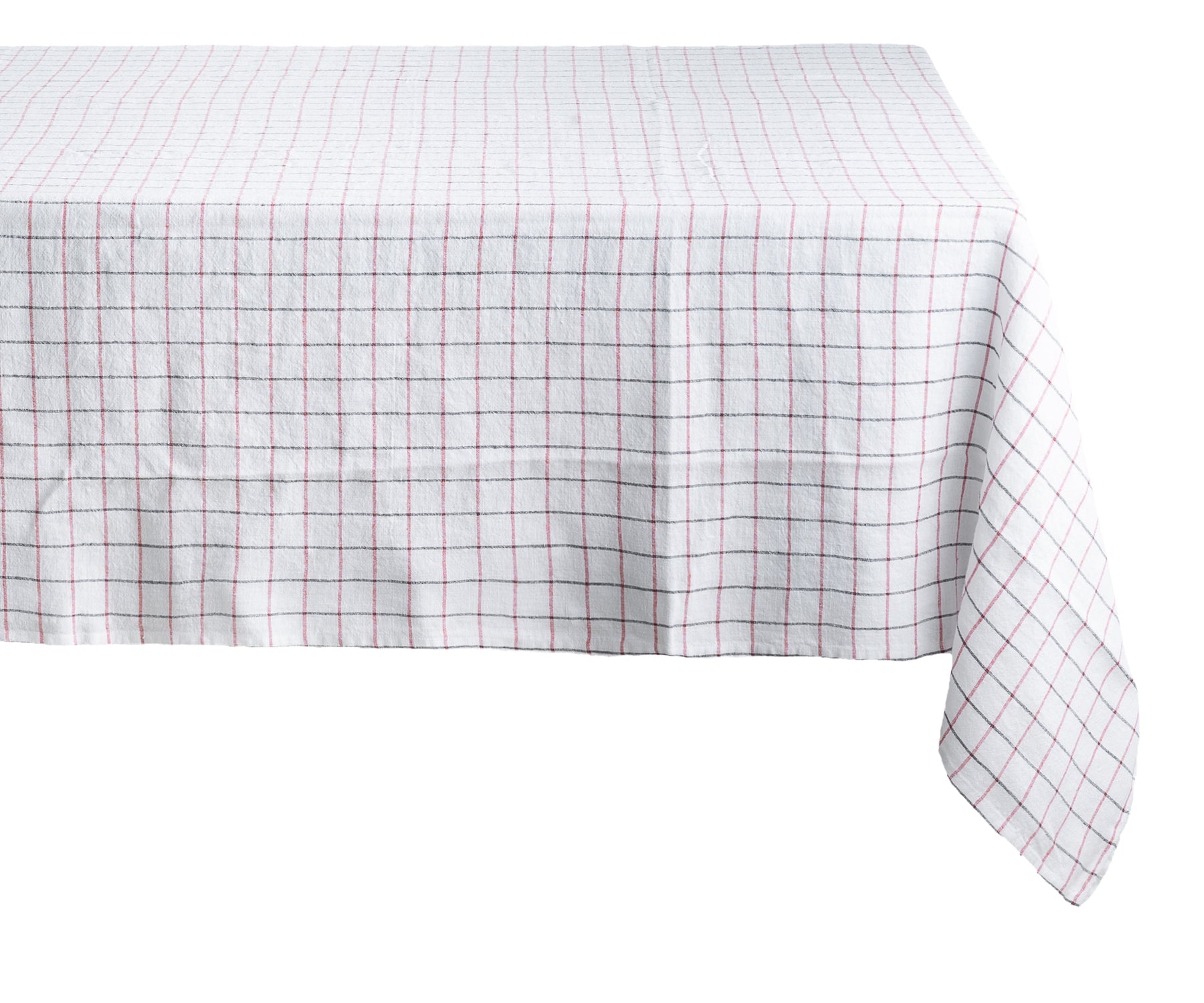
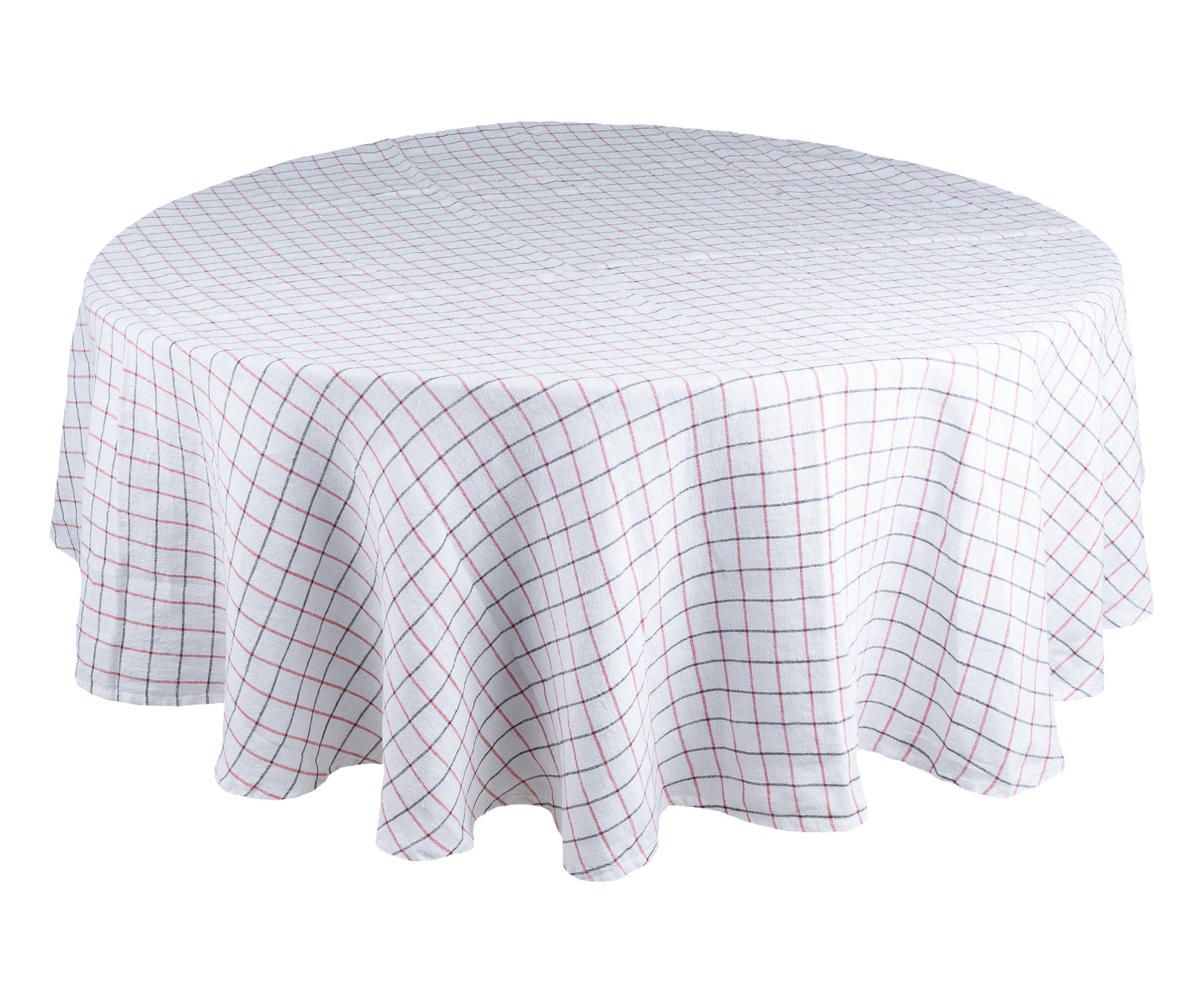
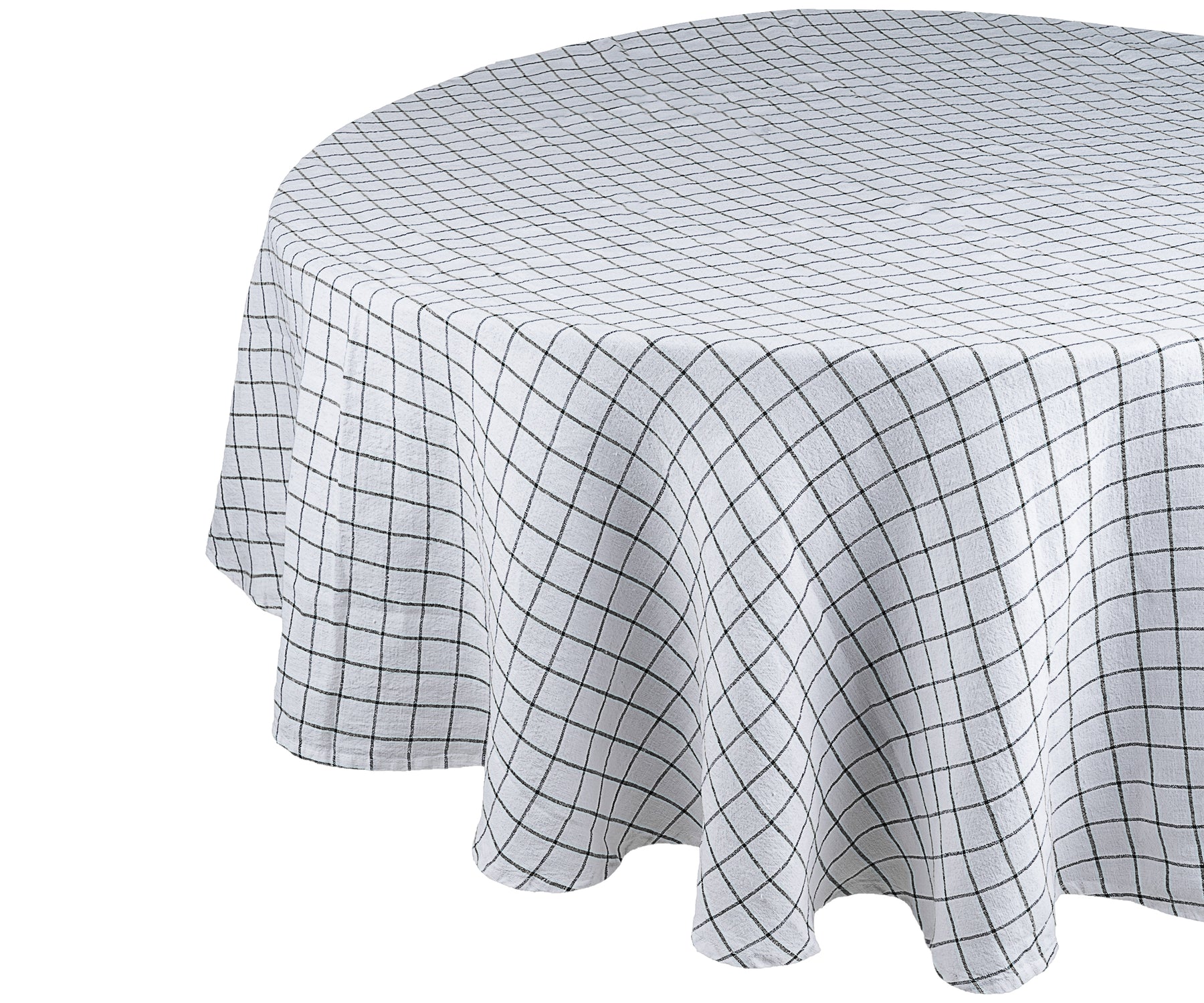
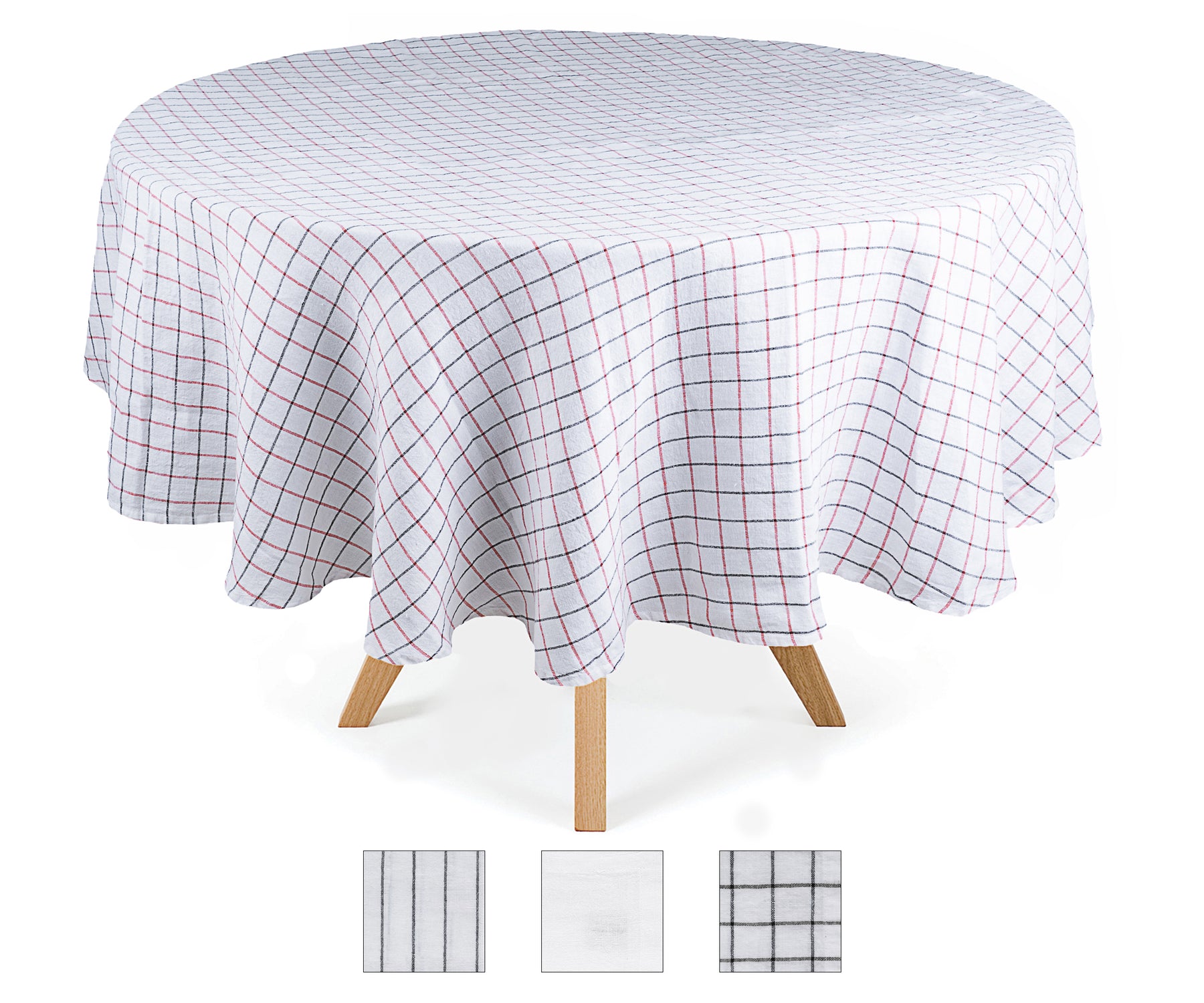
A windowpane check is a specific pattern defined by thin bands of colour forming a grid over a contrasting solid background. The result resembles the pane divisions of a traditional window. It is also known by the names French windowpane and Brunswick check.

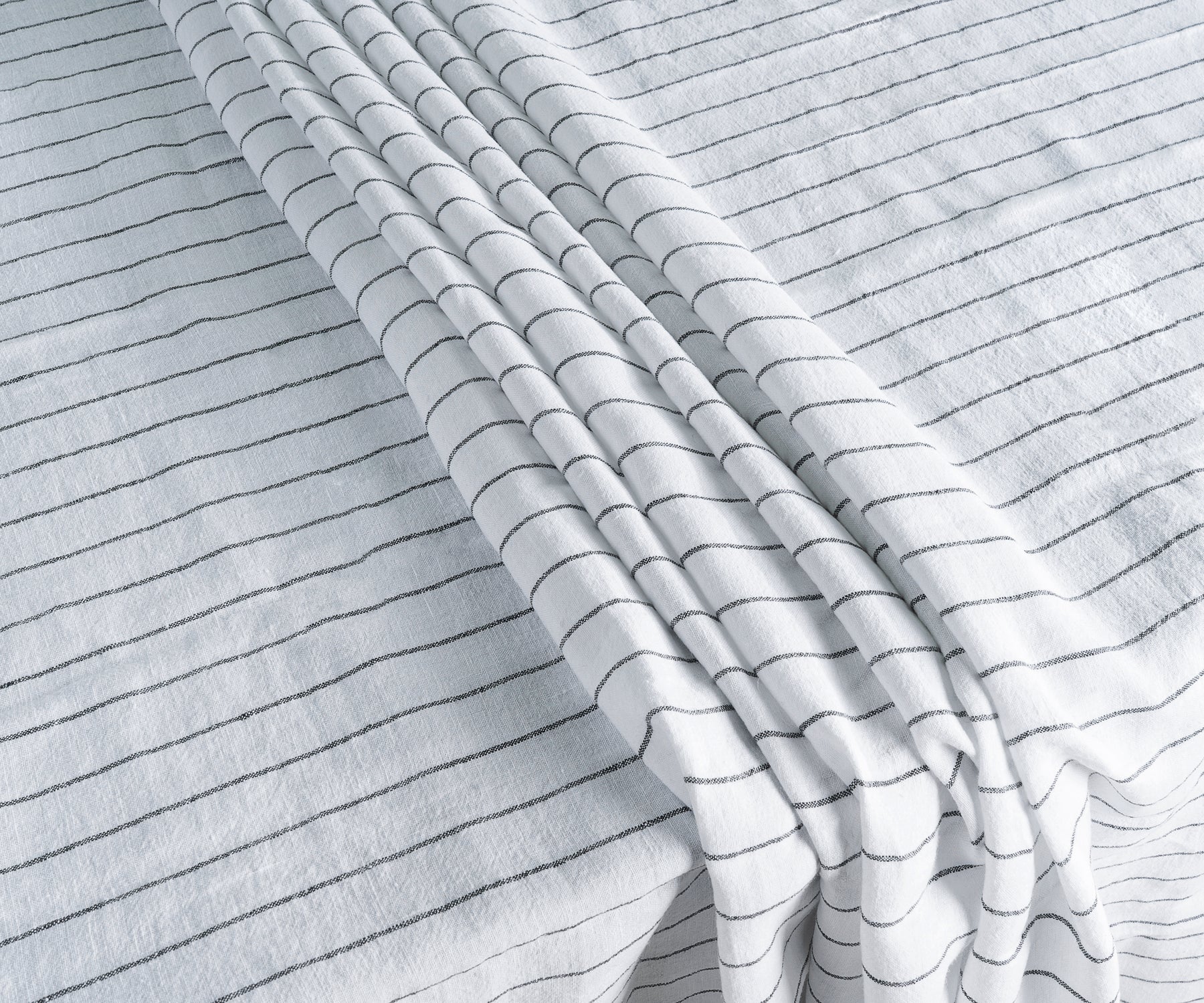
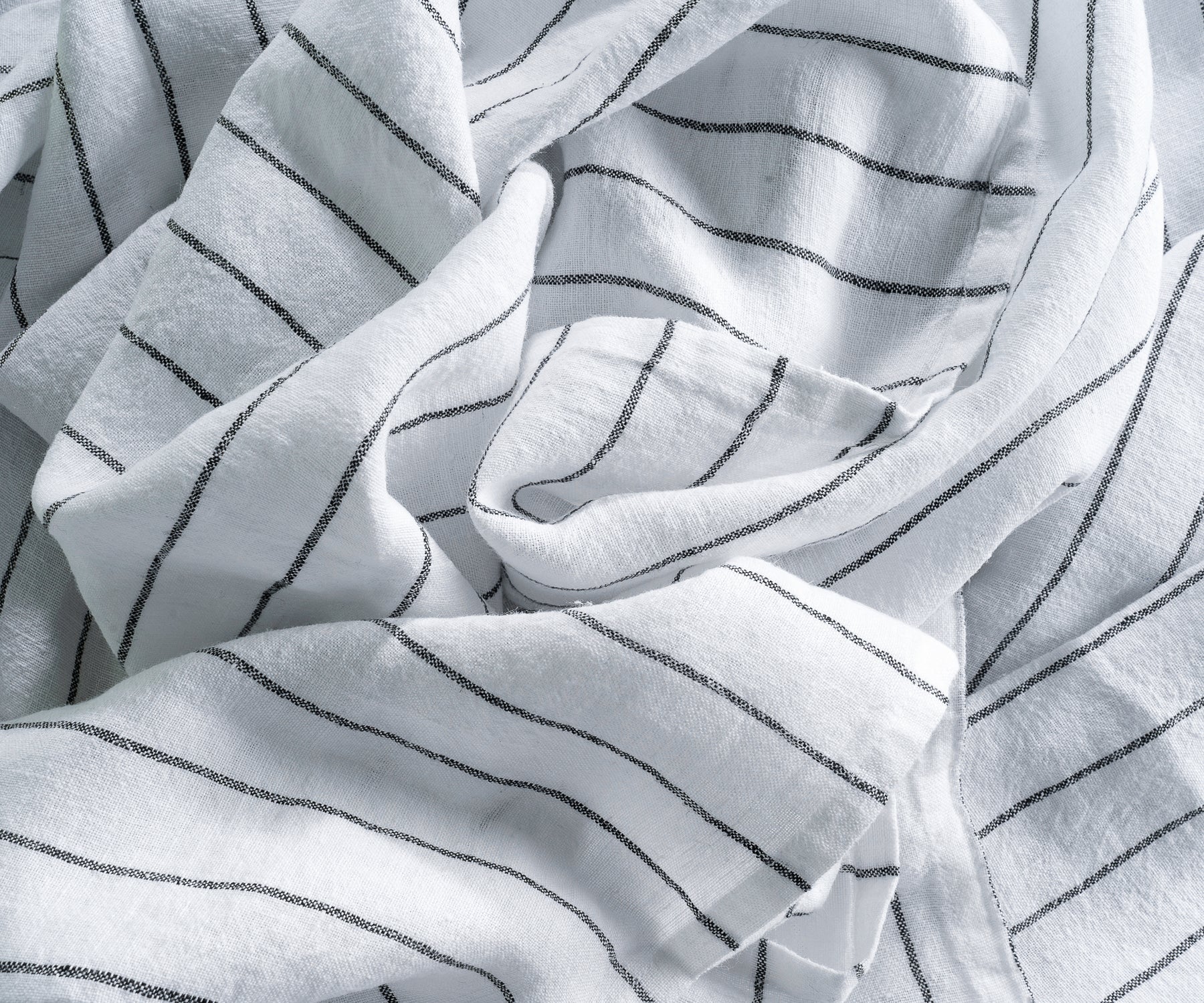
windowpane tablecloth

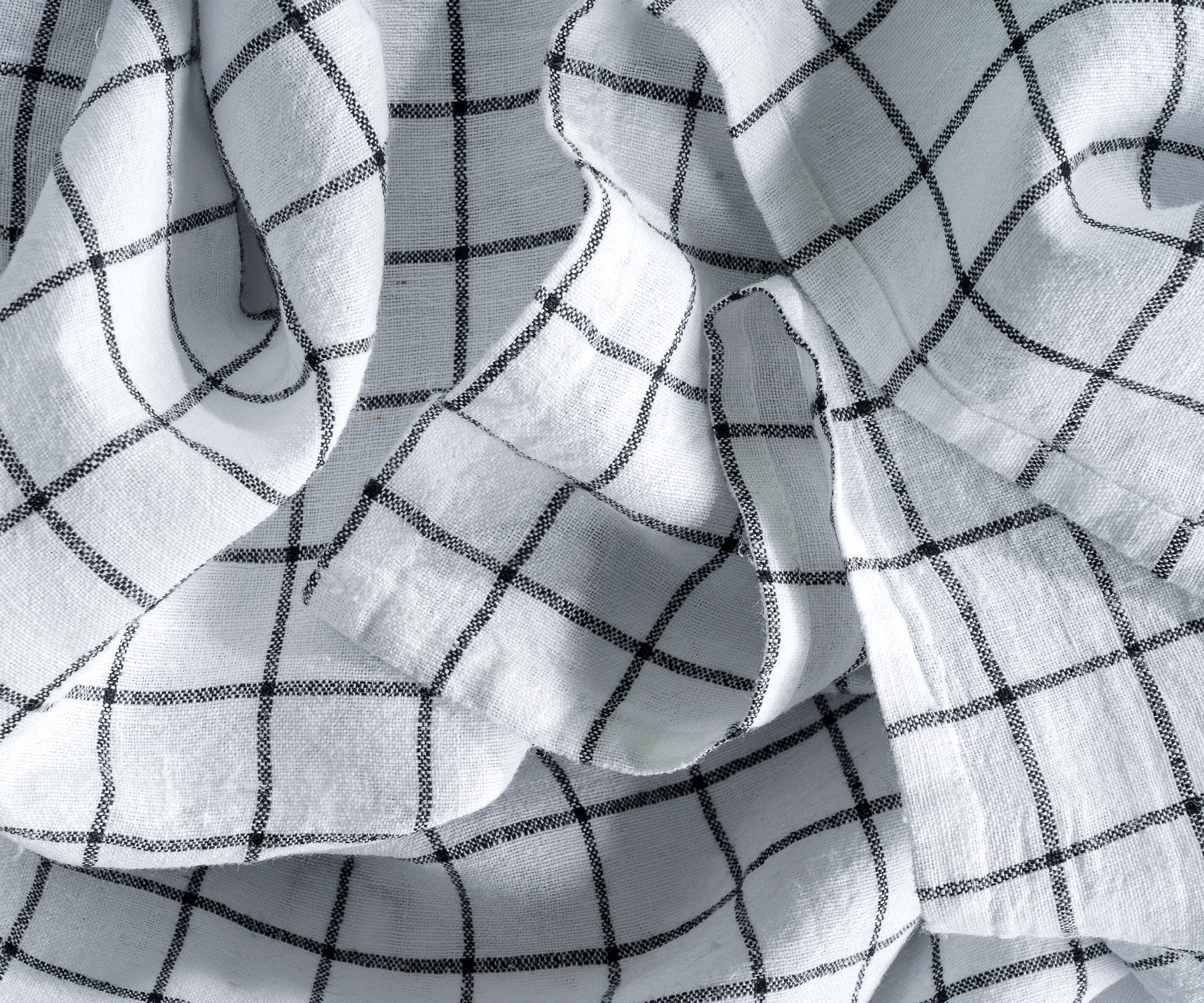
The defining characteristic of a windowpane pattern is restraint. The grid lines are narrow, often just a few threads wide in woven linen, which means the dominant visual impression remains the background colour. The pattern creates structure without noise: it is visible and deliberate but never loud.

Pattern type

Grid line width

Visual weight

Dominant impression

Windowpane check

Very narrow (1 to 3mm)

Light

Clean, structured, understated

Gingham

Medium (equal grid and background)

Medium

Classic, casual, balanced

Buffalo check

Wide (large squares)

Heavy

Bold, rustic, statement

Plaid/tartan

Multiple widths, multi-colour

Very heavy

Traditional, complex, seasonal

The windowpane pattern sits at the lightest end of the check spectrum. This is what makes it the most versatile; it functions almost like a textured solid, providing visual interest without the styling constraints of a more assertive pattern.

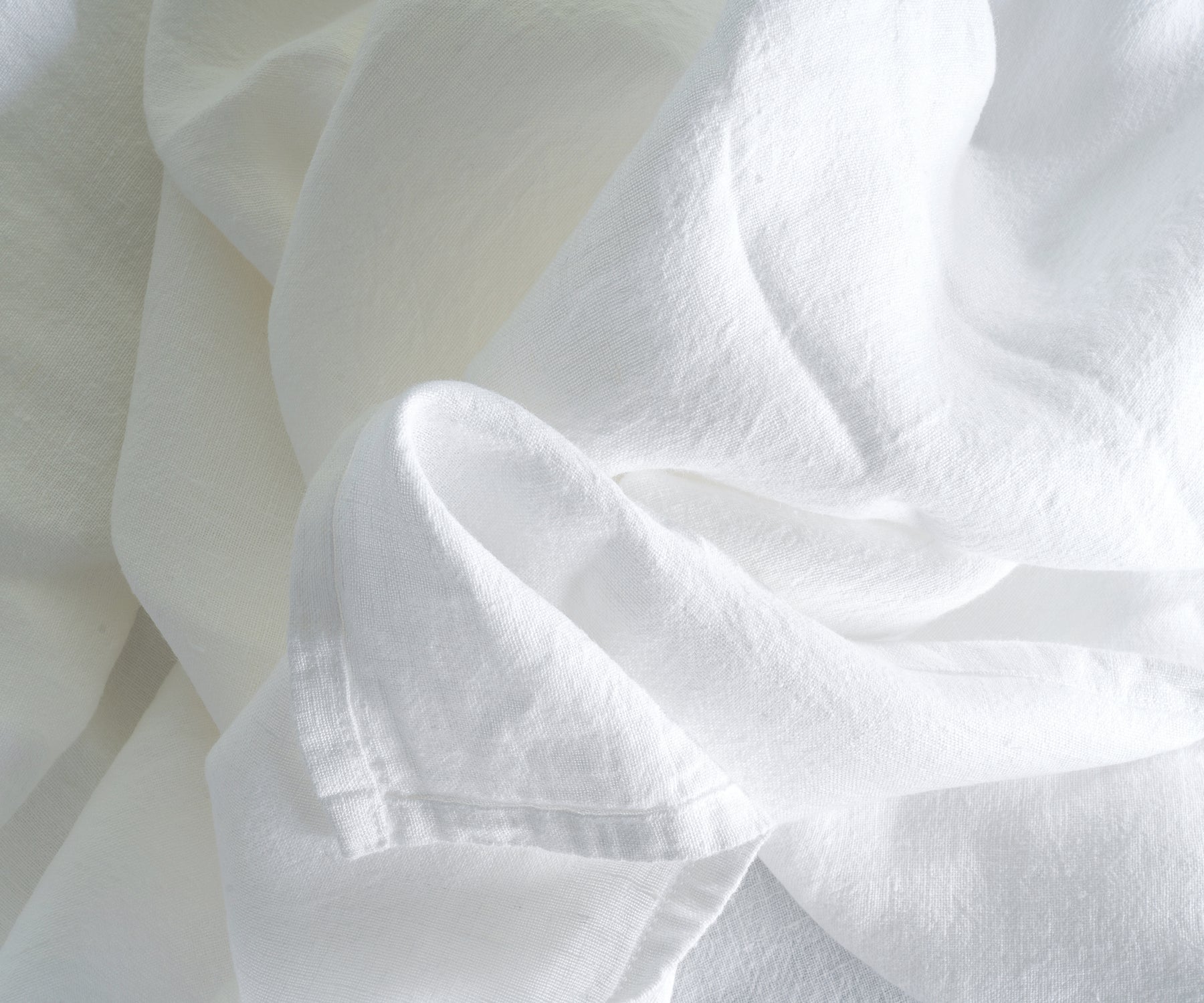
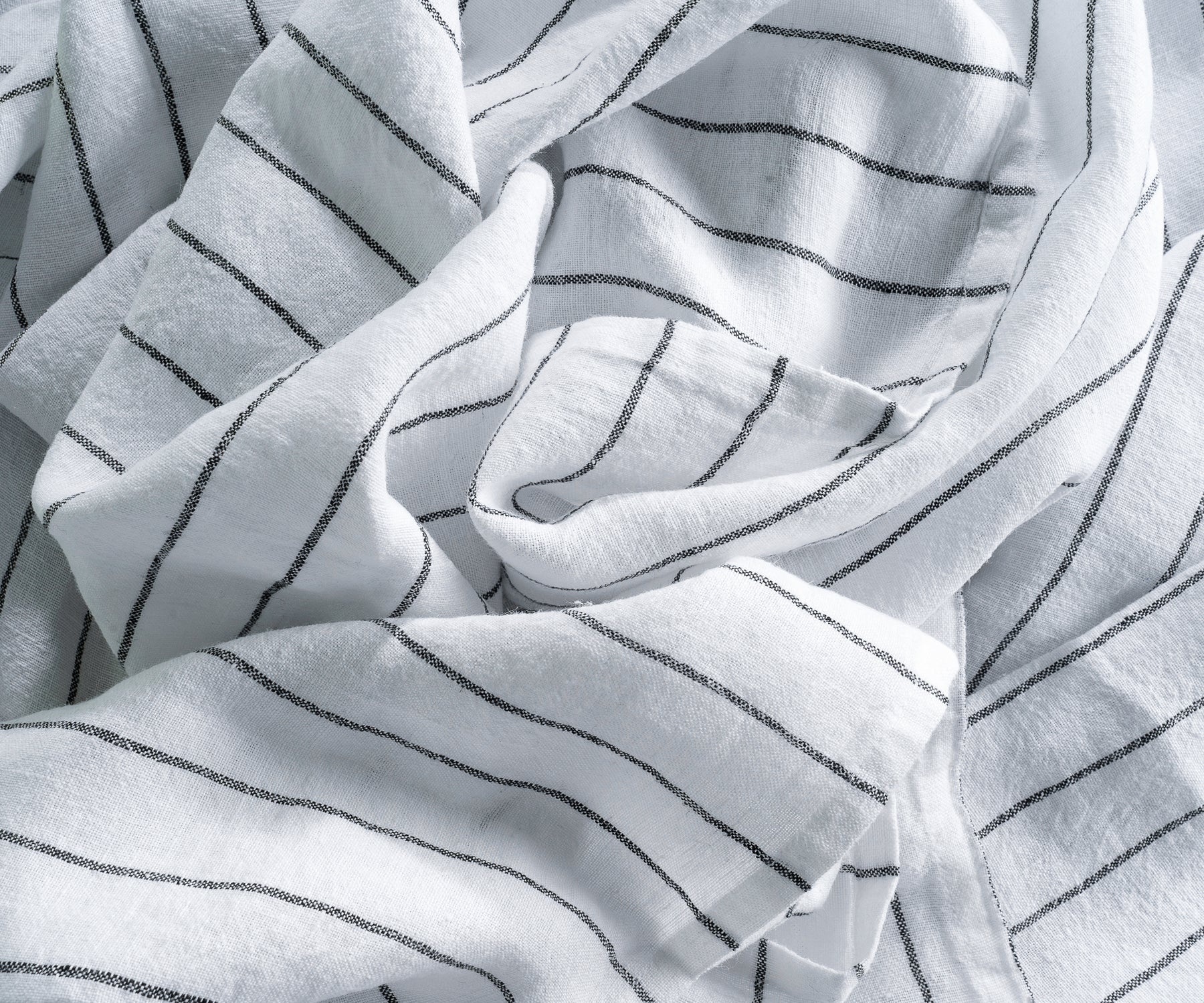
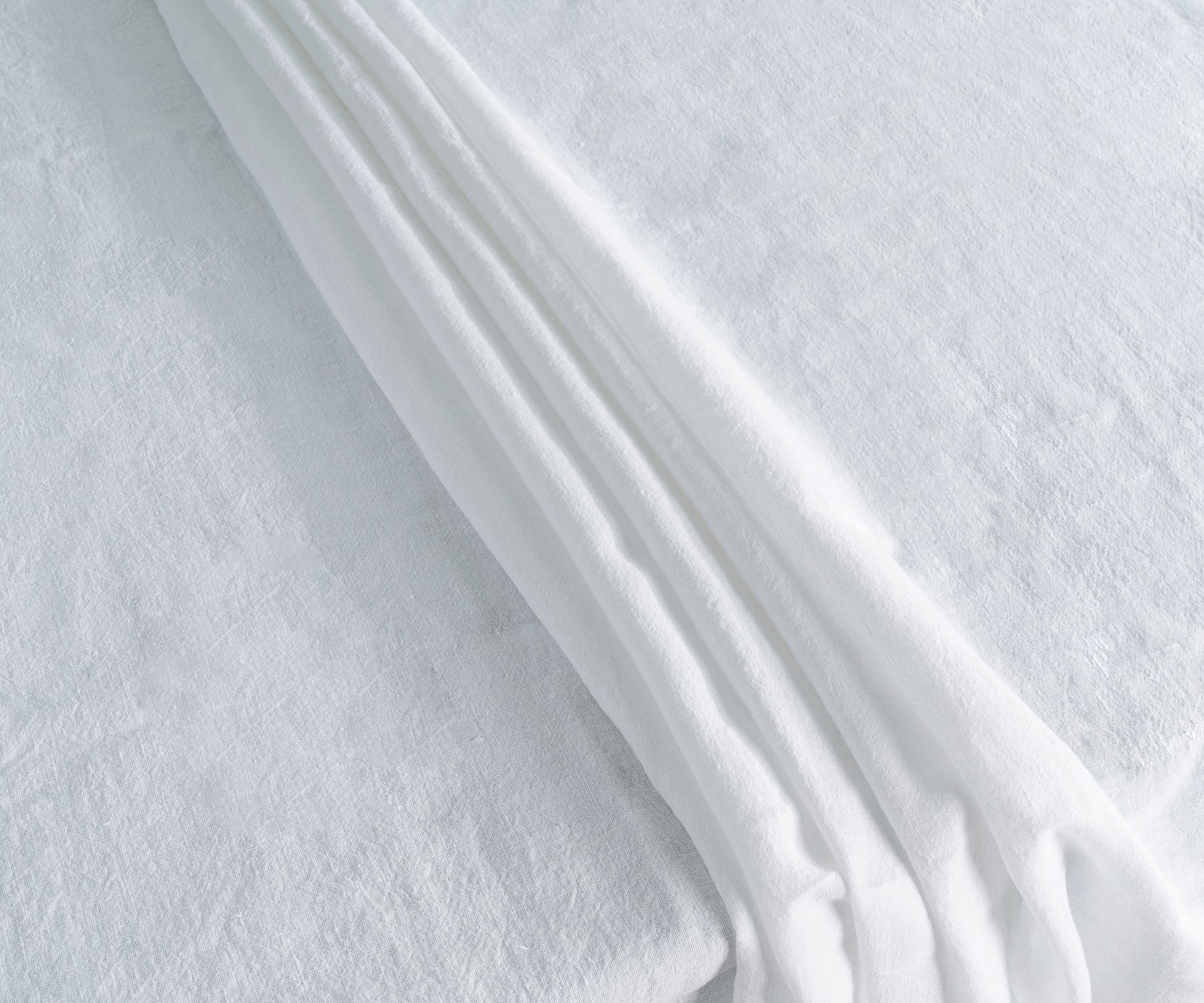
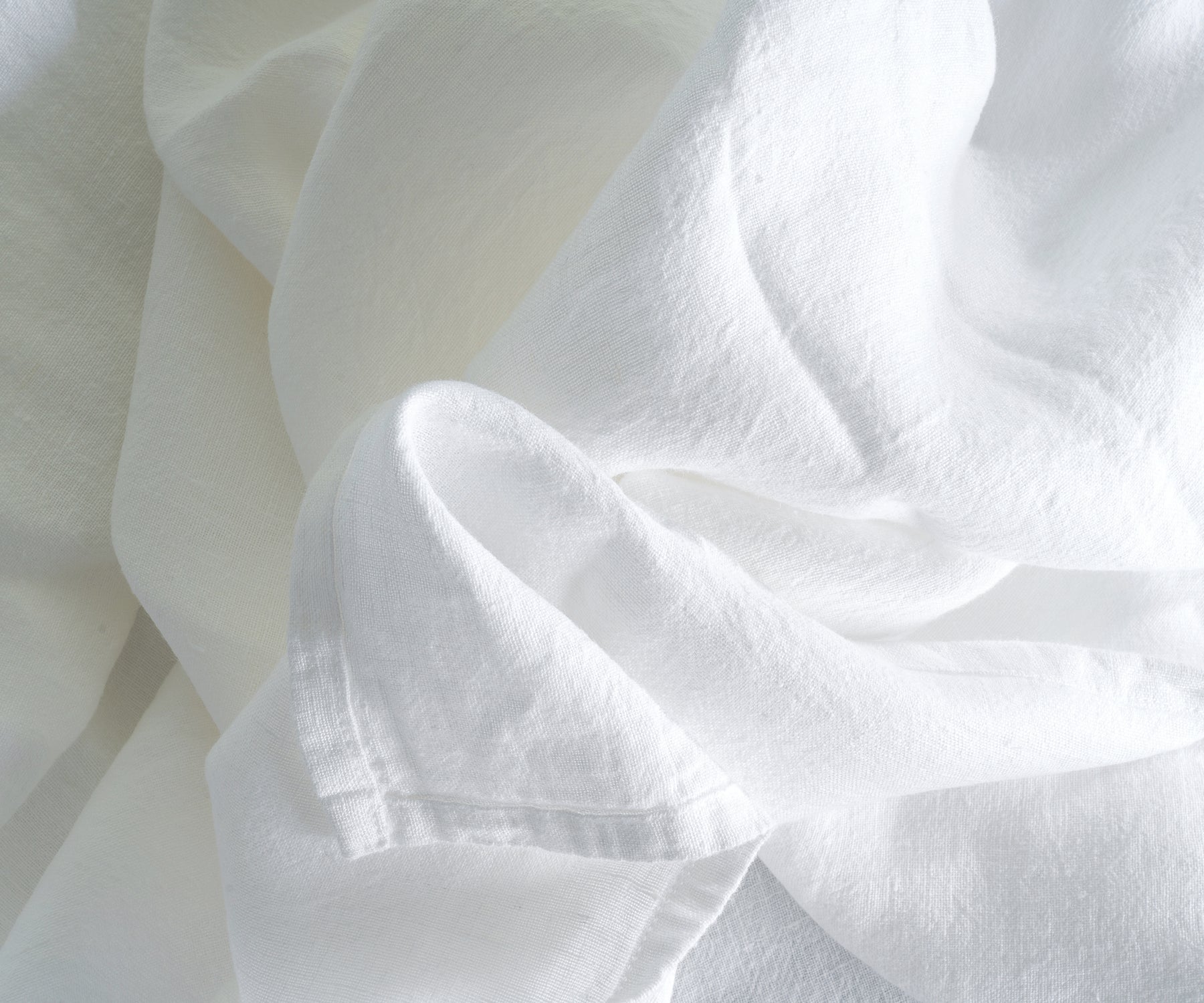
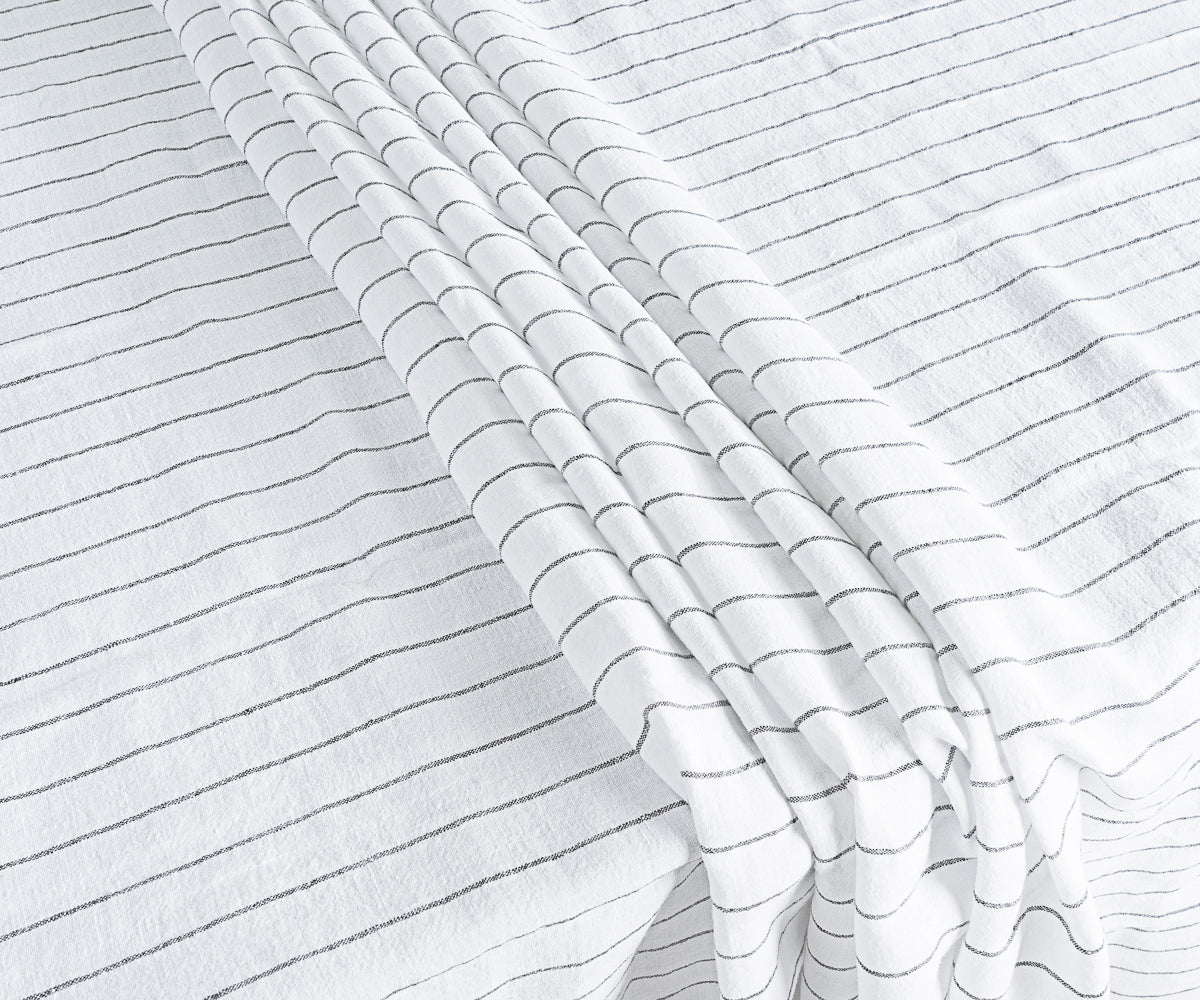
In linen fabric, the windowpane pattern has a particular quality: the natural slubs and variations in the flax weave add a layer of organic texture to the geometric grid that makes the combination feel warm and handcrafted rather than rigidly structured. This is why windowpane linen tablecloths have become one of the most sought-after table linen choices in 2025 and 2026. The combination of natural fibre texture and geometric pattern sits exactly at the intersection of considered design and organic warmth.

Find Out: Which Tablecloth Material Is Best? A Complete Fabric Guide

Colour guide: choosing the right windowpane tablecloth

The colour combination of a windowpane tablecloth, the background tone, and the grid line colour determine its styling range and occasion appropriateness. Here is a complete guide to the most widely available and most versatile combinations.

Colour combination

Styling character

Best occasion

Best season

White background, black grid

Classic, crisp, high contrast

All occasions — the most versatile

Year-round

Natural linen background, black or navy grid

Organic, warm, contemporary

Casual to semi-formal

Year-round

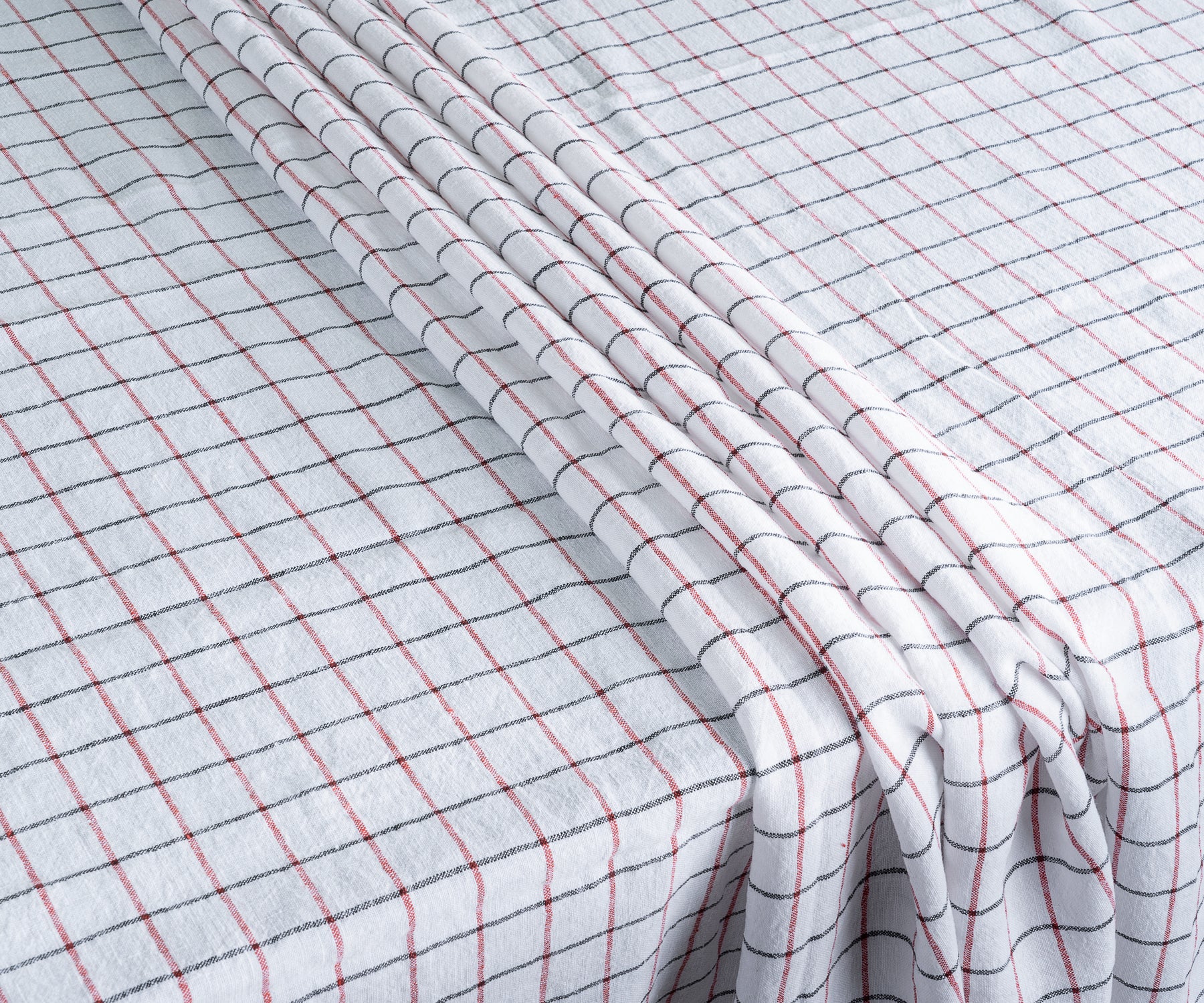
White background, red grid

Farmhouse, traditional, festive

Casual, holiday, outdoor

Autumn, Christmas

Ivory background, brown or tan grid

Warm, rustic, understated

Casual, rustic, outdoor

Autumn, year-round

White or cream background, navy grid

Smart casual, nautical, refined

Casual to semi-formal, outdoor

Summer, year-round

Linen background, sage green grid

Contemporary, botanical, calm

Every day, elegant, garden dining

Spring, summer

White background, charcoal grid

Modern, minimal, architectural

Contemporary spaces, everyday

Year-round

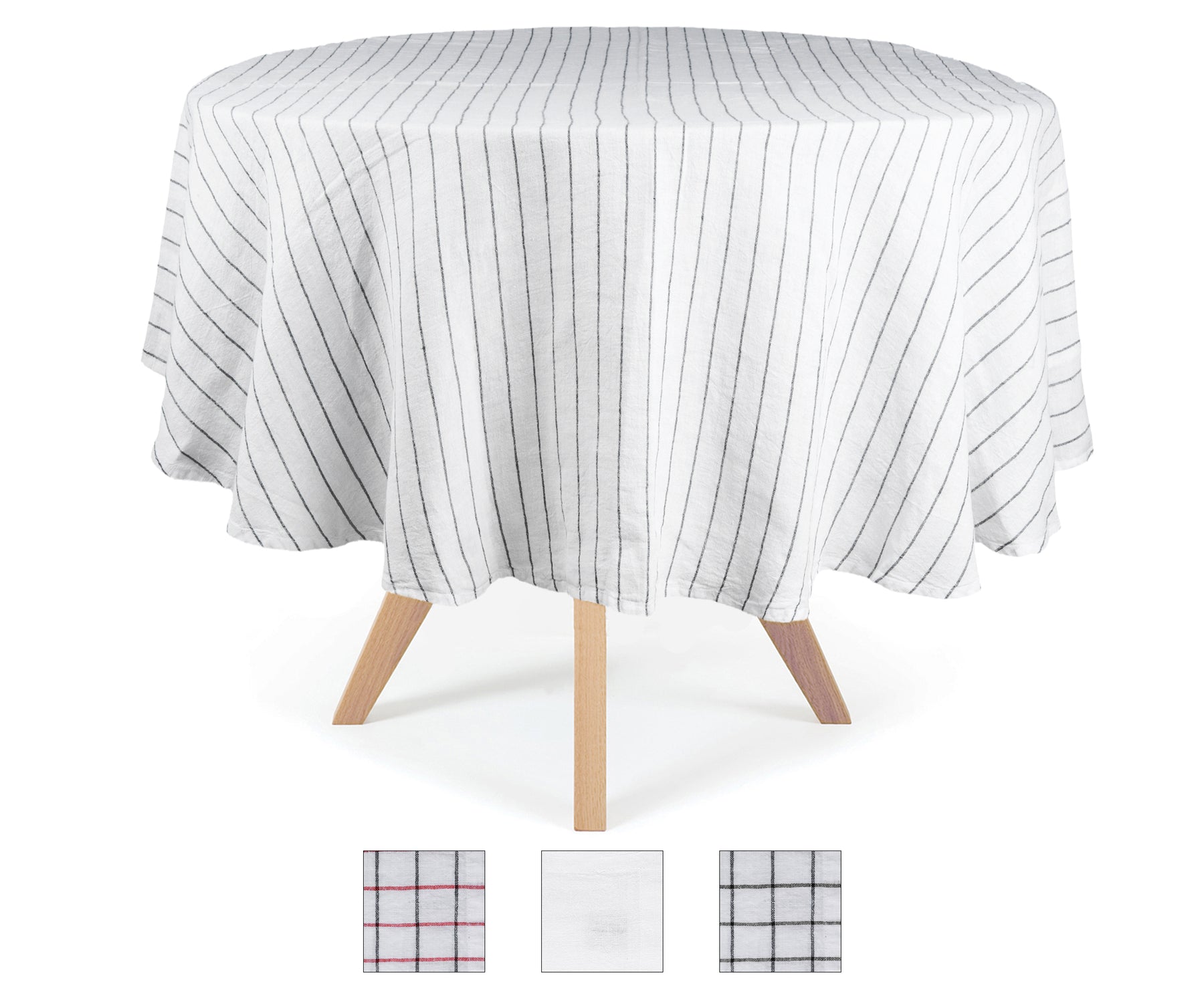
The most universally useful windowpane tablecloth is a white or natural linen background with a black grid. This combination is genuinely versatile; it works for a casual weekday breakfast, a Sunday lunch with guests, and a semi-formal dinner without requiring a different styling approach for each occasion. The contrast between black and white or natural linen is strong enough to be visible and interesting without introducing a colour that limits coordination options.

For households that want to add colour through the tablecloth itself, a navy or sage green grid on a linen or white background introduces colour at the lightest possible intensity as a thin line rather than a dominant surface, which is the most coordinated way to use colour in a patterned tablecloth.

How to style a windowpane tablecloth: the core principles

Because a windowpane pattern already provides visual structure, the most effective styling approach is disciplined simplicity in everything else. These three principles apply across every occasion and every colour combination.

style a windowpane tablecloth

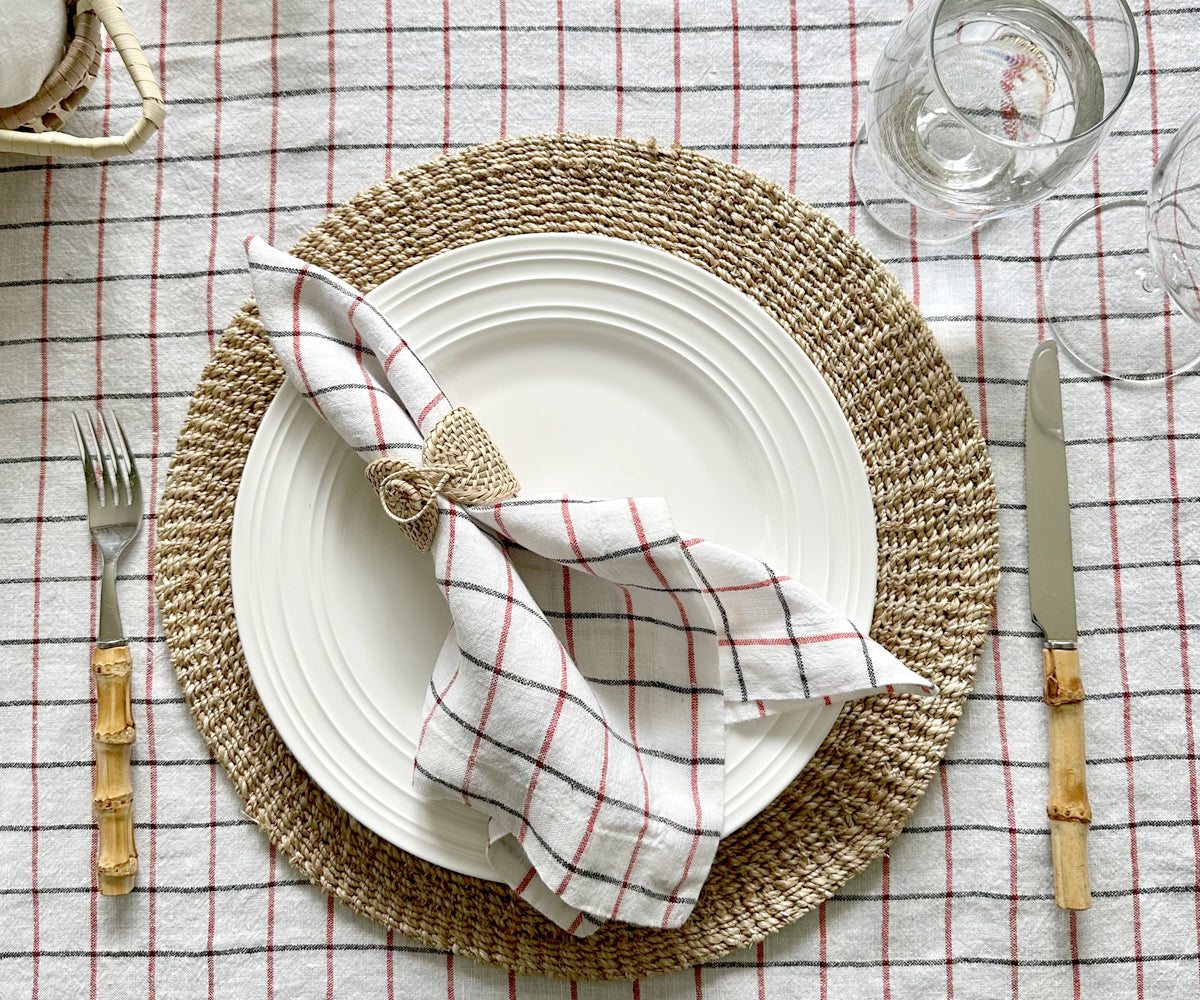
Choose solid-coloured napkins in one colour from the grid

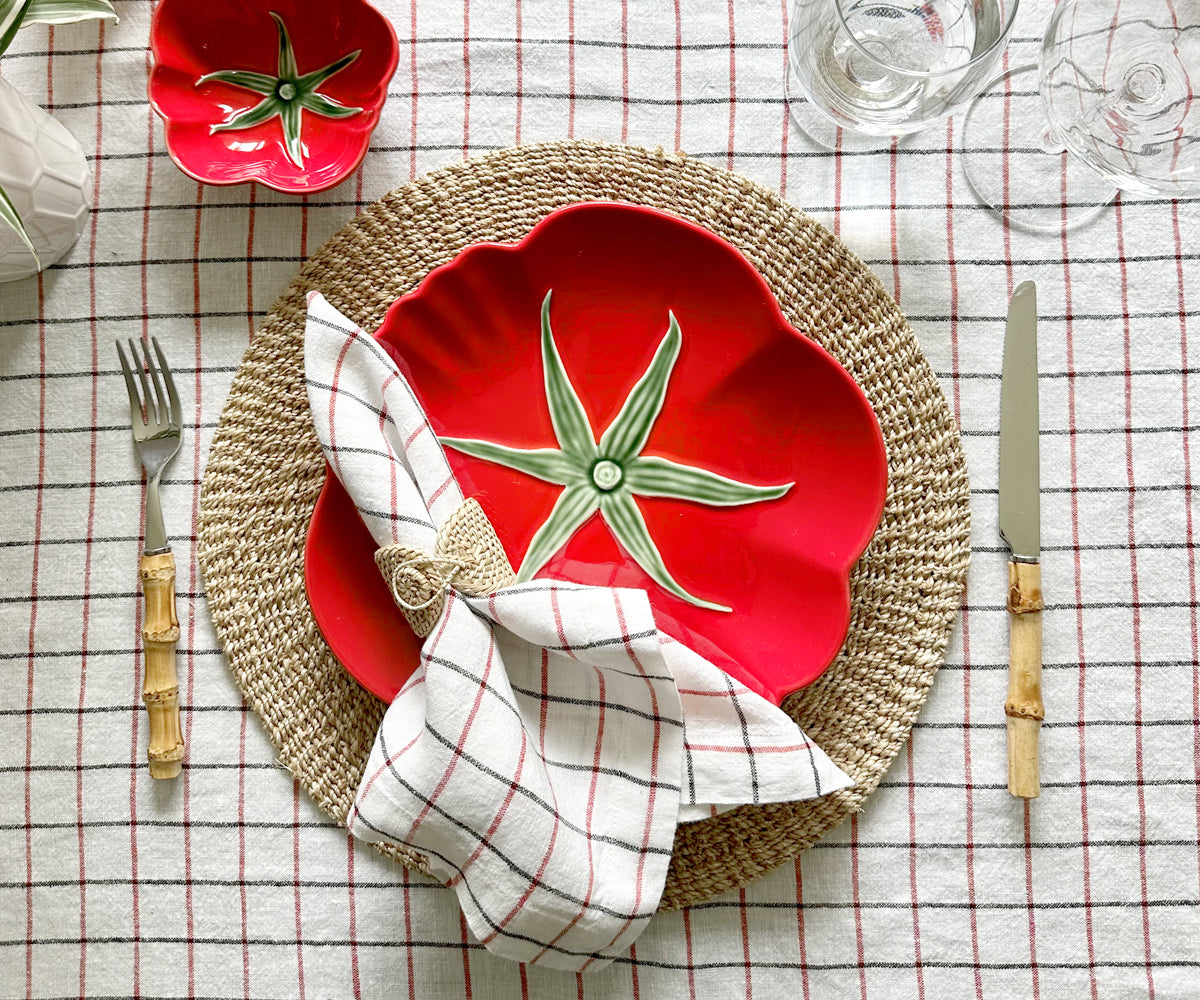
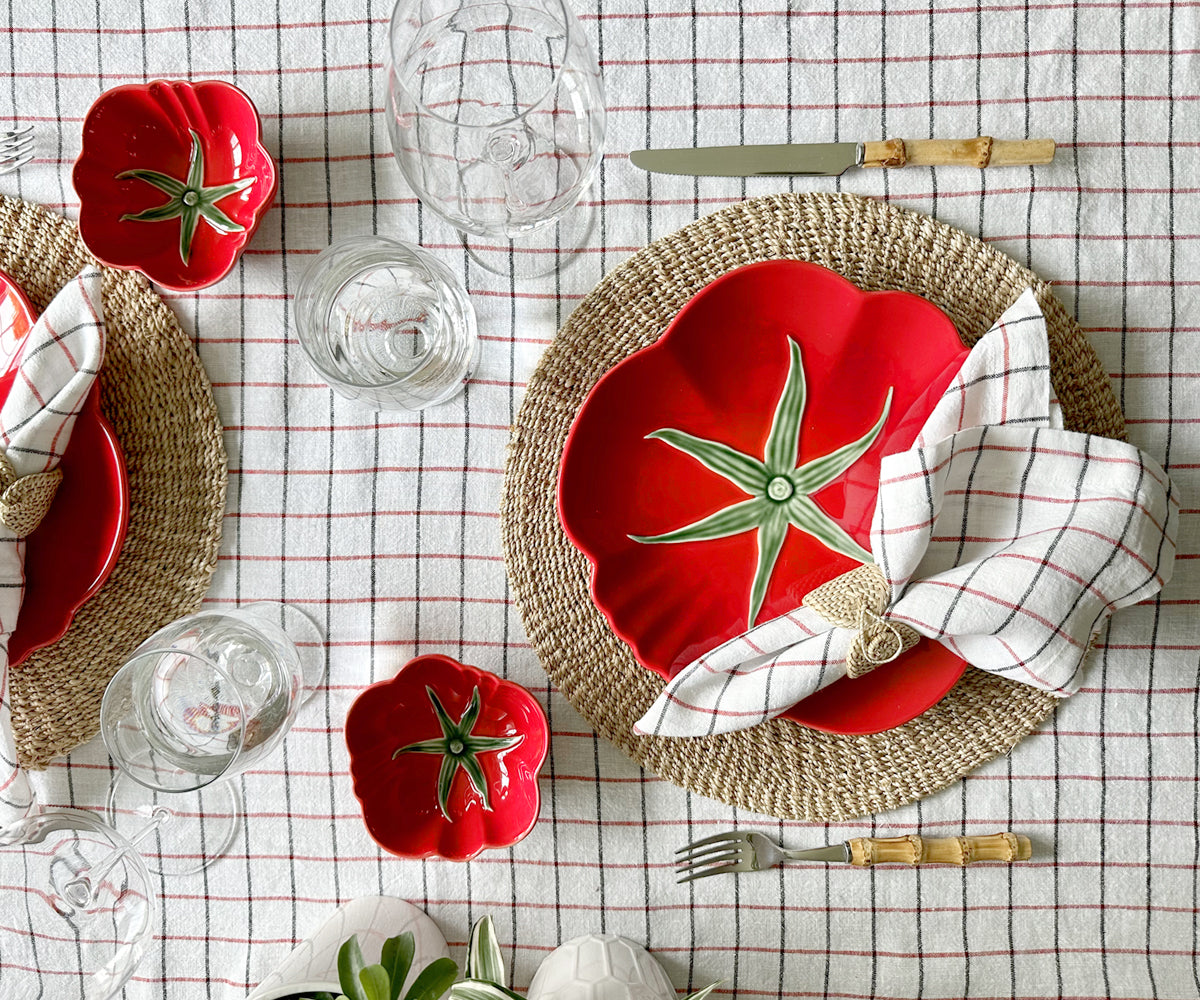
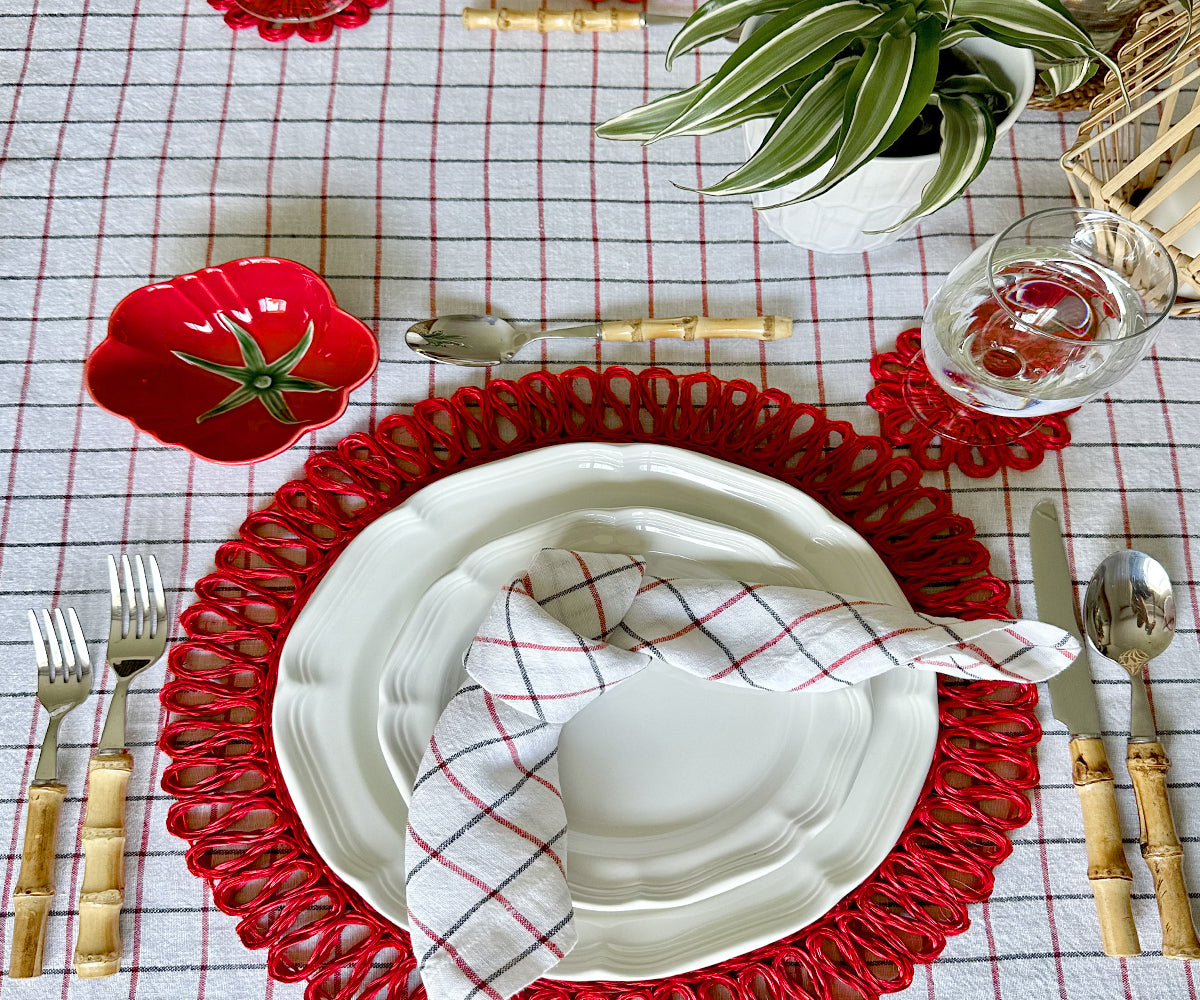
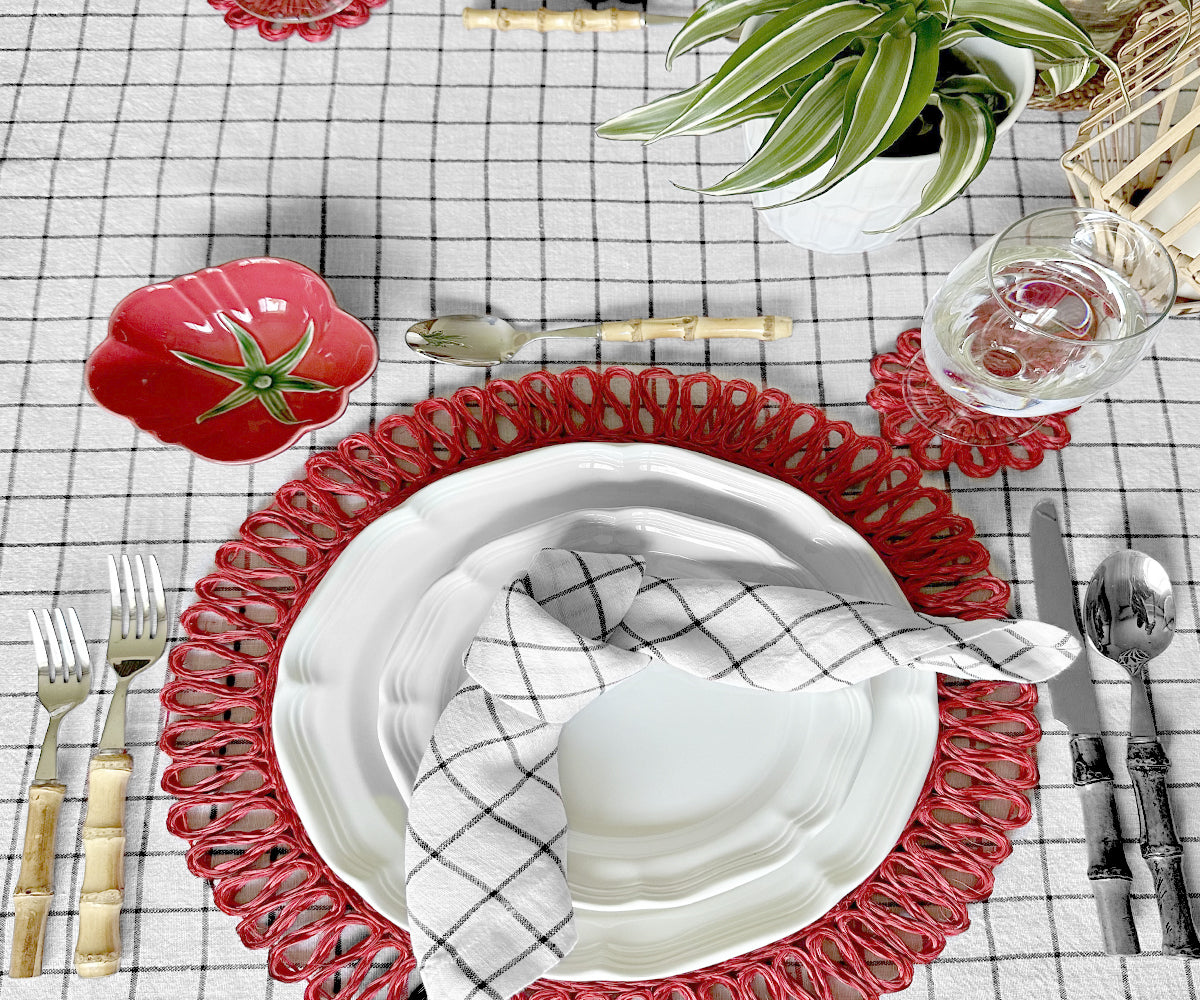
The check pattern itself contains two colours: the background and the grid line. Pull either of these into the napkin as a solid colour. A black grid windowpane tablecloth with white napkins uses the background colour. The same tablecloth with black napkins uses the grid line colour. Either approach is correct. Patterned napkins alongside a windowpane tablecloth create visual competition; the patterns argue rather than cooperate.

Keep dinnerware simple and solid

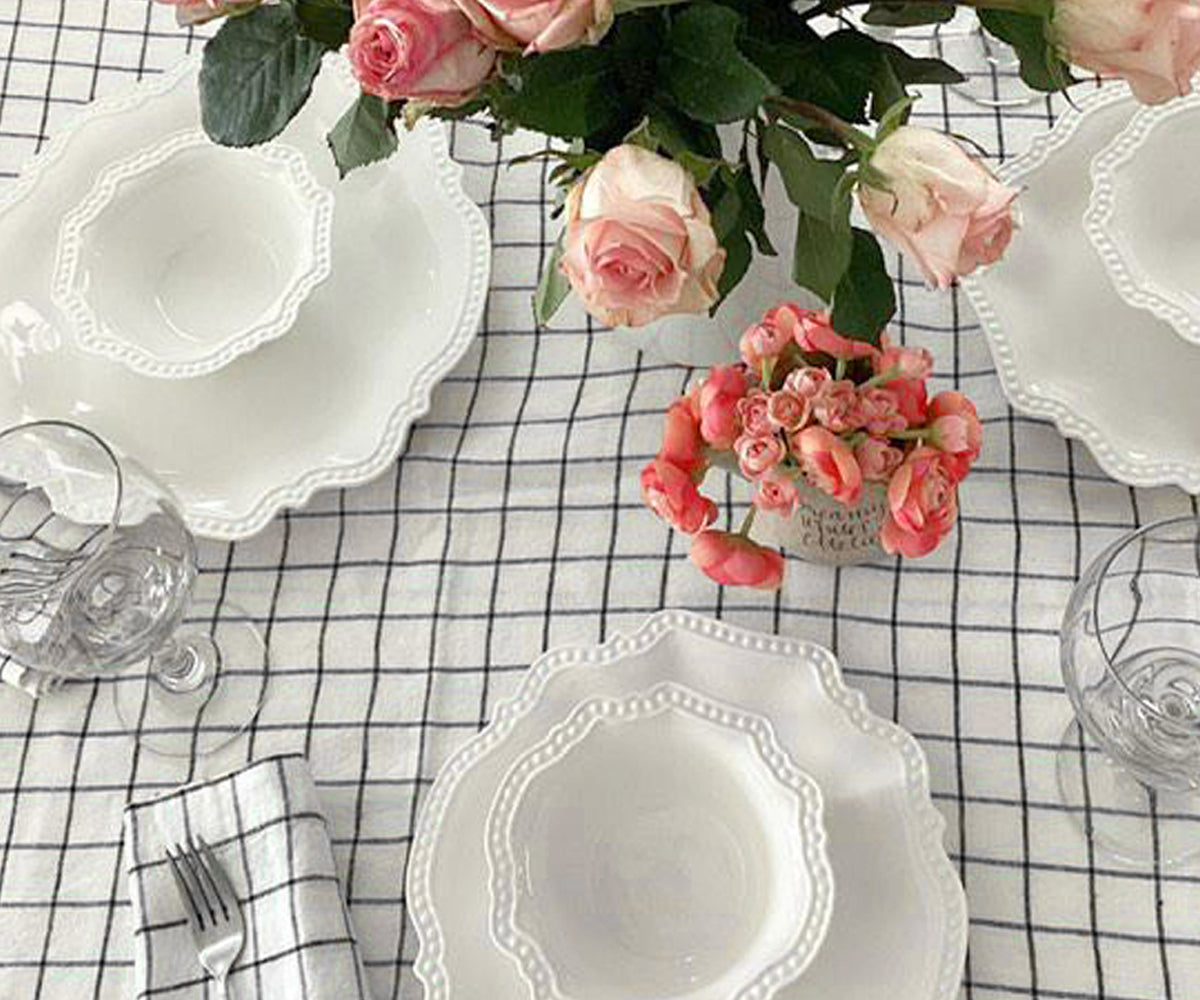
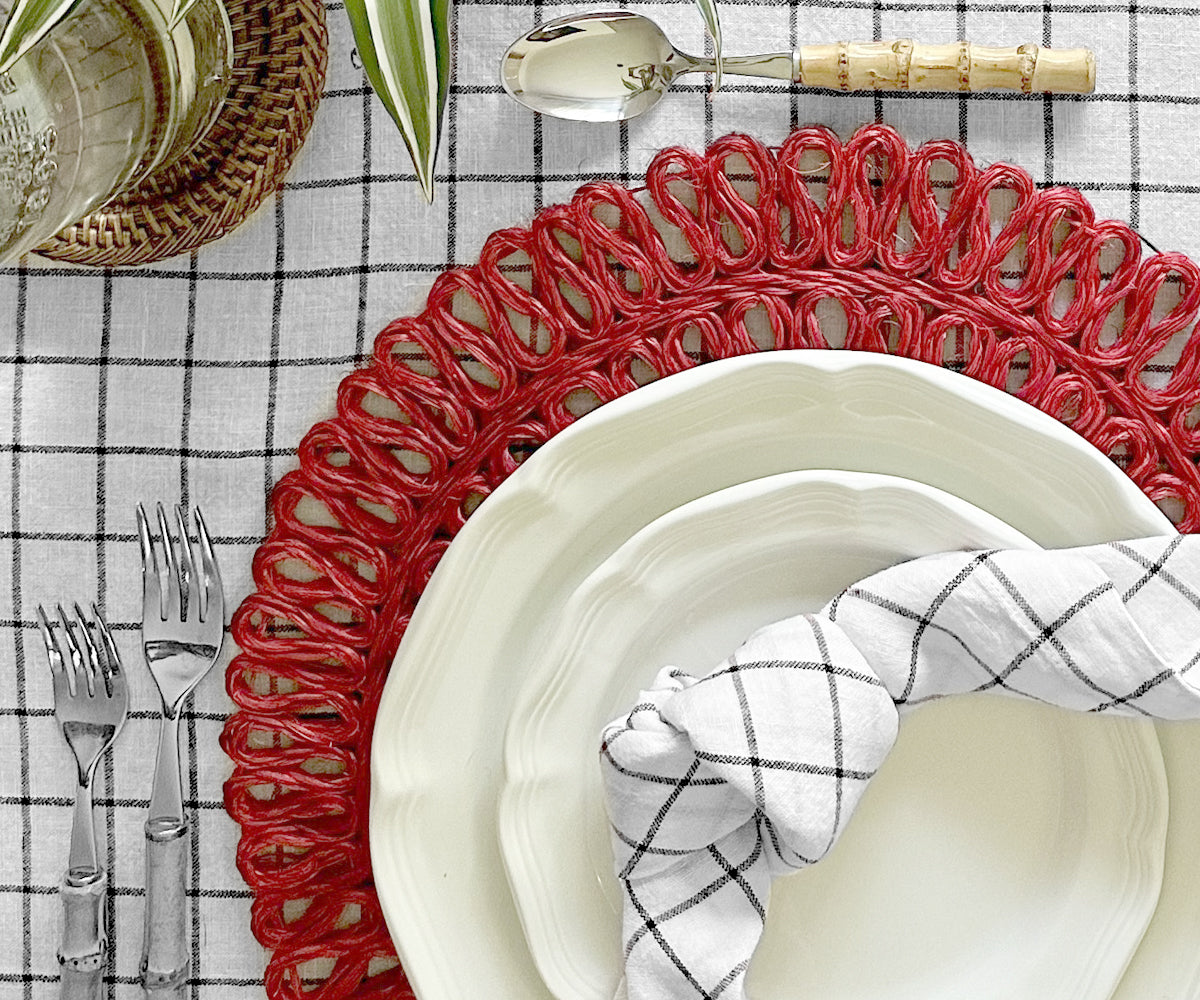
White, cream, or neutral-toned dinnerware reads cleanly against a windowpane pattern. The grid provides the visual complexity, and the plates and bowls should be quiet. Heavily patterned or brightly coloured dinnerware alongside a windowpane tablecloth creates a setting where the eye has too many competing claims on its attention.

Let the centrepiece breathe

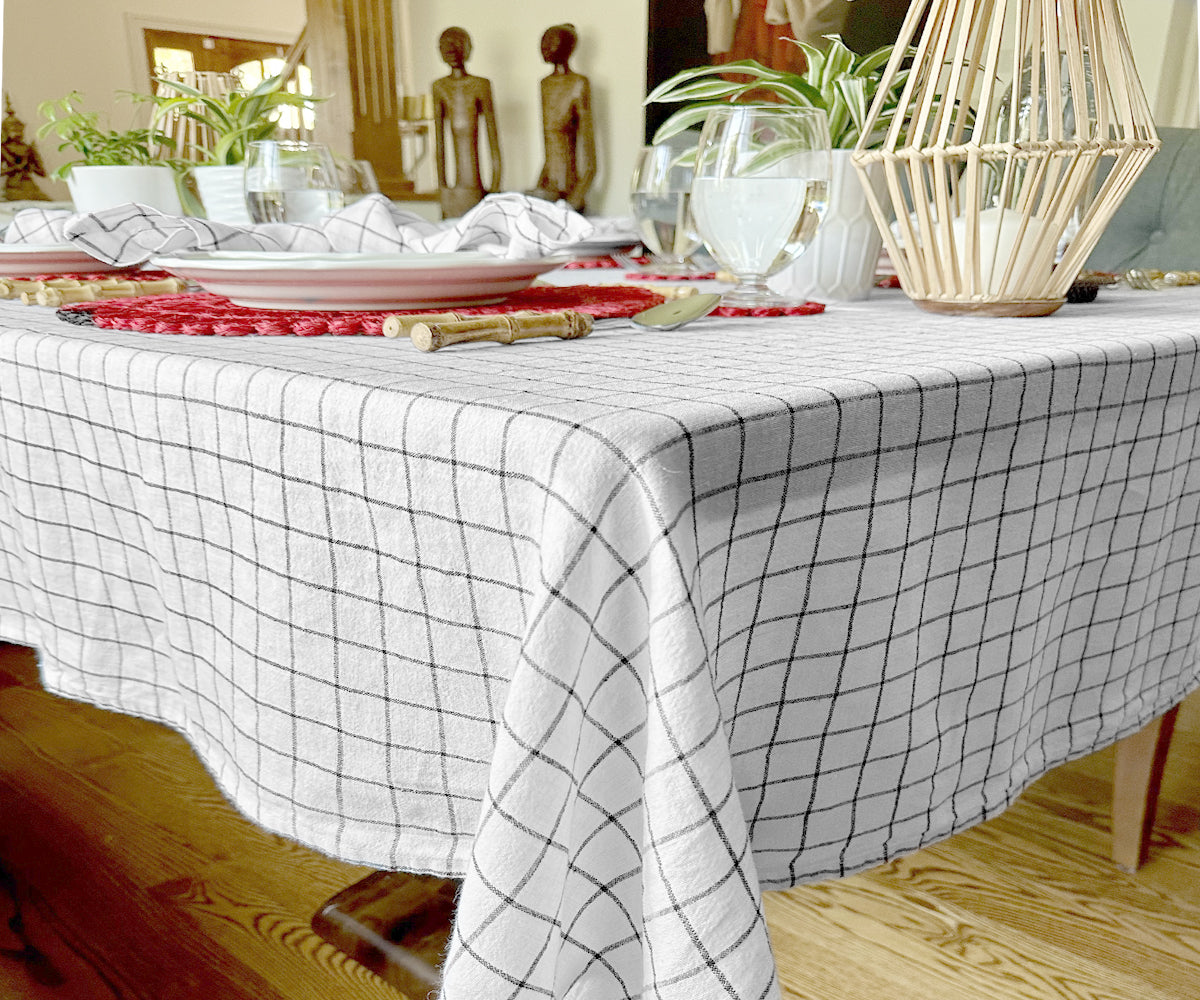
The windowpane grid creates a visual framework across the table surface. Within this framework, a centrepiece placed along the centre reads as intentionally curated. The most effective centrepieces for a windowpane tablecloth are natural and low: a cluster of pillar candles, a simple vase of seasonal flowers, a wooden board with herbs, or a ceramic bowl of seasonal fruit. Elaborate, large, or very colourful centrepieces compete with the pattern rather than complementing it.

Occasion-specific styling ideas

Everyday casual dining

For a weekday table, a windowpane linen tablecloth in natural and black or natural and navy is the ideal everyday covering. It makes the table look deliberately set without requiring styling effort. Pair with simple ceramic mugs and plates, a small pot of herbs in the centre, and cotton napkins in a solid tone from the check. This combination takes under two minutes to arrange and looks genuinely considered.

Weekend brunch

A white-background windowpane tablecloth with a red or navy grid works particularly well for a relaxed weekend table. The pattern reads as casually elegant, more structured than a solid but not formal. Add mismatched vintage mugs (the windowpane grid handles mixing more easily than a more assertive pattern), a wooden board of fruit and pastries, and simple folded napkins. No additional styling required.

Weekend brunch

Dinner party

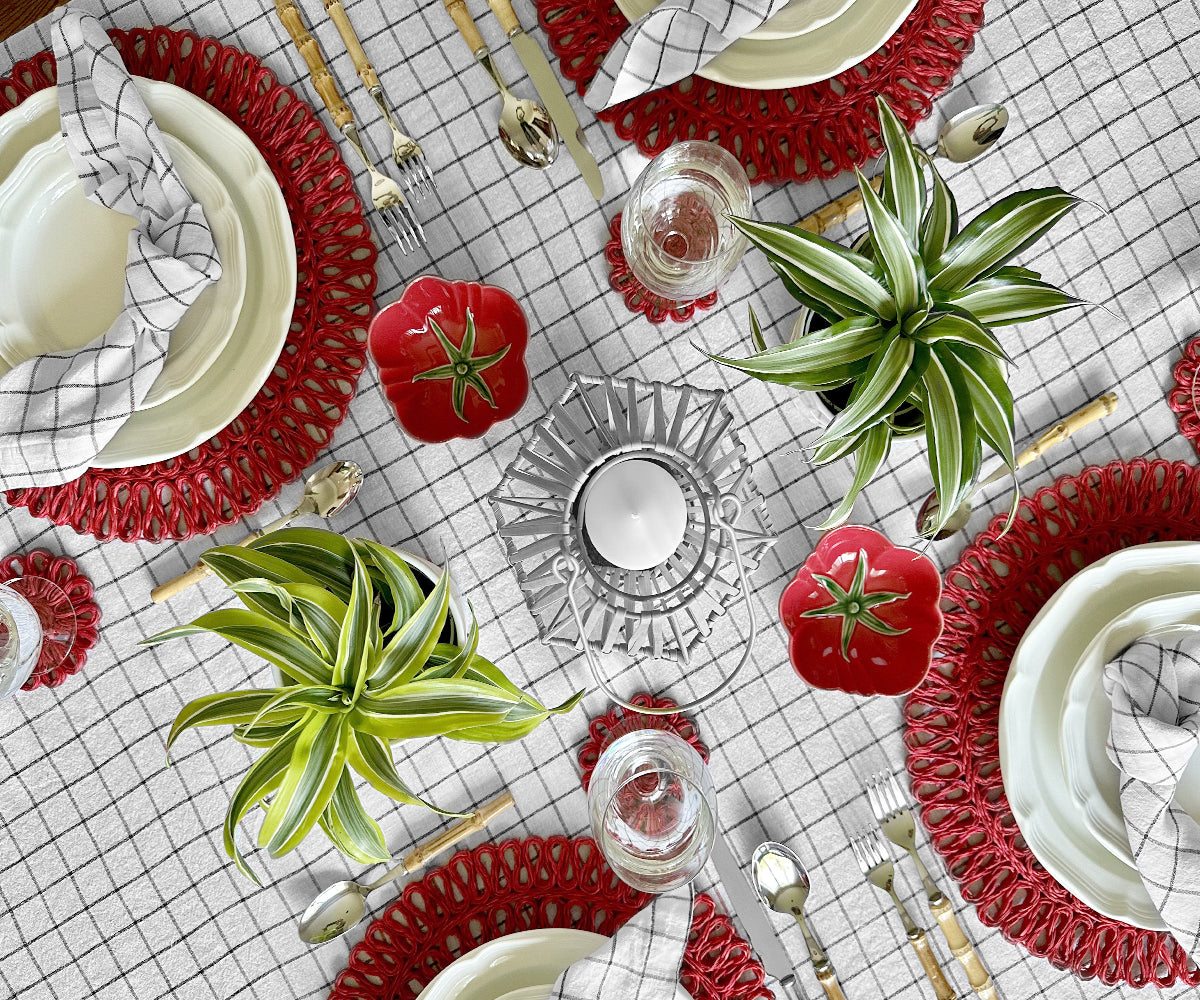
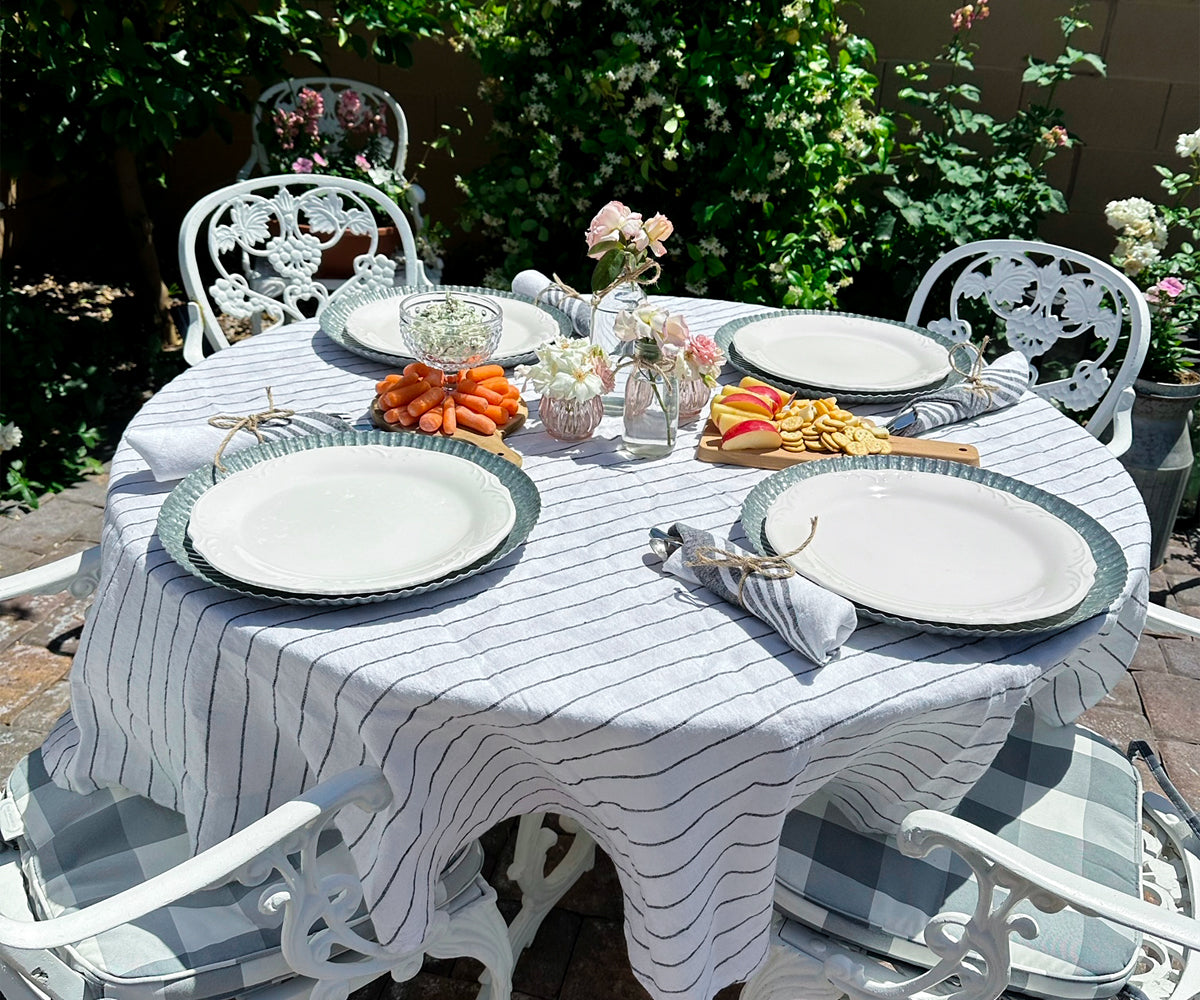
For a semi-formal dinner, a white or natural linen windowpane tablecloth with a charcoal or black grid is the strongest option. Layer with hemstitch linen napkins in white or ivory, simple silver or matte black cutlery, and clear or smoke-tinted glassware. A centrepiece of tapered candles in neutral holders down the centre of the table on or beside the tablecloth pattern, rather than obscuring it, completes the setting. The windowpane pattern does the design work. The other elements support it without competing.

Outdoor and al fresco dining

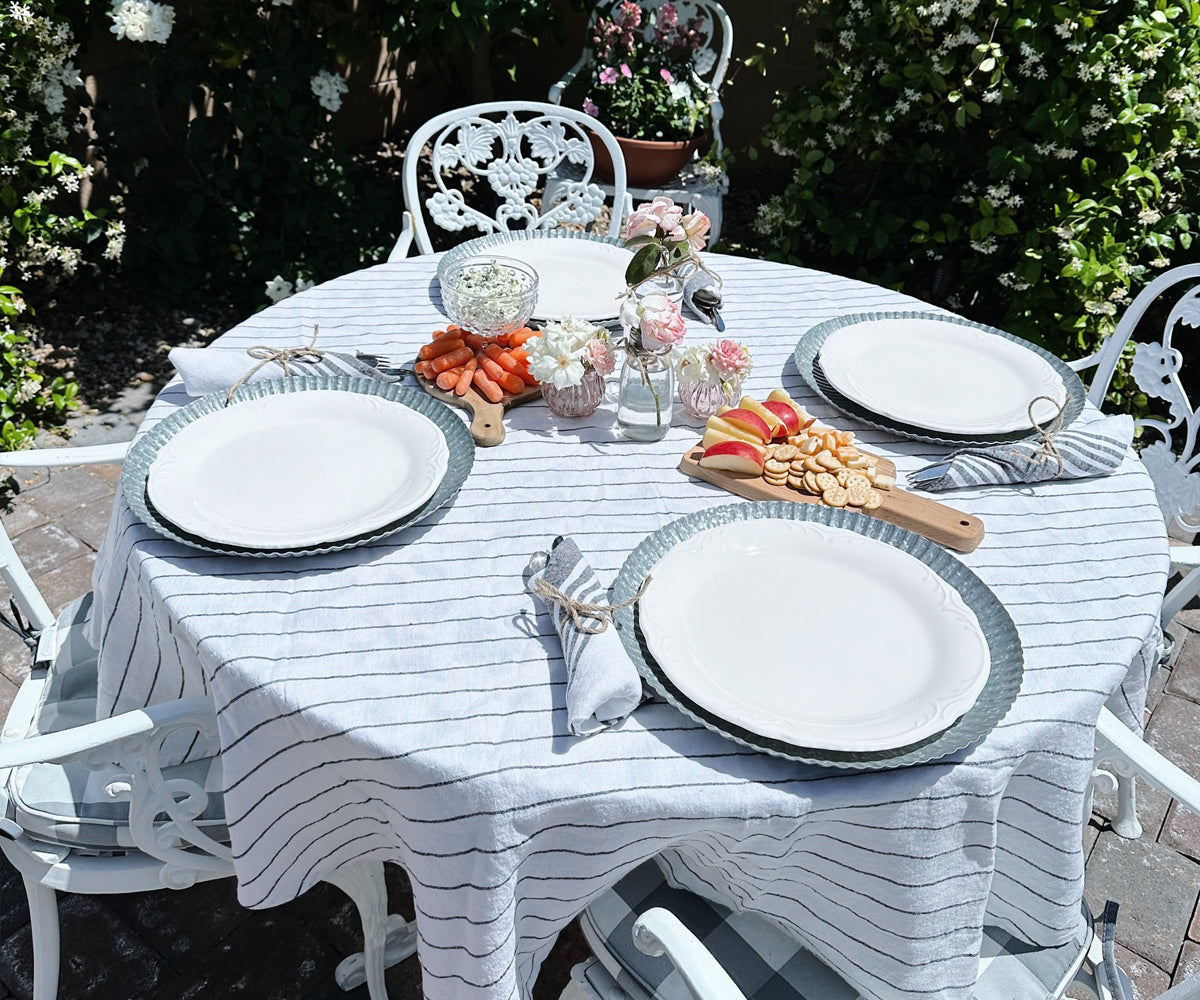
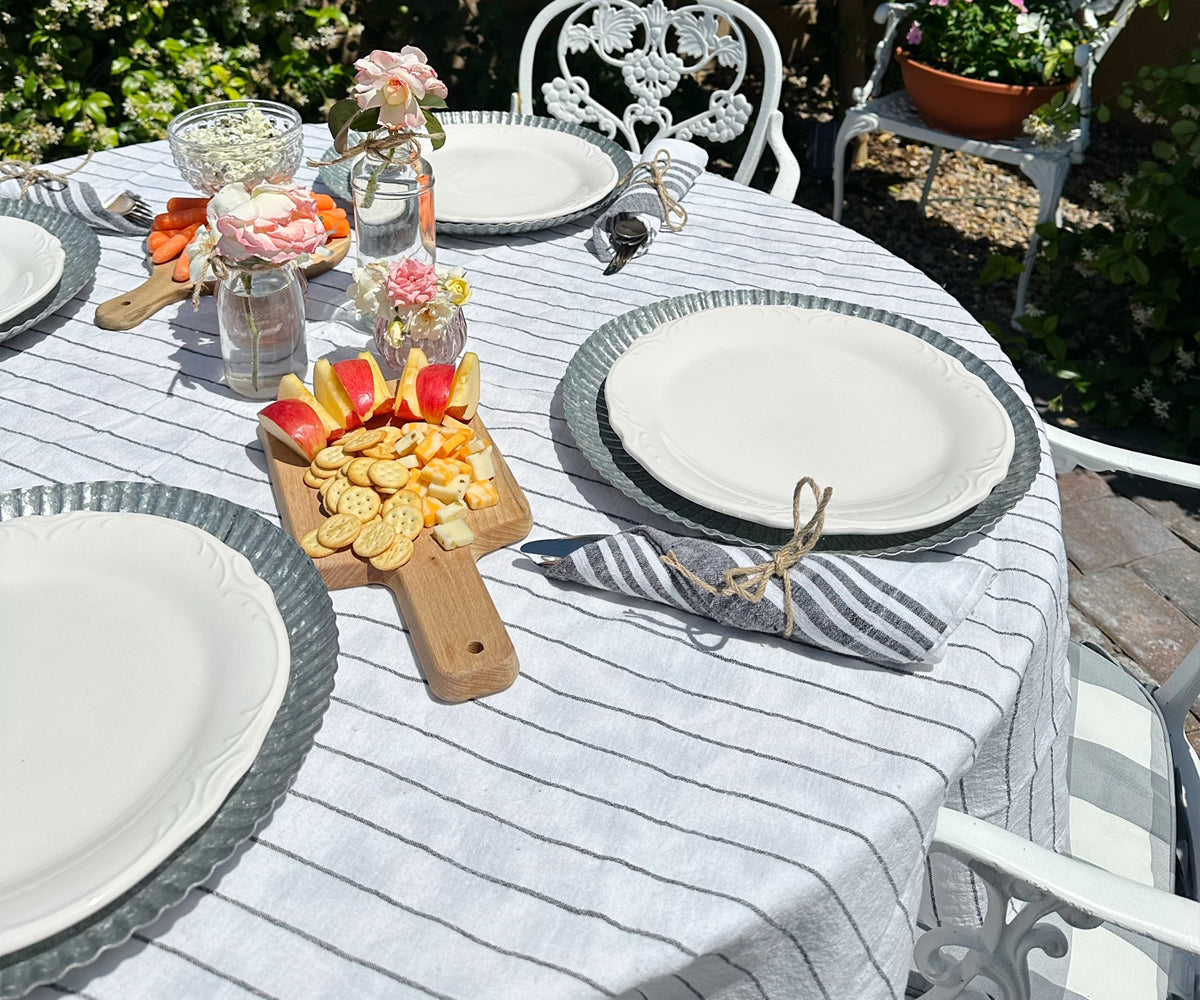
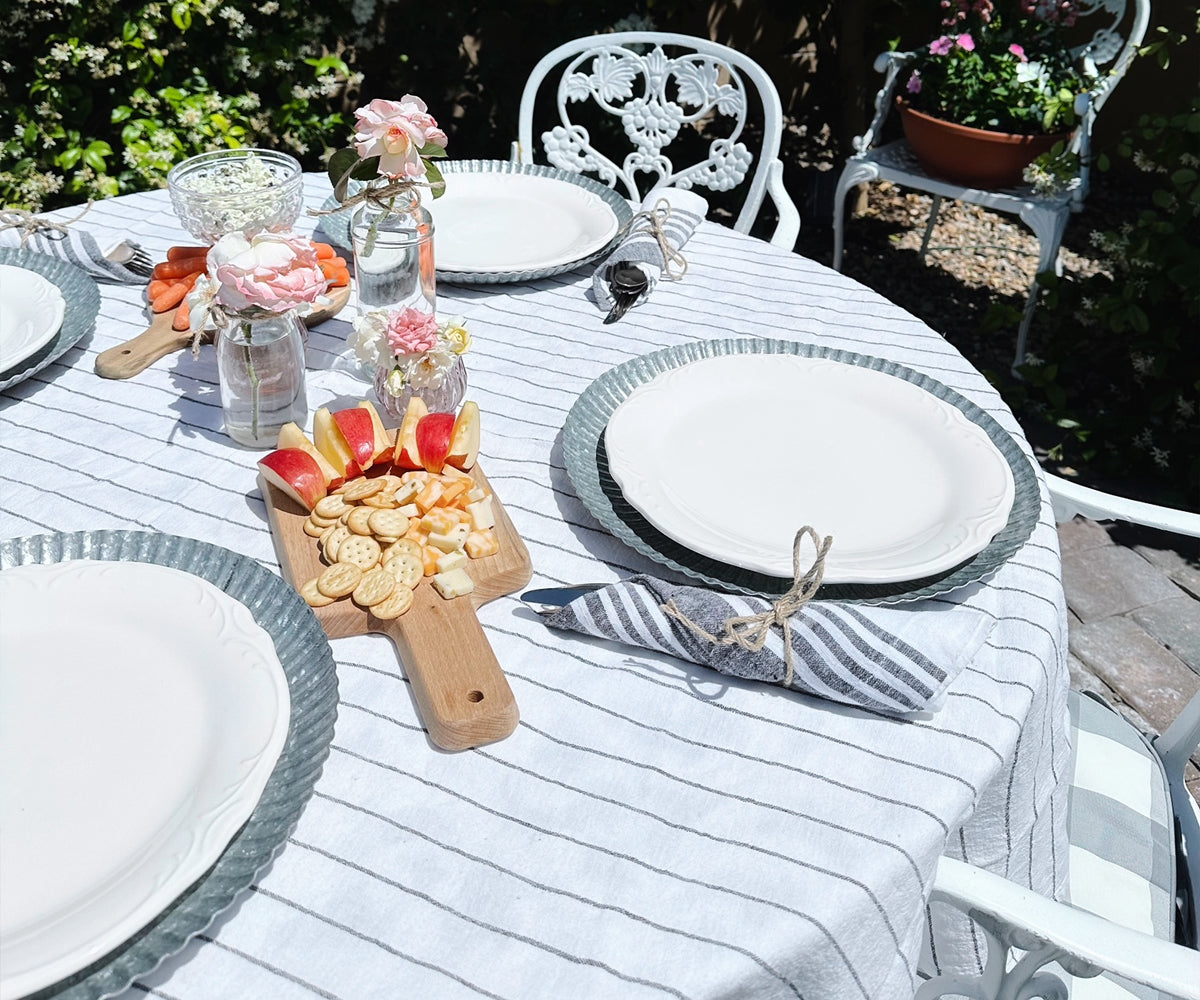
The windowpane check pattern is one of the most effective outdoor tablecloth patterns because the geometric grid remains visually clear even in the variable light conditions of outdoor eating. A natural linen or ivory background with a navy or sage green grid coordinates naturally with outdoor settings, garden greenery, timber furniture, patio stone, without requiring the rest of the outdoor space to match.

Outdoor and al fresco dining

For outdoor use, medium to heavyweight linen or cotton-linen blend in a windowpane pattern provides the best balance of visual quality and practical performance. Both fabrics handle outdoor conditions better than lightweight options and wash easily after outdoor use.

Holiday and seasonal styling

The red-grid-on-white windowpane tablecloth has strong associations with farmhouse and holiday aesthetics, particularly at Christmas and Thanksgiving. Used with natural wood accents, pine greenery, pillar candles, and simple cream or white dinnerware, this combination is one of the most immediately recognisable and warmly received holiday table looks.

For other seasons, rotating the grid colour shifts the windowpane tablecloth's seasonal register without changing the base tablecloth: a sage green grid feels like spring; a navy or cobalt grid feels like summer; a warm red or orange grid (if available) feels like autumn; charcoal or black reads as winter and year-round.

Layering windowpane tablecloths with other table elements

The windowpane pattern's geometric structure makes it particularly well-suited as a base for layering, providing a clear visual framework within which a table runner or overlay can sit.

Layering a solid table runner over a windowpane tablecloth

The most effective runner for a windowpane tablecloth is a solid colour in either the background or grid line tone. A natural linen runner over a white-and-black windowpane cloth adds a warm, organic layer without introducing a second pattern. A navy runner over a white-and-navy windowpane cloth intensifies the grid line colour into a central statement band.

windowpane tablecloth or a windowpane linen

The runner width matters: use a 12 to 14-inch runner to leave generous portions of the windowpane pattern visible on each side. A very wide runner that covers most of the tablecloth defeats the purpose of having the pattern as the base.

Using windowpane tablecloths as overlays

A smaller windowpane tablecloth or a windowpane linen rectangle placed as an overlay on a solid neutral base cloth creates a particularly layered, textured look. The overlay shows the windowpane pattern against the contrasting solid base, and the two-layer effect creates visual depth that neither alone achieves. This is especially effective with a natural linen windowpane overlay on a white cotton base cloth.

Beyond the dining table, other uses for windowpane tablecloths

The styling versatility of a windowpane linen tablecloth extends beyond the dining table into other areas of the home where a patterned natural fabric covering adds character.

Coffee table: 

A windowpane linen tablecloth draped over a coffee table with the corners hanging naturally adds structure and texture to a living space. Pair with a stack of books, a small tray of candles, and a simple plant. The geometric pattern reads as architectural in a living room context.

Coffee table  Interior Living Space

Console or buffet table:

 For parties and gatherings, a windowpane tablecloth covering a console table used as a buffet station elevates the food presentation significantly. The pattern provides a clear, considered background for serving dishes and platters.

Console or buffet table

Outdoor spaces: 

A windowpane linen tablecloth is well-suited to covering garden furniture between uses, protecting outdoor table surfaces while adding visual character to the garden or patio. The breathable linen fabric handles outdoor conditions better than synthetic covers.

Outdoor spaces: Garden Patio

Know More: Waterford Tablecloth Sizes: Perfect Fit for Every Table

How to care for a windowpane linen or cotton tablecloth

Machine wash in cool or warm water on a gentle cycle. Linen windowpane tablecloths should be washed at 30 to 40°C to maintain colour intensity in the grid lines. Higher temperatures can cause dye migration in strongly contrasting checks over time.

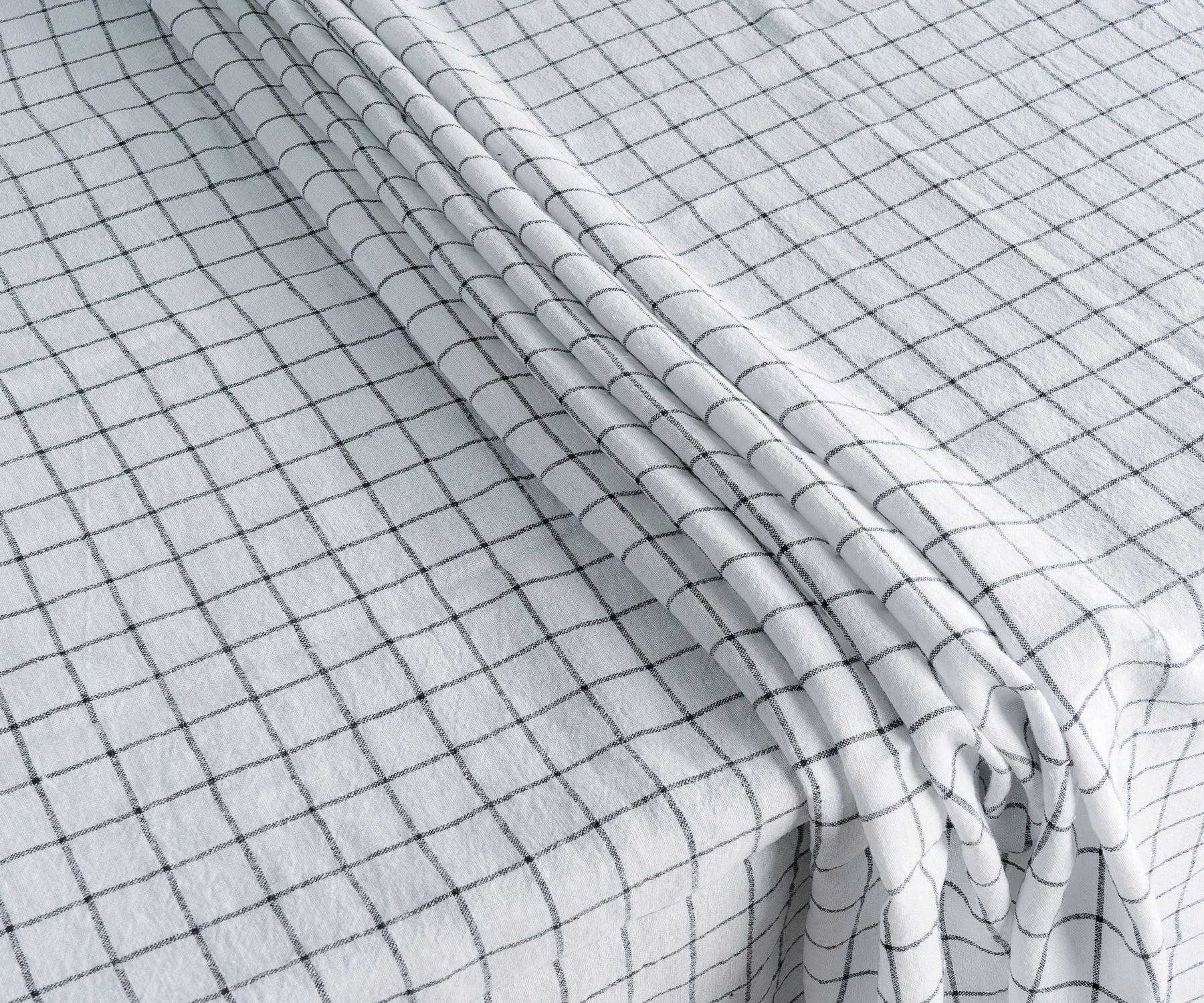
Iron while slightly damp for the crispest result. The geometric grid of a windowpane pattern benefits particularly from ironing, as the straight lines of the check become sharper and more defined after ironing, which adds to the pattern's visual clarity. Iron on the reverse side for linen to prevent sheen developing on the front surface.

Store loosely folded to avoid deep crease lines developing along the fold. A windowpane tablecloth stored in a tight fold will have visible crease lines running across the grid that require significant ironing to remove before use.

Overview

The windowpane tablecloth is one of the most genuinely versatile patterned table linens available, structured enough to add visual interest to any table, restrained enough to work with virtually every styling direction. It is the tablecloth that looks deliberately chosen without requiring the rest of the table to revolve around it.

In 2026, its combination of geometric precision and natural linen texture places it at exactly the intersection of current design directions, check and plaid patterns on linen and cotton fabrics, organic materials with architectural structure, and styling that is considered but never overworked.

FAQs

Yes, placemats can be placed on top of a tablecloth to add extra style, protect the fabric, and define individual place settings. Choose complementary colors and textures for a cohesive look.

Ensure the tablecloth fits properly, iron out wrinkles before use, and coordinate it with table decor such as runners, centerpieces, and napkins for an elegant setup.

Use tablecloth clips, non-slip pads, or a fabric-friendly adhesive to keep the tablecloth in place. Choosing a heavier fabric can also help prevent shifting.

A round tablecloth on a square table creates a unique layered effect, but it may not provide full coverage. For a balanced look, consider using a square or rectangular overlay.

The tablecloth trick is a magic trick where a tablecloth is swiftly pulled from a set table without disturbing the items. It works by using a quick, downward motion with a smooth, firm pull.