
What Size Tablecloth Do I Need?
The easiest way to find the right tablecloth size is to measure your tabletop and add twice your desired drop.
For a rectangular or square table:
Tablecloth length = table length + (2 × drop)
Tablecloth width = table width + (2 × drop)
For a round table:
Tablecloth diameter = table diameter + (2 × drop)
For example, if your rectangular table measures 72 × 30 inches and you want a 15-inch drop:
-
Length: 72 + 15 + 15 = 102 inches
-
Width: 30 + 15 + 15 = 60 inches
You would need a 60 × 102-inch tablecloth.
This calculation gives you the target dimensions. Since tablecloths are sold in standard sizes, choose the closest available size that provides the coverage you want.
How to Measure a Table for a Tablecloth
Before buying a tablecloth, measure the actual tabletop rather than relying only on the number of seats.
Rectangular Table
Measure:
-
The full length from end to end.
-
The full width from side to side.
-
The table height if you want a floor-length tablecloth.
Square Table
Measure one side of the tabletop. Because all four sides should be equal, one measurement is enough to determine the tabletop size.
Round Table
Measure straight across the center of the tabletop from one edge to the opposite edge. This measurement is the diameter.
Oval Table
Measure both the longest length and the widest width. An oval tablecloth should match the shape of the table rather than simply using the diameter measurement for a round table.
Tip: If your table has extension leaves, measure it both closed and fully extended. You may want a smaller tablecloth for everyday use and a larger one for family gatherings.
Why Tablecloth Sizing Matters
The size of a tablecloth affects more than just appearance. A well-fitted tablecloth improves the visual balance of your table decor, ensures the fabric drapes evenly on all sides, and keeps the table arrangement looking consistent, especially important when multiple tables are being set for a large event.

For weddings, banquet dinners, and corporate functions, consistent tablecloth drops across all tables give the venue a unified, professional look. For everyday dining, the right fit simply means the cloth stays in place, does not drag on the floor, and does not expose the table legs in an awkward way. Comfort also matters: a tablecloth with the correct drop length does not bunch under chairs or interfere with how guests sit.
Step 1: Measure Your Table
The first step in finding the right tablecloth size is measuring the table itself. Use a tape measure and record the dimensions carefully, as even a few inches of difference can change the way the cloth drapes.
For a rectangular table, measure the full length from one end to the other and the full width from one side to the other. For a round table, measure straight across the center of the table to get the diameter. For a square table, measure one side; all four sides should be equal. Always measure the actual tabletop rather than estimating based on how many people the table seats, since table proportions vary even among tables of the same seating capacity.
Step 2: Choose Your Drop Length
The tablecloth drop is the amount of fabric that hangs over each edge of the table. This is where the setting and occasion determine the right choice.
For casual dining and everyday table settings, a drop of 6 to 8 inches is the standard. This shorter drop keeps the table practical and accessible without overcomplicating the look. For semi-formal occasions, a dinner party, a birthday celebration, or a holiday meal, a drop of 10 to 15 inches gives a more finished appearance while still keeping the table comfortable for guests. For formal events such as weddings, gala dinners, and corporate banquets, a floor-length drop that extends all the way to the ground creates the most complete table presentation. This style is particularly effective when paired with decorative tablecloths featuring tassels, ruffles, or fringe edges, as the full drop allows the detail to show properly.

Read More: Can You Put Napkins in the Microwave?
Step 3: Calculate the Correct Tablecloth Size
Once you have the table measurements and a preferred drop length, calculating the tablecloth size is straightforward. The same basic formula applies to all table shapes.
For a rectangular table, add double the drop length to both the length and the width of the table. So if your table is 72 inches long and 36 inches wide, and you want a 10-inch drop, the calculation looks like this: the length becomes 72 plus 20, which is 92 inches, and the width becomes 36 plus 20, which is 56 inches. The tablecloth you need is approximately 56 by 92 inches.
For a round table, add double the drop length to the diameter. If your round table measures 54 inches across and you want a 12-inch drop, the calculation is 54 plus 24, giving you a 78-inch round tablecloth. In practice, you would select the nearest standard size, in this case a 90-inch round tablecloth, to ensure enough coverage with a generous drape.
For a square table, the same principle applies as with a rectangular table; add double the drop to each side measurement to get the required tablecloth dimensions.
90 x 132 Tablecloth: Fits What-Size Table?
A 90 x 132 inch tablecloth is sized for a standard 6-foot rectangular table (approximately 30" x 72"), giving a full, floor-length drop of around 30 inches on the sides and 30 inches on the ends. This size is typically used for formal events, weddings, and banquets where a dramatic, fully covered look is the goal, since the drop extends close to the floor rather than stopping at a casual mid-length.
120" Round Tablecloth: Fits What Size Table?
A 120-inch round tablecloth fits a round table with a diameter of roughly 60 inches, providing a generous floor-length drop of about 30 inches all the way around. This size is best suited for large round banquet tables (typically seating 8–10 guests) at weddings and formal events. For a shorter, more casual drop on the same table, a 90-inch round tablecloth would give closer to a 15-inch drop instead.
60 x 120 Tablecloth: Fits What-Size Table?
A 60 x 120 inch tablecloth is designed for a standard 6-foot rectangular table (30" x 72"), giving a generous 14–15 inch drop on all sides, long enough to create an elegant, formal look without reaching a full floor-length drape. This size is a popular choice for weddings, holiday dinners, and events that call for a polished appearance without the extra fabric of a full floor-length cloth.
60 x 84 Tablecloth: Fits What-Size Table?
A 60 x 84 inch tablecloth is sized for a standard 6-foot rectangular table (30" x 72"), providing a shorter, casual drop of about 6 inches on all sides. This size works well for everyday dining, casual family meals, and relaxed gatherings where you want the table covered without excess fabric pooling near guests' laps or the floor.
A 54 x 108 Tablecloth: Fits What-Size Table?
A 54 x 108 inch tablecloth is designed for a smaller rectangular table, roughly 30" x 84" (a table seating around 6–8), giving a mid-length drop of about 12 inches on the sides and 12 inches on the ends. This size works well for semi-formal dinners and smaller banquet tables that don't require a full floor-length drape but still want a polished, dressed-up look.
Square Tablecloth Sizes
|
Table Size |
Seats |
6–8" Drop (Casual) |
10–15" Drop (Semi-Formal) |
Floor Length (Formal) |
|
24" × 24" |
2 |
40" × 40" |
52" × 52" |
84" × 84" |
|
36" × 36" |
4 |
52" × 52" |
62" × 62" |
96" × 96" |
|
48" × 48" |
4–6 |
60" × 60" |
72" × 72" |
108" × 108" |
|
60" × 60" |
6–8 |
72" × 72" |
84" × 84" |
120" × 120" |
Common Tablecloth Sizes for Round Tables
Round tables are used widely for weddings, banquet dinners, and family gatherings, and matching them to the right tablecloth size is one of the most common questions in event planning.
A 36-inch round table typically pairs well with a 54-inch tablecloth. A table measuring 40 to 44 inches across works with a 60-inch cloth. For tables between 48 and 54 inches in diameter, a 70-inch tablecloth is the standard choice. A 60-inch round table, which is one of the most common banquet sizes and seats six to eight people comfortably, is usually covered with a 90-inch tablecloth for a mid-length drop or a 120-inch cloth for a full floor-length drape. Tables in the 66 to 72-inch range suit a 105-inch tablecloth, while tables from 72 to 78 inches typically use a 110-inch or 120-inch cloth, depending on the preferred drop.
Standard Rectangular and Square Tablecloth Sizes
Rectangular tablecloths are the most widely used across dining rooms, banquet halls, and event spaces. Common sizes include 60 by 120 inches for standard banquet tables, 63 by 88 inches for shorter dining tables, and longer sizes such as 63 by 126 or 63 by 144 inches for extended tables that seat more guests. Widths of 70 inches are also available for slightly wider tables and are paired with the same length options.

Square tablecloths serve a different purpose. They work well on smaller dining tables, side tables, and outdoor tables, and they are also used as overlays placed on top of larger tablecloths to add texture and a layered visual effect. Common square sizes are 52 by 52 inches, 62 by 62 inches, and 72 by 72 inches.
Round Tablecloth Sizes
|
Table Diameter |
Seats |
6–8" Drop (Casual) |
10–15" Drop (Semi-Formal) |
Floor Length (Formal) |
|
36" |
2–4 |
54" |
60" |
96" |
|
48" |
4–6 |
60" |
70" |
108" |
|
54" |
6 |
70" |
82" |
114" |
|
60" |
6–8 |
72" |
90" |
120" |
|
72" |
8–10 |
90" |
105" |
132" |
Should a Tablecloth Touch the Floor?
This is one of the most frequently asked questions when selecting table linens, and the answer depends entirely on the occasion.
For everyday meals and informal gatherings, a short drop is preferable. It is practical, easy to manage, and does not get in the way of guests moving around the table. For formal occasions, weddings, anniversary dinners, and upscale receptions, a floor-length tablecloth is the standard choice. It creates a seamless presentation from the tabletop to the ground, hides the table legs completely, and gives the overall setting a formal, intentional feel.
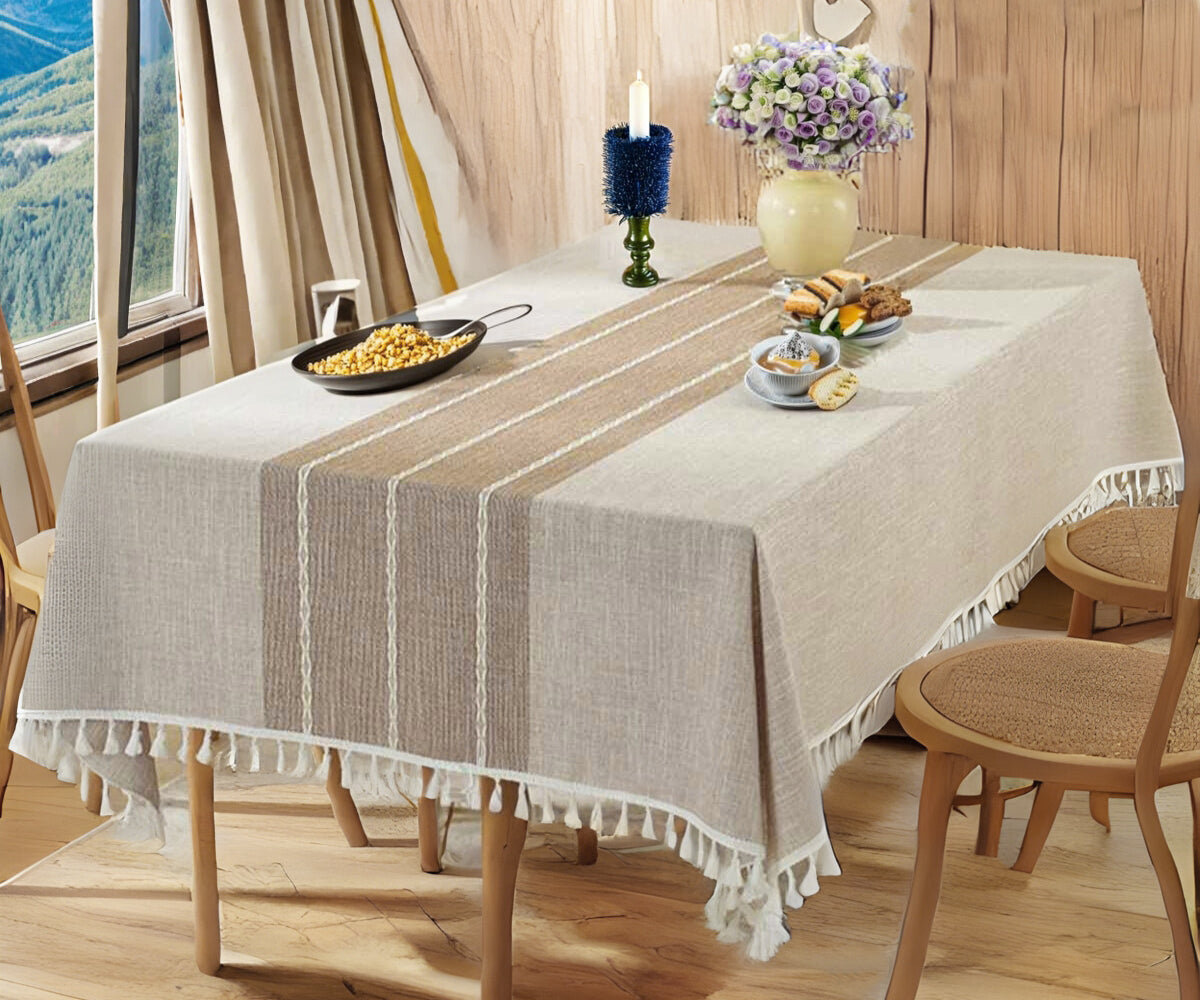
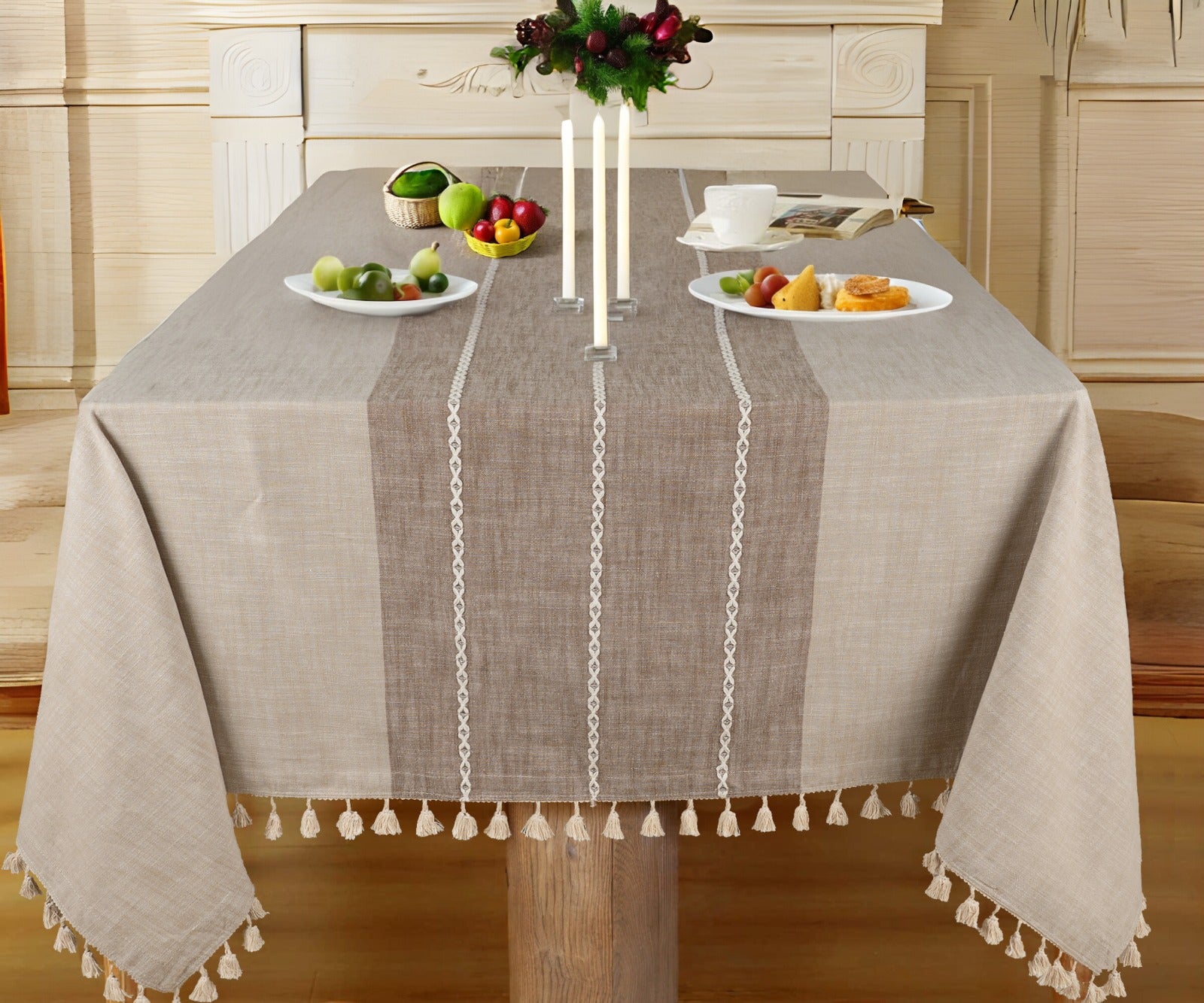
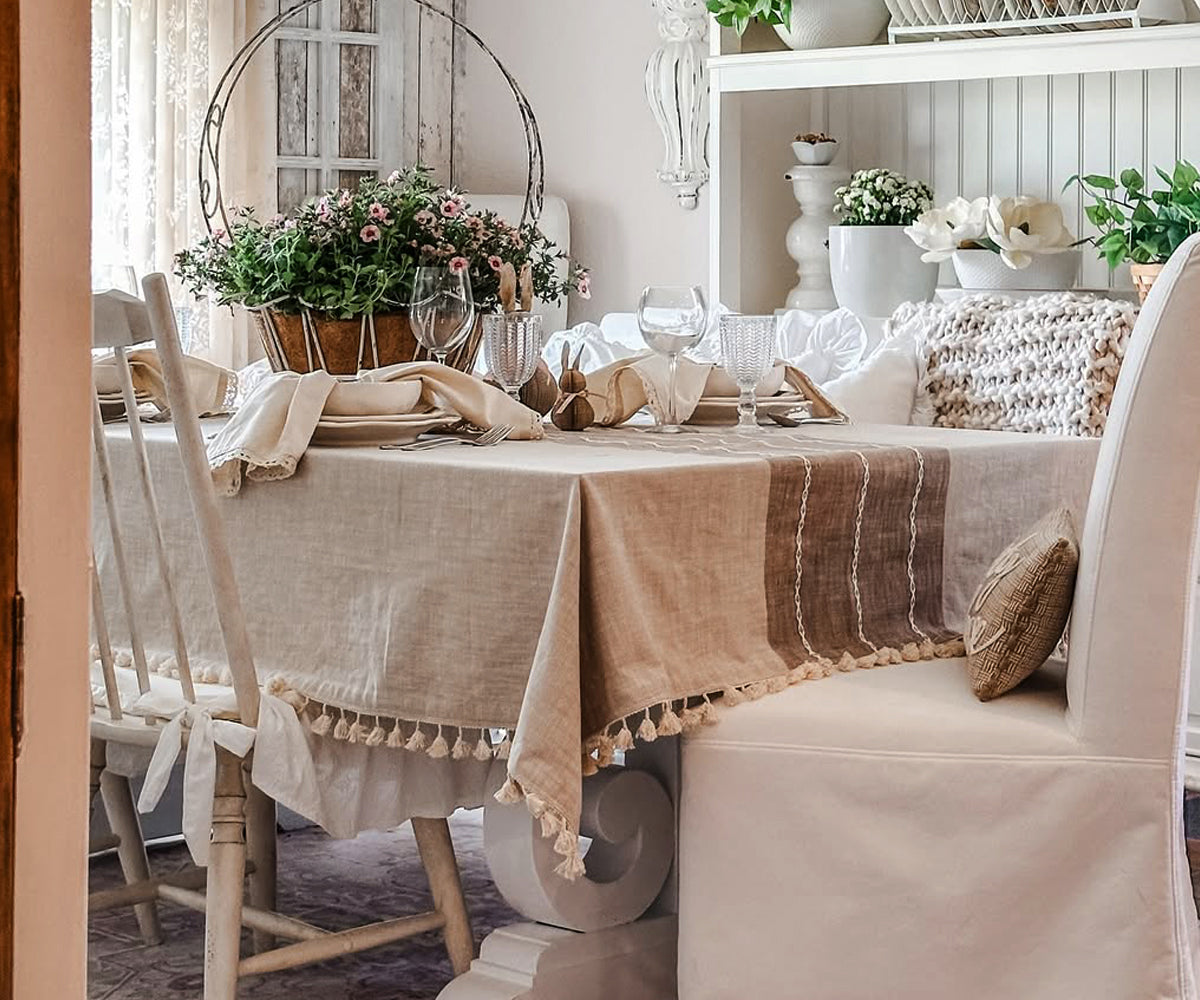
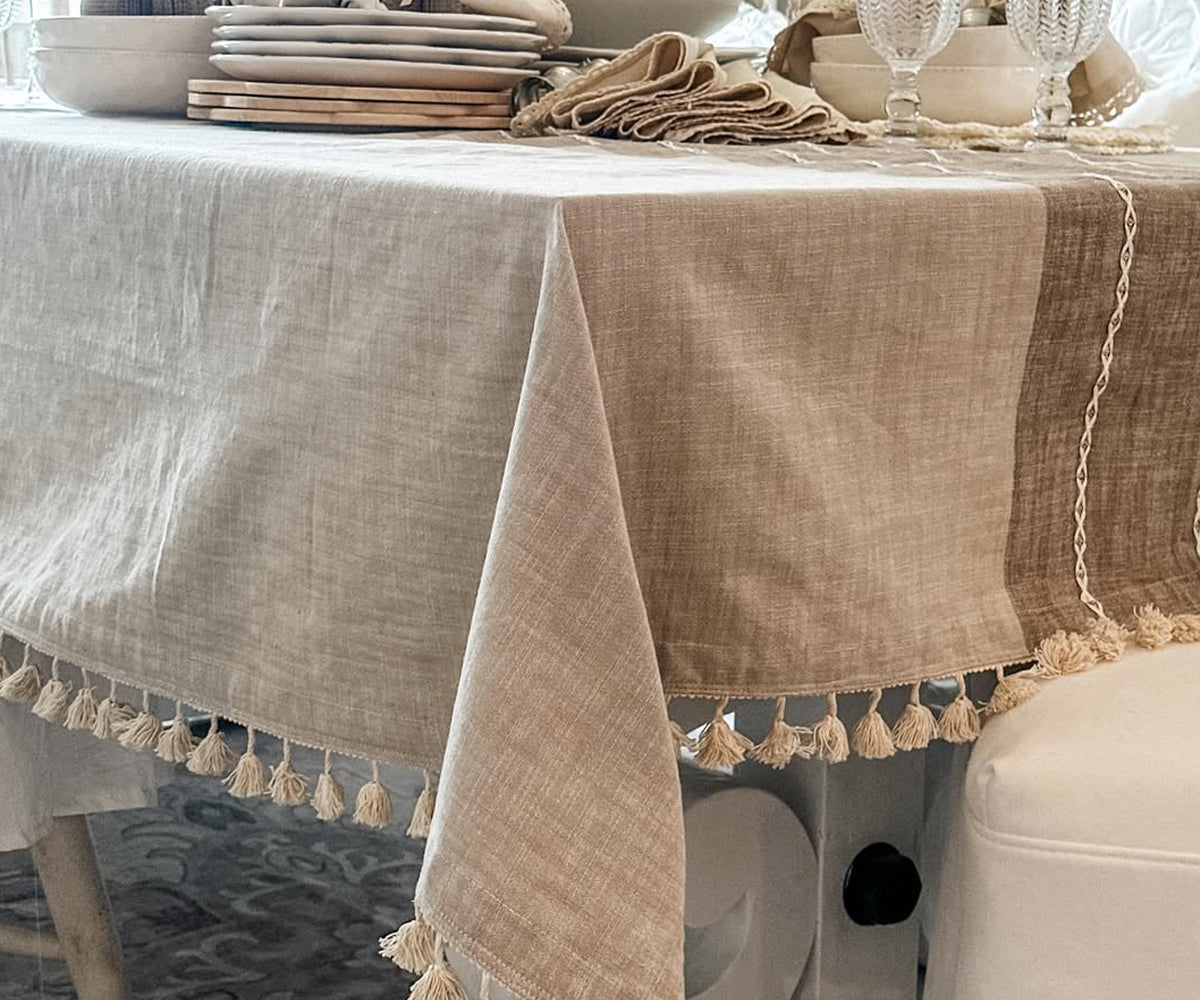
When using a floor-length drop, the tablecloth style matters more because the full length of the fabric is visible. Decorative styles like ruffled tablecloths, tassel tablecloths, and fringe-edged designs look especially effective at full drop length because the decorative detail has room to be seen properly.
Also Read: What Size Tablecloth for an 8-Foot Rectangular Table?
How to Style a Tablecloth for Different Occasions

- For a casual everyday table, keep it simple—a plain cotton tablecloth in a neutral tone with matching cloth napkins is clean and practical
- For a dinner party, layer a linen tablecloth with a table runner in a contrasting color or texture to add depth without overcomplicating the setup
- For a wedding reception, floor-length tablecloths in white, ivory, or natural linen create a classic base that works with any floral or decorative arrangement
- For holiday tables, checkered or printed tablecloths add seasonal personality without requiring additional décor
- For outdoor events, use a tablecloth with weighted corners or secure it with clips to prevent movement in the wind
- Mixing a plain tablecloth base with a decorative overlay or square topper is an easy way to add visual interest to any event table
How to Calculate Fabric if You Are Sewing Your Own Tablecloth
If you are purchasing fabric by the yard to make your own tablecloth, the calculation is similar to the standard size formula, with one addition: hem allowance. After calculating the total length and width based on the table dimensions and preferred drop, add approximately 2 inches on all sides for hemming. So, for a 48-inch round table with a 12-inch drop, the total diameter before hemming would be 72 inches, and with a 2-inch hem allowance added, the required fabric diameter would be 74 inches. Dividing 74 by 36 gives just over 2 yards of fabric. It is always worth purchasing slightly more than the calculated amount to allow for adjustments and to account for any variation in cutting.
What Fabric Is Best for a Tablecloth?
- Cotton tablecloths are the most versatile choice—soft, washable, and suitable for both casual and semi-formal settings
- Linen tablecloths offer a naturally crisp drape and a refined look, making them ideal for formal dining, weddings, and upscale events
- Cotton-linen blends combine the softness of cotton with the structure of linen, giving a polished finish that works across most occasions
- Polyester tablecloths are wrinkle-resistant and budget-friendly, commonly used for large-scale events where ironing every cloth is not practical
- Jacquard tablecloths feature woven patterns built into the fabric itself, adding texture and visual interest without printed designs
- For outdoor use, a tighter cotton or cotton-linen weave holds up better against wind and light moisture than lighter fabrics
Tips for Event Planners
When managing tablecloths across a large event, a few practical principles help keep everything consistent and polished. The first is to always account for the actual table height. Most standard banquet tables stand at around 30 inches, but specialty display or cocktail tables can vary significantly, which affects the floor-length drop calculation.
The second is to maintain a consistent drop length across all tables in the same space. Even if tables vary slightly in size, using the same drop length throughout the venue creates a unified look that reads as intentional and professionally planned.
The third is to consider how fabric type affects drape. Cotton and linen tablecloths hang differently from synthetic fabrics. Natural fibers tend to drape more softly and create a more relaxed, organic look, while stiffer synthetic blends hold their shape more rigidly. The fabric choice should suit both the aesthetic of the event and the practical demands of the setting.
How to Choose a Tablecloth Size for Different Occasions
The same table can look completely different depending on the tablecloth drop.
Everyday Dining
Choose a shorter drop of around 6–12 inches. It keeps the fabric away from guests' knees and makes the table easier to use every day.
Dinner Parties
A 10–15-inch drop gives the table more coverage without bringing the fabric close to the floor.
Thanksgiving and Holiday Dinners
A longer drop can help create a more finished table setting. Choose your size based on the table dimensions and the amount of overhang you prefer.
Weddings and Formal Events
Floor-length tablecloths are common for formal occasions. For a standard 30-inch-high banquet table, a drop of roughly 29–30 inches brings the cloth close to the floor.
Outdoor Dining
For patios, decks, and backyard meals, consider a shorter drop. It reduces the chance of the fabric catching on chairs or brushing against the ground.
Overview
The right tablecloth size can completely change how a dining table looks and feels. A proper fit creates a clean, polished setup for everyday meals, family gatherings, weddings, and festive occasions. By measuring your table correctly and choosing the ideal drop length, you can easily find a tablecloth that works for both style and function. Whether you prefer cotton tablecloths for daily use, linen tablecloths for formal dining, or decorative embroidered and tassel styles for special events, the right choice helps bring the entire table setting together.